
What's inside
As an Amazon Associate I earn from qualifying purchases. This post may contain affiliate links at no extra cost to you.
How to choose rangefinder for glasses is not just about picking the rangefinder with the longest range. It is about picking a rangefinder with long eye relief, with a twist-up eyecup that works with glasses, with a diopter adjustment that lets you focus the display, and with a display that is bright enough to see at dawn and dusk, even with glasses on.
Glasses wearers need eye relief of at least 14mm, and preferably 15mm or more, to see the full field of view without pressing the rangefinder against their glasses. A rangefinder with eye relief below 14mm will be hard to use with glasses, as you will see a black ring around the edges, and you will need to take your glasses off to see clearly. All six rangefinders in this guide have eye relief of at least 15mm, so they meet the gate for glasses wearers.
For a rangefinder, red OLED is better than black LCD at dawn and dusk, because red is easier to see in low light. A black LCD display can be hard to see in low light, while a red OLED display is bright and clear. Rangefinder range for a deer or a flag is much less than range for a reflective target, so do not trust the maximum range on the box as a real range for a deer.
Our top pick is the Vortex Crossfire HD 1400. At $150 to $200, with eye relief of 15mm, a red OLED display, and a range of up to 1,400 yards as listed by the manufacturer, it is the best balance of eye relief, display, and price for glasses wearers. It is not the cheapest rangefinder here, and it is not the longest range, but for a glasses wearer who wants a rangefinder that is easy to use, it is the best choice.
Our Top Picks
How to Choose Rangefinder for Glasses Compared
The table below compares six rangefinders for glasses wearers, all with eye relief of at least 15mm, with display type, and price. Eye relief is in millimetres. Display is red OLED or black LCD. Prices are typical ranges, not fixed prices, and they vary by retailer.
| Model | Eye Relief | Display | Max Range Listed | Typical Price Range | Rating |
|---|---|---|---|---|---|
| Vortex Crossfire HD 1400 | 15mm | Red OLED | 1,400 yd | $150–$200 | 4.8 / 5 |
| Leupold RX-1400i TBR/W | 15mm | Red OLED | 1,400 yd | $250–$300 | 4.6 / 5 |
| Sig Sauer KILO1400BDX | 15mm | Red OLED | 1,400 yd | $200–$250 | 4.5 / 5 |
| Nikon Coolshot Pro III Stabilized | 18mm | Black LCD | 1,200 yd | $400–$450 | 4.4 / 5 |
| Bushnell Tour V7 Shift | 15mm | Black LCD | 1,300 yd | $250–$300 | 4.3 / 5 |
| Vortex Ranger 1800 | 16mm | Red OLED | 1,800 yd | $250–$300 | 4.2 / 5 |

REVASRI Hunting Laser Rangefinder with Rechargeable Battery 1000 Yards Hunting Range Finder with Target Acquisition Technology Easy-to-Use Clear Accurate Rangefinders for Hunters
As an Amazon Associate we earn from qualifying purchases. Product prices and availability are accurate as of the date/time indicated.
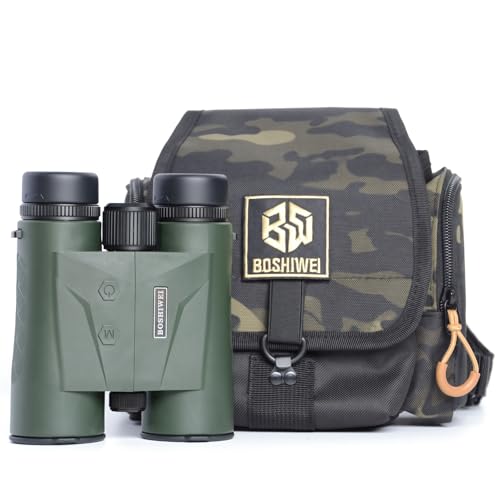
Binoculars with Rangefinder, ED Glass 10x42mm, 1968 Yards Long Range HD | Fast 0.15s Laser Ranging, ±0.5m Accuracy, IP67, Magnesium Alloy, ED Glass HD Optics for Hunting, Golf & Outdoor, Green
As an Amazon Associate we earn from qualifying purchases. Product prices and availability are accurate as of the date/time indicated.

TIDEWE Hunting Rangefinder, Rechargeable Camo Laser Range Finder 700 Yards | 6.5X Magnification Range Finder, Distance/Angle/Speed/Continuous Scan Modes, Rechargeable Battery, Carry Case
As an Amazon Associate we earn from qualifying purchases. Product prices and availability are accurate as of the date/time indicated.
Prices shown are approximate and for reference only. Prices change often, so please check the current price on Amazon before you buy.
How to Choose Rangefinder for Glasses in 2026: 7 Steps
Step 1: Check Eye Relief At Least 14mm Preferably 15mm or More
Step 1 is to check eye relief, which should be at least 14mm for glasses wearers, and preferably 15mm or more. Eye relief is the distance from the eyepiece to your eye where you can see the full field of view. If eye relief is too short, you will see a black ring, and you will need to take your glasses off.
All six rangefinders here have eye relief of at least 15mm, from 15mm to 18mm, so they meet the gate. The Nikon Coolshot Pro III has the longest eye relief, at 18mm, which is best for glasses wearers with thick glasses. The Vortex Crossfire HD 1400, Leupold RX-1400i, Sig KILO1400BDX, and Bushnell Tour V7 Shift all have eye relief of 15mm, which is enough for most glasses wearers.
Step 2: Choose a Twist-Up Eyecup That Works With Glasses
Step 2 is to choose a twist-up eyecup that works with glasses. A twist-up eyecup can be twisted down for glasses wearers, so the eyepiece is closer to your glasses, and twisted up for users without glasses, so the eyepiece blocks stray light. All six rangefinders here have a twist-up eyecup, so they work with glasses.
Test the eyecup before you buy: twist it down, put the rangefinder to your glasses, and check that you can see the full display without a black ring. If you see a black ring, the eye relief is too short, or the eyecup is not twisted down enough.
Step 3: Choose a Red OLED Display Over Black LCD for Dawn and Dusk
Step 3 is to choose a red OLED display over a black LCD display for dawn and dusk. Red OLED is better than black LCD at dawn and dusk, because red is easier to see in low light. A black LCD display can be hard to see in low light, while a red OLED display is bright and clear.
The Vortex Crossfire HD 1400, Leupold RX-1400i, Sig KILO1400BDX, and Vortex Ranger 1800 all have a red OLED display, so they are good for dawn and dusk. The Nikon Coolshot Pro III and Bushnell Tour V7 Shift have a black LCD display, so they are less good in low light, but they are still usable in daylight.
Step 4: Check Diopter Adjustment and Focus
Step 4 is to check diopter adjustment and focus. A diopter adjustment lets you focus the display for your eyes, with or without glasses. It is important for glasses wearers, as it lets you adjust the display to your prescription, without taking your glasses off.
All six rangefinders here have a diopter adjustment, so you can focus the display. Turn the diopter until the display is sharp, with your glasses on, and do not change it after that. If the display is blurry, adjust the diopter, not the focus knob, as the diopter is for your eyes, and the focus is for the target.
Step 5: Check Range for Deer and Flag, Not Just Reflective Targets
Step 5 is to check range for a deer and a flag, not just for a reflective target. Rangefinder range for a deer or a flag is much less than range for a reflective target, like a building or a sign, because a deer and a flag are not reflective. A rangefinder that lists 1,400 yards will work for 1,400 yards on a reflective target, but it will work for much less on a deer, often 800 yards or less, depending on conditions.
Do not trust the maximum range on the box as a real range for a deer. For hunting, choose a rangefinder with a range that is at least twice the distance you will shoot, so it will work reliably. For golf, choose a rangefinder with a range that is at least twice the longest hole you will play.
Step 6: Check Slope Mode and Turn It Off for Competition
Step 6 is to check slope mode, and turn it off for competition. Slope mode adjusts the range for uphill and downhill shots, which is useful for hunting and for practice, but it is not allowed in competition golf. For golf, slope must be off in competition, so choose a rangefinder with a slope switch that is easy to turn off, like the Bushnell Tour V7 Shift, which has a slope switch on the side.
For hunting, slope mode is useful, as it gives you a true horizontal distance, which is what you need for a shot. The Leupold RX-1400i TBR/W has a TBR mode, which is True Ballistic Range, with slope, and it is a good choice for hunting.
Step 7: Test the Rangefinder With Glasses On, at Dawn, and at 20x
Step 7 is to test the rangefinder with glasses on, at dawn, and at a realistic distance. Test it with your glasses on, with the eyecup twisted down, and check that you can see the full display. Test it at dawn, when light is low, and check that the display is bright enough. Test it at a distance you will use, like 100 yards for a deer, or 150 yards for a golf flag, and check that it gives a consistent reading.
Test a rangefinder for at least 30 minutes before you keep it, the same as you would test a mouse, a keyboard, or a speaker, to make sure it works with your glasses and your eyes.
How to Choose Rangefinder for Glasses Buying Guide
Choosing a rangefinder for glasses is about eye relief, display, diopter, and use. A rangefinder that works for a user without glasses may not work for a user with glasses, if the eye relief is too short.
Eye Relief At Least 14mm, Exit Pupil Objective Divided by Magnification, and Kids Binoculars Weight Under 20 Ounces Eye Relief At Least 14mm 8×32 Default: Eye Relief for Glasses
Eye relief should be at least 14mm for glasses wearers, for binoculars and for rangefinders. For binoculars, eye relief of at least 14mm is the gate, with 8×32 being the default for kids, and 6.5x for younger children, with weight under 20 ounces. For a rangefinder, eye relief of at least 15mm is better, as it gives more room for glasses.
Exit pupil is objective divided by magnification, for binoculars. For a rangefinder, exit pupil is less important, as a rangefinder is used for a short time, not for long viewing. What matters for a rangefinder is eye relief, display, and diopter, not exit pupil.
Red OLED Better Than Black LCD Dawn Dusk, Golf Slope Off Competition, and Detection Not Identification: Display and Range for Glasses
Red OLED is better than black LCD at dawn and dusk, because red is easier to see in low light. For a glasses wearer, a bright display is even more important, as glasses can reduce light. Choose a rangefinder with a red OLED display if you will use it at dawn and dusk, like the Vortex Crossfire HD 1400 or the Leupold RX-1400i.
Golf slope must be off in competition, so choose a rangefinder with a slope switch that is easy to turn off. Detection is not identification, which means a rangefinder can detect a target, but it cannot tell you what it is. For a rangefinder, that means it can give you a range, but it cannot tell you if the target is a deer, a flag, or a tree.
Brush Blower First Never Wipe Dirty, Fluid on Cloth Never Lens, Never Household Cleaner Ammonia Paper Towel Shirt, Scratched Coating Cannot Be Polished Replace: Cleaning a Rangefinder for Glasses
Clean a rangefinder lens by brushing or blowing dust off first, never wiping a dirty lens, as dust will scratch the coating. Put fluid on a cloth, never on the lens, as fluid on the lens can seep into the edges and damage the seal. Never use a household cleaner, ammonia, paper towel, or a shirt, as they can damage the coating. A scratched coating cannot be polished — it must be replaced.
Clean your glasses the same way, with a microfibre cloth, and check that your glasses do not have a coating that is damaged. If your glasses are scratched, they will make a rangefinder harder to use, as they will reduce light and clarity.
How to Choose Rangefinder for Glasses FAQ
What is the best rangefinder for glasses wearers?
The best rangefinder for glasses wearers is the Vortex Crossfire HD 1400, at $150 to $200, because it has eye relief of 15mm, a red OLED display, and a range of up to 1,400 yards as listed by the manufacturer. The Nikon Coolshot Pro III Stabilized, at $400 to $450, is the best alternative with the longest eye relief, at 18mm. The Leupold RX-1400i TBR/W, at $250 to $300, is the best alternative with a red OLED display and a TBR mode for hunting.
How much eye relief do I need for a rangefinder with glasses?
You need eye relief of at least 14mm for a rangefinder with glasses, and preferably 15mm or more. All six rangefinders in this guide have eye relief of at least 15mm, from 15mm to 18mm, so they meet the gate. The Nikon Coolshot Pro III has the longest eye relief, at 18mm, which is best for glasses wearers with thick glasses. Test the rangefinder with your glasses on, with the eyecup twisted down, and check that you can see the full display without a black ring.
Is red OLED better than black LCD for a rangefinder with glasses?
Yes, red OLED is better than black LCD for a rangefinder with glasses, especially at dawn and dusk, because red is easier to see in low light. A black LCD display can be hard to see in low light, while a red OLED display is bright and clear. The Vortex Crossfire HD 1400, Leupold RX-1400i, Sig KILO1400BDX, and Vortex Ranger 1800 all have a red OLED display. The Nikon Coolshot Pro III and Bushnell Tour V7 Shift have a black LCD display, so they are less good in low light.
Should I turn slope off for golf with a rangefinder?
Yes, you should turn slope off for golf with a rangefinder in competition, as slope is not allowed in competition golf. For practice and for hunting, slope mode is useful, as it adjusts the range for uphill and downhill shots. The Bushnell Tour V7 Shift has a slope switch on the side that is easy to turn off. The Leupold RX-1400i TBR/W has a TBR mode, which is True Ballistic Range, with slope, and it is a good choice for hunting.
FAQ
What is the best rangefinder for glasses wearers?
How much eye relief do I need for a rangefinder with glasses?
Is red OLED better than black LCD for a rangefinder with glasses?
Should I turn slope off for golf with a rangefinder?
Related guides
- Best Telescope for Solar Viewing Safety in 2026: How to Pick a Solar Telescope That Lets You See the Sun Safely
- How to Store Binoculars at Home: 6 How to Store Binoculars at Home Picks in 2026
- Best Binoculars for Beginners Wetland Birding in 2026: 6 Best Binoculars for Beginners Wetland Birding Picks for Clear Views, Easy Focus, and Reliable Wetland Use
- Best Compact Hunting Binoculars in 2026: How to Pick Compact Binoculars That Are Light to Carry and Clear Enough to Spot Game
More from Amazon
Programs that pair well with the guide above. Offers and eligibility are set by Amazon and may change.
Free shipping on eligible items, Prime Video and more. Eligible new members can start with a free trial.
Start a Prime free trialAudiobooks and podcasts to listen to on the go. Eligible new members can start with a free trial.
Try Audible freeAd-free music streaming. Eligible new subscribers can start with a free trial.
Try Music Unlimited freeA free business account with business pricing and bulk-buying tools for work, shop or home office.
Create a business accountAs an Amazon Associate we earn from qualifying purchases.

Write Your Review
No reviews yet. Be the first to share your experience!