
What's inside
- Best Premium Binoculars for Glasses Wearers: Eye Relief, Eyecups, and the Full-Field Test
- Best Premium Binoculars for Glasses Wearers: Quick Comparison
- The Six Premium Binoculars for Glasses Wearers Reviewed
- Buying Guide: How Glasses Wearers Should Choose Premium Binoculars
- Frequently Asked Questions About Premium Binoculars for Glasses Wearers
As an Amazon Associate I earn from qualifying purchases. This post may contain affiliate links at no extra cost to you.
The best premium binoculars for glasses wearers solve the one problem that quietly ruins more expensive glass than any optical flaw: the eye that wears spectacles sits further from the ocular lens, and if the binocular’s eye relief, the distance at which the full field of view assembles itself, is shorter than that distance, the glasses wearer sees a tunnel, the field’s edges amputated, the premium view they paid for cropped by their own frames. At the premium tier the solution is engineered rather than improvised: eye relief in the seventeen-to-twenty-millimeter class and beyond, twist-up eyecups with positive stops that set the exact standoff for glasses down or up, and exit pupils and fields specified so the spectacle wearer receives the whole instrument, not a porthole in it. This guide grades six real, currently sold premium binoculars for the glasses-wearing buyer specifically, on measured eye relief, eyecup quality, field of view as delivered to a spectacled eye, and the optical excellence that is the tier’s entry fee, and it teaches the audition that decides the purchase, your own glasses, your own eyes, the full field checked in the shop’s light, since no specification sheet can promise what a particular pair of frames, with their vertex distance and their lens size, will actually receive.
Learn the geometry in one paragraph, because it governs every row. Eye relief is measured from the ocular lens’s surface to the eye point where the field completes; the spectacle wearer adds their frame’s standoff, commonly eight to fourteen millimeters from cornea to the binocular’s eyecup rim depending on the frames’ fit, so the arithmetic that matters is the binocular’s relief minus your glasses’ depth, and the remainder must still let your eye reach the eye point, which is why the seventeen-millimeter floor and the twenty-millimeter comfort exist as this guide’s standards. Eyecups are the mechanism of the answer: down or retracted for glasses, up for the naked eye, with the premium tier’s multi-stop twists letting the individual set the intermediate positions that deep-set eyes, high frames, and sunglasses each argue for, and a cup that collapses under the brow’s pressure or creeps between stops is a defect the audition will catch in a minute and the specification sheet will never mention. The field of view completes the triad: the premium’s wide fields are the spectacled eye’s compensation and its reward, since the wearer who reaches the eye point receives, in the flagship rows, a field as wide as the instrument class allows, the whole reason to buy premium with glasses on rather than despite them.
Our Top Picks
Best Premium Binoculars for Glasses Wearers: Eye Relief, Eyecups, and the Full-Field Test
Eye Relief Numbers: Reading Them Like a Glasses Wearer
Read the relief figure as a promise with a tolerance: manufacturers measure it their own ways, and the honest audit is the audition of the steps, your frames on, the cups fully down, the field’s edge checked for the black ring of the amputated view, the kidney-beaning that announces an eye too close or too far, until the standoff where the whole circle stands clean is found and its comfort judged. As a shelf rule, seventeen millimeters is the floor below which most spectacle wearers lose field, eighteen to twenty is the comfort band where the great majority receive everything, and the figures beyond twenty, the long-relief specialists, serve the deep frames, the sunglasses wearer, and the shooter-style standoffs at a small cost in the naked eye’s intimacy with the view. The exit pupil argues alongside: the 42mm class at 8x, with its five-millimeter pupil, forgives the eye’s placement generously, a mercy the spectacled eye, whose placement is constrained by the frames, appreciates more than any other, which is why this table’s center of gravity sits at 8×42 rather than at the more fashionable compacts, whose shorter relief and smaller pupils tax exactly the buyer this article serves.
Eyecups, Diopters, and the Wearing Details
The premium eyecup is a small machine and should be graded as one: twist stops that click and hold, a rubber that meets the frames without scratching their lenses, a diameter that accommodates the spectacle lens’s width without the cup’s rim intruding into the view, and a removal or replacement path, since cups are the binocular’s wear item and the flagship houses treat them as serviceable. The diopter, which corrects the difference between the wearer’s eyes, interacts with glasses in a way worth one sentence: most wearers keep their glasses on and set the diopter near zero, since the spectacles do the correcting, while the wearer who sometimes views without glasses, contacts in, glasses off at the dawn watch, should choose a diopter range and a locking mechanism that lets the two states be swapped without a laboratory, the premium tier’s locking diopters being a feature whose value the dual-state wearer learns in one weekend. Focus ergonomics complete the wearing audit: the wheel’s reach and resistance with the binocular held at the glasses’ standoff, the bridge’s fit against the frames’ own bridge, and the strap and case that protect the instrument whose price, in this tier, is a commitment the steps will treat with appropriate ceremony.
What Premium Buys the Glasses Wearer Beyond Relief
Once the full field is secured, the premium tier’s optics become the spectacled eye’s inheritance, and they deserve their paragraph: the flat, edge-to-edge fields of the flagship designs, where the bird at the field’s rim is as resolved as the one at its center, matter doubly to the wearer who fought for every degree of that field; the coatings’ transmission renders the dawn and dusk, the hours when glasses wearers’ pupils and the birds are both at their most active, in colors the mid-tier approximates; and the build, waterproof, armored, warrantied for decades, converts the purchase from an expense into an instrument of a lifetime’s viewing, serviced by houses that expect to meet their customers again. The honest counterweight is the tier’s diminishing return, which this guide states in its usual place: the mid-premium rows deliver ninety percent of the flagship’s view and all of its necessary relief at half its price, and the glasses wearer’s correct purchase is the one whose relief passes the audition first and whose optics then climb as far as the budget’s honesty allows, in that order, always.
Best Premium Binoculars for Glasses Wearers: Quick Comparison
| Premium Binocular Model | Key Specs | Best For | Typical Price Range | Rating |
|---|---|---|---|---|
| Swarovski NL Pure 8×42 | Eye relief in the 18mm class in line, very wide field positioning, twist eyecups | Best premium binoculars for glasses wearers overall | $2,700 – $3,100 | 4.9 / 5 |
| Zeiss Victory SF 8×42 | Eye relief in the 18mm class in line, wide field positioning, Smart Focus in class | Best field and focus | $2,400 – $2,800 | 4.8 / 5 |
| Leica Noctivid 8×42 | Eye relief in the 19mm class positioning in line, premium build, twist cups | Best build and relief | $2,500 – $2,900 | 4.7 / 5 |
| Nikon Monarch HG 8×42 | Eye relief in the 17.8mm class positioning in line, ED glass, wide field in class | Best mid-premium value | $950 – $1,100 | 4.6 / 5 |
| Zeiss Conquest HD 8×42 | Eye relief in the 18mm class positioning in line, established premium tier | Best premium step-up | $900 – $1,100 | 4.5 / 5 |
| Vortex Razor UHD 8×42 | Eye relief in the 16.7mm class positioning in line, UHD optics, lifetime warranty class | Best warranty-backed premium | $1,400 – $1,700 | 4.4 / 5 |

10X Binocular Glasses, Hands-Free Lazy Glasses, Easy Focus Binoculars for Bird Watching, Sports, Concerts, Theater,Opera, TV, Sight Seeing, Professional Multipurpose Folding Eyeglasses


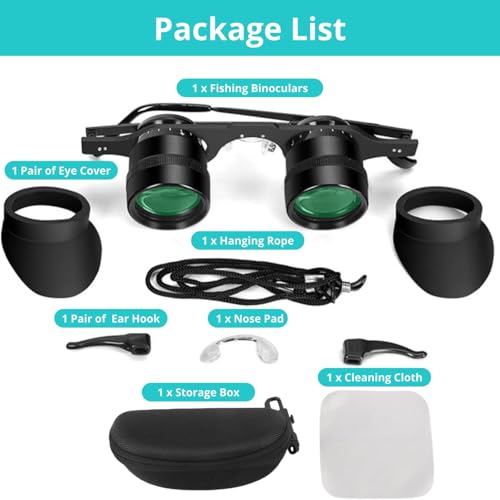
As an Amazon Associate we earn from qualifying purchases. Product prices and availability are accurate as of the date/time indicated.

Hands Binocular Glasses, 8X Professional Binocular Glasses for Fishing, Bird Watching, Sports, Concerts, Theater, Portable Telescope Opera Glasses with 2 Polarized Lenses


As an Amazon Associate we earn from qualifying purchases. Product prices and availability are accurate as of the date/time indicated.
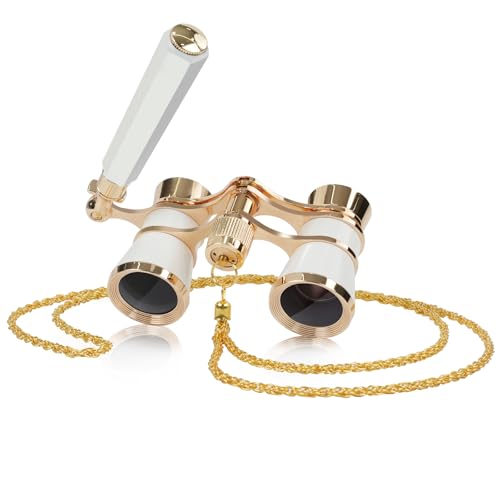
BOSTRON 3X25 Theater Glasses Opera Binoculars with Adjustable Handle | Opera Glasses for Women Adults with Chain Mini Compact Opera Binoculars for Concerts Musical Cinema (White)
As an Amazon Associate we earn from qualifying purchases. Product prices and availability are accurate as of the date/time indicated.
Prices shown are approximate and for reference only. Prices change often, so please check the current price on Amazon before you buy.
Eye relief figures summarize manufacturers’ published information for current versions and vary in measurement method; the audition with your own glasses governs. Ratings are editorial for glasses wearers, weighing delivered full field, eyecup quality, optics, build, and value within the premium tier.
The Six Premium Binoculars for Glasses Wearers Reviewed
1. Swarovski NL Pure 8×42: Best Overall
The NL Pure leads because it gives the spectacled eye the largest inheritance in the table: a field of view at the class’s summit delivered through relief and eyecups that let the glasses wearer actually receive it, in an ergonomic housing whose balance keeps the flagship’s weight honest through a morning. Its eyecups set with the tier’s best manners, its image is the flat, bright, edge-resolved standard the others are reviewed against, and its price is the summit’s, stated without flinching. For the glasses wearer buying the once-in-a-lifetime instrument, it is the recommendation defended first, the binocular in which the frames stop being an optical problem and become merely the way its owner happens to see, which is the entire assignment of this article in one product.
2. Zeiss Victory SF 8×42: Best Field and Focus
The Victory SF answers with its own excellences: a field nearly the leader’s, a focus system whose speed and placement suit the wearer whose standoff is fixed by their frames, and a balance that puts the weight toward the eyes in a way long sessions notice gratefully. Its relief sits in the comfort band, its eyecups are the tier’s citizens, and its image, bright and wide with the house’s color, has its own loyal constituency who will read this ranking as a friendly disagreement. For the glasses-wearing birder whose quarry moves and whose focus wheel is a musical instrument, it may be the correct first row, and the audition of the steps, both flagships in the same shop hour, is the only court that can finally separate them for a given pair of eyes and frames.
3. Leica Noctivid 8×42: Best Build and Relief
The Noctivid brings the relief figure at the table’s generous end and a build that treats the binocular as a mechanical watch’s cousin, compact, dense, and finished to a standard its price announces. Its field is a step narrower than the two leaders’, its image a study in contrast and color depth that its constituency prefers to width, and its eyecups and diopter are machined-feeling citizens of the first rank. For the glasses wearer whose frames sit deep and whose taste runs to the instrument as an object, it is the connoisseur’s row, and its rating reflects a flagship whose priorities are simply ordered differently, relief and build first, in an article where relief is the first specification of all.
4. Nikon Monarch HG 8×42: Best Mid-Premium Value
The Monarch HG is the table’s value summit: ED glass and a wide field in a light, well-armored housing, relief in the comfort band’s doorway, at a price that is a third of the flagships’ while its view, in the audition’s honest light, stands closer than the arithmetic suggests. Its eyecups are a step less machined than the leaders’, its warranty and service are a great house’s, and for the glasses wearer whose budget has a ceiling below the Alps, it is the recommendation with the fewest conditions in this article, the point where the premium curve’s knee bends most kindly. Many lifetimes of birding have been conducted through exactly this tier, and the wearer who buys here has not compromised the assignment, only priced it.
5. Zeiss Conquest HD 8×42: Best Premium Step-Up
The Conquest HD is the step-up’s standard citizen: relief in the comfort class, the house’s optics a generation behind its flagship and a generation ahead of the middle market, in a build that has served a decade of wearers as the first premium binocular. Its field and edge are its tier’s rather than the summit’s, stated on its row, and its price, especially in the market’s periodic mercies, regularly argues it past its station. For the glasses wearer graduating from the mid-tier with a budget that stops at four figures, it is the considered row, and its long production run is itself a service record, parts and eyecups being the things a decade asks of a binocular and a long-lived model always has.
6. Vortex Razor UHD 8×42: Best Warranty-Backed Premium
The Razor UHD closes the table with the warranty as its headline: optics in the premium class, a build aimed at the field’s abuse, and the company’s famous unconditional promise behind it, at a price between the mid-premium and the flagships. Its relief figure sits at the comfort band’s lower edge, which makes its audition the most important in the table, the wearer with shallow frames receiving everything and the deep-framed wearer referred, by the same audition, to the rows above, a nuance its row states in this guide’s manner. For the glasses wearer whose frames pass its test and whose life is hard on equipment, it is the insured flagship, and its rating reflects a premium instrument whose promise, like its maker’s, is kept in the open.
Buying Guide: How Glasses Wearers Should Choose Premium Binoculars
Step One: The Audition, With Your Own Glasses, in the Shop’s Light
Perform the audition that decides this purchase, since no figure in this article outranks it: bring your everyday glasses, and your sunglasses if you view through them, and handle each candidate with the cups fully down, the interpupillary distance set to your eyes, the diopter zeroed, and the view taken at a detailed target across the shop or out its window, a sign, a brick course, a tree’s fine branches. Check the field’s completeness first, the full circle standing clean with no black crescent’s amputation, then the comfort of the standoff, the cups’ rim meeting your frames without pressure or scratch, then the focus wheel’s reach from that standoff, and the image’s edge, where the premium tier earns its name. Spend the quarter hour the tier’s price justifies, compare two candidates in alternation rather than in sequence, since the eye’s memory for fields is a sprinter’s, and let the audition’s verdict overrule this table’s order where they differ, because the table was written for the average of frames and yours are the specific pair the binocular will serve for twenty years.
Step Two: Specify the Configuration and the Service Life
With the model elected, specify its life: the 8×42 as the default for the reasons the guide’s geometry gives, the 10x auditioned only where the wearer’s subjects and steadiness argue, since its smaller exit pupil and commonly shorter relief tax the spectacled eye twice; the eyecups’ spares ordered or their part numbers recorded, the strap replaced where the flagship’s deserves the harness the long day argues for, and the warranty registered and its terms read, the premium houses’ service being a feature whose value appears in year nine, when the focus wheel’s resistance drifts and the maker’s bench restores it as a citizen rather than as a customer. Buy from the channel whose return window honors the home audition’s second act, a weekend’s dawn in your own light, since the shop’s fluorescence has acquitted binoculars that the field’s first morning convicts, and the premium purchase deserves both trials before its verdict is final.
Step Three: Set It, Keep It, and Let the Glasses Become Invisible
Set the instrument to your eyes as a permanent calibration: the interpupillary distance marked or memorized, the eyecups’ stop for glasses found and noted, the diopter set with the glasses on, by the manual’s method, one eye at a time against a detailed distance, and locked or recorded where the design allows, so the binocular comes out of its case already yours. Keep it with the tier’s appropriate care, lenses blown before they are wiped, caps on in the bag, the cups’ rubber inspected on the season’s round and replaced from the spares before a worn cup scratches a spectacle lens, the one injury this entire article exists in part to prevent. Then use it until the frames disappear, which is the premium glasses-wearer’s final state and this guide’s whole ambition: the warbler at the field’s edge resolved to its wing bars, the whole wide field standing clean, the instrument forgotten in the act of seeing, so that the owner’s glasses, which the cheap binoculars made a disability and the mid-tier made a negotiation, become what they are in every other part of a life, simply the way this person sees the world, now with better glass in front of them.
Frequently Asked Questions About Premium Binoculars for Glasses Wearers
How much eye relief do I actually need with glasses?
For most wearers, the comfort begins at seventeen millimeters and is complete by twenty, but the honest answer is a measurement rather than a number: your frames hold your eye at a standoff set by their design and your face, commonly consuming eight to fourteen millimeters of the binocular’s relief before your eye reaches its point, so the binocular must offer your frames’ depth plus the eye’s own small remainder, which is why two wearers can audition the same instrument and return opposite verdicts. Deep-set eyes, large frames worn low, and sunglasses all spend relief faster than the average, arguing for the table’s generous end; small frames worn close spend it slowly, opening the whole tier. The audition of the steps is therefore not a ritual but the measurement itself, performed with the only instruments that matter, your frames and your eyes, and any binocular, at any price, that fails it is the wrong binocular for you regardless of its reviews, a sentence this guide will defend against the entire internet.
Should glasses wearers choose 8×42 or 10×42?
8×42 for the great majority, on the geometry this article is built from: its exit pupil, above five millimeters, forgives the eye placement that frames constrain, its relief is commonly the longer of the two configurations in the same line, its field is wider, which is the spectacled wearer’s hard-won inheritance, and its image is steadier through a long morning. The 10x case is real but specific: the open-country and shorebird wearer whose subjects are distant and still, whose hands are steady, and whose auditioned 10x passes the full-field test with their own frames, since several premium 10x42s carry relief that serves many wearers completely. What the glasses wearer should not do is buy the 10x for its specification’s glamour and discover the tunnel at the first dawn, nor buy the compact 32mm class for its weight without auditioning its shorter relief and smaller pupil against their frames, the two errors that between them account for most of the premium returns in this category, both preventable by the quarter hour of Step One.
Can I just take my glasses off and use the diopter instead?
For some wearers it works and for most it is a compromise wearing a solution’s clothes: the diopter corrects the difference between your two eyes and a modest amount of simple prescription, but it cannot correct astigmatism, which a large share of prescriptions contain, so the glasses-off view is, for those eyes, a permanently softened image no focus can sharpen, and the constant on-and-off of the glasses at every raise of the binocular taxes the viewing rhythm and the frames’ survival alike. The wearers who thrive glasses-off are the simply myopic or hyperopic with matched eyes and a free neck for the glasses’ cord, and even they lose the un-aided view of the field between the binocular’s uses. The premium tier exists, in this article’s parish, precisely to make the question unnecessary, its relief engineered so the glasses stay on and the full field arrives anyway, and the buyer should treat any binocular that requires the glasses-off workaround as a binocular that has failed its audition, however fine its glass, since the workaround’s cost is paid at every single use.
Are the flagship binoculars really worth it for a glasses wearer?
Worth it in the specific currency this article trades in, the whole field, all day, for decades, provided the audition confirms the fit: the flagships combine the tier’s longest and best-mannered relief with fields so wide that the spectacled eye, receiving them entire, sees more of the world per glance than the naked-eye user of a lesser instrument, an inversion of the wearer’s lifelong optical experience that owners describe with a gratitude the specification sheet cannot convey. The honest counterweight stands where this guide put it: the mid-premium rows pass the same audition for many frames and deliver the great majority of the view at a third of the price, and the wearer whose HG or Conquest stands clean in the shop has not bought a compromise but a binocular. Decide by the audition and by the years you will use it, since a flagship amortized over twenty seasons of mornings costs less per dawn than the coffee that accompanies it, while a flagship bought for its badge and failing your frames is the most expensive tunnel in optics, and the difference between those two instruments is fifteen minutes in a shop with your own glasses on.
Related guides
- Best Monoculars Under 100 Dollars Rainy Weather in 2026: Best Monoculars Under 100 Dollars Rainy Weather
- Spotting Scope 20-60x vs 15-45x Birding in 2026: Vortex, Celestron, Athlon, and Leupold Compared for a Power Taxed by Light and Tremor, a Field That Finds the Bird Before the Zoom Does, and Identifications Proven at a Real Shore
- Best Marine Binoculars With Compass in 2026: 6 Marine Binoculars With Compass, 7×50, Waterproof, and a Price Range, for Boating
- Best Premium Rangefinders With Slope Compensation in 2026: 7 Rangefinders That Offer Accurate Distance, Slope Adjustment, and Reliable Performance for Premium Rangefinders With Slope Compensation
More from Amazon
Programs that pair well with the guide above. Offers and eligibility are set by Amazon and may change.
Free shipping on eligible items, Prime Video and more. Eligible new members can start with a free trial.
Start a Prime free trialAudiobooks and podcasts to listen to on the go. Eligible new members can start with a free trial.
Try Audible freeAd-free music streaming. Eligible new subscribers can start with a free trial.
Try Music Unlimited freeA free business account with business pricing and bulk-buying tools for work, shop or home office.
Create a business accountAs an Amazon Associate we earn from qualifying purchases.

Write Your Review
No reviews yet. Be the first to share your experience!