
What's inside
As an Amazon Associate I earn from qualifying purchases. This post may contain affiliate links at no extra cost to you.
The best rangefinder binoculars under 500 are a short list, and this guide will not pretend otherwise to fill a table. A rangefinding binocular contains two instruments in one housing: a pair of binoculars and a laser rangefinder with its display, electronics, and battery. At premium prices that combination is superb. Under $500, every maker must choose where to save, and the saving usually lands in one of three places: the glass, the laser’s reach and consistency on difficult targets, or the build and warranty behind both. The good news is that for the most common real-world job, deer, hog, and varmint hunting inside a few hundred yards, and ranging steel, berms, and trees for practice, the better models in this class are genuinely capable. The bad news is that headline range figures are measured on large, reflective targets in ideal conditions, and a dark animal in brush at last light is not an ideal target. Buy for the range you actually shoot, in the light you actually hunt, and this price class will serve you well.
We compare five real, currently sold rangefinding binocular models that typically street at or under the $500 line, plus the honest context of what stepping up buys, because a buyer who needs reliable 800-yard ranges on game in open country should know before the season, not during it, that their budget and their requirement disagree. Every model here is assessed on the same tests: binocular image quality in low light, range consistency on reflective and non-reflective targets, display readability, speed of a reading, and the ergonomics of carrying one optic instead of two. Used within their limits, and paired with verified practice on your own ground, these are useful tools. Used on the strength of a box claim, they are a disappointment with batteries.
Our Top Picks
What Best Rangefinder Binoculars Under 500 Can and Cannot Do
Reflective Range vs Game Range
Manufacturers rate rangefinders first on highly reflective targets: a building, a vehicle, a metal sign, a rock face in bright sun. Deer hair, dark timber, fog, rain, and a low sun angle all shorten the practical range, sometimes dramatically. A unit advertised in the class of a mile on reflective targets may return consistent readings on deer-sized, non-reflective targets at a few hundred yards, and inconsistent or no readings beyond that in poor conditions. That is not a defect unique to budget models; it is laser physics, and premium units simply push the boundary farther with better receivers, optics, and processing. For the under-$500 buyer, the working method is to cut the headline reflective figure roughly in half for planning on game in good conditions, and to test your own unit on your own ground, at dawn and dusk, before trusting it where a shot decision depends on it. Always follow hunting regulations for your area, confirm your target and what lies beyond it, and never take a shot beyond the range you have practiced and can make ethically, whatever any optic displays.
Glass Quality at This Price
A conventional binocular at $300 to $500 can have excellent glass, because all of its budget goes into seeing. A rangefinding binocular at the same price splits its budget between seeing and measuring, so its image is usually a step behind a dedicated binocular of equal cost: a little less brightness at last light, a little more color fringing at the edges, a slightly narrower sweet spot. For most hunting inside legal light, that step is acceptable, and the convenience of glassing and ranging without swapping instruments, and without moving your eyes off the animal, is worth real money and real opportunities. For a birder, a dedicated binocular remains the right tool. For a hunter who has lost a chance while fumbling between two optics, the trade in this guide is the correct one, made knowingly.
Angle Compensation, Ballistics, and Display
Most models here offer angle-compensated distance, which reports the horizontal equivalent of a sloped shot, valuable in hills and from elevated stands. Some add basic ballistic groupings or holdover information. Treat those features as a convenience layered on top of your own verified data, never as a substitute for it: confirm any ballistic solution against your actual rifle, load, and practiced results at the range, and know your equipment’s limits in wind, where no rangefinder of any price can help you. Display quality matters more than feature count. A clear, adjustable-brightness readout that gives a range quickly, in a color and position that does not obscure the animal, is worth more in the field than a long menu of modes you will set once and forget.
Best Rangefinder Binoculars Under 500: Quick Comparison
| Model | Key Specs | Best For | Typical Price Range | Rating |
|---|---|---|---|---|
| Bushnell Fusion X 10×42 | 10×42, laser rangefinder rated to about 1,760 yards reflective class, angle compensation, ActivSync display that adjusts to light, IPX7 waterproof class | Best overall under $500 for deer hunting | $380 – $500 | 4.5 / 5 |
| SIG Sauer Canyon RF 10×42 | 10×42, rangefinder rated to about 4,000 yards reflective class per maker, angle compensation, multiple ranging modes, SpectraCoat lenses | Best headline range and modes in class | $380 – $480 | 4.4 / 5 |
| Athlon Midas G2 Pro 10×50 LRF | 10×50, larger objective for low light, rangefinder with angle compensation, ED glass in this line class, rubber armor | Best low-light image in class | $430 – $500 | 4.3 / 5 |
| Bushnell Engage 1700 in Fusion line bundles | Bundle-dependent configuration; verify exact model, magnification, and rangefinder rating on the listing before purchase | Best only when the exact model is verified on sale | $300 – $450 | 4.0 / 5 |
| Hawke Frontier LRF 10×42 | 10×42, rangefinder rated in the roughly 2,300-yard reflective class per maker, angle mode, OLED-style display class varies by version | Best for buyers who find it at street price under the cap | $450 – $550 | 4.2 / 5 |
| Vortex Crossfire HD 1400 plus Diamondback HD 10×42 (two-optic alternative) | Separate rangefinder monocular rated about 1,400 yards reflective class, plus dedicated 10×42 binocular with HD optical system | Best glass for the money if you accept two optics | $380 – $500 combined | 4.4 / 5 |
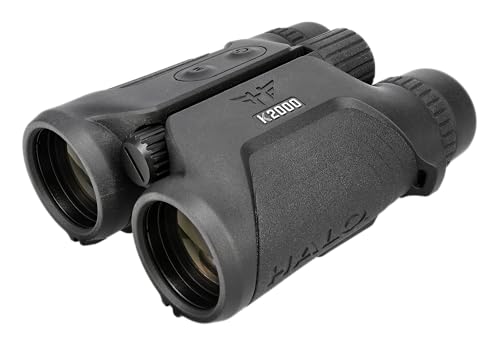
Halo Optics K2000 Rangefinder Binoculars 10x 42mm
As an Amazon Associate we earn from qualifying purchases. Product prices and availability are accurate as of the date/time indicated.

Laser Rangefinder Binoculars for Hunting 8x32 Red OLED Display 3000 Yards | HD Optics, Long Range Tactical Binoculars Kit with S/H/V Mode, Y/M Unit, Brightness Adjustment, Tripod Adaptable Lightweight
As an Amazon Associate we earn from qualifying purchases. Product prices and availability are accurate as of the date/time indicated.

4K Night Vision Binoculars with Rangefinder, WiFi, 1200Yd Measuring Range | 1968Ft Night Vision, 18X Digital Zoom, 5000mAh Battery, 32GB Card, Wildlife Watching, Christmas, Camping, Gear for Dad & Men
As an Amazon Associate we earn from qualifying purchases. Product prices and availability are accurate as of the date/time indicated.
Prices shown are approximate and for reference only. Prices change often, so please check the current price on Amazon before you buy.
Specifications summarize manufacturers’ published figures for current models; street prices move with sales and bundles, and one model above commonly crosses the $500 line outside promotions, so confirm the live price and exact version before buying. Range figures are makers’ reflective-target ratings, not guaranteed distances on game. Ratings are editorial, weighing image quality, ranging consistency, display, handling, and value.
The Picks Reviewed
1. Bushnell Fusion X 10×42: Best Overall Under $500
The Fusion X is the model this category is judged by. Its standout feature is a display that changes with ambient light, dark in bright conditions and glowing in dim ones, which solves the oldest complaint about budget rangefinding binoculars: a readout you cannot read at dawn. The 10×42 configuration is the right hunting default, the ranging is quick on practical targets, and the waterproofing suits real weather. Its glass is good rather than great, exactly as the price predicts, and at last light a dedicated binocular of the same money sees a little more. As a single optic for a deer hunter working inside a few hundred yards, it is the most complete answer under the cap.
2. SIG Sauer Canyon RF 10×42: Best Features and Headline Range
SIG brought its rangefinder electronics experience down into this price class, and the Canyon RF offers an unusually long reflective rating and a fuller set of ranging modes than its rivals. In the field, read those numbers the way this guide teaches: as evidence of a capable laser and receiver that will be consistent at hunting distances, not as a promise on game at extreme range. The image is competitive, the controls are glove-manageable, and the brand’s optics support is a genuine consideration in a product that contains electronics. For a hunter in more open country who wants the strongest ranging headroom the budget allows, this is the pick.
3. Athlon Midas G2 Pro 10×50 LRF: Best at Last Light
The 10×50 format is this model’s argument. Larger objective lenses gather more light and give a brighter, more comfortable image in the first and last minutes of legal light, when animals move and when this entire category is weakest. The cost is size and weight on your chest over a long day, and a slightly less handy package in tight timber. Athlon’s value reputation in rifle scopes carries into this line, and for a stand hunter, a hog hunter at dusk, or anyone whose hunting is a short walk to a long sit, the trade of bulk for brightness is the right one in this table.
4. Hawke Frontier LRF 10×42: Best When Found Under the Cap
Hawke’s Frontier LRF sits at the category’s border, often priced just above $500 and regularly discounted into it, which is why it appears here with its honest range of prices shown. Its ranging performance and display are a step toward the premium class, and its binocular image is among the better ones in this company. The correct way to buy it is patiently: set the cap, wait for the sale, and verify the exact version, because Hawke’s line includes configurations with different displays and ratings. Bought under the line, it is arguably the most capable optic in the table. Bought carelessly above it, it has broken the brief you set.
5. The Two-Optic Alternative: Best Glass for the Same Money
This entry is a deliberate challenge to the article’s premise, included because an honest guide owes it to you. A dedicated mid-range binocular such as Vortex’s Diamondback HD 10×42, paired with a compact rangefinder monocular such as the Crossfire HD 1400, typically costs the same combined money, gives you noticeably better binocular glass, and lets you replace or upgrade each instrument separately. What it costs you is the single-optic convenience: two items to carry, and a swap at the moment of truth. Many experienced hunters choose exactly this, and many others have lost one chance too many to the swap and happily pay the image tax for a combined unit. Neither is wrong. Choose with your own worst memory in mind.
Buying Guide: How to Choose the Best Rangefinder Binoculars Under 500
Step One: Set Your Real Maximum Range on Game
Write down the longest shot you have actually practiced and would take ethically at game, in your terrain, with your rifle and load. For most deer hunters that figure is 200 to 350 yards, and every model in this guide ranges reliably at those distances in reasonable conditions, which means you can buy on glass, display, and handling rather than on headline numbers. If your honest figure is 600 yards and beyond on game in open country, say so now and change the budget or the plan, because no under-$500 unit should be the sole basis for shot decisions at that distance in poor light. This single honest paragraph is worth more than any feature list in the article.
Step Two: Test the Display and the Glass at Dusk
Rangefinding binoculars are bought at noon in a lit shop and used at dawn in a dark wood, so test accordingly if you possibly can. Look through the unit at a shaded, low-contrast target, trigger a range, and judge three things: whether the readout is immediately legible without blinding you, whether the image stays bright enough to identify an animal rather than merely detect it, and whether the focus and diopter adjustments stay where you set them. Check eye relief with your glasses or sunglasses if you wear them. A unit that wins this dusk test will win your season, even if its specification sheet loses to a rival’s.
Step Three: Verify the Exact Model, Warranty, and Battery
Electronics fail differently from glass, so read the warranty for the rangefinder portion specifically, which on some products is shorter than the lifetime coverage on the binocular portion. Confirm the battery type, carry a spare in your pack, and learn the low-battery behavior before the field, because a fading battery can mean missed readings rather than an obvious shutdown. Verify the exact model name and version on any bundle or marketplace listing, since this category is full of similar names across generations. Finally, practice with the unit at a range and on known distances around your property until its readings, its modes, and its limits are familiar, because the time to discover that brush mode exists is a Tuesday in September, not a Saturday in November.
Step Four: Carry It the Way You Hunt
A rangefinding binocular is heavier than a plain binocular of the same size, and it rides on your chest for every step of the hunt. Use a proper chest harness rather than a neck strap from the first outing, both for comfort and to protect the optic, and confirm the unit fits your harness with its battery and lens covers in place. Decide your lens cover discipline now: covers that are attached and quick are covers that get used, and an exposed objective in brush is how a season’s image quality quietly degrades. Treat the optic as the two instruments it is, insure your investment with the harness and covers, and it will be ready on the one morning that justifies the whole purchase.
Frequently Asked Questions About Rangefinder Binoculars Under $500
How far will a rangefinder binocular under $500 really range a deer?
Expect consistent readings on deer-sized, non-reflective targets at a few hundred yards in decent conditions from the better models in this guide, with performance falling off in fog, rain, bright low sun, and against dark backgrounds, and with reflective objects such as vehicles, signs, and rock faces ranging much farther. Makers’ headline figures describe those reflective targets, so use them only to compare models within the class, never to plan a shot. The only figure that should govern your hunting is the one you establish yourself, testing your own unit, on targets like the ones you hunt, at the times of day you hunt them. If a reading will not repeat, treat the distance as unknown and act accordingly, by moving closer, waiting, or passing, which are the three oldest and best tools in hunting.
Is 10×42 the right size for a hunting rangefinder binocular?
For most hunters, yes. Ten power is enough magnification to judge animals at practical ranges without the image shake that higher powers introduce when you are breathing hard or cold, and a 42mm objective keeps the unit compact while delivering a usable image in low light, especially in the exit pupil range that aging eyes can still use. A 10×50, like the Athlon in this guide, is brighter at dusk and bulkier all day, which suits stand hunting. An 8×42 is steadier and wider in view, which suits timber, at some cost in reach for judging at distance. Choose by your ground: open country rewards 10x, deep woods reward 8x, and the last light rewards the larger objective whichever power you pick.
Do I need angle compensation and ballistic features?
Angle compensation is genuinely useful if you hunt in hills, mountains, or elevated stands, because the distance that governs your hold is the horizontal distance, and the difference grows with both angle and range. Ballistic features are a convenience to be verified, not an authority: any built-in grouping or hold suggestion must be checked against your rifle, your load, and your recorded results at known distances before it informs a shot, and it does nothing for wind, which remains the shooter’s judgment entirely. If you hunt flat ground at modest ranges, you can ignore both features and buy on glass and display. If you hunt steep country, angle compensation alone justifies choosing the models here that implement it cleanly.
Should I buy a rangefinder binocular or two separate optics?
Buy the combined optic if your hunting involves quick opportunities, moving animals, or a history of losing chances while switching between binocular and rangefinder, and accept an image a step behind a dedicated binocular of the same total cost. Buy two separate optics if image quality at last light is your highest value, if you also bird or glass for pleasure, or if you want to upgrade and replace each instrument on its own schedule. The combined units in this guide have closed much of the practical gap for hunting inside a few hundred yards, which is why they sell. The two-optic kit in the table remains the connoisseur’s answer at this budget. Your terrain, your light, and your own fumbling history, honestly recalled, will tell you which hunter you are.
Related guides
- Best Binoculars for Opera Glasses Replacement Viewing: 6 Best Binoculars for Opera Glasses Replacement Viewing Picks in 2026
- Best Handheld Monocular for Bird Watching in 2026: Vortex, Celestron, Hawke, and Opticron Compared Honestly for a One-Eyed Parish, a Close Focus for the Warbler’s Hedge, and a Pocket’s Glass That Is Simply Always There
- Best Telescope Lens Cover for Astronomy in 2026: How to Pick a Telescope Lens Cover That Protects Your Glass, Fits Your Telescope, and Keeps Dew Away
- Best Binoculars Under 100 Dollars Hunting in 2026: 6 8×42 and 10×42 Binoculars Under $100 With Eye Relief of at Least 14mm and Waterproof Sealing, for Hunting
More from Amazon
Programs that pair well with the guide above. Offers and eligibility are set by Amazon and may change.
Free shipping on eligible items, Prime Video and more. Eligible new members can start with a free trial.
Start a Prime free trialAudiobooks and podcasts to listen to on the go. Eligible new members can start with a free trial.
Try Audible freeAd-free music streaming. Eligible new subscribers can start with a free trial.
Try Music Unlimited freeA free business account with business pricing and bulk-buying tools for work, shop or home office.
Create a business accountAs an Amazon Associate we earn from qualifying purchases.

Write Your Review
No reviews yet. Be the first to share your experience!