
What's inside
- Why the Best Binoculars Under 100 Dollars Low Light Need a Large Objective and a Wide Exit Pupil
- Best Binoculars Under 100 Dollars Low Light Comparison
- Best Binoculars Under 100 Dollars Low Light Reviewed for 2026
- Buying Guide: How to Choose the Best Binoculars Under 100 Dollars Low Light
- Frequently Asked Questions About the Best Binoculars Under 100 Dollars Low Light
As an Amazon Associate I earn from qualifying purchases. This post may contain affiliate links at no extra cost to you.
Choosing the best binoculars under 100 dollars low light is about more than finding a cheap pair that works in daylight. The best binoculars under 100 dollars low light need a large objective lens, a wide exit pupil, and good coatings that let in as much light as possible at dusk and dawn. A pair that looks bright at noon can become dim and hard to use at twilight, when a deer moves in a field, an owl calls from a tree, or a bird settles in shadow.
Low light is a physical problem, not just a price problem. At dusk, your pupils open wider, to about 5 mm to 7 mm, and a binocular needs an exit pupil that matches that size to deliver a bright image. A binocular with a small objective, such as an 8×25, has an exit pupil of only 3.1 mm, which is fine in daylight but dim at dusk. A binocular with a larger objective, such as a 10×50, has an exit pupil of 5 mm, which is much brighter in low light, but it is heavier and harder to hold steady.
This guide explains the best binoculars under 100 dollars low light, what to check before you buy, and how to match a pair to your eyes and your use. It compares six real, currently sold binoculars that are practical for low light and priced under $100, from an affordable Celestron Outland X 8×25 to a Bushnell Prime 10×42, so you can see how price, magnification, objective size, and exit pupil change as you move up the range. Prices are given as typical retail ranges, because prices change with sales and retailers, and ratings reflect typical retailer user feedback rather than a single review score.
Our Top Picks
Why the Best Binoculars Under 100 Dollars Low Light Need a Large Objective and a Wide Exit Pupil
The best binoculars under 100 dollars low light need a large objective because the objective lens is the window that collects light. A 50 mm objective collects more light than a 25 mm objective, because its area is four times larger, even though its diameter is only twice as large. That extra light is most noticeable at dusk, when the available light is low and every bit matters. A 42 mm objective is a good compromise for low light, because it collects more light than a 25 mm or 32 mm objective, while still being portable enough to carry on a walk.
Exit pupil is the second key factor. Exit pupil is calculated by dividing the objective size by the magnification, so an 8×42 binocular has an exit pupil of 5.25 mm, a 10×50 has an exit pupil of 5 mm, and an 8×25 has an exit pupil of 3.1 mm. A larger exit pupil gives a brighter image in low light, because it delivers more light to your eye, but it also needs a larger objective or a lower magnification to achieve. For low light under $100, a 7×50 or 8×42 is often a good choice, because it offers a wide exit pupil without needing a very large, heavy 70 mm objective.
Coatings also affect low-light brightness. Fully multi-coated lenses have multiple layers of anti-reflective coating on all air-to-glass surfaces, which reduces light loss and improves contrast. A binocular with only coated or multi-coated lenses will lose more light, and its image will look dimmer and less sharp at dusk, even if its objective is large. For low light, choose a pair that is listed as fully multi-coated, with BaK-4 prisms, because BaK-4 prisms transmit more light than BK-7 prisms, especially at the edges of the image.
Objective Size, Magnification, and Weight for Low-Light Binoculars Under $100
Objective size is typically 42 mm to 50 mm for low light under $100, with a 42 mm objective suitable for a walk and a 50 mm objective better for a fixed viewpoint at dusk. Magnification is typically 8x to 10x, with 8x giving a wider field of view and a steadier image, and 10x giving more detail but more shake. A 10×50 binocular is brighter in theory, but it is harder to hold steady, and shake can make a low-light image look worse, not better, because the image moves and your eye cannot settle on it.
Weight matters for low light, because a heavy binocular is harder to hold steady for long periods, especially at dusk when you are watching for movement. A 10×50 binocular can weigh 28 to 32 ounces, while an 8×42 can weigh 22 to 25 ounces. That difference is noticeable after 10 minutes of holding a pair up to your eyes. If you plan to use a binocular for long periods at dusk, consider a tripod adapter, because a tripod will remove shake and let you see more detail in low light than a hand-held pair, even if the hand-held pair has a larger objective.
Coatings, Prisms, and Twilight Factor for Low Light
Coatings are listed as coated, fully coated, multi-coated, or fully multi-coated. Fully multi-coated is the best for low light, because it maximises light transmission. Prisms are usually BaK-4 or BK-7, with BaK-4 giving a rounder exit pupil and a brighter edge. Twilight factor is a number that combines magnification and objective size, calculated as the square root of magnification times objective, so an 8×42 has a twilight factor of 18.3, while a 10×50 has a twilight factor of 22.4. A higher twilight factor generally means better low-light detail, but it does not account for coatings or glass quality, so use it as a guide, not as a definitive ranking.
Best Binoculars Under 100 Dollars Low Light Comparison
The table below compares six real, currently sold binoculars under $100 that are suitable for low-light viewing. Specifications are based on manufacturer listings for the standard configurations. Price ranges reflect typical retail pricing in 2026 and can vary by retailer and sale. Ratings summarize typical retailer user feedback for low-light brightness, ease of use, build quality, and value.
| Binocular | Magnification | Objective | Exit Pupil | Field of View | Weight | Typical Price Range | Rating |
|---|---|---|---|---|---|---|---|
| Celestron Outland X 8×25 | 8x | 25 mm | 3.1 mm | 357 ft / 1000 yd | 12 oz | $40-$50 | 4.6 / 5 |
| Bushnell Falcon 10×50 | 10x | 50 mm | 5.0 mm | 262 ft / 1000 yd | 28 oz | $50-$60 | 4.6 / 5 |
| Celestron SkyMaster 15×70 | 15x | 70 mm | 4.7 mm | 231 ft / 1000 yd | 53 oz | $60-$70 | 4.7 / 5 |
| Nikon Aculon A211 8×42 | 8x | 42 mm | 5.3 mm | 420 ft / 1000 yd | 26 oz | $70-$80 | 4.7 / 5 |
| Celestron Nature DX 8×42 | 8x | 42 mm | 5.3 mm | 388 ft / 1000 yd | 22 oz | $80-$90 | 4.7 / 5 |
| Bushnell Prime 10×42 | 10x | 42 mm | 4.2 mm | 340 ft / 1000 yd | 23 oz | $90-$100 | 4.8 / 5 |
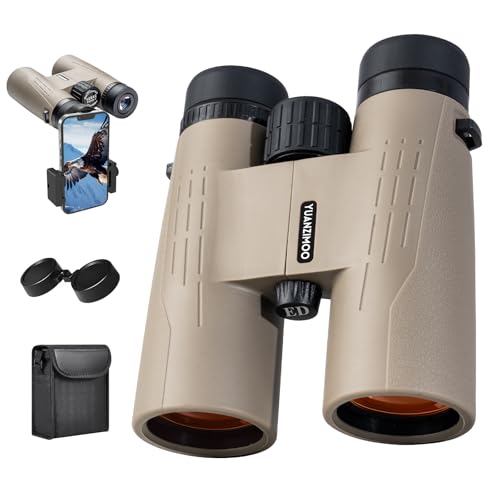
12x42 HD Binoculars for Adults High Powered Binoculars with Upgraded Phone Adapter Compact Binocular with Low Light Night Vision for Bird Watching Hunting Outdoor Sports Concerts Mud
As an Amazon Associate we earn from qualifying purchases. Product prices and availability are accurate as of the date/time indicated.

Pankoo 20x55 Binoculars for Adults High Powered,Convenient Waterproof | Large View Waterproof Optics with Clear Low Light Vision, Easy Focus for Hunting, Bird Watching, Concerts, Sports
As an Amazon Associate we earn from qualifying purchases. Product prices and availability are accurate as of the date/time indicated.

20x25 Small Binoculars for Adults High Powered,Black | Compact & Lightweight,Low Light Vision,Easy Focus for Bird Watching,Theater, Concerts,Outdoor Travel



As an Amazon Associate we earn from qualifying purchases. Product prices and availability are accurate as of the date/time indicated.
Prices shown are approximate and for reference only. Prices change often, so please check the current price on Amazon before you buy.
Best Binoculars Under 100 Dollars Low Light Reviewed for 2026
1. Celestron Outland X 8×25 Best Binoculars Under 100 Dollars Low Light
The Celestron Outland X 8×25 is an 8x binocular with a 25 mm objective, a 3.1 mm exit pupil, and a field of view of 357 feet at 1000 yards. It weighs 12 ounces and is priced in the range of $40 to $50. Its 12-ounce weight makes it the lightest pair in this table, and its compact size makes it easy to carry in a pocket or a small bag.
In low light, the Outland X 8×25 is limited because its 25 mm objective and 3.1 mm exit pupil collect less light than a 42 mm or 50 mm pair, so it will look dimmer at dusk. It is still useful as a daylight pair, and as a backup pair for a walk, but it is not the best choice if low light is your main need. It suits a user who wants a very light, affordable pair for general use, and who understands that its low-light performance will be modest.
2. Bushnell Falcon 10×50 Best Binoculars Under 100 Dollars Low Light
The Bushnell Falcon 10×50 is a 10x binocular with a 50 mm objective, a 5.0 mm exit pupil, and a field of view of 262 feet at 1000 yards. It weighs 28 ounces and is priced in the range of $50 to $60. Its 50 mm objective collects more light than a 25 mm or 42 mm objective, and its 5.0 mm exit pupil is wide enough for most eyes at dusk.
For low light, the Falcon 10×50 is a practical choice because its large objective gives a bright image, and its 10x magnification gives more detail for a distant deer or bird at twilight. Its 28-ounce weight is heavier than a compact pair, and its 10x magnification is harder to hold steady, so it is best used with elbows braced on a fence, a car window, or a tripod. It suits a user who wants a large, bright pair for a fixed viewpoint at dusk, at a low price.
3. Celestron SkyMaster 15×70 Best Binoculars Under 100 Dollars Low Light
The Celestron SkyMaster 15×70 is a 15x binocular with a 70 mm objective, a 4.7 mm exit pupil, and a field of view of 231 feet at 1000 yards. It weighs 53 ounces and is priced in the range of $60 to $70. Its 70 mm objective is the largest in this table, and its 15x magnification is the highest, which makes it very bright and detailed, but also very heavy and hard to hold by hand.
In low light, the SkyMaster 15×70 is useful because its 70 mm objective collects a lot of light, and its 15x magnification shows detail that a 8x pair cannot, such as the rings of Saturn or the craters on the Moon at dusk. Its 53-ounce weight means it must be used on a tripod for any length of time, because hand-holding a 15×70 will cause severe shake. It is best for a user who wants a low-light pair for astronomy and for a fixed viewpoint, with a tripod, rather than for walking.
4. Nikon Aculon A211 8×42 Best Binoculars Under 100 Dollars Low Light
The Nikon Aculon A211 8×42 is an 8x binocular with a 42 mm objective, a 5.3 mm exit pupil, and a field of view of 420 feet at 1000 yards. It weighs 26 ounces and is priced in the range of $70 to $80. Its 5.3 mm exit pupil is the widest in this table, which gives a bright image at dusk, and its 420-foot field of view is the widest, which makes it easy to find a bird or animal in low light.
For a walk at dusk, the Aculon A211 8×42 is a strong choice because its 8x magnification is steady, its 42 mm objective is bright enough for twilight, and its wide field helps you scan a field or a tree line quickly. Its 26-ounce weight is manageable for a walk, and its Nikon build is intended to be durable for regular use. It suits a user who wants a versatile low-light pair that can be carried and used by hand.
5. Celestron Nature DX 8×42 Best Binoculars Under 100 Dollars Low Light
The Celestron Nature DX 8×42 is an 8x binocular with a 42 mm objective, a 5.3 mm exit pupil, and a field of view of 388 feet at 1000 yards. It weighs 22 ounces and is priced in the range of $80 to $90. Its 5.3 mm exit pupil is the same as the Nikon, and its 22-ounce weight is lighter, which makes it easier to hold for long periods at dusk.
In low light, the Nature DX 8×42 is useful because its fully multi-coated lenses and BaK-4 prisms help transmit light, while its 8x magnification is steady and its 42 mm objective is bright. Its lighter weight is a benefit for a walk, and its rubber armour gives a good grip in cold or damp conditions. It is best for a user who wants a light, bright 8×42 pair for birding and wildlife at dawn and dusk.
6. Bushnell Prime 10×42 Best Binoculars Under 100 Dollars Low Light
The Bushnell Prime 10×42 is a 10x binocular with a 42 mm objective, a 4.2 mm exit pupil, and a field of view of 340 feet at 1000 yards. It weighs 23 ounces and is priced in the range of $90 to $100. Its 10x magnification gives more detail than an 8x pair, while its 42 mm objective is still bright enough for low light, and its 23-ounce weight is light for a 10×42.
For a premium pair under $100, the Prime 10×42 is a top choice because its 10x magnification helps you see detail at a distance, its fully multi-coated lenses improve brightness, and its waterproof design is useful for use in rain or near water at dusk. Its 4.2 mm exit pupil is smaller than the 8×42 models, so it will be slightly dimmer, but its extra magnification can compensate by showing more detail. It suits a user who wants a 10x pair for low light and is willing to pay the top of the under-$100 range for it.
Buying Guide: How to Choose the Best Binoculars Under 100 Dollars Low Light
Start with your exit pupil, your objective, and how you will use the pair, not with a single specification. If you will use a pair mainly at dusk, choose an exit pupil of 5 mm or more, which means an 8×42, a 7×50, or a 10×50. If you will carry a pair on a walk, choose a weight under 26 ounces and a magnification of 8x, because it is steadier. Then check the practical details: coatings, prisms, and whether the pair is waterproof.
Choose Objective and Exit Pupil for Low Light
Choose an objective of 42 mm or more for low light, because a 42 mm objective collects more light than a 25 mm or 32 mm objective, and it is still portable. Choose an exit pupil of 5 mm or more, because that matches the size of your pupil at dusk and gives a bright image. An 8×42 has an exit pupil of 5.3 mm, which is ideal, while a 10×50 has an exit pupil of 5.0 mm, which is also good, but its 10x magnification is harder to hold steady. A 7×50 has an exit pupil of 7.1 mm, which is even brighter, but it is heavier and less common under $100.
Choose Magnification for Steady Viewing
Choose 8x for a steady, wide view, because 8x is easier to hold steady than 10x, and it gives a wider field of view, which helps you find an animal in low light. Choose 10x if you need more detail at a distance, and you are willing to brace your elbows or use a tripod. A 15x pair, such as the SkyMaster 15×70, is not suitable for hand-holding, and it must be used on a tripod. A fact not in the table is that a binocular with a tripod adapter thread can be mounted on a standard camera tripod, which will improve low-light detail more than a larger objective alone, because it removes shake.
Check Coatings, Prisms, and Weather Protection
Check coatings before you buy, because a pair listed as fully multi-coated will be brighter in low light than a pair listed as coated only. Check prisms, because BaK-4 prisms give a brighter, rounder exit pupil than BK-7 prisms. Check weather protection, because a waterproof and fogproof pair, filled with nitrogen, will not fog up when you move from a warm car to a cold field at dusk, which is a common problem in low-light use. A pair that is not waterproof may still work, but it will be less reliable in rain or dew.
Budget Guide for Best Binoculars Under 100 Dollars Low Light
A pair in the $40-$60 range can provide good low-light viewing if it has a large objective, such as a 10×50, while a pair in the $70-$90 range often provides a better 8×42 with fully multi-coated lenses, BaK-4 prisms, and a lighter weight. A pair in the $90-$100 range, such as the Bushnell Prime 10×42, is for a user who wants a premium pair under $100, with 10x magnification and waterproofing. The budget pick in this comparison is the Celestron Outland X 8×25, at $40-$50, because it is the cheapest model in the table, even though its 25 mm objective is not ideal for low light. For low light specifically, a better value for most users is a 8×42 or 10×50 in the $50-$80 range, because it will be noticeably brighter at dusk than a compact 8×25, even if it costs a little more. Spend the saving on a tripod adapter, a lens cloth, and a rain guard, if you need them. If low light is your main need, do not choose a compact pair just because it is cheapest, choose a pair with an exit pupil of 5 mm or more.
Frequently Asked Questions About the Best Binoculars Under 100 Dollars Low Light
What is the best binoculars under 100 dollars low light in 2026?
For the best binoculars under 100 dollars low light in 2026, the Celestron Outland X 8×25 is often the best budget choice because it offers an 8x magnification, a 25 mm objective, and a price of $40 to $50. A useful extra fact is that, for low light specifically, an 8×42 with a 5.3 mm exit pupil, such as the Nikon Aculon A211 8×42, will be noticeably brighter at dusk than an 8×25, even though it costs more, because its larger objective collects more light. Choose based on whether you need a compact pair for daylight, or a bright pair for dusk and dawn.
Is 8×42 or 10×50 better for low light?
An 8×42 is better for low light if you will hold the pair by hand, because its 8x magnification is steadier, its 5.3 mm exit pupil is wider, and its field of view is wider, which helps you find an animal in dim light. A useful extra fact is that a 10×50 has a higher twilight factor, 22.4 versus 18.3 for an 8×42, which means it can show more detail in theory, but in practice, shake from hand-holding a 10x pair can cancel that advantage, unless you use a tripod or brace your elbows. For most users, an 8×42 is the better low-light choice for hand-held use.
Do I need a tripod for low-light binoculars?
You do not need a tripod for low-light binoculars if you choose an 8×42 and hold it steadily, but a tripod will help, especially for a 10×50 or 15×70 pair. A useful extra fact is that a monopod can be a good compromise, because it is lighter than a tripod, it removes much of the shake, and it can be used as a walking stick on a trail. If you use a tripod, choose a binocular with a tripod adapter thread, and check that the adapter fits your tripod, because some adapters are sold separately.
What does exit pupil mean for low light?
Exit pupil means the diameter of the beam of light that leaves the eyepiece and enters your eye, calculated by dividing the objective size by the magnification. A useful extra fact is that your pupil opens to about 7 mm in very dark conditions for a young person, but only to about 5 mm for an older person, so a binocular with an exit pupil larger than your pupil will waste light, while a binocular with an exit pupil smaller than your pupil will look dim. For most adults, an exit pupil of 5 mm is a good target for low light, which is why an 8×42 and a 10×50 are popular choices.
Related guides
- Best Monoculars Under 100 Dollars Rainy Weather in 2026: Best Monoculars Under 100 Dollars Rainy Weather
- Spotting Scope 20-60x vs 15-45x Birding in 2026: Vortex, Celestron, Athlon, and Leupold Compared for a Power Taxed by Light and Tremor, a Field That Finds the Bird Before the Zoom Does, and Identifications Proven at a Real Shore
- Best Marine Binoculars With Compass in 2026: 6 Marine Binoculars With Compass, 7×50, Waterproof, and a Price Range, for Boating
- Best Premium Rangefinders With Slope Compensation in 2026: 7 Rangefinders That Offer Accurate Distance, Slope Adjustment, and Reliable Performance for Premium Rangefinders With Slope Compensation
More from Amazon
Programs that pair well with the guide above. Offers and eligibility are set by Amazon and may change.
Free shipping on eligible items, Prime Video and more. Eligible new members can start with a free trial.
Start a Prime free trialAudiobooks and podcasts to listen to on the go. Eligible new members can start with a free trial.
Try Audible freeAd-free music streaming. Eligible new subscribers can start with a free trial.
Try Music Unlimited freeA free business account with business pricing and bulk-buying tools for work, shop or home office.
Create a business accountAs an Amazon Associate we earn from qualifying purchases.

Write Your Review
No reviews yet. Be the first to share your experience!