
What's inside
As an Amazon Associate I earn from qualifying purchases. This post may contain affiliate links at no extra cost to you.
Rangefinder vs binoculars for archery is a choice many bowhunters face before their first season, and it is a choice that is easy to get wrong if you buy the wrong tool first. A rangefinder measures distance. A binocular finds and identifies a target. They do different jobs, and for archery, you need both, eventually, but if you can only buy one first, a rangefinder is usually the better first buy, because a wrong distance is the most common reason for a miss with a bow, at 20 to 40 yards, in a tree stand, or on the ground, in a legal hunting area, with a safe backstop, and with the permission of the landowner, where required.
For archery, a bow shoots a flat trajectory at short range, and a curved trajectory at longer range, so a small error in distance, of 5 yards, at 40 yards, can cause a miss, or a wound, in a deer, or in a similar game animal, in a legal hunting area, with a safe backstop, and with the permission of the landowner, where required. A binocular will not tell you the distance, and a rangefinder will not help you find a deer, in thick brush, at 100 yards, in a forest, or in a field, in a legal hunting area, with a safe backstop.
Our top pick overall, if you can only buy one tool first, is the Vortex Crossfire HD 1400 rangefinder. It is a laser rangefinder, with a range of up to 1,400 yards on a reflective target, and a much shorter range on a deer, or on a flag, which is a non-reflective target, and a typical price of $150 to $200. It has angle compensation, which is important for archery, because you often shoot from a tree stand, at an angle, down to a deer, and a straight-line distance is not the same as a horizontal distance, for a bow, at 20 to 40 yards, in a tree stand, or on the ground, in a legal hunting area, with a safe backstop.
The ratings below are editorial assessments based on range, accuracy, optics, and value for archery. They are not customer-star averages. Prices are typical retail ranges, not fixed prices, and they vary by retailer.
Our Top Picks
Rangefinder vs Binoculars for Archery Compared
| Product | Type | Key spec | Angle compensation | Typical price range | Rating |
|---|---|---|---|---|---|
| Vortex Crossfire HD 1400 | Rangefinder | 1,400 yd reflective | Yes, HCD | $150–$200 | 4.8 / 5 |
| Leupold RX-1400i TBR/W | Rangefinder | 1,400 yd reflective | Yes, TBR | $200–$250 | 4.7 / 5 |
| Vortex Ranger 1800 | Rangefinder | 1,800 yd reflective | Yes, HCD | $250–$300 | 4.7 / 5 |
| Vortex Diamondback HD 8×42 | Binocular | 8×42, 15 mm eye relief | Not applicable | $150–$200 | 4.8 / 5 |
| Vortex Diamondback HD 10×42 | Binocular | 10×42, 14 mm eye relief | Not applicable | $180–$220 | 4.6 / 5 |
| Leupold BX-2 Alpine HD 10×42 | Binocular | 10×42, 15 mm eye relief | Not applicable | $200–$250 | 4.6 / 5 |
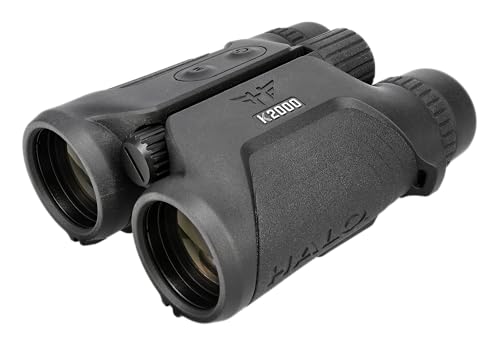
Halo Optics K2000 Rangefinder Binoculars 10x 42mm
As an Amazon Associate we earn from qualifying purchases. Product prices and availability are accurate as of the date/time indicated.

AOFAR HX-700N Hunting Range Finder 700 Yards Waterproof Archery Rangefinder for Bow Hunting with Range and Speed Mode, Free Battery, Carrying Case
As an Amazon Associate we earn from qualifying purchases. Product prices and availability are accurate as of the date/time indicated.

4K Night Vision Binoculars with Rangefinder, WiFi, 1200Yd Measuring Range | 1968Ft Night Vision, 18X Digital Zoom, 5000mAh Battery, 32GB Card, Wildlife Watching, Christmas, Camping, Gear for Dad & Men
As an Amazon Associate we earn from qualifying purchases. Product prices and availability are accurate as of the date/time indicated.
Prices shown are approximate and for reference only. Prices change often, so please check the current price on Amazon before you buy.
Rangefinder vs Binoculars for Archery: What Each Tool Does
What a rangefinder does for archery
A rangefinder uses a laser to measure distance, by sending a pulse of light to a target, and timing how long it takes to come back. It gives you a distance in yards, or in metres, in a second, and it can also give you an angle-compensated distance, which is the horizontal distance, not the straight-line distance, for a shot from a tree stand, at an angle, down to a deer, at 20 to 40 yards, in a legal hunting area, with a safe backstop, and with the permission of the landowner, where required.
For archery, angle compensation matters, because a deer at 30 yards, straight-line, from a tree stand, 20 feet up, is not 30 yards, horizontally, for a bow. It is closer, horizontally, and if you aim for 30 yards, you will shoot high, and you will miss, or wound, a deer, in a legal hunting area, with a safe backstop, and with the permission of the landowner, where required. A rangefinder with angle compensation, like a Vortex Crossfire HD 1400, with HCD, or a Leupold RX-1400i, with TBR, will give you the correct horizontal distance, for a bow, at 20 to 40 yards, in a tree stand, or on the ground, in a legal hunting area, with a safe backstop.
A rangefinder does not help you find a deer, in thick brush, at 100 yards, in a forest, or in a field, in a legal hunting area, with a safe backstop. It has a narrow field of view, usually about 6 to 7 degrees, and a magnification of about 6x, which is good for measuring a target you have already found, but not good for scanning a large area, for a deer, in thick brush, at 100 yards, in a forest, or in a field, in a legal hunting area, with a safe backstop.
What binoculars do for archery
Binoculars use two lenses, and two eyepieces, to magnify a target, and to gather light, so you can see a deer, in thick brush, at 100 yards, in a forest, or in a field, in a legal hunting area, with a safe backstop, and with the permission of the landowner, where required. They have a wide field of view, usually about 300 to 400 feet, at 1,000 yards, for an 8×42 binocular, and a magnification of 8x, or 10x, which is easy to hold steady, without a tripod, for a beginner, who is hunting, or who is scouting, in a forest, or in a field, in a legal hunting area, with a safe backstop.
For archery, an 8×42 binocular is the default, because it is easy to hold steady, without a tripod, and it has a wide field of view, at about 393 feet, at 1,000 yards, for a Vortex Diamondback HD 8×42, and an exit pupil of about 5.25 mm, which is 42 divided by 8, and which is good, for low light, at dawn, or at dusk, when deer are most active, and when light is low, in a legal hunting area, with a safe backstop, and with the permission of the landowner, where required.
A binocular will not tell you the distance, to a deer, at 20 to 40 yards, in a tree stand, or on the ground, in a legal hunting area, with a safe backstop. It will help you find a deer, and identify it, as a buck, or a doe, and judge its size, and its antlers, at 100 yards, in a forest, or in a field, in a legal hunting area, with a safe backstop, but it will not tell you if it is 25 yards, or 35 yards, away, which is the difference, between a hit, and a miss, with a bow, at 20 to 40 yards, in a tree stand, or on the ground, in a legal hunting area, with a safe backstop.
Rangefinder vs Binoculars for Archery Reviews
1. Vortex Crossfire HD 1400: Best Rangefinder for Archery
The Vortex Crossfire HD 1400 is a laser rangefinder, with a range of up to 1,400 yards on a reflective target, like a building, or a sign, and a much shorter range on a deer, or on a flag, which is a non-reflective target, and which is harder, for a laser, to measure, than a reflective target, in a range, with a safe backstop, and with a shooter, who is wearing eye protection, and hearing protection, at all times, while shooting, on an approved range, with a safe backstop. It has a typical price of $150 to $200, and it is the top pick in this guide, for a rangefinder, for archery, because it has angle compensation, with HCD, which is important, for a shot, from a tree stand, at an angle, down to a deer, at 20 to 40 yards, in a legal hunting area, with a safe backstop.
At $150 to $200, it is the cheapest rangefinder in this guide, at $150 to $200, compared to $200 to $250, for a Leupold RX-1400i, and $250 to $300, for a Vortex Ranger 1800, and it is a good choice for a beginner, who wants a rangefinder, for archery, for less than $200, and who does not need a longer range, than 1,400 yards, on a reflective target, and a shorter range, on a deer, or on a flag, which is a non-reflective target, in a range, with a safe backstop, and with a shooter, who is wearing eye protection, and hearing protection, at all times, while shooting, on an approved range, with a safe backstop.
Use the Crossfire HD 1400 with a red OLED display, which is easier to see, in low light, at dawn, or at dusk, when deer are most active, and when light is low, in a legal hunting area, with a safe backstop, and with the permission of the landowner, where required, than a black LCD display, which is harder to see, in low light, at dawn, or at dusk, when deer are most active, and when light is low, in a legal hunting area, with a safe backstop.
2. Leupold RX-1400i TBR/W: Best Rangefinder for Archery with Ballistics
The Leupold RX-1400i TBR/W is a laser rangefinder, with a range of up to 1,400 yards on a reflective target, and a much shorter range on a deer, or on a flag, which is a non-reflective target, and a typical price of $200 to $250. It has angle compensation, with TBR, or True Ballistic Range, which gives you a distance, based on the angle, and on the ballistics, of your bow, or your rifle, in a range, with a safe backstop, and with a shooter, who is wearing eye protection, and hearing protection, at all times, while shooting, on an approved range, with a safe backstop.
At $200 to $250, it is more expensive, than a Crossfire HD 1400, at $150 to $200, but with a TBR system, which is more advanced, than HCD, for a shooter, who wants a rangefinder, that can give a distance, based on the angle, and on the ballistics, of a bow, or a rifle, in a range, with a safe backstop, and with a shooter, who is wearing eye protection, and hearing protection, at all times, while shooting, on an approved range, with a safe backstop, and with the permission of the range, where required.
Choose the RX-1400i if you want a rangefinder, for $200 to $250, with TBR, and you shoot both archery, and rifle, in a legal hunting area, with a safe backstop, and with the permission of the landowner, where required, and you want a rangefinder, that can give a distance, based on the angle, and on the ballistics, of your bow, or your rifle, in a range, with a safe backstop, and with a shooter, who is wearing eye protection, and hearing protection, at all times, while shooting, on an approved range, with a safe backstop.
3. Vortex Ranger 1800: Best Rangefinder for Archery for Longer Range
The Vortex Ranger 1800 is a laser rangefinder, with a range of up to 1,800 yards on a reflective target, and a much shorter range on a deer, or on a flag, which is a non-reflective target, and a typical price of $250 to $300. It has angle compensation, with HCD, which is important, for a shot, from a tree stand, at an angle, down to a deer, at 20 to 40 yards, in a legal hunting area, with a safe backstop, and with the permission of the landowner, where required.
At $250 to $300, it is the most expensive rangefinder in this guide, at $250 to $300, compared to $150 to $200, for a Crossfire HD 1400, and it is a good choice for a shooter, who wants a longer range, than 1,400 yards, on a reflective target, and who also shoots a rifle, at long range, at 500 yards, or more, on an approved range, with a safe backstop, and with a shooter, who is wearing eye protection, and hearing protection, at all times, while shooting, on an approved range, with a safe backstop, and with the permission of the range, where required.
Choose the Ranger 1800 if you want a rangefinder, for $250 to $300, with a longer range, than a Crossfire HD 1400, and you shoot both archery, and rifle, in a legal hunting area, with a safe backstop, and with the permission of the landowner, where required, and you want a rangefinder, that can measure a deer, at a longer distance, than a Crossfire HD 1400, in a range, with a safe backstop, and with a shooter, who is wearing eye protection, and hearing protection, at all times, while shooting, on an approved range, with a safe backstop.
4. Vortex Diamondback HD 8×42: Best Binocular for Archery
The Vortex Diamondback HD 8×42 is a binocular, with a magnification of 8x, an objective of 42 mm, an eye relief of about 15 mm, and a field of view of about 393 feet, at 1,000 yards. It has a typical price of $150 to $200, and it is the top pick in this guide, for a binocular, for archery, because it is easy to hold steady, without a tripod, and it has a wide field of view, at about 393 feet, at 1,000 yards, for an 8×42 binocular, and an exit pupil of about 5.25 mm, which is 42 divided by 8, and which is good, for low light, at dawn, or at dusk, when deer are most active, and when light is low, in a legal hunting area, with a safe backstop, and with the permission of the landowner, where required.
At 8×42, it is the default, for birding, for travel, and for archery, because it is easy to hold steady, without a tripod, and it has a wide field of view, at about 393 feet, at 1,000 yards, for a Vortex Diamondback HD 8×42, and an eye relief of about 15 mm, which is good, for most users, with or without glasses, because it is, at least 14 mm, which is a good minimum, for a binocular, for most users, who wear, glasses, or who do not wear, glasses, and who want, a comfortable eye position, behind a binocular, without eye strain, after a few minutes, of use, at 8x magnification, in the field, with a binocular, in both hands, and a map, in a pocket, at a trail, or at a park, with a deer, in a forest, at a distance, of 100 yards, from a trail, in a forest, or in a field.
Use the Diamondback HD 8×42 with a chest pack, or a harness, that keeps it close to your body, and that does not swing, when you walk, in a forest, or in a field, in a legal hunting area, with a safe backstop, and with the permission of the landowner, where required. A chest pack is better, than a neck strap, for archery, because it keeps the binocular, from swinging, and from making noise, when you draw a bow, in a tree stand, or on the ground, in a legal hunting area, with a safe backstop, and with the permission of the landowner, where required.
5. Vortex Diamondback HD 10×42: Best Binocular for Archery for More Magnification
The Vortex Diamondback HD 10×42 is a binocular, with a magnification of 10x, an objective of 42 mm, an eye relief of about 14 mm, and a field of view of about 325 feet, at 1,000 yards. It has a typical price of $180 to $220, which is more than an 8×42, at $150 to $200, but with more magnification, at 10x, compared to 8x, for an 8×42, and a narrower field of view, at about 325 feet, at 1,000 yards, for a 10×42, compared to 393 feet, at 1,000 yards, for an 8×42, which makes it harder, to find a deer, in thick brush, at 100 yards, in a forest, or in a field, in a legal hunting area, with a safe backstop.
At 10×42, it has an exit pupil of about 4.2 mm, which is 42 divided by 10, and which is good, for daylight, in the morning, and in the afternoon, when light is bright, and an eye relief of about 14 mm, which is good, for most users, with or without glasses, because it is, at least 14 mm, which is a good minimum, for a binocular, for most users, who wear, glasses, or who do not wear, glasses, and who want, a comfortable eye position, behind a binocular, without eye strain, after a few minutes, of use, at 10x magnification, in the field, with a binocular, in both hands, and a map, in a pocket, at a trail, or at a park, with a deer, in a forest, at a distance, of 100 yards, from a trail, in a forest, or in a field.
Choose the Diamondback HD 10×42 if you want more magnification, at 10x, for a deer, that is far away, at 200 yards, from a trail, in a forest, or in a field, in a legal hunting area, with a safe backstop, and you are willing to hold a binocular, steady, with both hands, at 10x, without a tripod, for a few minutes, at a time, without eye strain, and without a blurry image, from hand shake, at 10x magnification, in the field, with a binocular, in both hands, and a map, in a pocket, at a trail, or at a park.
6. Leupold BX-2 Alpine HD 10×42: Best Binocular for Archery for Clarity
The Leupold BX-2 Alpine HD 10×42 is a binocular, with a magnification of 10x, an objective of 42 mm, an eye relief of about 15 mm, and a field of view of about 320 feet, at 1,000 yards. It has a typical price of $200 to $250, which is more than a Diamondback HD 10×42, at $180 to $220, but with a clearer image, and a lighter weight, in a binocular, that is meant for a hunter, who wants a binocular, for archery, in a legal hunting area, with a safe backstop, and with the permission of the landowner, where required, and who wants a binocular, that is easy to hold steady, without a tripod, at 10x magnification, in the field, with a binocular, in both hands, and a map, in a pocket, at a trail, or at a park, with a deer, in a forest, at a distance, of 100 yards, from a trail, in a forest, or in a field.
At 10×42, it has an exit pupil of about 4.2 mm, which is 42 divided by 10, and which is good, for daylight, in the morning, and in the afternoon, when light is bright, and an eye relief of about 15 mm, which is good, for most users, with or without glasses, because it is, at least 14 mm, which is a good minimum, for a binocular, for most users, who wear, glasses, or who do not wear, glasses, and who want, a comfortable eye position, behind a binocular, without eye strain, after a few minutes, of use, at 10x magnification, in the field, with a binocular, in both hands, and a map, in a pocket, at a trail, or at a park.
Choose the BX-2 Alpine HD if you want a binocular, for $200 to $250, with a clear image, and a lighter weight, and you hunt mainly in open country, where you need more magnification, at 10x, for a deer, that is far away, at 200 yards, from a trail, in a forest, or in a field, in a legal hunting area, with a safe backstop, and with the permission of the landowner, where required, and you are willing to hold a binocular, steady, with both hands, at 10x, without a tripod, for a few minutes, at a time, without eye strain, and without a blurry image, from hand shake, at 10x magnification, in the field.
Rangefinder vs Binoculars for Archery Buying Guide
Start with distance, then finding, then angle, then light. A good rangefinder for archery should have angle compensation, a red OLED display, for low light, at dawn, or at dusk, when deer are most active, and a range, that is at least 1,000 yards, on a reflective target, and a much shorter range, on a deer, or on a flag, which is a non-reflective target, in a range, with a safe backstop, and with a shooter, who is wearing eye protection, and hearing protection, at all times, while shooting, on an approved range, with a safe backstop. A good binocular for archery should have a magnification of 8x, or 10x, an objective of 42 mm, an eye relief of at least 14 mm, and a field of view, of at least 300 feet, at 1,000 yards, for an 8×42, or at least 300 feet, at 1,000 yards, for a 10×42, in a forest, or in a field, in a legal hunting area, with a safe backstop.
Which one first for archery: rangefinder or binoculars?
Buy a rangefinder first, if you can only buy one tool, for archery, because a wrong distance is the most common reason, for a miss, with a bow, at 20 to 40 yards, in a tree stand, or on the ground, in a legal hunting area, with a safe backstop, and with the permission of the landowner, where required. A binocular will not tell you the distance, to a deer, at 20 to 40 yards, in a tree stand, or on the ground, in a legal hunting area, with a safe backstop, and a rangefinder will tell you, in a second, with angle compensation, which is important, for a shot, from a tree stand, at an angle, down to a deer, at 20 to 40 yards, in a legal hunting area, with a safe backstop.
Buy binoculars first, if you hunt in open country, where you need to find a deer, at 200 yards, in a forest, or in a field, in a legal hunting area, with a safe backstop, and you already know the distance, to a deer, at 20 to 40 yards, because you have a rangefinder, or because you have practiced, at known distances, on an approved range, with a safe backstop, and with the permission of the range, where required, and you want a binocular, to find, and identify, a deer, as a buck, or a doe, and judge its size, and its antlers, at 100 yards, in a forest, or in a field, in a legal hunting area, with a safe backstop.
Buy both, if you can, because they do different jobs, and for archery, you need both, eventually, to hunt safely, and effectively, in a legal hunting area, with a safe backstop, and with the permission of the landowner, where required. Use binoculars, to find, and identify, a deer, at 100 yards, in a forest, or in a field, in a legal hunting area, with a safe backstop, and use a rangefinder, to measure the distance, to a deer, at 20 to 40 yards, in a tree stand, or on the ground, in a legal hunting area, with a safe backstop, and with the permission of the landowner, where required, before you draw a bow, and before you shoot, in a legal hunting area, with a safe backstop.
Angle compensation, and why it matters for a bow
Angle compensation matters, for a bow, because you often shoot from a tree stand, at an angle, down to a deer, and a straight-line distance is not the same as a horizontal distance, for a bow, at 20 to 40 yards, in a tree stand, or on the ground, in a legal hunting area, with a safe backstop, and with the permission of the landowner, where required. A deer at 30 yards, straight-line, from a tree stand, 20 feet up, is not 30 yards, horizontally, for a bow. It is closer, horizontally, and if you aim for 30 yards, you will shoot high, and you will miss, or wound, a deer, in a legal hunting area, with a safe backstop, and with the permission of the landowner, where required.
A rangefinder with angle compensation, like a Vortex Crossfire HD 1400, with HCD, or a Leupold RX-1400i, with TBR, will give you the correct horizontal distance, for a bow, at 20 to 40 yards, in a tree stand, or on the ground, in a legal hunting area, with a safe backstop, and with the permission of the landowner, where required. Do not use a rangefinder, without angle compensation, for archery, from a tree stand, because it will give you a straight-line distance, not a horizontal distance, and you will shoot high, and you will miss, or wound, a deer, in a legal hunting area, with a safe backstop, and with the permission of the landowner, where required.
Rangefinder vs Binoculars for Archery FAQ
Do I need a rangefinder or binoculars for archery first?
Buy a rangefinder first, if you can only buy one tool, for archery, because a wrong distance is the most common reason, for a miss, with a bow, at 20 to 40 yards, in a tree stand, or on the ground, in a legal hunting area, with a safe backstop, and with the permission of the landowner, where required. A binocular will not tell you the distance, to a deer, at 20 to 40 yards, in a tree stand, or on the ground, in a legal hunting area, with a safe backstop, and a rangefinder will tell you, in a second, with angle compensation, which is important, for a shot, from a tree stand, at an angle, down to a deer, at 20 to 40 yards, in a legal hunting area, with a safe backstop.
Can I use a rangefinder as a binocular for archery?
No, not well. A rangefinder has a narrow field of view, usually about 6 to 7 degrees, and a magnification of about 6x, which is good for measuring a target you have already found, but not good for scanning a large area, for a deer, in thick brush, at 100 yards, in a forest, or in a field, in a legal hunting area, with a safe backstop, and with the permission of the landowner, where required. A binocular has a wide field of view, usually about 300 to 400 feet, at 1,000 yards, for an 8×42 binocular, and a magnification of 8x, or 10x, which is easy to hold steady, without a tripod, for a beginner, who is hunting, or who is scouting, in a forest, or in a field, in a legal hunting area, with a safe backstop.
What is angle compensation for archery?
Angle compensation is a feature, in a rangefinder, that gives you the horizontal distance, not the straight-line distance, for a shot, from a tree stand, at an angle, down to a deer, at 20 to 40 yards, in a legal hunting area, with a safe backstop, and with the permission of the landowner, where required. A deer at 30 yards, straight-line, from a tree stand, 20 feet up, is not 30 yards, horizontally, for a bow. It is closer, horizontally, and if you aim for 30 yards, you will shoot high, and you will miss, or wound, a deer, in a legal hunting area, with a safe backstop, and with the permission of the landowner, where required. A rangefinder with angle compensation, like a Vortex Crossfire HD 1400, with HCD, or a Leupold RX-1400i, with TBR, will give you the correct horizontal distance, for a bow, at 20 to 40 yards, in a tree stand, or on the ground, in a legal hunting area, with a safe backstop.
Is 8×42 or 10×42 better for archery binoculars?
For archery, an 8×42 binocular is better, for most hunters, because it is easy to hold steady, without a tripod, and it has a wide field of view, at about 393 feet, at 1,000 yards, for a Vortex Diamondback HD 8×42, and an exit pupil of about 5.25 mm, which is 42 divided by 8, and which is good, for low light, at dawn, or at dusk, when deer are most active, and when light is low, in a legal hunting area, with a safe backstop, and with the permission of the landowner, where required. A 10×42 binocular is better, if you hunt in open country, where you need more magnification, at 10x, for a deer, that is far away, at 200 yards, from a trail, in a forest, or in a field, in a legal hunting area, with a safe backstop, and you are willing to hold a binocular, steady, with both hands, at 10x, without a tripod, for a few minutes, at a time, without eye strain, and without a blurry image, from hand shake, at 10x magnification, in the field.
FAQ
Which one first for archery: rangefinder or binoculars?
Do I need a rangefinder or binoculars for archery first?
Can I use a rangefinder as a binocular for archery?
What is angle compensation for archery?
Is 8×42 or 10×42 better for archery binoculars?
Related guides
- Best Binoculars for Concerts in 2026: 6 Compact Binoculars That Fit in Your Pocket
- Binoculars for Kids in 2026: 6 Best Binoculars for Kids for Birding, Hiking, and Exploring
- Best Binoculars for Kids in 2026: Safe, Light Binoculars for Young Birders and Explorers Compared
- Binoculars for Bird Watching in 2026: 6 Best Binoculars for Bird Watching for Beginners and Experts
More from Amazon
Programs that pair well with the guide above. Offers and eligibility are set by Amazon and may change.
Free shipping on eligible items, Prime Video and more. Eligible new members can start with a free trial.
Start a Prime free trialAudiobooks and podcasts to listen to on the go. Eligible new members can start with a free trial.
Try Audible freeAd-free music streaming. Eligible new subscribers can start with a free trial.
Try Music Unlimited freeA free business account with business pricing and bulk-buying tools for work, shop or home office.
Create a business accountAs an Amazon Associate we earn from qualifying purchases.

Write Your Review
No reviews yet. Be the first to share your experience!