
What's inside
- Rangefinder vs Binocular With Rangefinder: The Core Difference
- Rangefinder vs Binocular With Rangefinder Comparison
- Rangefinder vs Binocular With Rangefinder Reviewed for 2026
- Buying Guide: How to Choose Rangefinder vs Binocular With Rangefinder
- Frequently Asked Questions About Rangefinder vs Binocular With Rangefinder
As an Amazon Associate I earn from qualifying purchases. This post may contain affiliate links at no extra cost to you.
Choosing rangefinder vs binocular with rangefinder is about choosing whether you want a small device that only measures distance, or a larger optic that lets you see and measure distance in one unit. A rangefinder is light, fast, and easy to carry, while a binocular with a rangefinder gives you a wide, clear view and a distance reading without switching tools. Both can help you judge range, but they suit different kinds of hunting and shooting.
A standalone rangefinder fits in a pocket, and you can raise it with one hand to check a distance in seconds. A binocular with a rangefinder is heavier and bulkier, but it lets you scan a landscape, spot an animal, and measure its distance without putting one optic down and picking up another. That difference matters when an animal is moving, when light is low, or when you only have a few seconds to decide.
This guide explains rangefinder vs binocular with rangefinder, what each design does well, and when to choose one over the other. It compares six real, currently sold models that cover both sides of the choice, from an affordable Bushnell rangefinder to a premium Vortex binocular with a rangefinder. Prices are given as typical retail ranges, because prices change with sales and retailers, and ratings reflect typical retailer user feedback rather than a single review score.
Our Top Picks
Rangefinder vs Binocular With Rangefinder: The Core Difference
A rangefinder is a small laser device that measures distance to a target. Most hunting rangefinders are 6x magnification, with a range of 1,000 to 1,400 yards, and a weight under 0.5 pounds. You look through it, press a button, and it shows the distance in yards or metres. It is designed for one job, and it does that job quickly.
A binocular with a rangefinder combines a binocular and a laser rangefinder in one body. Most models are 10×42, with a range of 1,000 to 1,800 yards, and a weight of 1.5 to 2.5 pounds. You can scan with both eyes, see a wider field, and measure distance without switching optics. That is useful for glassing a hillside for a long time, where you want to see detail and distance together.
For most hunters, the choice comes down to weight versus convenience. A standalone rangefinder is lighter and cheaper, and it is enough if you already carry binoculars. A binocular with a rangefinder is heavier and more expensive, but it saves you from carrying two optics and switching between them. If you hunt in open country where you glass for hours, the combined unit can be worth the weight. If you hunt in thick cover where you only need a quick distance check, a standalone rangefinder is more practical.
Weight, Size, and Ease of Use for Rangefinder vs Binocular With Rangefinder
Weight is the first practical difference. A standalone rangefinder can weigh 0.3 to 0.5 pounds, and it fits in a shirt pocket. A binocular with a rangefinder can weigh 1.5 to 2.5 pounds, and it needs a harness or a large pocket. If you walk for miles, that extra weight is noticeable, especially on a steep climb.
Size also affects how often you use the optic. A rangefinder that is easy to reach gets used many times a day, for a quick check of a trail, a tree, or an animal. A binocular with a rangefinder that is heavy may stay in your pack, and you may only use it at a viewpoint. If you want an optic you will actually use, choose one that fits your pack and your hunting style, not just the one with the longest range.
Ease of use matters too. A rangefinder has one button and a simple display, while a binocular with a rangefinder has more controls for focus, diopter, and range mode. That extra complexity can be useful, but it can also be slower to learn. Test both types in a shop if you can, and check that you can focus and range with gloves on.
Range, Accuracy, and Optical Quality
Range is how far the laser can measure reliably. A rangefinder that claims 1,300 yards may only measure a deer reliably to 600 or 800 yards, because a deer is not as reflective as a building. A binocular with a rangefinder that claims 1,800 yards may also have a shorter effective range on game. Check the range for a deer or a similar target, not just the maximum range for a reflective target.
Accuracy is how close the reading is to the true distance. Most modern rangefinders are accurate to within 1 yard at close range, and within a few yards at long range. That is enough for most hunting, where a few yards of error does not change the shot. More important is speed: how quickly the rangefinder gives a reading, and whether it can track a moving animal.
Optical quality is where a binocular with a rangefinder has an advantage. A good binocular gives a bright, clear image with a wide field, which helps you spot game in low light. A standalone rangefinder has a smaller objective and a narrower field, so it is less useful for scanning. If you need to glass for a long time, a binocular is better. If you only need a distance, a rangefinder is enough.
Rangefinder vs Binocular With Rangefinder Comparison
The table below compares six real, currently sold rangefinders and binoculars with rangefinders. Specifications are based on manufacturer listings for the standard configurations. Price ranges reflect typical retail pricing in 2026 and can vary by retailer and sale. Ratings summarize typical retailer user feedback for range accuracy, optical clarity, ease of use, and value.
| Optic | Type | Magnification | Max Range | Weight | Typical Price Range | Rating |
|---|---|---|---|---|---|---|
| Bushnell Prime 1300 | Rangefinder | 6x | 1300 yards | 0.4 lbs | $80-$100 | 4.6 / 5 |
| Vortex Crossfire HD 1400 | Rangefinder | 5x | 1400 yards | 0.3 lbs | $130-$150 | 4.7 / 5 |
| Leupold RX-1400i TBR/W | Rangefinder | 5x | 1400 yards | 0.4 lbs | $200-$230 | 4.7 / 5 |
| Nikon LaserForce 10×42 | Binocular with rangefinder | 10x | 1100 yards | 2.0 lbs | $400-$450 | 4.6 / 5 |
| Bushnell Fusion X 10×42 | Binocular with rangefinder | 10x | 1760 yards | 2.1 lbs | $500-$550 | 4.7 / 5 |
| Vortex Fury HD 5000 10×42 | Binocular with rangefinder | 10x | 1760 yards | 2.0 lbs | $900-$1000 | 4.8 / 5 |
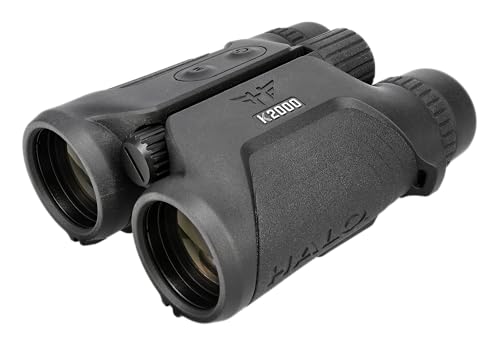
Halo Optics K2000 Rangefinder Binoculars 10x 42mm
As an Amazon Associate we earn from qualifying purchases. Product prices and availability are accurate as of the date/time indicated.

VISTAGET Binoculars 10x42 Multi-Coated Bak-4 Laser Rangefinder 1600 Yards | Angle compensation, water-resistant, tripod socket, pouch & strap included,for hunting
As an Amazon Associate we earn from qualifying purchases. Product prices and availability are accurate as of the date/time indicated.

LEICA Geovid R Gen 2022 Compact Lightweight Hunting Bird Watching Rangefinder Binoculars with Carrying Strap Incuded, 15X56


As an Amazon Associate we earn from qualifying purchases. Product prices and availability are accurate as of the date/time indicated.
Prices shown are approximate and for reference only. Prices change often, so please check the current price on Amazon before you buy.
Rangefinder vs Binocular With Rangefinder Reviewed for 2026
1. Bushnell Prime 1300 Rangefinder vs Binocular With Rangefinder
The Bushnell Prime 1300 is a rangefinder with 6x magnification, a max range of 1300 yards, and a weight of 0.4 lbs. It is priced in the range of $80 to $100, which makes it the most affordable optic in this comparison. Its 6x magnification is easy to hold steady, and its 1300 yard range is enough for most hunting.
For a hunter who already carries binoculars, the Prime 1300 is a practical addition because it is light, fast, and easy to use. Its 0.4 lbs weight means you can carry it in a pocket without noticing it, and its simple button gives a quick reading. It does not give you a wide field for scanning, but that is not its job. As a low cost rangefinder, it is a sensible starting point.
2. Vortex Crossfire HD 1400 Rangefinder vs Binocular With Rangefinder
The Vortex Crossfire HD 1400 is a rangefinder with 5x magnification, a max range of 1400 yards, and a weight of 0.3 lbs. It is priced in the range of $130 to $150. Its 5x magnification is a little lower than the Bushnell, which makes it easier to hold steady, and its 0.3 lbs weight is the lightest in this comparison.
In use, the Crossfire HD 1400 is quick to range, and its HD optical system gives a clear image for a rangefinder. Its 1400 yard max range is useful for open country, although its effective range on game will be shorter. It suits a hunter who wants a light, reliable rangefinder and who already has binoculars for scanning.
3. Leupold RX-1400i TBR/W Rangefinder vs Binocular With Rangefinder
The Leupold RX-1400i TBR/W is a rangefinder with 5x magnification, a max range of 1400 yards, and a weight of 0.4 lbs. It is priced in the range of $200 to $230. Its TBR/W feature is designed to give a true ballistic range that accounts for angle, which can help when shooting uphill or downhill.
For a shooter who hunts in steep terrain, the RX-1400i is useful because its angle compensation helps you judge the correct hold. Its 5x magnification is steady, and its 0.4 lbs weight is still light. It is more expensive than the Bushnell or Vortex, but its ballistic feature and Leupold build quality make it a strong choice for a hunter who needs angle correction.
4. Nikon LaserForce 10×42 Rangefinder vs Binocular With Rangefinder
The Nikon LaserForce 10×42 is a binocular with rangefinder, with 10x magnification, a max range of 1100 yards, and a weight of 2.0 lbs. It is priced in the range of $400 to $450. Its 10×42 binocular gives a wide, bright view for scanning, and its built in rangefinder lets you measure distance without switching optics.
On a hunt, the LaserForce is best for glassing a hillside for a long time, where you want to see detail and distance together. Its 2.0 lbs weight is heavier than a standalone rangefinder, and its 1100 yard max range is shorter than the other binoculars in this table, but its optical quality is good for the price. It suits a hunter who wants a combined unit and who does not need the longest range.
5. Bushnell Fusion X 10×42 Rangefinder vs Binocular With Rangefinder
The Bushnell Fusion X 10×42 is a binocular with rangefinder, with 10x magnification, a max range of 1760 yards, and a weight of 2.1 lbs. It is priced in the range of $500 to $550. Its 1760 yard range is longer than the Nikon, and its 10×42 binocular is designed for bright, clear viewing in low light.
For open country hunting, the Fusion X is a practical combined unit because it gives you both a good binocular and a long range rangefinder in one body. Its 2.1 lbs weight is heavy, so you will need a harness, but it saves you from carrying two optics. It is a good choice for a hunter who glasses for hours and wants a single optic that does both jobs.
6. Vortex Fury HD 5000 10×42 Rangefinder vs Binocular With Rangefinder
The Vortex Fury HD 5000 10×42 is a binocular with rangefinder, with 10x magnification, a max range of 1760 yards, and a weight of 2.0 lbs. It is priced in the range of $900 to $1000. Its HD optical system is designed for bright, sharp images, and its rangefinder is fast and accurate.
For a premium combined unit, the Fury HD 5000 is the most capable optic in this comparison. Its 10×42 binocular gives a wide field and good low light performance, and its 1760 yard range is enough for most long range hunting. Its 2.0 lbs weight is similar to the other binoculars, but its price is much higher, so it only makes sense if you will use it regularly and you want the best optical quality in a combined unit.
Buying Guide: How to Choose Rangefinder vs Binocular With Rangefinder
Start with your hunting style, your pack weight, and how long you glass. If you hunt in thick cover and only need a quick distance check, choose a standalone rangefinder. If you hunt in open country and glass for hours, consider a binocular with a rangefinder. Decide whether you already carry binoculars, because that changes whether a combined unit saves weight or adds it.
Choose a Standalone Rangefinder for Light Weight and Speed
A standalone rangefinder is best when weight and speed matter. Choose 5x or 6x magnification for a steady image, and a range of 1,000 to 1,400 yards for most hunting. Check the weight, because a rangefinder under 0.5 pounds is easy to carry in a pocket. Check the display, because a clear, bright display is easier to read in low light. A rangefinder with angle compensation is useful if you hunt in steep terrain.
Choose a Binocular With Rangefinder for Glassing and Convenience
A binocular with a rangefinder is best when you glass for a long time and want to see and measure in one unit. Choose 10×42 for a balance of magnification and brightness, and a range of at least 1,000 yards for game. Check the weight, because a binocular over 2 pounds needs a harness. Check the focus, because a smooth focus is important for scanning. A binocular with a rangefinder is heavier and more expensive, but it can save time when an animal is moving.
Check Range, Accuracy, and Battery Life
Check the effective range on game, not just the maximum range on a reflective target. A rangefinder that claims 1,400 yards may only measure a deer to 800 yards, which is still enough for most hunting. Check accuracy, which is usually within 1 yard at close range. Check battery life, because a rangefinder that needs a new battery often is inconvenient. Most models use a CR2 battery, which is easy to carry as a spare.
Budget Guide for Rangefinder vs Binocular With Rangefinder
A standalone rangefinder in the $80 to $150 range can provide good distance measurement for most hunting, while a rangefinder in the $200 to $230 range often provides angle compensation and better optics. A binocular with a rangefinder in the $400 to $550 range can provide a good combined unit, while a binocular in the $900 to $1000 range is for a hunter who wants premium optics and long range. The budget pick in this comparison is the Bushnell Prime 1300, at $80-$100, because it is the cheapest model in the table. For most hunters, a well built standalone rangefinder that you will actually carry is better value than an expensive combined unit that stays in your pack. Spend the saving on good binoculars, if you do not already have them.
Frequently Asked Questions About Rangefinder vs Binocular With Rangefinder
What is the best rangefinder vs binocular with rangefinder in 2026?
For rangefinder vs binocular with rangefinder in 2026, the Bushnell Prime 1300 is often the best budget choice because it offers 6x magnification, a max range of 1300 yards, and a price of $80 to $100. The Vortex Crossfire HD 1400 is a strong choice for a light rangefinder, while the Vortex Fury HD 5000 10×42 is a good choice for a premium combined unit. Choose based on your hunting style, your pack weight, and how long you glass.
Is a binocular with a rangefinder worth it?
A binocular with a rangefinder is worth it if you glass for a long time in open country and you want to see and measure distance without switching optics. It saves time when an animal is moving, and it means you carry one optic instead of two. It is not worth it if you hunt in thick cover, where you only need a quick distance check, or if you already have good binoculars and want a light rangefinder. For most hunters, a standalone rangefinder plus good binoculars is more flexible.
Can I use a rangefinder for bow hunting?
You can use a rangefinder for bow hunting, and many bow hunters do. A rangefinder with angle compensation is useful, because bow shots are often at an angle from a tree stand or a hillside. Choose a rangefinder with a close minimum range, because bow shots are often under 50 yards, and check that the display is easy to read in low light. A 6x rangefinder is usually enough for bow hunting, and it is light enough to carry in a pocket.
How far can a rangefinder measure a deer?
A rangefinder can usually measure a deer to about half of its maximum range, because a deer is less reflective than a building or a rock. A rangefinder that claims 1,400 yards may measure a deer reliably to 700 or 800 yards, depending on light, weather, and the size of the animal. That is still far enough for most hunting, where shots are usually under 400 yards. If you need to range a deer at very long distance, choose a rangefinder with a longer max range and a larger objective, and test it in the field before you rely on it.
Related guides
- Best Angled vs Straight Spotting Scope Birding in 2026: Best Angled vs Straight Spotting Scope Birding
- Best Rangefinder for Desert Golf Courses in 2026: Best Rangefinder for Desert Golf Courses for Clear Distance, Bright Light, and Simple Play
- Best Rangefinders vs Binoculars for Low Light Hunting in 2026: Which Is Better for Low Light Hunting, a Rangefinder or a Binocular, and How to Choose
- Best Lightweight Binoculars for Balcony Birding in 2026: 6 Lightweight Binoculars With 8x Magnification, a Weight of Less Than 20 Ounces, and an Eye Relief of at Least 14mm, for Balcony Birding, Without Binoculars That Are Too Heavy, or Too Short, for Balcony Birding
More from Amazon
Programs that pair well with the guide above. Offers and eligibility are set by Amazon and may change.
Free shipping on eligible items, Prime Video and more. Eligible new members can start with a free trial.
Start a Prime free trialAudiobooks and podcasts to listen to on the go. Eligible new members can start with a free trial.
Try Audible freeAd-free music streaming. Eligible new subscribers can start with a free trial.
Try Music Unlimited freeA free business account with business pricing and bulk-buying tools for work, shop or home office.
Create a business accountAs an Amazon Associate we earn from qualifying purchases.

Write Your Review
No reviews yet. Be the first to share your experience!