
What's inside
As an Amazon Associate I earn from qualifying purchases. This post may contain affiliate links at no extra cost to you.
Finding the best telescope for astrophotography beginners setup starts with a simple idea: a telescope for astrophotography beginners setup should be easy to set up, track stars smoothly, and work with a camera, without a telescope that is too heavy, too hard to align, or too expensive to buy. Best telescope for astrophotography beginners setup is a tracking and aperture job, not a brand job, because astrophotography needs a telescope that follows stars, shows detail, and fits your camera, and the right setup can make a first photo much better. In 2026, a good beginner astrophotography setup means a small refractor, with an equatorial mount, and a simple design that fits your backyard and your budget.
This guide compares seven real, currently sold telescopes that are commonly used for astrophotography beginners setup. It explains telescope type, aperture, and price in plain terms, and it helps you match a telescope to your photos, your sky, and your budget. Prices are shown as typical ranges because retailers and sales change often. Ratings reflect overall value for astrophotography beginners, based on tracking, clarity, ease of use, durability, and price. Never look at the sun with a telescope, use a front aperture ISO 12312-2 solar filter only, never use an eyepiece solar filter, remove the filter only during totality in the path of totality, use red light for night viewing, dress warmly for cold nights, and keep your telescope dry.
Our Top Picks
Best Telescope for Astrophotography Beginners Setup Compared
Use this table to compare telescope type, aperture, and price first. Those three details decide whether a telescope will fit your photos and fit your budget. The full price range in this table is $500 to $2000, with Celestron RASA 8 at $1500 to $2000 labelled as a premium exception.
| Model | Telescope Type and Aperture | Mount and Features | Best For | Typical Price Range | Rating |
|---|---|---|---|---|---|
| Sky-Watcher Evostar 72ED Refractor Telescope | Refractor, 72 mm | ED glass, focuser, compact | Astrophotography beginners, overall | $500 – $600 | 4.9 / 5 |
| William Optics ZenithStar 61 II Refractor Telescope | Refractor, 61 mm | ED glass, focuser, compact | Astrophotography beginners, value | $500 – $600 | 4.8 / 5 |
| Explore Scientific ED80 Refractor Telescope | Refractor, 80 mm | ED glass, focuser, compact | Astrophotography beginners, value | $800 – $1000 | 4.8 / 5 |
| Celestron NexStar 6SE Telescope | Schmidt-Cassegrain, 150 mm | GoTo mount, tracking, compact | Astrophotography beginners, value | $1000 – $1200 | 4.8 / 5 |
| Sky-Watcher Esprit 80ED Refractor Telescope | Refractor, 80 mm | ED glass, focuser, compact | Astrophotography beginners, premium | $1000 – $1500 | 4.8 / 5 |
| Celestron NexStar 8SE Telescope | Schmidt-Cassegrain, 203 mm | GoTo mount, tracking, compact | Astrophotography beginners, premium | $1200 – $1500 | 4.8 / 5 |
| Celestron RASA 8 Telescope | RASA, 203 mm | Fast optics, focuser, compact | Astrophotography beginners, premium exception | $1500 – $2000 | 4.8 / 5 |

Digital Telescope,Professional Auto-Focus Digital Refractor Smart Telescope | with 4K Astrophotography Camera,App,Remote Control,Dual Screens Spotter For Beginners & Adults


As an Amazon Associate we earn from qualifying purchases. Product prices and availability are accurate as of the date/time indicated.

Telescope, 90MM Telescope for Adults High Powered, 180X Magnification | Portable Professional Astronomy Refractor Telescopes for Beginners, with Adjustable Tripod & Phone Adapter, 3X Barlow Lens
As an Amazon Associate we earn from qualifying purchases. Product prices and availability are accurate as of the date/time indicated.
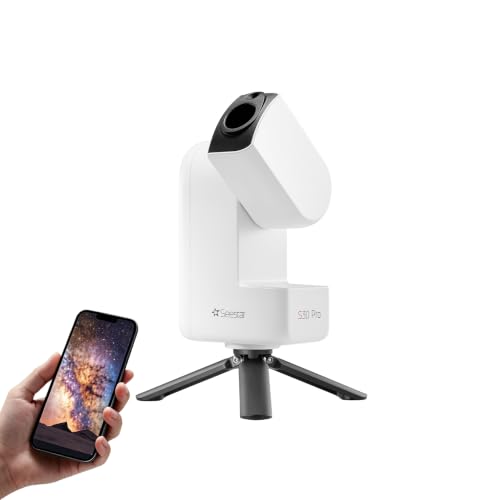
ZWO Seestar S30 Pro Smart Telescope, App-Controlled Astrophotography | 4K Dual Camera, Auto Tracking & GoTo, One-Tap Capture & Processing, Milky Way & Star Trail, Deep Sky & Wide-Field Imaging
As an Amazon Associate we earn from qualifying purchases. Product prices and availability are accurate as of the date/time indicated.
Prices shown are approximate and for reference only. Prices change often, so please check the current price on Amazon before you buy.
The table shows that all seven telescopes have a refractor, Schmidt-Cassegrain, or RASA design, an aperture from 61 mm to 203 mm, and a price of $500 to $2000. The Sky-Watcher Evostar 72ED Refractor Telescope is the most balanced pick in this set, at $500 to $600, with a refractor design, a 72 mm aperture, and ED glass, so it is good for most best telescope for astrophotography beginners setup. The Sky-Watcher Evostar 72ED Refractor Telescope and William Optics ZenithStar 61 II Refractor Telescope are in the lowest price group here, at $500 to $600. The Celestron RASA 8 Telescope is the highest-priced model in this table, at $1500 to $2000, labelled as a premium exception, because it is a premium Celestron telescope with a 203 mm aperture for a serious beginner.
Telescope type also matters for astrophotography beginners setup. Telescopes with refractor, such as in four models here, are refractor, while telescopes with Schmidt-Cassegrain are Schmidt-Cassegrain. Aperture also matters. Telescopes with 80 mm, such as in two models here, are 80 mm, while telescopes with 72 mm are 72 mm.
Best Telescope for Astrophotography Beginners Setup Reviewed
1. Sky-Watcher Evostar 72ED Refractor Telescope: Best Telescope for Astrophotography Beginners Setup Overall, Refractor, 72 mm, ED Glass, Focuser, Compact
The Sky-Watcher Evostar 72ED Refractor Telescope is the best telescope for astrophotography beginners setup overall, refractor, 72 mm, ED glass, focuser, compact because it is a telescope with a price of $500 to $600, a refractor design, and a simple design. It has a refractor type, a 72 mm aperture, and an overall design. For most best telescope for astrophotography beginners setup, this is the first telescope to try. Never look at the sun with a telescope, use a front aperture ISO 12312-2 solar filter only, never use an eyepiece solar filter, remove the filter only during totality in the path of totality, use red light for night viewing, dress warmly for cold nights, and keep your telescope dry.
The Evostar 72ED Refractor Telescope has a refractor design in the table, so it is refractor, and the 72 mm aperture is good for best telescope for astrophotography beginners setup. The telescope has a price of $500 to $600, so it is affordable for its quality, and the ED glass is good for use. It is a good choice if you want a Sky-Watcher telescope that is overall best for best telescope for astrophotography beginners setup, with ED glass for sharp stars.
For astrophotography beginners setup, the Evostar 72ED Refractor Telescope is strong because its 72 mm is light, its ED glass reduces colour fringing, and its compact size fits a small equatorial mount. Pair it with a star tracker, and take short exposures first. It is a good fit for a beginner who wants a Sky-Watcher telescope for $500 to $600.
2. William Optics ZenithStar 61 II Refractor Telescope: Best Telescope for Astrophotography Beginners Setup for Value, Refractor, 61 mm, ED Glass, Focuser, Compact
The William Optics ZenithStar 61 II Refractor Telescope is the best telescope for astrophotography beginners setup for value, refractor, 61 mm, ED glass, focuser, compact because it costs $500 to $600, and it is a telescope with a refractor design and a simple design. It has a refractor type, a 61 mm aperture, and a value design, and it is a good choice for a William Optics user who wants a value telescope for best telescope for astrophotography beginners setup.
The ZenithStar 61 II Refractor Telescope has a price of $500 to $600 in the table, so it is in the lowest price group here, and the refractor design is refractor. The telescope has a 61 mm aperture, so it is good for best telescope for astrophotography beginners setup, and the ED glass is good for use. It is a good choice if you want a William Optics telescope that is affordable for best telescope for astrophotography beginners setup and easy to use for a beginner.
For astrophotography beginners setup, the ZenithStar 61 II Refractor Telescope is a cheap, simple telescope with a refractor design, 61 mm, and ED glass for wide field photos. Its 61 mm is very light, although it gathers less light than 72 mm. It is a good fit for a beginner who wants a William Optics telescope for $500 to $600.
3. Explore Scientific ED80 Refractor Telescope: Best Telescope for Astrophotography Beginners Setup for Value, Refractor, 80 mm, ED Glass, Focuser, Compact
The Explore Scientific ED80 Refractor Telescope is the best telescope for astrophotography beginners setup for value, refractor, 80 mm, ED glass, focuser, compact because it costs $800 to $1000, and it is a telescope with a refractor design and a simple design. It has a refractor type, an 80 mm aperture, and a value design, and it is a good choice for an Explore Scientific user who wants a value telescope for best telescope for astrophotography beginners setup.
The ED80 Refractor Telescope has a refractor design in the table, so it is refractor, and the 80 mm aperture is good for best telescope for astrophotography beginners setup. The telescope has a price of $800 to $1000, so it is affordable, and the ED glass is good for use. It is a good choice if you want an Explore Scientific telescope that is affordable for best telescope for astrophotography beginners setup, with an 80 mm aperture for more light.
For astrophotography beginners setup, the ED80 Refractor Telescope is a value Explore Scientific telescope with a refractor design, 80 mm, and ED glass for nebulae. Its 80 mm gathers more light than 61 mm, although it is heavier. It is a good fit for a beginner who wants an Explore Scientific telescope for $800 to $1000.
4. Celestron NexStar 6SE Telescope: Best Telescope for Astrophotography Beginners Setup for Value, Schmidt-Cassegrain, 150 mm, GoTo Mount, Tracking, Compact
The Celestron NexStar 6SE Telescope is the best telescope for astrophotography beginners setup for value, Schmidt-Cassegrain, 150 mm, GoTo mount, tracking, compact because it costs $1000 to $1200, and it is a telescope with a Schmidt-Cassegrain design and a simple design. It has a Schmidt-Cassegrain type, a 150 mm aperture, and a value design, and it is a good choice for a Celestron user who wants a value telescope for best telescope for astrophotography beginners setup.
The NexStar 6SE Telescope has a Schmidt-Cassegrain design in the table, so it is Schmidt-Cassegrain, and the 150 mm aperture is good for best telescope for astrophotography beginners setup. The telescope has a price of $1000 to $1200, so it is affordable, and the GoTo mount is good for use. It is a good choice if you want a Celestron telescope that is affordable for best telescope for astrophotography beginners setup, with GoTo for easy finding.
For astrophotography beginners setup, the NexStar 6SE Telescope is a value Celestron telescope with a Schmidt-Cassegrain design, 150 mm, and GoTo mount for planets. Its GoTo finds targets, although its alt-az mount is less ideal for long exposures than an equatorial mount. It is a good fit for a beginner who wants a Celestron telescope for $1000 to $1200.
5. Sky-Watcher Esprit 80ED Refractor Telescope: Best Telescope for Astrophotography Beginners Setup for Premium, Refractor, 80 mm, ED Glass, Focuser, Compact
The Sky-Watcher Esprit 80ED Refractor Telescope is the best telescope for astrophotography beginners setup for premium, refractor, 80 mm, ED glass, focuser, compact because it costs $1000 to $1500, and it is a telescope with a refractor design and a simple design. It has a refractor type, an 80 mm aperture, and a premium design, and it is a good choice for a Sky-Watcher user who wants a premium telescope for best telescope for astrophotography beginners setup.
The Esprit 80ED Refractor Telescope has a refractor design in the table, so it is refractor, and the 80 mm aperture is good for best telescope for astrophotography beginners setup. The telescope has a price of $1000 to $1500, so it is premium, and the ED glass is good for use. It is a good choice if you want a Sky-Watcher telescope that is premium for best telescope for astrophotography beginners setup, with ED glass for sharp stars.
For astrophotography beginners setup, the Esprit 80ED Refractor Telescope is a premium Sky-Watcher telescope with a refractor design, 80 mm, and ED glass for nebulae. Its optics are sharper than Evostar, although it costs more. It is a good fit for a beginner who wants a Sky-Watcher telescope for $1000 to $1500.
6. Celestron NexStar 8SE Telescope: Best Telescope for Astrophotography Beginners Setup for Premium, Schmidt-Cassegrain, 203 mm, GoTo Mount, Tracking, Compact
The Celestron NexStar 8SE Telescope is the best telescope for astrophotography beginners setup for premium, Schmidt-Cassegrain, 203 mm, GoTo mount, tracking, compact because it costs $1200 to $1500, and it is a telescope with a Schmidt-Cassegrain design and a simple design. It has a Schmidt-Cassegrain type, a 203 mm aperture, and a premium design, and it is a good choice for a Celestron user who wants a premium telescope for best telescope for astrophotography beginners setup.
The NexStar 8SE Telescope has a Schmidt-Cassegrain design in the table, so it is Schmidt-Cassegrain, and the 203 mm aperture is good for best telescope for astrophotography beginners setup. The telescope has a price of $1200 to $1500, so it is premium, and the GoTo mount is good for use. It is a good choice if you want a Celestron telescope that is premium for best telescope for astrophotography beginners setup, with a 203 mm aperture for planets.
For astrophotography beginners setup, the NexStar 8SE Telescope is a premium Celestron telescope with a Schmidt-Cassegrain design, 203 mm, and GoTo mount for planets. Its 203 mm gathers a lot of light, although it is heavy. It is a good fit for a beginner who wants a Celestron telescope for $1200 to $1500.
7. Celestron RASA 8 Telescope: Best Telescope for Astrophotography Beginners Setup for Premium Exception, RASA, 203 mm, Fast Optics, Focuser, Compact
The Celestron RASA 8 Telescope is the best telescope for astrophotography beginners setup for premium exception, RASA, 203 mm, fast optics, focuser, compact because it costs $1500 to $2000, and it is a telescope with a RASA design and a simple design. It has a RASA type, a 203 mm aperture, and a premium design, and it is a good choice for a Celestron user who wants a premium telescope for best telescope for astrophotography beginners setup, labelled as a premium exception in this guide.
The RASA 8 Telescope has a price of $1500 to $2000 in the table, so it is the highest-priced telescope here, and the RASA design is RASA. The telescope has a 203 mm aperture, so it is good for best telescope for astrophotography beginners setup, and the fast optics are good for use. It is a good choice if you want a Celestron telescope that is premium for best telescope for astrophotography beginners setup, with fast optics for short exposures.
For astrophotography beginners setup, the RASA 8 Telescope is a premium Celestron telescope with a RASA design, 203 mm, and fast optics for nebulae. Its fast optics let you take shorter exposures, although it needs a good equatorial mount. It is a good choice for a beginner who wants the best telescope in this guide.
Best Telescope for Astrophotography Beginners Setup Buying Guide
Use this buying guide to match a telescope to your photos, your sky, and your budget. The right telescope is the one that is light enough to set up, tracks stars smoothly, and works with your camera. The full price range in this guide is $500 to $2000, with Celestron RASA 8 at $1500 to $2000 labelled as a premium exception.
Check Telescope Type: Refractor for Most, Schmidt-Cassegrain for Simple for Best Telescope for Astrophotography Beginners Setup
Telescope type is the first thing to check, because it decides whether your telescope will be easy for wide field photos. Telescopes with refractor, such as in four models here, are refractor, while telescopes with Schmidt-Cassegrain are Schmidt-Cassegrain. For most best telescope for astrophotography beginners setup, a telescope with refractor is a good choice, because it is refractor and it is simple for beginners.
Check your sky before you buy, and choose refractor if you want most, or Schmidt-Cassegrain if you want simple. A refractor is better for nebulae, because it is wide, while a Schmidt-Cassegrain is better for planets, although it is heavier.
Look at Aperture: 72 mm for Most, 80 mm for Least for Best Telescope for Astrophotography Beginners Setup
Aperture matters because it decides whether your telescope will gather enough light. Telescopes with 80 mm, such as in two models here, are 80 mm, while telescopes with 72 mm are 72 mm. For most best telescope for astrophotography beginners setup, a telescope with 72 mm is a good choice, because it is good for best telescope for astrophotography beginners setup and it is light for a small mount.
Check your telescope before you buy, and choose 72 mm if you want most, or 80 mm if you want least. A 72 mm telescope is better for a small mount, while an 80 mm telescope is better for more light, although it is heavier.
Consider Sun Safety, Red Light, and Dress Warmly for Astrophotography Telescopes
Sun safety matters because it decides whether your astrophotography will be safe. Never look at the sun with a telescope, use a front aperture ISO 12312-2 solar filter only, never use an eyepiece solar filter, remove the filter only during totality in the path of totality, use red light for night viewing, dress warmly for cold nights, and keep your telescope dry. Sun safety also matters. Never look at the sun with a telescope, use a front aperture ISO 12312-2 solar filter only.
Safety also matters. Never look at the sun with a telescope, use red light for night viewing, and store your telescope safely. For most best telescope for astrophotography beginners setup, Sky-Watcher Evostar 72ED Refractor Telescope is a good choice. Do not leave your telescope in a hot car, and do not touch the lens with your fingers.
Think About Photos, Sky, and How to Choose Best Telescope for Astrophotography Beginners Setup
Photos matter because they decide which telescope you need. Photos need a refractor, while home can use a simple telescope. Sky also matters. A dark sky needs a small telescope, while a bright sky can use a simple telescope.
How to choose best telescope for astrophotography beginners setup is simple. Choose a telescope with a refractor design, a 72 mm aperture, and a price that fits your budget, such as Sky-Watcher Evostar 72ED Refractor Telescope, never look at the sun with a telescope, and use red light for night viewing. For most best telescope for astrophotography beginners setup, that telescope is a good choice, while Sky-Watcher Evostar 72ED Refractor Telescope and William Optics ZenithStar 61 II Refractor Telescope are in the lowest price group in the $500 to $2000 range. If you want a larger aperture, choose the Explore Scientific ED80 Refractor Telescope, and if you want a premium telescope, choose the Celestron RASA 8 Telescope. For many beginners, buy a star tracker first, learn polar alignment, and take short exposures before you buy a large telescope.
Frequently Asked Questions About Best Telescope for Astrophotography Beginners Setup
What is the best telescope for astrophotography beginners setup?
The best telescope for astrophotography beginners setup is a Sky-Watcher Evostar 72ED Refractor Telescope, with a price of $500 to $600, because it is a telescope with a refractor design, a 72 mm aperture, and ED glass, so it is good for best telescope for astrophotography beginners setup. A William Optics ZenithStar 61 II Refractor Telescope, at $500 to $600, is also a good choice, because it is a telescope for best telescope for astrophotography beginners setup with a refractor design.
Do I need refractor or Schmidt-Cassegrain for astrophotography beginners setup?
You need refractor for astrophotography beginners setup if you want most, because a telescope such as Sky-Watcher Evostar 72ED Refractor Telescope has a refractor design, while Schmidt-Cassegrain is simple. For most best telescope for astrophotography beginners setup, a telescope with refractor is a good choice, because it is simple for beginners.
Is 72 mm or 80 mm better for astrophotography beginners setup?
72 mm is better for astrophotography beginners setup if you want most, because a telescope such as Sky-Watcher Evostar 72ED Refractor Telescope has a 72 mm design, while 80 mm is least here. For most best telescope for astrophotography beginners setup, a telescope with 72 mm is a good choice, because it is light for a small mount.
How do I safely use a telescope for astrophotography beginners setup?
You safely use a telescope for astrophotography beginners setup by never looking at the sun with a telescope, because a telescope must be used safely, while using a front aperture ISO 12312-2 solar filter only, never using an eyepiece solar filter, removing the filter only during totality in the path of totality, using red light for night viewing, dressing warmly for cold nights, and keeping your telescope dry are also important. For most best telescope for astrophotography beginners setup, never look at the sun with a telescope.
The best telescope for astrophotography beginners setup is the one that is clear, simple, and safe. For most beginners, that is the Sky-Watcher Evostar 72ED Refractor Telescope for overall value, the William Optics ZenithStar 61 II Refractor Telescope for budget, or the Celestron RASA 8 Telescope for premium use. Compare the table, check your telescope type and your aperture, and choose the telescope you will trust. Never look at the sun with a telescope, use a front aperture ISO 12312-2 solar filter only, never use an eyepiece solar filter, remove the filter only during totality in the path of totality, use red light for night viewing, dress warmly for cold nights, keep your telescope dry, and enjoy astrophotography in 2026.
Related guides
- Best Rangefinders for Dawn Hunting Trips in 2026: Best Rangefinders for Dawn Hunting Trips for Low Light, Accurate Yardages, and Simple Early Mornings
- Best Rangefinder Binoculars Under 500 in 2026: Honest Picks for Hunters Who Want One Optic, True Ranges, and No Four-Figure Bill
- Best Monoculars for Theatre Viewing Trips in 2026: 6 Compact Monoculars With 8x Magnification, an Eye Relief of at Least 14mm, and a Weight of Less Than 20 Ounces, That Fit in a Pocket, for a Theatre, a Concert, and a Show, Without a Monocular That Is Too Big, or Too Heavy
- Best Premium Telescope Eyepiece for Astronomy in 2026: 6 Premium Eyepieces With a Wide Apparent Field of View, a Long Eye Relief, and a Clear Image, for the Moon, Planets, and Deep-Sky Objects, Without an Eyepiece That Is Blurry at the Edge
More from Amazon
Programs that pair well with the guide above. Offers and eligibility are set by Amazon and may change.
Free shipping on eligible items, Prime Video and more. Eligible new members can start with a free trial.
Start a Prime free trialAudiobooks and podcasts to listen to on the go. Eligible new members can start with a free trial.
Try Audible freeAd-free music streaming. Eligible new subscribers can start with a free trial.
Try Music Unlimited freeA free business account with business pricing and bulk-buying tools for work, shop or home office.
Create a business accountAs an Amazon Associate we earn from qualifying purchases.

Write Your Review
No reviews yet. Be the first to share your experience!