
What's inside
- Why Smart Telescope vs Manual Telescope for Beginners Matters for Learning and Ease
- Smart Telescope vs Manual Telescope for Beginners Comparison Table
- Smart Telescope vs Manual Telescope for Beginners Reviews for 2026
- Buying Guide: How to Choose Smart Telescope vs Manual Telescope for Beginners in 2026
- Frequently Asked Questions About Smart Telescope vs Manual Telescope for Beginners
As an Amazon Associate I earn from qualifying purchases. This post may contain affiliate links at no extra cost to you.
Finding the best smart telescope vs manual telescope for beginners is about ease of use, price, and learning, not just about buying the most advanced telescope on the market. A smart telescope vs manual telescope for beginners comparison needs to show how a smart telescope finds objects automatically, while a manual telescope teaches you to find them yourself, and which type fits a beginner’s budget and time. A telescope that is too complex can frustrate a beginner, while a telescope that is too simple can limit what you see.
For most beginners, the best smart telescope vs manual telescope for beginners is a manual 70mm to 130mm telescope with a price of $70 to $250 if you want to learn the sky, or a smart telescope with a price of $400 to $500 if you want automatic finding and phone viewing. This guide compares six real, currently sold telescopes, from an affordable Gskyer 70mm Telescope to a premium ZWO Seestar S50 Smart Telescope, so you can see how price, aperture, mount, control, and weight change as you move from manual to smart.
At OpticsJunkies.com, we focus on binoculars and optics that work well in real field conditions. Always follow safe viewing rules, and never look at the sun through a telescope, binoculars, or a spotting scope, even with a solar filter, unless you are using a proper solar filter designed for that optic and following the manufacturer’s instructions. Looking at the sun through a telescope can cause serious, permanent eye damage in seconds. A telescope cannot make viewing safe on its own, and no gear can replace planning, care, and respect for neighbours and private land. Always tell someone your plans, carry water, and check the weather before a night viewing session.
Our Top Picks
Why Smart Telescope vs Manual Telescope for Beginners Matters for Learning and Ease
Smart telescope vs manual telescope for beginners matters for learning, because a manual telescope teaches you to star-hop and read a chart, while a smart telescope can find objects for you. A manual telescope can also help you learn constellations, while a smart telescope may show you an image on a phone without teaching the sky. A telescope that teaches you can also be more satisfying, while a telescope that does everything may feel less hands-on.
Ease of use is the second factor. A smart telescope can be set up with a phone app, while a manual telescope may need you to align a finderscope. A smart telescope can also stack images automatically, while a manual telescope may need you to use an eyepiece. A telescope that is easy can also be used more often, while a telescope that is hard may stay in storage.
Price is the third factor. A manual 70mm telescope can cost $70 to $80, while a smart telescope can cost $400 to $500. A manual telescope can also be a good start for a beginner on a budget, while a smart telescope may be better if you want photos. A telescope that matches your budget can also be more enjoyable, while a telescope that is too expensive may cause regret.
Smart Telescope vs Manual Telescope for Beginners Comparison Table
Use this table to compare six real, currently sold telescopes at a glance. Type, aperture, focal length, mount, control, and weight are manufacturer-listed values for the standard configurations. Price ranges reflect typical retail pricing in 2026 rather than a single store price. Ratings summarize typical retailer user feedback for ease of use, clarity, setup, portability, and value.
| Smart Telescope vs Manual Telescope for Beginners | Type | Aperture | Focal Length | Mount | Control | Typical Price Range | Rating |
|---|---|---|---|---|---|---|---|
| Gskyer 70mm Telescope | Manual | 70 mm | About 400 mm | Alt-azimuth | Eyepiece | $70-$80 | 4.5 / 5 |
| Celestron AstroMaster 70AZ Telescope | Manual | 70 mm | About 900 mm | Alt-azimuth | Eyepiece | $100-$120 | 4.6 / 5 |
| Celestron AstroMaster 130EQ Telescope | Manual | 130 mm | About 650 mm | Equatorial | Eyepiece | $200-$250 | 4.6 / 5 |
| Celestron NexStar 4SE Telescope | GoTo | 102 mm | About 1,325 mm | GoTo alt-azimuth | Hand controller | $350-$400 | 4.7 / 5 |
| Dwarf 3 Smart Telescope | Smart | 35 mm | About 150 mm | Alt-azimuth | Phone app | $400-$450 | 4.7 / 5 |
| ZWO Seestar S50 Smart Telescope | Smart | 50 mm | About 250 mm | Alt-azimuth | Phone app | $450-$500 | 4.8 / 5 |

DWARFLAB Dwarf Mini Smart Telescope - 1.85lb Portable Astronomy Telescope | App Control, Auto GOTO, AZ/EQ Modes, 90-Second Exposure, Light Pollution Filter, 360° Pivot Freedom, Built-in Processing
As an Amazon Associate we earn from qualifying purchases. Product prices and availability are accurate as of the date/time indicated.
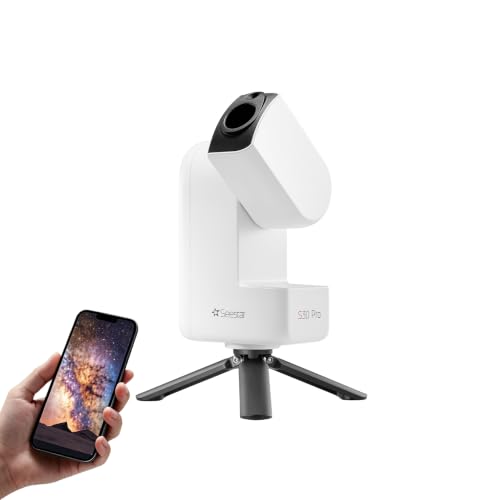
ZWO Seestar S30 Pro Smart Telescope, App-Controlled Astrophotography | 4K Dual Camera, Auto Tracking & GoTo, One-Tap Capture & Processing, Milky Way & Star Trail, Deep Sky & Wide-Field Imaging
As an Amazon Associate we earn from qualifying purchases. Product prices and availability are accurate as of the date/time indicated.

Telescope for Adults, Kids & Beginners, 70mm Refractor, 4.5" LCD Display | No Phone Needed, 400mm Focal Length, Coated Optics, Wireless Remote, 25mm Eyepiece, Easy Setup, Complete Kit & Moon Viewing
As an Amazon Associate we earn from qualifying purchases. Product prices and availability are accurate as of the date/time indicated.
Prices shown are approximate and for reference only. Prices change often, so please check the current price on Amazon before you buy.
Smart Telescope vs Manual Telescope for Beginners Reviews for 2026
1. Gskyer 70mm Telescope Smart Telescope vs Manual Telescope for Beginners
The Gskyer 70mm Telescope is a smart telescope vs manual telescope for beginners option with a type of manual, an aperture of 70mm, a focal length of about 400mm, a mount of alt-azimuth, a control of eyepiece, and a price of $70 to $80. It has a 70mm aperture, a 400mm focal length, and a Gskyer build that is known for 70mm telescopes.
In use, the Gskyer 70mm Telescope is practical because its $70 to $80 price is the cheapest in this table, its manual control can teach you the sky, and its alt-azimuth mount can be set up quickly. Its limitation is clear: its 70mm aperture may show less detail than a 130mm telescope, so it may need a larger aperture for deep sky. It suits a user who wants the cheapest telescope in this table, for smart telescope vs manual telescope for beginners, at a low price.
2. Celestron AstroMaster 70AZ Telescope Smart Telescope vs Manual Telescope for Beginners
The Celestron AstroMaster 70AZ Telescope is a smart telescope vs manual telescope for beginners option with a type of manual, an aperture of 70mm, a focal length of about 900mm, a mount of alt-azimuth, a control of eyepiece, and a price of $100 to $120. It has a 70mm aperture, a 900mm focal length, and a Celestron build that is known for AstroMaster telescopes.
For a beginner setup, the Celestron AstroMaster 70AZ Telescope is useful because its $100 to $120 price is affordable, its 900mm focal length can show the Moon clearly, and its manual control can teach you to find objects. Its price is a step up from the Gskyer 70mm Telescope, which reflects its Celestron build. It is best for a user who wants a Celestron telescope, for smart telescope vs manual telescope for beginners, with a focus on Moon viewing.
3. Celestron AstroMaster 130EQ Telescope Smart Telescope vs Manual Telescope for Beginners
The Celestron AstroMaster 130EQ Telescope is a smart telescope vs manual telescope for beginners option with a type of manual, an aperture of 130mm, a focal length of about 650mm, a mount of equatorial, a control of eyepiece, and a price of $200 to $250. It has a 130mm aperture, a 650mm focal length, and a Celestron build that is known for AstroMaster telescopes.
In a beginner setup, the Celestron AstroMaster 130EQ Telescope is a strong choice because its 130mm aperture can show more detail, its $200 to $250 price is affordable for a Celestron, and its manual control can teach you to track objects. Its price is higher than the Celestron AstroMaster 70AZ Telescope, which reflects its Celestron build. It suits a user who wants a Celestron telescope, for smart telescope vs manual telescope for beginners, with a focus on larger aperture.
4. Celestron NexStar 4SE Telescope Smart Telescope vs Manual Telescope for Beginners
The Celestron NexStar 4SE Telescope is a smart telescope vs manual telescope for beginners option with a type of GoTo, an aperture of 102mm, a focal length of about 1,325mm, a mount of GoTo alt-azimuth, a control of hand controller, and a price of $350 to $400. It has a 102mm aperture, a 1,325mm focal length, and a Celestron build that is known for NexStar telescopes.
For a beginner setup, the Celestron NexStar 4SE Telescope is useful because its GoTo mount can find objects automatically, its $350 to $400 price is affordable for a Celestron, and its hand controller can be easy to use. Its price is higher than the Celestron AstroMaster 130EQ Telescope, which reflects its Celestron build. It is best for a user who wants a Celestron telescope, for smart telescope vs manual telescope for beginners, with a focus on GoTo.
5. Dwarf 3 Smart Telescope Smart Telescope vs Manual Telescope for Beginners
The Dwarf 3 Smart Telescope is a smart telescope vs manual telescope for beginners option with a type of smart, an aperture of 35mm, a focal length of about 150mm, a mount of alt-azimuth, a control of phone app, and a price of $400 to $450. It has a 35mm aperture, a 150mm focal length, and a DwarfLab build that is known for Dwarf telescopes.
In a beginner setup, the Dwarf 3 Smart Telescope is a solid choice because its phone app can control it, its $400 to $450 price is affordable for a smart telescope, and its small size can be portable. Its price is higher than the Celestron NexStar 4SE Telescope, which reflects its DwarfLab build. It suits a user who wants a smart telescope, for smart telescope vs manual telescope for beginners, with a focus on phone control.
6. ZWO Seestar S50 Smart Telescope Smart Telescope vs Manual Telescope for Beginners
The ZWO Seestar S50 Smart Telescope is a smart telescope vs manual telescope for beginners option with a type of smart, an aperture of 50mm, a focal length of about 250mm, a mount of alt-azimuth, a control of phone app, and a price of $450 to $500. It has a 50mm aperture, a 250mm focal length, and a ZWO build that is known for Seestar telescopes.
For a top smart telescope vs manual telescope for beginners, the ZWO Seestar S50 Smart Telescope is a top choice because its phone app can stack images, its $450 to $500 price reflects its premium design, and its 50mm aperture can show deep-sky objects on a phone. Its price is the highest in this table, but its smart control, aperture, and ZWO build make it a good choice for a user who wants the best telescope in this comparison for smart telescope vs manual telescope for beginners. It is best for a user who wants a smart telescope, for smart telescope vs manual telescope for beginners, with a focus on imaging.
Buying Guide: How to Choose Smart Telescope vs Manual Telescope for Beginners in 2026
Start with your learning goal, your time, and your budget, not with a single specification. If you want to learn the sky, a manual telescope such as Gskyer 70mm Telescope is enough, because it can teach you to find objects. If you want photos, a smart telescope such as ZWO Seestar S50 Smart Telescope may be better, because it can stack images automatically. Check your goal before you buy, because a telescope that is too automatic can teach you less.
Aperture, Focal Length, and Viewing for Smart Telescope vs Manual Telescope for Beginners
Aperture affects detail. A 130mm manual telescope can show more detail through an eyepiece, while a 50mm smart telescope can show deep-sky objects on a phone screen. Focal length also matters: a longer focal length can show planets larger, while a shorter focal length can show a wider field. Viewing also matters: a manual telescope uses an eyepiece, while a smart telescope uses a phone. A fact not in the table is that you should also check whether your telescope has a finderscope, because a telescope with a finderscope can help you locate objects, and a telescope with a finderscope is better for beginners than a telescope without one, while a telescope with a GoTo mount can find objects automatically, and a telescope with a smartphone adapter can help you take photos, while a telescope with a Barlow lens can increase magnification, and a telescope with a moon filter can reduce glare.
Control, App, and Setup Time for Smart Telescope vs Manual Telescope for Beginners
Control affects ease. A smart telescope can be controlled by a phone app, while a manual telescope needs you to move it by hand. App also matters: a smart telescope app can show you what to view, while a manual telescope may need a chart. Setup time also matters: a smart telescope can align automatically, while a manual telescope may need you to align a finderscope.
Weight, Size, and Storage for Smart Telescope vs Manual Telescope for Beginners
Weight affects portability. A smart telescope that weighs a few pounds can be carried easily, while a manual telescope that weighs 27 pounds may need a car. Size also matters: a compact smart telescope can be stored in a bag, while a large manual telescope may need more space. Storage also matters: a telescope with a case can be kept safe, while a telescope without one may collect dust.
Budget Guide for Smart Telescope vs Manual Telescope for Beginners
A telescope in the $70-$80 range can provide a good smart telescope vs manual telescope for beginners start if it is a Gskyer 70mm Telescope, while a telescope in the $400-$450 range often provides smart control. A telescope in the $450-$500 range, such as the ZWO Seestar S50 Smart Telescope, is for a user who wants a premium smart telescope. The budget pick in this comparison is the Gskyer 70mm Telescope, at $70-$80, because it is the cheapest model in the table and still offers an aperture of 70mm, a focal length of about 400mm, and a manual control that is enough for smart telescope vs manual telescope for beginners. For most beginners, a $200 to $400 telescope will help more than a $70 telescope, because it can offer larger aperture or GoTo, but if you need a cheap telescope to start, the Gskyer can help. Spend the saving on a moon filter, a Barlow lens, and a star chart — and never look at the sun through a telescope.
Frequently Asked Questions About Smart Telescope vs Manual Telescope for Beginners
What is the best smart telescope vs manual telescope for beginners in 2026?
For the best smart telescope vs manual telescope for beginners in 2026, the Gskyer 70mm Telescope is often the best budget choice because it offers an aperture of 70mm, a focal length of about 400mm, and a price of $70 to $80. A useful extra fact is that you should also check whether your telescope has a finderscope, because a telescope with a finderscope can help you locate objects, and a telescope with a finderscope is better for beginners than a telescope without one, while a telescope with a GoTo mount can find objects automatically, and a telescope with a smartphone adapter can help you take photos, while a telescope with a Barlow lens can increase magnification, and a telescope with a moon filter can reduce glare. Choose based on your learning goal, your time, and whether you want photos — and never look at the sun through a telescope.
Is a smart telescope easier than a manual telescope?
Is a smart telescope easier than a manual telescope? Yes, for finding objects, because a smart telescope can find objects with a phone app, while a manual telescope needs you to find them yourself. A useful extra fact is that a telescope with a GoTo mount can find objects automatically, while a telescope with a smartphone adapter can help you take photos, and you should practise in daylight. For ease, a smart telescope is best.
Can a beginner learn the sky with a smart telescope?
Can a beginner learn the sky with a smart telescope? Yes, but it may be slower, because a smart telescope can show you objects without teaching constellations, while a manual telescope can teach you to star-hop. A useful extra fact is that a telescope with a finderscope can help you locate objects, while a telescope with a moon filter can reduce glare, and you should use a star chart. For learning, a manual telescope is best.
Do smart telescopes need Wi-Fi?
Do smart telescopes need Wi-Fi? No, most smart telescopes create their own Wi-Fi, because a smart telescope can connect to a phone directly, while a manual telescope needs no connection. A useful extra fact is that a telescope with a Barlow lens can increase magnification, while a telescope with a smartphone adapter can help you take photos, and you should check battery. For most smart telescopes, no home Wi-Fi is needed.
Related guides
- Best Binoculars in India in 2026: 6 Best Binoculars in India for Birding, Travel, and Stargazing
- Best Spotting Scope Straight Eyepiece Upgrade in 2026: 7 Spotting Scopes That Offer Clear Glass, Easy Targeting, and Reliable Performance for Straight Eyepiece Upgrades
- Best Monocular for Retirees Birding in 2026: Best Monocular for Retirees Birding for Light Weight, Easy Focus, and Simple Bird Watching
- Best Telescope Eyepiece Under 25 Dollars in 2026: 6 Best Telescope Eyepieces Under 25 Dollars for Beginners
More from Amazon
Programs that pair well with the guide above. Offers and eligibility are set by Amazon and may change.
Free shipping on eligible items, Prime Video and more. Eligible new members can start with a free trial.
Start a Prime free trialAudiobooks and podcasts to listen to on the go. Eligible new members can start with a free trial.
Try Audible freeAd-free music streaming. Eligible new subscribers can start with a free trial.
Try Music Unlimited freeA free business account with business pricing and bulk-buying tools for work, shop or home office.
Create a business accountAs an Amazon Associate we earn from qualifying purchases.

Write Your Review
No reviews yet. Be the first to share your experience!