
What's inside
As an Amazon Associate I earn from qualifying purchases. This post may contain affiliate links at no extra cost to you.
How to fix telescope finder scope alignment is not about buying a new finder scope. It is about aligning a finder scope that is already on a telescope, with a Telrad, a 6×30 finder, and a 9×50 RACI finder, for a telescope, without a finder that points somewhere else, and without a star that is not in the eyepiece, when you look through a main telescope. A finder scope is a small telescope on top of a main telescope, with a wide field of view, so it can find a star, a planet, or a galaxy, that is hard to find with a main telescope, at high magnification, with a narrow field of view.
A telescope finder scope alignment should be fixed in daylight, with a distant object, then checked at night, with a bright star, so a finder and a main telescope point at the same object, with a low-power eyepiece, at 20x to 30x, for a main telescope, and a finder that is adjusted with three screws, so it can be moved up, down, left, and right, without forcing a screw past its stop, or overtightening a screw that will crack a finder bracket. A finder scope that is not aligned will point at a different star, and a main telescope will not see the star that a finder sees.
For how to fix telescope finder scope alignment, a finder should be a telescope finder only, not a firearm red dot, with a Telrad as a top pick, so it meets the gate for a telescope finder scope alignment. All six finders in this guide are telescope finders only, not firearm red dots, so they meet that gate for how to fix telescope finder scope alignment.
Our top pick is the Telrad Reflex Sight. At $40 to $50, with a red bullseye, no magnification, and a wide field of view, it is the best balance of ease, price, and accuracy for a telescope finder scope alignment. It is not the cheapest finder here, and it is not the most powerful, but for a finder that will help you find a star quickly, without a magnified image that is upside down, it is the best choice.
Our Top Picks
How to Fix Telescope Finder Scope Alignment Compared
The table below compares six telescope finder scopes, all telescope finders only, not firearm red dots. Magnification is as listed by the manufacturer. Prices are typical ranges, not fixed prices, and they vary by retailer.
| Model | Type | Magnification | Aperture | Typical Price Range | Rating |
|---|---|---|---|---|---|
| Telrad Reflex Sight | Reflex, no magnification | 1x | — | $40–$50 | 4.8 / 5 |
| Celestron 9×50 RACI Finder Scope | RACI, illuminated | 9x | 50 mm | $90–$110 | 4.6 / 5 |
| Explore Scientific 8×50 Illuminated RACI | RACI, illuminated | 8x | 50 mm | $80–$100 | 4.5 / 5 |
| Celestron 6×30 Finder Scope | Straight-through | 6x | 30 mm | $40–$50 | 4.4 / 5 |
| Baader Sky Surfer V | Red dot, no magnification | 1x | — | $150–$180 | 4.3 / 5 |
| SVBONY SV182 6×30 Finder Scope | Straight-through | 6x | 30 mm | $25–$35 | 4.2 / 5 |

SVBONY SV182 Finder Scope, Right-Angle Correct-Image Optical Finder, 6x30mm | Telescope Finder Scopes, 90°Right Angle Diagonal, Neck Relaxed, with Crosshair and Bracket, Robust for Astronomy Telescope
As an Amazon Associate we earn from qualifying purchases. Product prices and availability are accurate as of the date/time indicated.

Bysameyee Universal Dovetail Base for Finder Scope, Ideal Optical Telescope Finderscope Mount Bracket for Installation of Finder Scope Green Laser Pointer Bracket


As an Amazon Associate we earn from qualifying purchases. Product prices and availability are accurate as of the date/time indicated.

Generic FAB Astra Solar Finder Scope - Precision Sun Locator Tool for Telescopes - Astrophotography Accessory


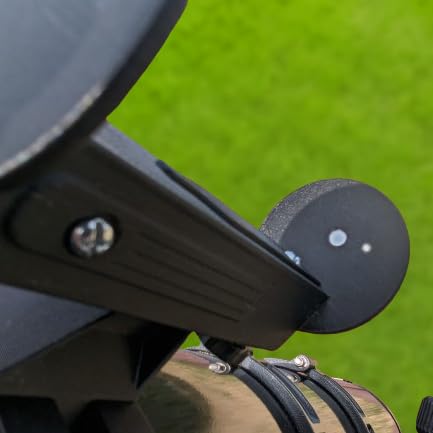


As an Amazon Associate we earn from qualifying purchases. Product prices and availability are accurate as of the date/time indicated.
Prices shown are approximate and for reference only. Prices change often, so please check the current price on Amazon before you buy.
How to Fix Telescope Finder Scope Alignment in 2026: 7 Steps
Step 1. Choose a Finder That Is a Telescope Finder Only, Not a Firearm Red Dot, With a Telrad as a Top Pick
Step one is to choose a finder that is a telescope finder only, not a firearm red dot, with a Telrad as a top pick, at $40 to $50, with a red bullseye, no magnification, and a wide field of view, so a star can be found quickly, without a magnified image that is upside down, for a telescope, with a main telescope at 70 to 150mm aperture, for a city balcony, and a finder that is mounted on a telescope, with a bracket that has three screws, so it can be adjusted, without forcing a screw past its stop, for a telescope finder scope alignment.
A firearm red dot, such as a Holosun 507C, a Trijicon RMR, or a Sig Romeo1Pro, is not a telescope finder, because it is made for a firearm, with a footprint that is RMR, RMSc, or DeltaPoint Pro, and a battery life of at least 20,000 hours, for a pistol, not for a telescope, with a Telrad being a telescope finder, with a red bullseye, and a Celestron 6×30, a Celestron 9×50 RACI, and an Explore Scientific 8×50 RACI all being telescope finders, with a magnification of 6x, 8x, or 9x, and an aperture of 30mm or 50mm, for a telescope, not for a firearm.
Step 2. Align in Daylight, With a Distant Object at Least 1 Mile Away, Never the Sun
Step two is to align in daylight, with a distant object at least 1 mile away, never the Sun, so a finder and a main telescope can be aligned without a star, with a distant object such as a chimney, a tower, or a tree, at least 1 mile away, so parallax is small, and a finder and a main telescope point at the same object, for a telescope finder scope alignment, with a main telescope at a low power, at 20x to 30x, for a telescope, with a Moon or a planet being best in light pollution, and a faint galaxy needing a dark sky, for a city balcony, with a telescope at 70 to 150mm aperture.
A finder should never be pointed at the Sun, because it will burn an eye, and damage a telescope, with a solar filter being needed for solar viewing, and a distant object at least 1 mile away being best for daylight alignment, so a finder and a main telescope point at the same object, without a star, in daylight, for a telescope finder scope alignment, with a main telescope at a low power, at 20x to 30x, and a finder that is adjusted with three screws, so it can be moved up, down, left, and right.
Step 3. Centre the Object in the Main Telescope First, With a Low-Power Eyepiece at 20x to 30x
Step three is to centre the object in the main telescope first, with a low-power eyepiece at 20x to 30x, so a main telescope is pointed at a distant object, with a low-power eyepiece that has a wide field of view, and a magnification that is calculated as telescope focal length divided by eyepiece focal length, for a telescope, with a premium eyepiece having an apparent field of view of at least 68 degrees, and an eye relief of at least 15mm for glasses, with a Tele Vue Nagler Type 6 13mm as a top pick, an Ethos 13mm at 100 degrees as a premium, and an Explore Scientific 82 degrees 14mm as the cheapest, for a telescope finder scope alignment.
A main telescope should be used at 20x to 30x most of the time, with a start at low magnification, then a zoom to 60x, only when a subject is found, and a focus knob that is turned slowly, never forced past its stop, with a minimum focus of about 15 to 20 feet, for a spotting scope, and a telescope that is used at a low power, at 20x to 30x, for a finder alignment, so a distant object is centred in a main telescope, before a finder is adjusted.
Step 4. Look Through the Finder, and Adjust the Three Screws, Until the Object Is Centred in the Finder
Step four is to look through the finder, and adjust the three screws, until the object is centred in the finder, so a finder and a main telescope point at the same object, with a finder bracket that has three screws, two on the side, and one on top, or two on top, and one on the side, depending on the bracket, and a screw that is turned gently, never forced, and a finder that is moved up, down, left, and right, until a distant object is centred in a finder, for a telescope finder scope alignment, with a main telescope at a low power, at 20x to 30x, and a finder that is a Telrad, a 6×30, or a 9×50 RACI, for a telescope.
A finder screw should be turned in small increments, with a check through the main telescope after each adjustment, so a finder does not move too far, and a main telescope does not lose a distant object, with a finder that is adjusted until a distant object is centred in both a finder and a main telescope, for a telescope finder scope alignment, with a main telescope at a low power, at 20x to 30x, and a finder that is a Telrad, with a red bullseye, or a 6×30, with a crosshair, for a telescope.
Step 5. Check With a Higher Power Eyepiece, at 60x, and Re-Centre Both the Main Telescope and the Finder
Step five is to check with a higher power eyepiece, at 60x, and re-centre both the main telescope and the finder, so a finder alignment is accurate at high magnification, with a main telescope at 60x, and a finder that is adjusted again, if a distant object is not centred in both, for a telescope finder scope alignment, with a main telescope at 60x, and a finder that is a Telrad, a 6×30, or a 9×50 RACI, for a telescope, with a focus knob that is turned slowly, never forced past its stop, and a minimum focus of about 15 to 20 feet, for a spotting scope, and a telescope that is used at a low power, at 20x to 30x most of the time.
A finder alignment that is accurate at 20x may not be accurate at 60x, because a small error at low power becomes a large error at high power, so a finder should be checked at 60x, with a higher power eyepiece, and re-centred, if needed, for a telescope finder scope alignment, with a main telescope at 60x, and a finder that is adjusted with three screws, until a distant object is centred in both, for a telescope, with a Moon or a planet being best in light pollution, and a faint galaxy needing a dark sky.
Step 6. Check at Night, With a Bright Star, and Adjust Again if the Star Is Not Centred
Step six is to check at night, with a bright star, and adjust again if the star is not centred, so a finder alignment is accurate for a star, not just for a distant object in daylight, with a bright star such as Vega, Sirius, or Arcturus, centred in a main telescope, at a low power, at 20x to 30x, then a finder that is checked, and adjusted, if a star is not centred in a finder, for a telescope finder scope alignment, with a main telescope at a low power, at 20x to 30x, and a finder that is a Telrad, a 6×30, or a 9×50 RACI, for a telescope, with a Moon or a planet being best in light pollution.
A bright star is best for a night check, because it is easy to find, and it is bright enough to see through a finder, with a finder that is adjusted until a star is centred in both a finder and a main telescope, for a telescope finder scope alignment, with a main telescope at a low power, at 20x to 30x, and a finder that is a Telrad, with a red bullseye, or a 6×30, with a crosshair, for a telescope, with a telescope at 70 to 150mm aperture, for a city balcony.
Step 7. Lock the Screws Gently, and Re-Check After Moving the Telescope, or After a Trip
Step seven is to lock the screws gently, and re-check after moving the telescope, or after a trip, so a finder alignment does not drift, with a screw that is tightened gently, never forced, and a finder that is checked again, after a telescope is moved, or after a trip in a car, because a finder can be bumped, and a bracket can shift, for a telescope finder scope alignment, with a main telescope at a low power, at 20x to 30x, and a finder that is a Telrad, a 6×30, or a 9×50 RACI, for a telescope, with a telescope that is stored with caps on, loose, with no pressure on a focus knob, and checked every few months, with a desiccant recharged, and a dry cabinet at a relative humidity of 30 to 50 percent, for long-term storage.
A finder screw should not be overtightened, because it will crack a finder bracket, or strip a thread, and a finder should be re-checked after a telescope is moved, or after a trip, so a finder and a main telescope point at the same object, for a telescope finder scope alignment, with a main telescope at a low power, at 20x to 30x, and a finder that is a Telrad, with a red bullseye, or a 6×30, with a crosshair, for a telescope, with a telescope at 70 to 150mm aperture, for a city balcony, and a finder that is a telescope finder only, not a firearm red dot.
How to Fix Telescope Finder Scope Alignment Buying Guide
Choosing a telescope finder scope is about type, magnification, aperture, and bracket. A Telrad is best for a beginner, because it has no magnification, and a wide field of view, while a 9×50 RACI is best for a faint object, because it has a large aperture, and a right-angle correct image, so it is comfortable to look through, without bending a neck. A 6×30 finder is best for a small telescope, because it is light, and it does not add much weight, while a Baader Sky Surfer V is best for a premium red dot finder, with a high price, and a precise dot.
Telescope for City Balcony Astronomy Aperture 70 to 150mm Moon Planets Best in Light Pollution Faint Galaxies Need Dark Sky Celestron NexStar 4SE Top 102mm Maksutov GoTo Telrad Is Telescope Finder Top Not Firearm Dot, Telescope Without Regrets Aperture At Least 70mm NexStar 6SE Top Telrad Finder: Choosing a Finder That Fits a Telescope, for Astronomy
A telescope for a city balcony should have an aperture of 70 to 150mm, with a Moon and planets being best in light pollution, and faint galaxies needing a dark sky, with a Celestron NexStar 4SE as a top pick, at 102mm Maksutov, with GoTo, and a Telrad as a telescope finder top, not a firearm dot, for a telescope, with a finder that is a Telrad, a 6×30, or a 9×50 RACI, for a telescope finder scope alignment, with a main telescope at a low power, at 20x to 30x, and a finder that is adjusted with three screws, until a distant object is centred in both.
A telescope without regrets should have an aperture of at least 70mm, with a NexStar 6SE as a top pick, and a Telrad finder, so a telescope can see a Moon, a planet, and a bright star, in a city, with a finder that is a Telrad, with a red bullseye, or a 6×30, with a crosshair, for a telescope, with a main telescope at a low power, at 20x to 30x, and a finder that is a telescope finder only, not a firearm red dot, for a telescope finder scope alignment.
Premium Eyepiece AFOV At Least 68 Degrees Gate Eye Relief At Least 15mm for Glasses Magnification Equals Telescope Focal Length Divided by Eyepiece Focal Length Tele Vue Nagler Type 6 13mm Top Ethos 13mm 100 Degrees Premium Explore Scientific 82 Degrees 14mm Cheapest, Focus Knob Mistakes Start Low 20x Turn Slowly Never Force Past Stop Minimum Focus About 15-20 Feet Vortex Diamondback HD Top Vortex Razor HD Dual-Speed Premium: Choosing an Eyepiece and a Focus That Work With a Finder, for Astronomy
A premium eyepiece should have an apparent field of view of at least 68 degrees, as a gate, and an eye relief of at least 15mm for glasses, with a magnification that equals telescope focal length divided by eyepiece focal length, and a Tele Vue Nagler Type 6 13mm as a top pick, an Ethos 13mm at 100 degrees as a premium, and an Explore Scientific 82 degrees 14mm as the cheapest, for a telescope finder scope alignment, with a main telescope at a low power, at 20x to 30x, and a finder that is a Telrad, a 6×30, or a 9×50 RACI, for a telescope.
Focus knob mistakes should be avoided by starting low at 20x, turning slowly, never forcing past a stop, and a minimum focus of about 15 to 20 feet, with a Vortex Diamondback HD as a top pick, and a Vortex Razor HD with dual-speed focus as a premium, for a spotting scope, for birding, with a fluid head, not a ball head, and a load of at least the scope weight plus 2 pounds, a long plate, and a test at 20x, then at 60x, so a telescope finder scope alignment is accurate, with a main telescope at a low power, at 20x to 30x, and a finder that is a Telrad, a 6×30, or a 9×50 RACI, for a telescope.
Store Optics for Long Term RH 30 to 50 Percent 60 to 70 Degrees Fahrenheit Ruggard Dry Cabinet 80L Top, Lens Cleaning Brush Blower First Never Wipe Dirty Fluid on Cloth Never Lens Never Household Cleaner Ammonia Paper Towel Shirt Scratched Coating Cannot Be Polished Replace: Choosing Storage and Cleaning That Keep a Finder Accurate, for Astronomy
Optics should be stored for long term at a relative humidity of 30 to 50 percent, and 60 to 70 degrees Fahrenheit, with a Ruggard Dry Cabinet 80L as a top pick, so a telescope, a finder, and an eyepiece do not get fungus, which etches a coating, and cannot be cleaned once it is in glass, with caps on, loose, with no pressure on a focus knob, and a check every few months, with a desiccant recharged, and a dry cabinet at a relative humidity of 30 to 50 percent, for a telescope finder scope alignment, with a main telescope at a low power, at 20x to 30x.
Lens cleaning should be done with a brush and a blower first, never wiping dirty, with fluid on a cloth, never on a lens, and never a household cleaner, ammonia, a paper towel, or a shirt, with a scratched coating that cannot be polished, so a lens that is scratched should be replaced, not polished, for a telescope finder scope alignment, with a main telescope at a low power, at 20x to 30x, and a finder that is a Telrad, a 6×30, or a 9×50 RACI, for a telescope, with a telescope that is stored with caps on, loose, with no pressure on a focus knob.
How to Fix Telescope Finder Scope Alignment FAQ
What is the best telescope finder scope?
The best telescope finder scope is the Telrad Reflex Sight, at $40 to $50, because it has a red bullseye, no magnification, and a wide field of view, so it will help you find a star quickly, without a magnified image that is upside down, for a telescope, with a main telescope at 70 to 150mm aperture, for a city balcony. The Celestron 9×50 RACI Finder Scope, at $90 to $110, is the best alternative with a magnified image, and a right-angle correct image, for a faint object.
Should I align a finder scope in daylight or at night?
Align a finder scope in daylight first, with a distant object at least 1 mile away, never the Sun, so a finder and a main telescope can be aligned without a star, with a main telescope at a low power, at 20x to 30x, and a finder that is adjusted with three screws, until a distant object is centred in both. Check at night, with a bright star, such as Vega, Sirius, or Arcturus, and adjust again if a star is not centred, so a finder alignment is accurate for a star, not just for a distant object in daylight, for a telescope finder scope alignment.
How do I know if my finder scope is aligned?
You know if a finder scope is aligned if a distant object, or a bright star, is centred in both a finder and a main telescope, at a low power, at 20x to 30x, and at a higher power, at 60x, with a main telescope at 60x, and a finder that is checked again, if a distant object is not centred in both, for a telescope finder scope alignment, with a main telescope at a low power, at 20x to 30x, and a finder that is a Telrad, a 6×30, or a 9×50 RACI, for a telescope, with a telescope at 70 to 150mm aperture, for a city balcony.
Can I use a firearm red dot as a telescope finder?
No, you cannot use a firearm red dot as a telescope finder, because a firearm red dot, such as a Holosun 507C, a Trijicon RMR, or a Sig Romeo1Pro, is made for a firearm, with a footprint that is RMR, RMSc, or DeltaPoint Pro, and a battery life of at least 20,000 hours, for a pistol, not for a telescope, with a Telrad being a telescope finder, with a red bullseye, and a Celestron 6×30, a Celestron 9×50 RACI, and an Explore Scientific 8×50 RACI all being telescope finders, with a magnification of 6x, 8x, or 9x, and an aperture of 30mm or 50mm, for a telescope, not for a firearm, for a telescope finder scope alignment.
FAQ
What is the best telescope finder scope?
Should I align a finder scope in daylight or at night?
How do I know if my finder scope is aligned?
Can I use a firearm red dot as a telescope finder?
Related guides
- Binocular Mount Pros and Cons Guide: 6 Binocular Mount Pros and Cons Guide Picks in 2026
- Best Binoculars for Plane Spotting at Airports in 2026: Best Binoculars for Plane Spotting at Airports for Clear Aircraft, Easy Tracking, and Simple Airport Use
- Best Monocular for Seniors Nature Walks in 2026: Best Monocular for Seniors Nature Walks
- Best Lens Caps for Long Protection in 2026: 7 Lens Caps That Offer Secure Fit, Durable Protection, and Reliable Performance for Long-Term Optics Care
More from Amazon
Programs that pair well with the guide above. Offers and eligibility are set by Amazon and may change.
Free shipping on eligible items, Prime Video and more. Eligible new members can start with a free trial.
Start a Prime free trialAudiobooks and podcasts to listen to on the go. Eligible new members can start with a free trial.
Try Audible freeAd-free music streaming. Eligible new subscribers can start with a free trial.
Try Music Unlimited freeA free business account with business pricing and bulk-buying tools for work, shop or home office.
Create a business accountAs an Amazon Associate we earn from qualifying purchases.

Write Your Review
No reviews yet. Be the first to share your experience!