
What's inside
As an Amazon Associate I earn from qualifying purchases. This post may contain affiliate links at no extra cost to you.
Learning how to choose binoculars for birding is learning to read five figures and distrust a sixth, because the birding binocular is a specialist instrument disguised as a general one: it must find a small, moving, camouflaged subject in a tangle of branches, at the day’s worst light, and hold it — bright, sharp, and true in colour — while the bird gives the watcher perhaps four seconds to make the identification that the whole walk was for. Every figure on the specification sheet serves or betrays that moment. The magnification and the objective compose the first two figures, and their quotient — the exit pupil — is the dawn’s arithmetic. The field of view is the finding figure, the difference between the bird located in the glass and the bird described by a companion while it leaves. The close focus is the hedge’s figure, electing the binoculars that can examine the warbler at six paces rather than blurring at it. The eye relief is the glasses-wearer’s licence. And the sixth figure, the one to distrust, is the price’s implication — because birding glass divides into honest classes whose differences are real but diminishing, and the beginner’s money is spent best by the doctrine this guide teaches: buy the format first, the class second, and the badge last, and audition everything in the field’s own light, at the field’s own distances, on the field’s own subjects — the shop’s ceiling tiles having never yet identified a warbler.
The format doctrine deserves its founding paragraphs, because it is the decision the rest of the purchase merely decorates. The birding parish’s settled standard is the 8×42, and its settlement was earned figure by figure: the 8 magnification whose field is wide enough to find the moving bird and whose steadiness the walking hand can hold; the 42 objective whose exit pupil — 42 divided by 8, a beam of five and a quarter millimetres — fills the dawn eye’s own pupil and delivers the woodland’s gloom undimmed; the size that the neck carries all day without the day becoming about the carrying. The 10×42 is the doctrine’s honoured exception, elected where the watching is distant and open — the estuary, the reservoir, the raptor’s hill — with its taxes confessed: the field narrowed by its parish, the tremor magnified with the view, the close country’s finding made harder. The compacts and the mid-size — the 8×32’s parish — serve the travelling and the long-mile watcher at a dawn tax the guide states rather than hides. Everything else on the shelf — the zooms, whose mechanisms spend the light and the alignment; the 12x and beyond, the mounted parish’s citizens; the bargain’s misaligned rows — is refused by the doctrine at the first step, so the beginner’s choice narrows, correctly, to the honest classes within the honest formats, which is a shelf small enough to audition entire.
The class doctrine completes the frame, because within the format the money buys specific mercies and the guide names them in their order: the coatings’ completeness, which is the contrast’s and the dawn’s whole story — the fully multi-coated parish as the floor, the phase coatings on the roof prisms as the birding standard, the ED glass’s colour discipline as the premium’s genuine article; the build’s sealing, since the wood in the rain is the birding’s normal parish and the fogged binocular is a season’s ending; the focus wheel’s manners, the birding’s most-touched citizen, whose speed and smoothness compose the difference between the bird followed and the bird lost at the critical turn; and the warranty’s parish, the houses whose unconditional promises convert the accident from a bereavement into a postage. The table spans the classes from the honest floor to the flagship’s foothills, and the reviews grade each citizen against the five figures in the open.
Our Top Picks
How to Choose Binoculars for Birding: The Five Figures
Figure One and Two: Magnification and Objective — the Exit Pupil’s Arithmetic
Perform the division before any other reading: the objective by the magnification gives the beam that enters your eye, and the dawn’s eye — dilated in the wood’s gloom toward its five or six millimetres — can use only what the beam provides, so the 8×42’s five-and-a-quarter is the parish’s sufficiency and the 10×42’s four-and-fifth is its confessed tax, visible exactly when the light is worst and the birds are best. The beginner who learns this one sum has learned to read past every headline on the shelf: the 10×50’s brightness bought with the weight’s parish, the compact’s 10×25 exposed as the theatre’s citizen moonlighting. Buy the format whose arithmetic fits your light — the wood’s watcher to the 8×42, the open country’s to its argued exception — and let the sum, not the salesman, close the question.
Figure Three: Field of View — the Finding Figure
The field is quoted in the degrees or the metres at the thousand, and its doctrine is the moving bird’s: every fraction of width is time bought in the search, the difference between the glass rising to the described branch with the bird inside the view and the glass hunting a porthole’s parish while the bird departs. Grade the candidates within their format by this figure with real weight — it outranks the coatings’ dialect in the finding parish — and test it at the audition against the shop’s own expanse, since the field’s edge has its own manners, the sharp parish’s width varying between citizens whose figures read alike. The wide field with the soft edge is a compromise the parish accepts knowingly; the narrow field, however sharp, is the beginner’s frustration composed in glass.
Figures Four and Five: Close Focus and Eye Relief
The close focus is the hedge’s figure: the warbler at six paces, the butterfly’s parish that shares the summer walk, ask the two-metre citizen, and the binocular that blurs inside three has declined the wood’s nearest work — read the figure on the sheet and prove it at the audition against your own paced distance. The eye relief is the glasses-wearer’s whole licence: the image held far enough behind the eyepiece for the glasses to sit between, a figure in the sheet’s high teens of millimetres for the parish’s comfort, proven at the audition with the glasses worn and the cups down — the test whose failure retires more binoculars than any flaw of glass, and the one whose performance costs the beginner nothing but the minute it takes.
Quick Comparison: Birding Binoculars Compared
| Binocular | Format / Best For | Key Specs |
|---|---|---|
| Vortex Diamondback HD 8×42 class | 8×42 — best for beginners birding | Fully multi-coated, lifetime warranty as published |
| Nikon Monarch M7 8×42 class | 8×42 — best mid-class | ED glass, wide field classes as published |
| Celestron Nature DX 8×42 class | 8×42 — best value | Phase-coated BaK-4 classes as published |
| Vortex Viper HD 8×42 class | 8×42 — best step-up | HD glass classes as published |
| Zeiss Terra ED 8×42 class | 8×42 — best handling | ED glass, compact body classes as published |
| Nikon Monarch M5 10×42 class | 10×42 — best for open country | ED classes as published |

Occer 12x25 Compact Binoculars for Adults and Kids | High Powered, Easy Focus, Large Eyepiece for Bird Watching, Cruise Ship, Outdoor Hunting, Travel, Sightseeing
As an Amazon Associate we earn from qualifying purchases. Product prices and availability are accurate as of the date/time indicated.

Vortex Triumph HD 10x42 Binoculars | HD Optics, Tripod Adaptable, Waterproof, Fogproof, Shockproof, Included Glasspak Harness - Unlimited, Unconditional Warranty


As an Amazon Associate we earn from qualifying purchases. Product prices and availability are accurate as of the date/time indicated.
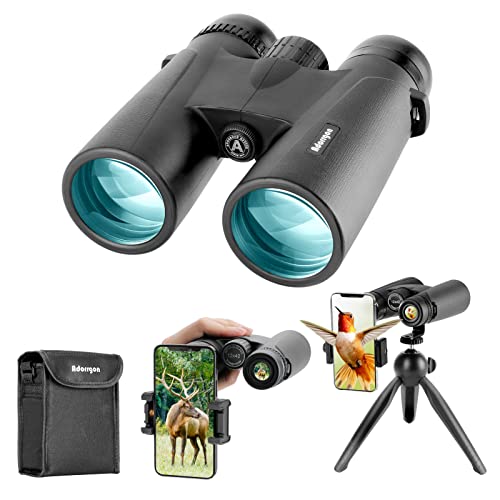
Adorrgon 12x42 High Powered Binoculars for Adults, Phone Adapter and Tripod | BAK4 Prism, FMC Optics, Waterproof, 367ft Wide View, 18.5mm Eyepieces for Bird Watching Cruise Travel Wildlife Viewing Sports
As an Amazon Associate we earn from qualifying purchases. Product prices and availability are accurate as of the date/time indicated.
The Six Birding Binoculars Reviewed
1. Vortex Diamondback HD 8×42 — Best for Beginners
The Diamondback is the doctrine composed at the beginner’s price: the format exact, the figures honest across the five, the alignment insured by the unconditional warranty that abolishes the beginner’s deepest risk. Its glass is the honest class’s — the dawn served, the contrast respectable — and its following is the parish’s own verdict. For the first birding binocular, it is the recommendation this guide writes first, as it has in these pages before and expects to again.
2. Nikon Monarch M7 8×42 — Best Mid-Class
The M7 is the step the parish takes when the season proves the hobby: the ED glass’s colour discipline, a field among the widest in its class — the finding figure this guide has weighted — and the focus wheel’s manners schooled for the following of birds. Its price is the mid-class’s honest figure; graded against the five figures entire, it is the table’s most complete citizen, and the beginner with the budget is counselled to start here without embarrassment.
3. Celestron Nature DX 8×42 — Best Value
The Nature DX brings the five figures’ essentials — the phase-coated roof parish, the format, the sealing — to the floor’s kindest reputable price, from the house the telescope parish built. Its refinements are the value class’s, conceded in the grade; as the instrument that starts the apprenticeship without the toy’s tuition in misalignment and gloom, it is the budget’s correct door.
4. Vortex Viper HD 8×42 — Best Step-Up
The Viper is the Diamondback’s doctrine at the next class: the glass’s parish finer, the build’s manners a degree more considered, the same warranty standing behind both. The beginner choosing between the siblings is choosing a class, not a format, and the guide’s counsel — the season’s evidence first, where it exists — is recorded in the buying steps; where the budget simply allows, the Viper is the decade’s citizen bought at the start.
5. Zeiss Terra ED 8×42 — Best Handling
Zeiss’s citizen is the hand’s parish: a body a measure more compact than its class, a focus wheel whose speed the warbler’s followers praise in the parish’s own dialect, ED glass from the house that composed the modern binocular’s grammar. Its field is its class’s honest figure rather than its summit, stated in the grade; for the smaller hand and the fast wood, it is the connoisseur’s value row.
6. Nikon Monarch M5 10×42 — Best for Open Country
The 10x citizen serves the doctrine’s exception with its taxes confessed and its virtues real: the estuary’s distance answered, the raptor’s parish composed, at a price below its 8x sibling’s class. The beginner whose country is genuinely open buys it by the census of Step One; the wood’s watcher is directed up the table, as the doctrine has insisted from its first paragraph.
Buying Guide: The Choice Made in the Field’s Order
Step One: The Census of Your Birding
Write the census before the catalogue: your country — the wood’s gloom or the open shore, with the dawn’s share of your watching stated honestly, since it elects the arithmetic; your glasses, which elect the relief’s figure; your distances, the hedge’s and the estuary’s in their proportions; your hand’s size and your neck’s day, which elect within the formats. The census composes the shortlist from the table’s rows — the format first, as the doctrine commands — and sets the class by the budget’s honest figure, with the parish’s counsel recorded: the class’s step buys more seasons than the format’s error, so the budget strained toward the format’s correctness and the class’s floor outranks the reverse in every case this guide has examined.
Step Two: The Audition in Honest Light
Audition the finalists as the field will: at the day’s dim end where the shop allows, or against the shop’s own shadowed parish; the straight edge drawn across the view for the alignment’s testimony; the diopter set by the procedure — the centre focus on the distant sign with one eye, the diopter’s ring for the other, the setting noted; the glasses worn for the relief’s verdict; the focus wheel run at the bird’s speed from the hedge’s distance to the tree’s, its smoothness and its travel graded as the following’s instrument; the close focus proven at your paced metres. Buy the specimen that passes, from the shelf whose returns are painless, and take it to the field within the window, since the dawn is the audition’s final court and it sits early.
Step Three: The First Season’s Liturgies
Hold the habits that make the instrument yours: the strap fitted and the harness considered where the day is long, the caps’ liturgy unvarying; the finding practised as a skill — the eyes first to the bird, the glass raised into the looking without dropping the gaze, the parish’s classic drill that the wide field rewards; the cleaning by the doctrine’s order — the blower, the brush, the cloth — and the storage dry; the diopter rechecked at the season’s turn and the warranty’s papers kept with the records. So censused, auditioned, and practised, the binocular performs the only service that matters: it vanishes — the bird simply there, bright and named, in the four seconds the wood allows — and the beginner discovers that choosing the glass was the easy part, which is exactly what a correct choice feels like.
How We Selected These Birding Binoculars
We included only real, named, currently sold binoculars whose makers publish fields of view, eye relief, close focus, and coatings, favouring the 8×42 doctrine and its argued 10×42 exception across the honest classes. Grades weight the five figures above brand prestige.
Frequently Asked Questions About Choosing Birding Binoculars
Why do birders prefer 8×42 over 10×42?
For the sum of the taxes and the mercies this article has kept separate, gathered here into the parish’s one answer: the 8’s field is wider, so the moving bird is found rather than hunted; its exit pupil is larger, so the dawn’s and the wood’s light — the birding’s decisive parish — arrives undimmed; its tremor is the lesser, so the walking, breathing, excited hand holds the image the identification needs; and its close country manners, the depth of the focus’s parish, forgive the hedge’s distances. The 10’s single mercy is the reach, and it is real — which is why the doctrine keeps its honoured exception for the open country, where the distances are the watching’s whole character and the light is the sky’s. The beginner’s error is to buy the reach for the wood, where it taxes everything and pays nothing; the census of Step One exists to prevent exactly that purchase, and the parish’s testimony — the 8x42s around every neck at the dawn chorus, across every class from the floor to the flagship — is the doctrine’s evidence filed by ten thousand mornings.
How much should a beginner spend on birding binoculars?
Into the honest class and not beyond the diminishing returns’ first parish — rendered in the table’s figures as the country between the value floor and the mid-class, where the five figures are all honestly served: below the floor, the parish’s tuition is paid in misalignment and gloom, the instruments that teach the beginner to blame their eyes; within it, the Diamondback’s and the Nature DX’s citizens serve the decade entire, and the beginner who starts there has spent correctly by any accounting. The step to the mid-class — the M7’s and the Viper’s country — buys the colour’s discipline, the field’s width, and the wheel’s manners, and is worth its figure to the beginner whose season has proven the hobby or whose budget simply allows the decade’s citizen at the first purchase. Above that parish the flagship’s mercies are real and rarefied, and this guide, which grades them gladly in their own articles, declines to sell them to the first season: the beginner’s scarcest resource is not money but mornings, and both are spent best in the field with the honest class, learning the birds the flagship would only show the clearer.
What do ED glass and phase coating actually do?
Two different mercies, worth separating since the listing prints them as one incantation: the ED glass — the extra-low dispersion parish — disciplines the colour’s fringing, the purple and green edges that uncorrected glass draws around the high-contrast citizen, the white bird against the dark wood being the parish’s test card; the discipline matters to the identification because the fringe is a false field mark composed by the instrument, and its removal lets the bird’s own colours testify. The phase coating answers a roof prism’s internal physics — the light’s two halves arriving out of step, the contrast quietly taxed — by restoring the step and with it the image’s snap, the feather’s separation from the branch behind it. Neither is a luxury dialect: in the roof-prism birding parish both are the class’s standard furniture from the honest floor upward, and the candidate lacking the phase parish in 2026 is graded as the anachronism it is. The audition’s eye can see both mercies at the shop’s contrasty parish — the sign’s edge against the bright window — which is where the beginner should look for them, rather than in the brochure’s adjectives.
Should I buy binoculars online or in a shop?
The shop, where one exists within your parish — and the reasoning is this article’s whole doctrine in one preference: the binocular is fitted to a face, a pair of eyes, and two hands, its decisive figures — the relief’s verdict with your glasses, the wheel’s manners under your finger, the alignment of the very specimen in your hands — are given only in the audition, and the specimen’s variance is a parish fact the online box cannot audition for you. The online purchase from the return-friendly shelf is the doctrine’s accepted second, with its terms stated: the audition performed at home on the arrival’s day, at the dim hour, with the return’s window as the court — and performed entire, since the unopened box on the shelf is the parish’s saddest instrument. What neither route permits is the purchase made on the figures alone without the eyes’ testimony, nor the bargain channel whose returns are a rumour. The binocular will be at your eyes for a decade of dawns; the hour spent choosing it in the flesh is the best-spent hour in the whole of the hobby’s budget, and the parish’s elders, who all have a story about the binocular they bought blind, will tell you so at length if you let them.
Related guides
- Best Optics for Beginners Winter Use in 2026: Fogproof Binoculars Graded on the Cold Transition — Warm Car to Frozen Field Without Losing the View
- Best Cell Phone Monocular in 2026: 7 Best Cell Phone Monoculars With Clear View, Simple Use, and Easy Use for Cell Phone Monocular
- Best Monocular for Glasses Wearers Comfort in 2026: Monocular for Glasses Wearers Comfort, Glasses Wearers Monoculars, and Best Comfortable Monoculars for Glasses Wearers
- Best Binoculars for Camping Trips Viewing in 2026: 7 Binoculars for Camping Trips Viewing That Offer Clear Optics, Easy Carry, and Reliable Performance for Camping
More from Amazon
Programs that pair well with the guide above. Offers and eligibility are set by Amazon and may change.
Free shipping on eligible items, Prime Video and more. Eligible new members can start with a free trial.
Start a Prime free trialAudiobooks and podcasts to listen to on the go. Eligible new members can start with a free trial.
Try Audible freeAd-free music streaming. Eligible new subscribers can start with a free trial.
Try Music Unlimited freeA free business account with business pricing and bulk-buying tools for work, shop or home office.
Create a business accountAs an Amazon Associate we earn from qualifying purchases.

Write Your Review
No reviews yet. Be the first to share your experience!