
What's inside
- What Makes the Best Telescope Tripod Adapter for Astronomy
- Quick Comparison: Tripod Adapters and Mounts for Astronomy Compared
- The Six Adapters and Mounts Reviewed
- Buying Guide: Marrying the Instrument to the Tripod
- How We Selected These Adapters
- Frequently Asked Questions About Tripod Adapters for Astronomy
As an Amazon Associate I earn from qualifying purchases. This post may contain affiliate links at no extra cost to you.
The best telescope tripod adapter for astronomy answers a need every stargazer meets in their first season: the instrument in the hand — most often the astronomy binocular, the small spotting scope, or the little refractor — must be married to the tripod in the cupboard, and the marriage is performed by a piece of hardware so small that its importance is routinely discovered at midnight, in the cold, by the wobble. This guide grades that hardware honestly and in its full parish: the simple L-bracket binocular adapters that bolt the binocular’s central stud to the tripod’s head; the stouter citizens built for the giant binoculars whose weight turns the bracket into a spring; the quick-release plates and the dovetail bars that marry telescopes to photographic and astronomical mounts alike; and the parallelogram mounts that are the parish’s summit — the adapter grown into an articulated arm, floating the binocular before the reclined observer’s eyes with the tripod exiled to the side. The examination throughout is the night’s own: rigidity first, because the adapter is the smallest and most flexible link in the chain between the ground and the eyepiece, and at fifty magnifications the bracket’s spring is the image’s earthquake — graded by the jiggle test this guide teaches, the tap on the tube whose tremor the clock counts; balance second, since the adapter decides where the instrument’s weight sits over the head, and the nose-heavy marriage fights its owner at every altitude; thread citizenship third — the quarter-twenty and three-eighths standards, the stud’s depth in the binocular’s socket, the adapter’s fit against the hinge’s real estate — because the parish’s classic failure is the adapter that fits the thread and fouls the body; and the ergonomics of the cold and the dark throughout, the knobs that gloves can work and the releases that cannot drop the instrument they free. The founding doctrine is stated in one sentence and defended in every section: in the mounting chain, the cheapest link sets the performance, and it is very often this one.
The flex doctrine deserves its founding analysis, because the adapter’s physics is the beginner’s most expensive surprise. A binocular on a tripod is a lever: its weight acts at a distance from the head’s axis, and the bracket that joins them is loaded in bending with every touch, every breeze, every heartbeat the observer lends the system through the eyepiece’s contact. The simple stamped L-brackets of the floor perform this duty for the light roof-prism citizens adequately and for the heavy porros marginally, flexing in a spring the image betrays at high power as a tremor that takes its seconds to die — seconds in which the double star does not split and the planet does not settle. The machined and the cast citizens shorten those seconds toward the tap-test’s ideal, and the parallelogram abolishes the geometry itself, balancing the instrument on an arm whose counterweight makes the binocular effectively weightless and whose joints move like a dentist’s lamp. The doctrine’s arithmetic is therefore a matching exercise, graded in the buying guide as a census: the instrument’s weight and its magnification against the adapter’s class, with the rule that the adapter is bought for the heaviest instrument it will ever carry and the highest power it will ever serve, since both are known on the day of purchase and regretted, jointly, on the first still night wasted to a tremor. The second doctrine is the interface census, and it is performed with the instrument in hand: the binocular’s adapter socket — its thread, its depth, the clearance around it against the hinge and the barrels — measured rather than assumed, because the porro’s generous socket and the roof’s recessed one elect different adapters, and the giant binocular’s centre bar is a third country with its own hardware.
The census of instruments completes the frame: the standard 8×42 and 10×50 citizens, whose adapters are the parish’s staple; the giant 15×70 and 20×80 astronomy binoculars, whose weight and power make the adapter a structural decision and the parallelogram their destiny; the small spotting scope and the tabletop telescope, whose dovetails and plates marry them to the photo tripod for the travel parish; and the phone-and-binocular digiscoping citizens, whose adapter-upon-adapter stacks are graded with the flex doctrine’s scepticism doubled. The table spans the census from the staple bracket to the parallelogram’s arm, and the reviews name each adapter’s instrument as plainly as its virtues.
Our Top Picks
What Makes the Best Telescope Tripod Adapter for Astronomy
Rigidity: The Jiggle Test Is the Review
Grade every adapter by the tap test’s verdict at the instrument’s working power: the mounted system, tapped once on the tube, should settle within a breath — the tremor dying in a second or so at the powers the parish uses — and any adapter whose spring sings longer has graded itself, whatever its finish. Construction is the test’s predictor: the machined and cast bodies, the short and triangulated geometries, the steel where the floor uses hope — and the matching doctrine caps it, since the adapter that is rigid for the 10×50 may be a diving board for the 20×80, and its rating in this table is always spoken with its instrument attached.
Threads, Studs, and the Socket’s Real Estate
The interface is graded by the census performed in the hand: the binocular’s socket thread (the quarter-twenty standard of nearly the whole parish), its depth against the adapter’s stud — the stud that bottoms early leaves the joint a rumour, and the one that runs long can foul the internals it approaches, so the engagement is proven by the fitted feel, firm without force — and the adapter’s body against the hinge’s clearance, where the wide citizens foul the narrow roof-prism hinges and the slim citizens exist for exactly that parish. The quick-release plates are graded on their standard’s honesty — the Arca parish’s near-universality against the proprietary plates’ orphanhood — because the adapter bought into a standard is a citizen for life and the one bought into a brand is a tenant.
Balance and the Head’s Behaviour
The adapter places the instrument over the head, and its geometry decides the night’s manners: the bracket that centres the binocular’s mass above the head’s axis lets the altitude lock hold without a wrestle and the slow pans run true, while the offset marriage nose-dives at the zenith and creeps at the horizon. The sliding and slotted citizens earn their grade here, letting the balance be set on the night rather than accepted from the box; and the parallelogram’s counterweighted arm is the doctrine’s perfection, in which balance is not set but abolished — the instrument floating at the eye, the head’s whole parish retired. Grade the balance with the instrument mounted and the locks released, in the shop or the garden, because the zenith is where the truth is told.
Quick Comparison: Tripod Adapters and Mounts for Astronomy Compared
| Adapter / Mount | Type / Best For | Key Specs |
|---|---|---|
| Oberwerk / Farpoint parallelogram class | Parallelogram mount — best telescope tripod adapter for astronomy, deluxe | Counterbalanced arm for giant binoculars as published |
| Celestron binocular tripod adapter class | L-bracket — best standard adapter | 1/4-20 stud, fits most roof/porro sockets as published |
| Vortex binocular tripod adapter class | L-bracket — best slim fit | Slim profile for close-set hinges as published |
| Leupold / machined adapter class | Machined bracket — best rigidity per dollar | Machined body classes as published |
| Orion Monster / parallelogram class | Parallelogram — best value arm | Counterweight arm classes as published |
| Vixen-style dovetail bar class | Telescope dovetail — best for small scopes | Standard dovetail bars, lengths as published |

Binocular Tripod, 72” Spotting Scope Tripod Stand with Binocular Adapter and 2 QR Plates, Travel Camera Stand with Phone Holder/Carry Bag, Compatible with Binoculars/Spotting Scope/Camera/Phone


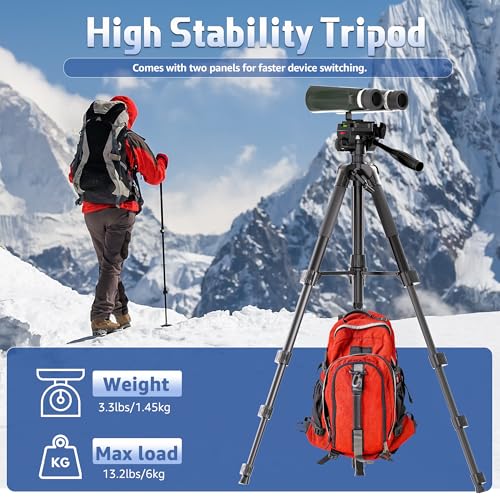
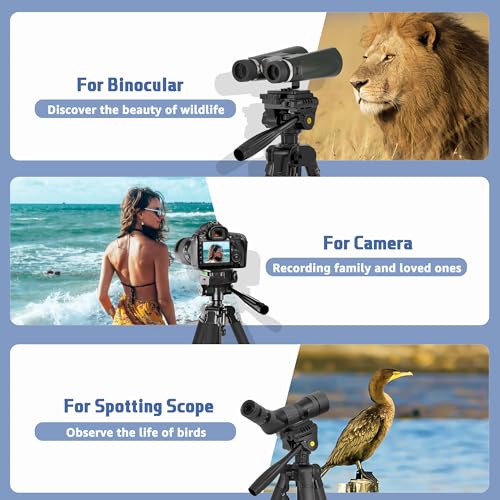

As an Amazon Associate we earn from qualifying purchases. Product prices and availability are accurate as of the date/time indicated.

Telescope, 90MM Telescope for Adults High Powered, 180X Magnification | Portable Professional Astronomy Refractor Telescopes for Beginners, with Adjustable Tripod & Phone Adapter, 3X Barlow Lens
As an Amazon Associate we earn from qualifying purchases. Product prices and availability are accurate as of the date/time indicated.

Telescope for Adults & Kids, 70MM Aperture FMC Optics Telescopes for Astronomy Beginners, 300MM Refractor Telescope (15X-150X) with Phone Adapter and Tripod, Travel Gifts for Moon, Jupiter and Star
As an Amazon Associate we earn from qualifying purchases. Product prices and availability are accurate as of the date/time indicated.
Adapters require a tripod and head, not included.
The Six Adapters and Mounts Reviewed
1. Parallelogram Mounts (Oberwerk / Farpoint Class) — Best Deluxe
The parallelogram earns the table’s summit by abolishing the parish’s problems rather than managing them: the counterbalanced arm floats the giant binocular at the reclined observer’s eyes, weightless, tremor-damped by its own geometry, the tripod standing aside like a butler. It is the 15×70 and 20×80’s intended destiny and the long session’s transformation — priced as furniture, conceded in its grade, and worth it to the binocular astronomer entire. For the giant-binocular citizen, it is not the upgrade; it is the instrument’s completion.
2. Leupold / Machined Adapter Class — Best Rigidity per Dollar
The machined brackets are the staple parish’s correct answer: bodies milled or cast to a stiffness the stamped floor cannot rehearse, studs and knobs of glove-worthy size, at prices that make the floor’s saving look like the false economy it is. For the 10×50 and the standard citizens worked at honest powers, this class ends the adapter question in one purchase, and the guide writes it as the default recommendation for every binocular that will never meet a parallelogram.
3. Vortex Adapter Class — Best Slim Fit
Vortex’s slim citizens serve the roof-prism parish whose close-set hinges foul the wide brackets: a narrow body that threads the needle between the barrels and seats the stud home. Its stiffness is its size’s, graded in its parish; for the modern roof binocular — the parish’s majority — it is the fit that fits, which in the interface census is the whole of the law.
4. Celestron Adapter Class — Best Standard Staple
Celestron’s bracket is the parish’s incumbent: the simple L that has married a generation of binoculars to their tripods, adequate for the standard citizens at their honest powers and priced like the staple it is. Its flex at the giants’ weight is its grade’s ceiling, stated plainly; as the first adapter and the spare, it remains the correct twelve dollars in the entire astronomy catalogue.
5. Orion Parallelogram Class — Best Value Arm
Orion’s arm brings the parallelogram’s transformation down a price class, with the construction’s manners a step below the summit’s and the geometry’s gift entire. For the giant-binocular owner whose budget divides between the glass and its mount, it is the value door to the reclined parish — and the guide notes, as the doctrine requires, that its tripod must be the stout citizen the arm’s leverage demands.
6. Vixen Dovetail Bar Class — Best for Small Telescopes
The dovetail bars are the telescope side of the keyword’s parish: the standard rail that marries the small refractor and the tabletop scope to the astronomical mount — and, with the photo adapters of the cross-compatible parish, to the sturdy photo tripod for the travel kit. Their grades are their standard’s: universal, rigid, and priced like hardware. For the small scope’s owner, the bar is the adapter question answered in the mount’s own language.
Buying Guide: Marrying the Instrument to the Tripod
Step One: The Interface Census, in the Hand
Perform the census before the catalogue: the instrument’s socket — its thread confirmed, its depth probed with the stud’s own measure, the clearance around it read against the hinge and the barrels — and its weight and working power written beside, since together they elect the adapter’s class by the matching doctrine. Audit the tripod’s head in the same sitting: its plate standard, its capacity against the mounted total, its altitude manners with a load — because the adapter marries two citizens and both must consent. The giant binocular’s owner performs the parallelogram’s arithmetic at this step, with the reclined chair’s parish priced as part of the system it completes.
Step Two: The Jiggle Test, Performed Before the Money Settles
Audition the marriage in the garden at dusk, inside the return window: the instrument mounted, balanced, and raised to the working altitude; the tube tapped once, and the tremor’s dying counted at the working power against the doctrine’s second; the locks worked with the gloves the season wears; the zenith approached and the balance’s manners read where the truth lives. The adapter that passes is kept without a backward glance; the one whose spring sings is returned while the returning is a procedure rather than a grievance, and its class — not merely its brand — is upgraded, since the test has graded the construction and not the specimen.
Step Three: The Night’s Citizenship
Hold the mounted system’s liturgies: the stud’s engagement checked by hand at every mounting, as briefly and as non-negotiably as the parish’s other safety habits; the quick-release’s lock proven with the instrument’s weight before the eye commits; the whole chain — legs, head, adapter, instrument — read as one structure whose weakest citizen sets the night’s quality, and upgraded at the link the jiggle test indicts rather than the one the catalogue flatters. Store the adapters with the instruments they serve. So censused, tested, and kept, the hardware performs the only service that matters: it disappears — and the observer is left alone with a steady sky, which is what every adapter in this table was, in the end, for.
How We Selected These Adapters
We included only real, named, currently sold adapters and mounts whose makers publish their fitments and constructions, spanning the bracket, machined, slim, dovetail, and parallelogram classes for binoculars and small telescopes. Grades weight rigidity at working powers and interface honesty above finish.
Frequently Asked Questions About Tripod Adapters for Astronomy
Do all binoculars fit a standard tripod adapter?
Nearly all of the parish’s serious citizens carry the socket — the quarter-twenty threaded hole in the front of the hinge, usually under a cap that names it — but the exceptions and the fouls are common enough that the census precedes the purchase: the compact and older citizens that omit the socket entirely (their parish is the hand and the monopod, and no adapter marries what has no thread); the roof-prism hinges whose close real estate fouls the wide brackets, electing the slim citizens; and the giant binoculars whose centre-bar mounts are their own hardware’s country. The socket’s presence is verified by the eye in five seconds — the cap removed, the thread read — and its depth and clearance by the fitted adapter’s feel at the audition. The beginner who performs the census buys once; the one who assumes buys the parish’s most returned twelve dollars, repeatedly, in different finishes.
Why does my binocular still shake on a tripod?
The chain’s weakest citizen is testifying, and the jiggle doctrine reads the testimony link by link: the adapter’s flex, indicted when the tremor is a spring’s slow song and cured by the machined class or the parallelogram’s geometry; the head’s locks and its capacity, indicted when the image creeps or the altitude sags, cured by the lock’s honest tightening or the head’s upgrade; the legs, indicted when the tremor arrives with the breeze and dies slowly, cured by the lowered stance, the hung weight, and the legs’ own class; and the observer, indicted when the tremor keeps the heartbeat’s time — cured by the hands-off discipline, the chair, and the remote parish’s patience, letting the system settle after every touch as the long-exposure photographers do. The diagnosis is performed by elimination at the audition’s leisure rather than the session’s frustration, and the guide’s consolation is the chain’s arithmetic: the cure is almost always the cheapest link, because that is where the flex lives.
Is a parallelogram mount worth it for binocular astronomy?
For the giant binoculars and the long sessions, it is the parish’s one transformation rather than an upgrade — and the reasoning is the observer’s body: the straight tripod holds the binocular at the zenith by exiling the observer to a crouch beneath it, neck craned, session shortened by the spine’s grievances, while the parallelogram floats the instrument before the reclined eye and lets the sky be watched from a deckchair, for hours, at the altitudes where the astronomy lives. Its costs are honestly the table’s highest — the arm, the stout tripod it leverages, the storage’s real estate — and for the 10×50’s quick sessions they buy nothing the bracket does not provide. The deciding evidence is the session’s length and the binocular’s weight: the citizen whose giants come out for the evening’s whole performance should buy the arm as the instrument’s completion, and the quick-look parish should buy the machined bracket and spend the difference on the sky’s other citizens, without either envying the other.
Can I mount a small telescope on a photo tripod?
Yes — within the photo parish’s honest limits, which this answer states as the marriage’s terms: the small refractor or tabletop scope rides the dovetail bar of its own standard, married to the tripod through the adapter plates the cross-compatible parish sells, on a head whose capacity respects the total with the doctrine’s margin and whose movements are the slow, locked kind — because the photo head’s fluid graces are built for the camera’s kilograms and the telescope is a longer lever with a higher power’s tremor standard. The combination serves the travel and grab-and-go parishes genuinely: the lunar and planetary evenings, the terrestrial double life, the holiday’s sky. Its ceiling is the long session at high power, where the astronomical mount’s slow motions and settled locks are the correct citizens — and the beginner who begins on the photo tripod, knowing its terms, has bought a useful servant rather than a disappointment, which is the distinction this entire guide exists to teach.
Related guides
- Best Optics for Beginners Winter Use in 2026: Fogproof Binoculars Graded on the Cold Transition — Warm Car to Frozen Field Without Losing the View
- Best Cell Phone Monocular in 2026: 7 Best Cell Phone Monoculars With Clear View, Simple Use, and Easy Use for Cell Phone Monocular
- Best Monocular for Glasses Wearers Comfort in 2026: Monocular for Glasses Wearers Comfort, Glasses Wearers Monoculars, and Best Comfortable Monoculars for Glasses Wearers
- Best Binoculars for Camping Trips Viewing in 2026: 7 Binoculars for Camping Trips Viewing That Offer Clear Optics, Easy Carry, and Reliable Performance for Camping
More from Amazon
Programs that pair well with the guide above. Offers and eligibility are set by Amazon and may change.
Free shipping on eligible items, Prime Video and more. Eligible new members can start with a free trial.
Start a Prime free trialAudiobooks and podcasts to listen to on the go. Eligible new members can start with a free trial.
Try Audible freeAd-free music streaming. Eligible new subscribers can start with a free trial.
Try Music Unlimited freeA free business account with business pricing and bulk-buying tools for work, shop or home office.
Create a business accountAs an Amazon Associate we earn from qualifying purchases.

Write Your Review
No reviews yet. Be the first to share your experience!