
What's inside
- Best Monoculars for Beginners Stadium Viewing: The Stadium Specification
- Best Monoculars for Beginners Stadium Viewing: Quick Comparison
- The Six Stadium Monoculars Reviewed
- Buying Guide: How to Choose the Best Monocular for Stadium Viewing as a Beginner
- Frequently Asked Questions About Monoculars for Stadium Viewing
As an Amazon Associate I earn from qualifying purchases. This post may contain affiliate links at no extra cost to you.
The best monoculars for beginners stadium viewing succeed by ignoring the specification most beginners shop for. In a stadium, magnification is a trap: the action is wide, fast, and shared with forty thousand people whose excitement moves your seat, your row, and your hands, and a high-power monocular turns that joy into a narrow, shaking tunnel in which the play is always leaving. The experienced stadium viewer carries low power, six to eight times, a wide field of view that holds the formation and the break of the play together, and an optic small enough to pass the venue’s bag policy and live in a jacket pocket until the moment it is wanted. This guide compares six real, currently sold monoculars for exactly that job, teaches the beginner the three numbers that matter in a seat, field of view, exit pupil, and weight, and gives the monocular its honest context: for long, relaxed viewing a small binocular is kinder to the eyes, while for the fan who wants one eye, one hand, and one pocket committed, nothing else in optics delivers so much closeness for so little carried.
Stadium viewing has a rhythm the beginner should design for. The monocular rises for the formation, the replay-worthy moment, the far end zone’s detail, the concert stage’s performer, and it lowers for the game itself, watched with the whole crowd and both eyes. An optic for that rhythm must focus fast, ride on a wrist loop or a neck cord without swinging into the seat in front, and survive the evening’s weather and beverages with a shrug. Every model in this table is waterproof or weather-resistant in its class and pocketable by design. What separates them is the view, and the view, at a stadium, is width and steadiness before it is power.
Our Top Picks
 10x25 Monocular Telescope with Rubber Body9.2X3cm1.18 x 3.62 x 1.18 inches0.16 poundsCheck on Amazon
Best Monoculars for Beginners Stadium Viewing: The Stadium Specification
Field of View Is the Stadium’s First Number
A football formation is twenty yards wide before the ball moves, a soccer attack develops across half a pitch, and a concert’s stage picture is the band, not the singer’s left eye. Field of view, published in feet at a thousand yards or in degrees, tells you how much of that picture your optic holds at once, and at stadium distances the wide monoculars in this table hold two to three times the scene of a narrow high-power one. For the beginner, the practical translation is forgiveness: a wide field finds the action without hunting, keeps it through the crowd’s surge, and lets one eye follow a play while the other, uncovered, keeps the stadium’s whole story in peripheral view, a trick experienced monocular users perform without thinking and beginners should practice from the first game. Shop field of view first, magnification second, and let any monocular that advertises power without publishing its field explain itself to someone else.
Exit Pupil and the Night Game
Divide the objective lens size by the magnification and you have the exit pupil, the width of the light beam reaching your eye, and under stadium lights at night, and in the deep shade of a covered stand by day, that number decides whether the view is bright and easy or dim and straining. An 8×32 delivers a 4-millimeter beam, a comfortable match for most eyes under lights; an 8×25 delivers about 3.1, serviceable and dimmer; a tiny 7×18 pocket scope delivers roughly 2.6, a daylight-only compromise its size explains. The beginner’s rule is generous and simple: for evening events favor the 32-millimeter class in this table, for pure daylight portability the 25s serve, and treat the smallest pocket scopes as fair-weather instruments, charming at a noon game and out of their depth under lights. No specification in this article will repay its learning cost faster on your first night game.
One Eye, One Hand: Ergonomics of a Monocular in a Crowd
A monocular is aimed with one hand and steadied against the brow, and its ergonomics are therefore a study in small mercies: a focus wheel or ring that one finger can roll without shifting the grip, a body thick enough to hold in a gloved or excited hand, an eyecup that meets glasses or folds for them, and a lanyard, because a dropped monocular in a stadium is a monocular donated to the concrete. Beginners should also learn the two steadiness tricks the veterans use: brace the holding elbow against the body or the seat’s arm, and rest the monocular’s body lightly against the brow bone rather than floating it before the eye, which converts the head and the hand into one structure. Fatigue is the monocular’s honest cost, one eye working while the other rests produces a tired feeling across a whole game that a binocular spares you, which is why the rhythm of this guide’s introduction, up for the moment, down for the match, is not a suggestion but the technique the instrument demands.
Best Monoculars for Beginners Stadium Viewing: Quick Comparison
| Monocular Model | Key Specs | Best For | Typical Price Range | Rating |
|---|---|---|---|---|
| Vortex Solo 8×25 | 8×25, waterproof and fogproof, rubber armor, integral carry clip in this line class, strong lifetime warranty | Best beginner monocular overall | $55 – $75 | 4.6 / 5 |
| Nocs Provisions Zoom Tube 8×32 | 8×32, waterproof in this line class, wide field design, rugged grip texture, bright exit pupil for night games | Best for night games and concerts | $75 – $95 | 4.5 / 5 |
| Celestron Outland X 6.5×32 | 6.5×32, very wide field in this class, waterproof and fogproof, large exit pupil, twist-up eyecup | Best wide field for beginners | $60 – $85 | 4.5 / 5 |
| Vortex Solo 8×36 | 8×36, waterproof and fogproof, larger objective for brightness, utility clip in this line class | Best brightness in the Solo line | $90 – $120 | 4.4 / 5 |
| Brunton Echo Pocket Scope 7×18 | 7×18, ultra-compact, very light, close focus in this line class, daylight design | Best ultra-pocket option | $25 – $40 | 3.9 / 5 |
| Bushnell Legend Ultra HD Monocular 10×42 | 10×42, ED glass in this line class, waterproof, large and bright, higher power | Best for distant detail from a steady seat | $180 – $230 | 4.2 / 5 |

8x32 Pocket Monocular for Adults High Powered IP67 Waterproof for Outdoor | Compact Monocular Telescope with Stable Handheld View and One-Hand Focus for Bird Watching, Travel, Hiking and Scenic Viewing
As an Amazon Associate we earn from qualifying purchases. Product prices and availability are accurate as of the date/time indicated.
10x25 Monocular Telescope with Rubber Body, Black Pocket Scope | Wildlife and Stadium Use, Distant Viewing, for Birders, 10x Magnification, Boy Girl and Beginners


As an Amazon Associate we earn from qualifying purchases. Product prices and availability are accurate as of the date/time indicated.
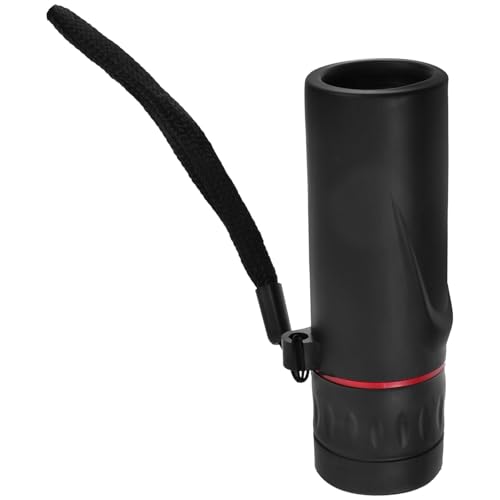
10x25 Monocular Telescope, Rubber Pocket Scope for Wildlife Viewing | Black Compact Design, Wrist Strap Carry, Navigation and Stadium Use, for Birders, Boy Girl and Beginners


As an Amazon Associate we earn from qualifying purchases. Product prices and availability are accurate as of the date/time indicated.
Prices shown are approximate and for reference only. Prices change often, so please check the current price on Amazon before you buy.
Specifications summarize manufacturers’ published information for current models. Ratings are editorial and are given for stadium use by beginners, weighing field of view, steadiness at the stated power, brightness, size, and value.
The Six Stadium Monoculars Reviewed
1. Vortex Solo 8×25: Best Beginner Monocular Overall
The Solo 8×25 is the monocular this guide hands a beginner without a second thought: a sane 8x in a waterproof, armored body, a field wide enough for the game’s real picture, focusing that one hand learns in an inning, and Vortex’s unconditional lifetime warranty behind a product that will be dropped in a stadium by definition. Its 25-millimeter objective sets its one boundary, the night game’s dimmer view, which its price fairly reflects. For the fan whose games are mostly daylight and whose pocket is the carrying case, it is the complete answer, and its rating leads the table because it makes no promise it cannot keep in a crowd.
2. Celestron Outland X 6.5×32: Best Wide Field for Beginners
The Outland X makes the beginner’s wisest trade on purpose: it gives up a step of magnification for the widest, brightest, steadiest picture in this table, a 6.5x that a new hand holds like a photograph and a 32-millimeter objective that keeps evening games lit. Finding the action in it is effortless, following it is calm, and a beginner’s first game with it teaches the field-of-view doctrine of this guide more convincingly than the guide can. If your stadium is large, your seats are high, and your sport is wide, soccer above all, this may be the true first choice, and its rating is a breath behind the leader’s for exactly the readers it serves best.
3. Nocs Provisions Zoom Tube 8×32: Best for Night Games and Concerts
Nocs built the Zoom Tube for the festival and stadium generation: an 8×32 with the exit pupil night events demand, a waterproof body with a grip that survives weather and enthusiasm, and a style that belongs at a concert as readily as at a cup final. Its view is bright and wide, its focus ring is a one-finger pleasure, and its price sits fairly for its glass. For the beginner whose calendar is evening-heavy, concerts, night games, summer tournaments under lights, it is the monocular whose brightness will be thanked at every event, and the one most likely to be borrowed by the seat neighbor who brought nothing.
4. Vortex Solo 8×36: Best Brightness in a Working Monocular
The larger Solo trades a little pocketability for a 36-millimeter objective and the brightest view in its line, serving the fan whose seats are distant, whose games run into dusk, or whose eyes simply want the easier picture. It keeps the family’s armor, clip, and warranty, and its size remains a jacket rather than a shirt pocket proposition. For the beginner who has handled the 8×25 and wished for light, this is the same idea grown, and choosing between them is this guide’s exit pupil lesson with two price tags attached.
5. Bushnell Legend Ultra HD 10×42: Best for Distant Detail, With a Warning
The Legend is the finest optic in this table and the one this guide recommends most carefully to beginners, because its 10×42 specification, ED glass, and generous brightness serve a different master: detail at distance, the far bench, the distant green, the scoreboard’s small print, from a seat steady enough to hold ten power. In a surging crowd it will shake; across a wide play it will crop; and in an experienced, braced hand it will show what no other monocular here can. Buy it as a second monocular, or as a first for the steady, detail-hungry viewer who has read this paragraph and accepts its terms, and it will reward the decision for years.
6. Brunton Echo Pocket Scope 7×18: Best Ultra-Pocket
The Echo is the monocular as a keychain thought: 7×18, a few ounces, a daylight view that turns a distant scoreboard and a far formation from rumor into reading, at a price below a stadium dinner. Its small exit pupil confines it to the sun, its field is modest, and its charms are entirely those of presence, the optic that is there because it weighs nothing and fits anywhere, including the small clear bag the venue’s policy allows. As a beginner’s only monocular it is a compromise; as the spare, the gift, and the child’s first optic, it is a delight, and it is rated for the job its size describes.
Buying Guide: How to Choose the Best Monocular for Stadium Viewing as a Beginner
Step One: Check the Venue’s Rules and Your Seat’s Reality
Read your stadium’s prohibited items and bag policy before buying, because venues increasingly govern what enters, commonly favoring small, pocketable items and clear bags, and a monocular’s compactness is a compliance feature as much as a convenience. Then picture your actual seat: its distance from the action, whether your events are day or night, and how much of the game you intend to watch through glass at all. That picture, honestly drawn, selects your class from this table in one step: daylight and near, the 8x25s; night and far, the 32s and 36; wide sports, the wide fields; detail hunting, the 10×42 with its warning understood. A monocular bought for your real seat will be used at every event. One bought for an imagined front row will be left at home by October.
Step Two: Test the One-Hand Skills Before the Game
Practice at home, on the television’s far wall or the street’s far sign, until the four skills are reflexes: raising the monocular to the correct eye without hunting, rolling the focus with one finger while the picture stays framed, bracing the elbow and brow as this guide teaches, and lowering it to the lanyard without a fumble. Set the eyecup for your glasses or your bare eye once, and learn your monocular’s close and far focus ends by feel. Ten minutes of this rehearsal is the difference between an optic that serves the game’s biggest moment and one that is still focusing while the crowd tells you what you missed, and it costs nothing but the admission that beginners rehearse, which is true in stadiums as in everything else this site covers.
Step Three: Carry It Like It Matters and Maintain It Like It Is Small
Compose the stadium kit around the monocular: its lanyard or wrist loop, always; a microfiber cloth in a pocket, because stadium air carries the evening’s food and weather; its small case for the journey, in the pocket or the permitted clear bag; and a habit, hand it to no one without its loop on their wrist, because concrete is undefeated. At home, clean the lenses with the cloth and a breath of patience, store the monocular dry, and check its focus and eyecup each season. A monocular’s whole virtue is being present, pocketed, and ready at the moment the game turns, and these small disciplines are what presence is made of. Buy the wide, low, bright one your seat requires, rehearse its handling once, and the far end zone is yours for the price of a couple of tickets, forever.
Frequently Asked Questions About Monoculars for Stadium Viewing
What magnification is best for a monocular at a stadium?
Six to eight times, for almost every beginner in almost every seat, because stadium viewing rewards a wide, steady picture over a narrow, magnified one: the play develops across a formation, the crowd moves your hands, and the monocular’s one-handed hold magnifies every tremor along with the action. At 6.5x to 8x, the field of view holds the play’s whole story, the image stays calm enough to follow at speed, and the exit pupil, with a 25 to 36 millimeter objective, stays bright enough for evening events in the larger sizes. Ten power has its place for the steady, experienced viewer hunting detail from a fixed seat, as this guide’s Legend review describes, and beyond ten power a handheld monocular in a crowd is a telescope impression rather than a tool. Buy the power your hands can hold, not the power the box can print, and your first game will teach you why every veteran in the row is carrying less magnification than the beginner expected.
Is a monocular or a small binocular better for stadiums?
For short, frequent looks, the monocular wins on size, price, and one-handed ease, which is why it is this guide’s subject and recommendation for the fan who watches the game itself with the naked eye. For long, continuous viewing, a concert set watched entire, a match followed through glass for minutes at a time, a compact binocular is kinder, because two eyes share the work without the fatigue and the narrowed awareness a monocular imposes, and many fans graduate to an 8×25 or 8×32 binocular for exactly that reason. The honest summary is that the monocular is the better pocket instrument and the binocular is the better viewing instrument, and the beginner’s choice is a rhythm choice: moments, monocular; sessions, binocular. Either, at low power with a wide field, will transform the far seats, and the fan who owns one of each, bought in that order, owns the stadium complete.
Can I bring a monocular into a stadium or concert venue?
Usually yes, because monoculars and small binoculars are standard, permitted items at most sporting and concert venues, but the governing document is your venue’s own policy, which you should read before every season as policies tighten and change: bag size and clear-bag rules govern how you carry it, some events restrict professional camera equipment in ways that occasionally sweep in larger optics, and a few high-security events prohibit items a league game welcomes. The pocket monoculars in this table are designed to the friendly end of every policy, small enough for a jacket pocket, which is the carry least likely to be questioned anywhere. When in doubt, check the event’s page, choose the smallest monocular that serves your seat, and carry it in the open hand or the pocket rather than in a bag that invites a search’s delay. The goal is to be watching the warmups, not discussing optics at the gate.
Why does the view through my monocular shake so much?
Because magnification multiplies motion exactly as it multiplies the image, and a monocular’s one-handed, one-eyed hold is the least braced hold in optics, so the beginner’s shake is physics before it is clumsiness. The remedies stack, and together they transform the view: brace the holding elbow against your body or the seat’s arm; rest the monocular lightly against your brow so head and hand move as one; hold the body in the whole hand rather than the fingertips and roll focus with a single finger instead of re-gripping; breathe out and view in the breath’s calm, as marksmen do; and, if the shake persists, accept the verdict of this guide’s first section and step down in magnification or up in objective, because a 6.5×32 in a beginner’s hand shows more of the game, in the end, than a 10×42 showing mostly the beginner. Practice the brace at home for one television game and the stadium version of you will be steadier than the row around you.
Related guides
- Best Binoculars for Marine Boating Use in 2026: Steiner, Fujinon, Bushnell, and Nikon Compared for a 7×50 Parish Chosen for a Moving Deck, Sealing Proven in the Maker’s Text, and a Compass That Aids and Never Replaces the Boat’s Own
- Best Telescopes for Spring Galaxy Viewing in 2026: Apertura, Sky-Watcher, and Celestron Compared for Aperture Sentenced Against Your Sky’s Own Darkness, Dark Adaptation Kept Like a Citizen, and Galaxies Read by Their Surface Brightness
- How to Service Binoculars Professional Repair in 2026: When to Clean, When to Send for Repair, and How to Protect Your Optics
- Dielectric Coated Prism Pros and Cons in 2026: What a Dielectric Coated Prism Does, Why It Helps Binoculars, and When It Is Worth the Price
More from Amazon
Programs that pair well with the guide above. Offers and eligibility are set by Amazon and may change.
Free shipping on eligible items, Prime Video and more. Eligible new members can start with a free trial.
Start a Prime free trialAudiobooks and podcasts to listen to on the go. Eligible new members can start with a free trial.
Try Audible freeAd-free music streaming. Eligible new subscribers can start with a free trial.
Try Music Unlimited freeA free business account with business pricing and bulk-buying tools for work, shop or home office.
Create a business accountAs an Amazon Associate we earn from qualifying purchases.

Write Your Review
No reviews yet. Be the first to share your experience!