
What's inside
- Best Monocular for Travel: Small Enough to Carry Always, Good Enough to Reward It
- Quick Comparison: Travel Monoculars Compared
- The Six Travel Monoculars Reviewed
- Buying Guide: Choose the Class by Where It Rides, Test It One-Handed, Carry It in the Cabin
- How We Selected These Travel Monoculars
- Frequently Asked Questions: Monoculars for Travel
As an Amazon Associate I earn from qualifying purchases. This post may contain affiliate links at no extra cost to you.
The best monocular for travel earns its place in a bag that has already evicted worthier citizens, and it earns it by being the optic that is actually there. A binocular is the finer instrument and the worse traveller: it takes the space of a paperback, demands a case and a decision, and on the third day of a walking tour it is living in the hotel safe while the view of a lifetime crosses the valley. A travel monocular, at its best, is the size of a torch, the weight of a phone, and the work of one hand and one second — out of the jacket pocket, to the eye, focused, enjoyed, and gone — and that readiness is not a compromise on the way to real optics. It is a different and, for the traveller, a superior philosophy: a good view you have beats a perfect view you left behind, every day of every trip ever taken. This guide grades the current field by that philosophy first, and by glass second, because on the road the order is honest.
The traveller’s uses are a wider parish than the birder’s or the hunter’s, and the right figures follow from naming them. There is the landscape use, the viewpoint, the waterfall, the far castle, where a wide field and modest power compose the scene. There is the wildlife use, the safari vehicle and the whale boat and the balcony over the waterhole, where reach and brightness at the day’s edges decide whether the animal is a shape or a memory. There is the urban use, the tower, the stadium seat, the theatre balcony, the harbour, where the subject is near, lit, and brief. And there is the window use, the train and the tour coach, where the glass is moving and the view is gone in seconds. Against that parish, the figures that matter are the carried ones — size, weight, and the toughness to live in a pocket with keys — then the optical ones, an honest eight or ten power, an objective large enough for dusk but small enough for the pocket, a field wide enough to find things with, and a focus that works from across the street to the far shore, with close focus as a genuine bonus for the museum, the garden, and the butterfly.
One rule travels with every optic and is repeated here without apology: never point a monocular at or near the Sun, on any day, in any country, because the damage to an eye is instant and permanent. A second, happier rule governs the rest of this guide: a travel monocular is the most shareable of optics, passed hand to hand at a viewpoint in a way a carefully adjusted binocular never survives, and the model that a stranger, a child, or a grandparent can use in five seconds, one-handed, without instruction, has a virtue no specification sheet records and every travelling family recognises by the second viewpoint.
Our Top Picks
 Celestron UpClose G2 10x25 Monocular for Hiking10 x 255.5 x 1.5 x 1.5 inches0.2 poundsCheck on Amazon
Best Monocular for Travel: Small Enough to Carry Always, Good Enough to Reward It
Size, Power, and Objective for the Best Monocular for Travel
The travel parish divides by a single question: does it live in a pocket or in the daypack? The pocket class, built around objectives in the mid-twenties of millimetres, is the true always-carried instrument, and its honest powers are the lower ones, eight and even six, because at pocket size the shake of a tired, happy, possibly caffeinated hand is the limiting optical element, and a steadier, wider, dimmer-on-paper view is in practice the clearer one. The daypack class, around a 42mm objective, gives up the jacket pocket and gains the dusk: enough light grasp for the safari’s last hour and the harbour at evening, at powers of eight or ten that a rested hand or a rested elbow on a railing can hold. Above that parish the monocular becomes a specialist instrument wearing a traveller’s clothes, and this guide grades it as such. Choose your class by where the instrument will actually ride, stated in step one of the buying guide, because a monocular carried in the pack on the days the pack stays at the hotel is a monocular that has resigned.
Exit pupil, the beam the eyepiece delivers, computed from objective over power, is the traveller’s brightness figure, and it should be read against the day’s edges rather than its noon. The pocket class yields a small beam that serves daylight fully and dusk briefly; the 42mm class at eight power yields the generous beam that makes the waterhole at last light a scene instead of a rumour. Field of view is the finding figure, and for travel it outranks power, because the traveller’s subjects are located by eye first and magnified second, and a wide field forgives the aim of a moving boat, a moving train, and a moving elephant simultaneously. Close focus completes the audit, and the traveller should prize it more than the safari photographs suggest: the detail of a cathedral ceiling, a manuscript in a case, a lizard on the hotel wall, and a butterfly in a botanic garden all live inside five metres, and a monocular that focuses there doubles its parish for the price of a line in its specification.
Handling, Weather, and Company for the Best Monocular for Travel
Travel handling is a discipline of one hand and no ceremony. The focus should be a single, smooth action the holding hand can work, a wheel or a lever with resistance enough not to drift in a pocket and lightness enough for a cold or gloved finger, and the eyecup should suit both the bare eye and the spectacle wearer without a seminar, because the traveller’s company will include both within the hour. Eye relief, the distance behind the eyepiece where the full field assembles, is the spectacle wearer’s whole question, and its stated figure should be checked by anyone who wears glasses, since a short relief quietly crops the view to its centre. A lanyard or wrist loop is not an accessory in this parish but a safety device, over water, over a tower’s parapet, and over the stone floor of everywhere old, and the case question answers itself: a soft belt or pocket pouch that protects the glass in transit and is discarded in one motion at the viewpoint beats a handsome hard case that makes the instrument a project.
Weather and rough handling are the traveller’s climate. A sealed, waterproof, fogproof build, in the makers’ stated parish, lets the instrument live through the boat’s spray, the rainforest’s afternoon, and the air-conditioned bus’s plunge into tropical humidity that fogs an unsealed lens from inside. Rubber armour earns its thickness in this parish, against the knocks of a thousand pockets, doors, and tray tables. Temperature deserves one sentence: leave the monocular in a hot car and you test its cements and its owner’s luck, so it rides with you, in the cabin bag, never in checked luggage where the baggage parish can lose or crush the one instrument the trip was bought for, and never, whatever the temptation, in the checked bag’s frozen hold beside a suitcase of somebody else’s skis.
What a Travel Monocular Is Not for the Best Monocular for Travel
Honesty closes the doctrine. A travel monocular is not a birding instrument of record, and the serious lister will want binoculars and should carry them and accept their parish. It is not a stargazing instrument beyond the Moon and the brightest wonders, though the 42mm class will show those from a dark campsite better than a phone ever will. It is not a phone camera, and the adapters that marry the two produce, with patience, a record photograph of a distant subject, which is a fine parish provided the traveller remembers that the looking came first and the herd does not wait for a focus confirmation. And it is not a toy, which is the failure of the cheapest parish of all, the souvenir monocular whose promised powers are a fiction and whose glass is a rumour; the floor of this table is set where real optics begin, because a bad monocular does not merely disappoint, it teaches its owner that monoculars are disappointing, which is the one false lesson this guide exists to prevent.
Quick Comparison: Travel Monoculars Compared
| Monocular | Best For | Key Specs | Typical Price Range | Rating |
|---|---|---|---|---|
| Vortex Solo 8×25 | Pocket — best monocular for travel overall | 8×25, fully multi-coated parish as published, waterproof and fogproof classes, compact weight classes, close focus parish as published | $60 – $90 | 4.6 / 5 |
| Vortex Solo 8×36 | Daypack — best brightness parish | 8×36, exit pupil parish about 4.5mm, fully multi-coated classes as published, waterproof build, tripod adaptable classes | $100 – $140 | 4.6 / 5 |
| Hawke Endurance ED 8×42 | Premium — best glass parish | 8×42, ED glass parish as published, exit pupil parish about 5.25mm, waterproof classes, short close focus classes | $150 – $210 | 4.5 / 5 |
| Celestron Nature DX 10×42 | Reach — best safari value parish | 10×42 monocular parish as published, multi-coated BaK-4 classes, waterproof classes, weight classes as published | $80 – $120 | 4.4 / 5 |
| Bushnell Prime 10×25 | Pocket reach — best small 10x parish | 10×25, fully multi-coated parish as published, waterproof classes, very compact weight classes as published | $50 – $80 | 4.3 / 5 |
| Pentax Papilio-inspired / close parish — Carson CloseUp | Close focus — best museum parish | Compact monocular parish as published, very short close focus classes, pocket weight classes as published | $40 – $70 | 4.3 / 5 |

Monocular Telescope, 10x42 Monocular for Adults, BAK4 Prism & FMC Lens | Monoculars for Adults High Powered, Waterproof Portable Monocular with Hand Strap for Bird Watching, Camping, Travel


As an Amazon Associate we earn from qualifying purchases. Product prices and availability are accurate as of the date/time indicated.
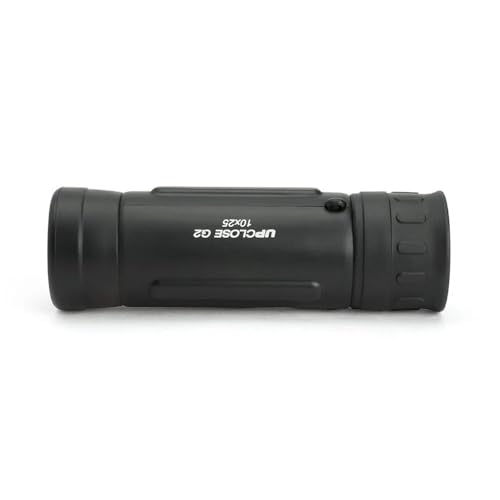
Celestron UpClose G2 10x25 Monocular for Hiking, Travel & Birding | Compact Monocular Design, Lightweight for Travel, Multi-Coated Optics, Rubber Armored Body, Comfortable One-Handed Viewing



As an Amazon Associate we earn from qualifying purchases. Product prices and availability are accurate as of the date/time indicated.

Mini 25X Monocular Telescope, HD Optics with Green Multilayer Coating, Lightweight & Waterproof for Outdoor Use, Great for Adults & Kids, for Hiking, Bird Watching, Travel and Stargazing


As an Amazon Associate we earn from qualifying purchases. Product prices and availability are accurate as of the date/time indicated.
Prices shown are approximate and for reference only. Prices change often, so please check the current price on Amazon before you buy.
Ratings are editorial assessments based on makers’ published magnification, objective, field, and weight specifications and value at typical prices. Check the exact current model’s eye relief and close focus before buying, as versions are revised.
The Six Travel Monoculars Reviewed
1. Vortex Solo 8×25 — Best Overall
The little Solo is the philosophy of this guide in metal and glass: pocketable, waterproof, honest at eight power, and backed by a warranty that treats travel as normal life. For most travellers, the audit ends in this row.
2. Vortex Solo 8×36 — Best Daypack Brightness
The 36mm Solo trades the jacket pocket for the dusk, keeping the line’s manners and adding the light grasp the safari evening demands. As the brightness parish, it shares the head.
3. Hawke Endurance ED 8×42 — Best Glass
Hawke’s ED monocular is the connoisseur’s traveller, colour and contrast of a serious order in a still-carryable form. As the glass parish, it earns its row.
4. Celestron Nature DX Parish — Best Safari Value
Celestron’s 10×42 gives the reach and the aperture the wildlife parish asks for at a price that forgives the risks of the road. As the value parish, it holds its row.
5. Bushnell Parish — Best Pocket Reach
Bushnell’s little 10×25 serves the traveller who wants the extra reach and accepts its steadiness tax with a railing’s help. As the pocket reach parish, it holds its place.
6. Carson Parish — Best Close Focus
The close-focus compacts are the museum, garden, and gallery parish, focusing where the great travellers cannot. As the close parish, they complete the table.
Buying Guide: Choose the Class by Where It Rides, Test It One-Handed, Carry It in the Cabin
Step One: Write Your Trip and Your Pocket
Set down the journey the instrument must survive and serve: the climate, the transport, the company’s ages and spectacles, and the subjects in their honest proportions, landscape, wildlife, city, or all three in a day. Then decide the class by the carrying fact, jacket pocket, handbag, daypack, or camera bag, and measure that parish if you must, because the class decision is the purchase and everything else is refinement. Note the budget composed whole with its pouch and lanyard, and note, kindly, the traveller you are rather than the one the brochures address: the hand that shakes, the glasses that fog, the patience that ends. This page, honestly written, points at one row of the table and defends the pointing.
Step Two: Audit Field, Relief, and the One-Hand Test
For each finalist, read field of view before power, eye relief against your spectacles, close focus against your museums and gardens, and the waterproof parish against your climate, all from the maker’s published specification. Then perform the only test that cannot be delegated: hold it one-handed, raise it, find a subject, focus, and lower it, in five seconds, without the other hand’s help or the manual’s, because that is the motion it will perform a thousand times, in wind, on boats, with a coffee in the other hand. Compose the price with its pouch and loop, and refuse any instrument whose promised magnification is its headline and whose glass, field, and relief are its footnotes, since the relationship should be exactly reversed.
Step Three: Travel Discipline and the Homecoming
Carry the monocular in the cabin, on the person or in the hand luggage, looped when it is out and pouched when it is not, and let it live in the same pocket every day of the trip, because an instrument with a home is an instrument that is there. At the viewpoint, share it freely and briefly, which is its social genius, and wipe its glass only with the proper cloth you packed, blowing grit away first as this site teaches for every optic. At home, air it from the trip’s humidity before it is stored, clean it once by the sequence if the image asks, and put it back in the travel bag rather than a drawer, because the next trip’s packing is where the last trip’s lessons are either kept or lost. A monocular kept on this round will attend more viewpoints in five years than a finer binocular attends in twenty, and attendance, as this guide began by saying, is the whole event.
How We Selected These Travel Monoculars
We included only real, named, currently sold monoculars whose makers publish magnification, objective, field, close focus, and weight specifications, spanning the pocket and daypack classes that travel actually uses. Prices are typical retail ranges. Ratings weight carryability and readiness first, then field and brightness, handling for all hands, weatherproofing, and value.
Frequently Asked Questions: Monoculars for Travel
Is 8x or 10x better for travel?
Eight, for most travellers, most days, and the reasons are the traveller’s own: a wider field that finds the subject from a moving boat or a crowded viewpoint, a steadier image in a hand that has walked all day, and a brighter beam at dusk from the same objective. Ten earns its parish where the subjects are distant and still and the hand can be rested, the safari’s far bank, the harbour’s far shore, the stadium’s far end, and where the traveller’s own steadiness has been honestly tested rather than assumed. The composed answer many families arrive at is the eight in the pocket class for every day and, where wildlife is the trip’s purpose, the ten in the 42mm class for those days, accepting the daypack as its parish. What no traveller should buy is a high power in a small objective, the souvenir parish, whose dim and shaking image has ended more monocular careers than any other specification in this guide.
Can a monocular replace binoculars on a safari?
It can serve, and for the traveller whose alternative is no optic at all it serves gloriously, but the honest comparison should be made with eyes open. Binoculars give two-eyed comfort across a long session at a waterhole, a wider and more restful view, and an easier time following a moving animal, and the dedicated wildlife traveller should carry them and pay their parish in space. The monocular answers with readiness, price, and the pocket, and in a vehicle where it is passed among four travellers it may give more people more animal than one pair of binoculars politely shared. Decide by the trip’s centre of gravity: the safari that is the journey’s purpose deserves the binocular, with the monocular as its pocket companion; the journey with a safari in it deserves the monocular, carried always, which will also serve the tower, the coast, and the train home.
What do I do about spectacles and sharing with people who wear them?
Buy the eye relief, and set the eyecup as a household policy. A stated eye relief in the generous parish, with an eyecup that twists or folds to a definite glasses position, lets a spectacle wearer see the whole field rather than its centre, and the figure should be checked in the specification before purchase by any household where glasses are worn, which is most households. For sharing, the monocular’s single eye and single focus make it the most democratic of optics: set the eyecup to the glasses position as the default if the company is mixed, teach the five-second motion rather than the theory, and let each user focus for their own eye without apology, since focus is personal and the wheel is quick. The traveller who wears glasses only for reading will usually observe bare-eyed and focus the difference away, which the instrument’s focus range accommodates as a matter of course.
How do I keep a monocular safe and clean on the road?
By the small disciplines of step three, which are worth restating as a creed: it rides in the cabin, never in checked luggage; it lives in one pocket, on its loop at every parapet and boat rail; its glass is blown before it is wiped, and wiped only with the proper cloth carried for the purpose; it is aired, not sealed, after a wet or humid day, and stored dry at home between journeys. Against theft, its parish is its size, since an instrument in a closed pocket is an instrument still owned, and against loss, the loop and the one-pocket rule are the whole insurance. None of this is burdensome, which is the point: the travel monocular asks less care than any other optic in this site’s parish, and repays it at the rate of one saved view a day, compounding across every trip you will ever take it on, which, if you chose by this guide, will be all of them.
Related guides
- Common Mistakes Buying Telescope Beginners in 2026: 7 Beginner Telescopes Compared, and the Mistakes to Avoid When Buying Your First Telescope
- Best Fluid Head for Reliable Movement in 2026: Smooth Pans That Start Without a Jerk, Hold Without Drift, and Track a Flying Bird Without Fighting You
- Best Telescopes for Beginners Kids Astronomy in 2026: Orion, Sky-Watcher, and Celestron Compared for a Mount a Small Hand Can Govern, a Sun Law With No Exceptions, and a First Moon That Makes an Astronomer
- Best Premium Rangefinders for Dusk Hunting in 2026: Best Premium Rangefinders for Dusk Hunting for Low Light, Long Range, and Simple Evening Hunts
More from Amazon
Programs that pair well with the guide above. Offers and eligibility are set by Amazon and may change.
Free shipping on eligible items, Prime Video and more. Eligible new members can start with a free trial.
Start a Prime free trialAudiobooks and podcasts to listen to on the go. Eligible new members can start with a free trial.
Try Audible freeAd-free music streaming. Eligible new subscribers can start with a free trial.
Try Music Unlimited freeA free business account with business pricing and bulk-buying tools for work, shop or home office.
Create a business accountAs an Amazon Associate we earn from qualifying purchases.

Write Your Review
No reviews yet. Be the first to share your experience!