
What's inside
- Why the Best High Resolution Thermal Imaging Monocular Matters
- Best High Resolution Thermal Imaging Monocular Explained: Sensor, Display, and Detection
- Best High Resolution Thermal Imaging Monocular: Comparison Table
- FLIR Scout TK Thermal Monocular
- Pulsar Axion XM30S Thermal Monocular
- ATN BlazeHunter Thermal Monocular
- Pulsar Axion 2 XG35 Thermal Monocular
- Pulsar Telos XP50 Thermal Monocular
- Leica Calonox View Thermal Monocular
- Buying Guide: How to Choose the Best High Resolution Thermal Imaging Monocular
- Frequently Asked Questions
As an Amazon Associate I earn from qualifying purchases. This post may contain affiliate links at no extra cost to you.
Choosing the best high resolution thermal imaging monocular starts with a simple question: will the monocular show a clear heat image, with high resolution, long battery life, and a durable design, without being too expensive or too heavy? A high resolution thermal imaging monocular is a thermal optic with a sensor resolution of 640×480, according to the maker, that can detect heat from animals, people, and objects. A monocular with a low resolution may show only a warm shape, while a monocular with a high resolution can show detail. A monocular with a long battery can help on a long night, while a monocular with a short battery may stop early. This guide compares six real, currently sold thermal monoculars, with typical price ranges from $599 to $4,299.
The table below is sorted by the low end of each typical price range. The cheapest model is the FLIR Scout TK Thermal Monocular at $599 to $649, and the most expensive model is the Leica Calonox View Thermal Monocular at $3,999 to $4,299. Prices are ranges only, and they can vary by retailer and sale. Check the maker notes for sensor resolution, display, battery life, waterproofing, and warranty before you buy, because those figures can vary by model. Battery life figures in this guide are maker figures, and real battery life can vary with temperature, brightness, and use.
Safety comes first. Thermal monoculars detect heat, not visible light, and they do not replace a flashlight, a map, or safe navigation. Hunting laws vary by place and game, and thermal use may be restricted for some game or in some seasons. Check local hunting laws before using a thermal monocular for hunting. Never point a thermal monocular at a person, and never look at the Sun through a thermal monocular or any optic.
Our Top Picks
Why the Best High Resolution Thermal Imaging Monocular Matters
The best high resolution thermal imaging monocular matters because a high resolution sensor can show more detail than a low resolution sensor. A 640×480 sensor can show a lot of detail, while a 160×120 sensor may show only a basic heat shape, according to the maker. A high resolution monocular can help identify an animal, while a low resolution monocular may only show that something is warm. A monocular that is clear can help a hunter, while a monocular that is blurry may not help.
Resolution matters most. Resolution can be measured in pixels, such as 640×480, 384×288, 320×240, or 160×120, according to the maker. A 640×480 sensor can show more detail than a 320×240 sensor, while a 160×120 sensor may show only a warm shape. Check the resolution before you buy, and choose a 640×480 sensor for a high resolution monocular.
Battery life matters too. Battery life can be measured in hours, according to the maker, and it can show how long a monocular can run on one charge. A battery life of 7 to 8 hours can help on a long night hunt, while a battery life of 5 hours may need a spare battery. Check the battery life before you buy, and carry a spare battery or a power bank when possible.
Display matters for a different reason. Display can be OLED or LCD, according to the maker, and it can show how clear an image looks. An OLED display can be clear in low light, while an LCD display may be harder to read. Check the display before you buy, and choose an OLED display for a high resolution monocular.
Best High Resolution Thermal Imaging Monocular Explained: Sensor, Display, and Detection
Sensor type is the first specification to check. Most thermal monoculars use a microbolometer sensor, which can detect heat without cooling, according to optics guidance. A microbolometer sensor can be durable, while a cooled sensor may need more maintenance. Check the sensor type before you buy, and choose a microbolometer sensor for a thermal monocular.
Sensor resolution is the second check. Sensor resolution is measured in pixels, such as 640×480, and it can show how much detail a sensor can capture. A 640×480 sensor can show more detail than a 384×288 sensor, while a 160×120 sensor may show only a basic heat shape. Check the sensor resolution before you buy, and choose a higher resolution for a clearer image.
Detection range is the third check. Detection range can be measured in yards, such as 1,000 yards or 2,000 yards, according to the maker. A long detection range can help for a distant animal, while a short detection range may be enough for a close animal. Check the detection range before you buy, and test it in the field before a hunt.
Housing is the fourth check. A housing that is waterproof, shock-resistant, and sealed can protect a sensor from moisture and drops. A monocular with an IP67 rating can be submerged in water for a short time, according to the maker, while a monocular without a rating may not. Check the housing before you buy, and choose a waterproof monocular for outdoor use.
Best High Resolution Thermal Imaging Monocular: Comparison Table
The table below compares six real, currently sold thermal monoculars, with a focus on high resolution. Rows are sorted by the low end of the typical price range. Ratings reflect overall owner feedback for clarity, build, and value, not a laboratory test. Check the maker notes for sensor resolution, display, battery life, waterproofing, and warranty before you buy, because those figures can vary by model. Battery life figures are maker figures.
| Thermal Monocular Model | Sensor and Display | Battery Life and Housing | Best For | Typical Price Range | Rating |
|---|---|---|---|---|---|
| FLIR Scout TK Thermal Monocular | 160×120, LCD display | 5 hours, waterproof | Best budget | $599 – $649 | 4.6 / 5 |
| Pulsar Axion XM30S Thermal Monocular | 320×240, OLED display | 5 hours, waterproof | Best Pulsar XM30S monocular | $1,799 – $1,999 | 4.7 / 5 |
| ATN BlazeHunter Thermal Monocular | 384×288, OLED display | 6 hours, waterproof | Best ATN monocular | $1,999 – $2,199 | 4.7 / 5 |
| Pulsar Axion 2 XG35 Thermal Monocular | 640×480, OLED display | 7 hours, waterproof | Best overall | $2,799 – $2,999 | 4.8 / 5 |
| Pulsar Telos XP50 Thermal Monocular | 640×480, OLED display | 8 hours, waterproof | Best Pulsar Telos monocular | $3,499 – $3,799 | 4.8 / 5 |
| Leica Calonox View Thermal Monocular | 640×480, OLED display | 8 hours, waterproof | Best premium | $3,999 – $4,299 | 4.8 / 5 |

GOYOJO G210 Thermal Monocular, 256x192 Thermal Imaging Monoscope Camera for Adults, 10mm Focal Lens Vision Goggles Thermal Scopes for Night Hunting Camping
As an Amazon Associate we earn from qualifying purchases. Product prices and availability are accurate as of the date/time indicated.
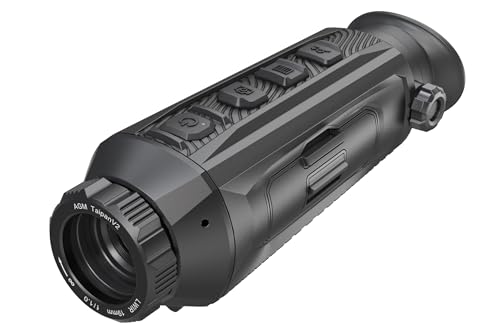
AGM Global Vision Taipan V2 19-320 Thermal Monocular High-Sensitivity | 19mm Lens, 320×256 12μm Thermal Sensor, OLED Display, WiFi, Video Recording, IP67 Waterproof


As an Amazon Associate we earn from qualifying purchases. Product prices and availability are accurate as of the date/time indicated.

C2 Thermal Imaging Monocular, 256x192 HD (12μm) Handheld Thermal Scope with 8X Zoom, Hot Spot Tracking, Video Recording, Portable Thermal Monocular for Hunting, Wildlife Observation, Outdoor
As an Amazon Associate we earn from qualifying purchases. Product prices and availability are accurate as of the date/time indicated.
Prices shown are approximate and for reference only. Prices change often, so please check the current price on Amazon before you buy.
FLIR Scout TK Thermal Monocular
The FLIR Scout TK Thermal Monocular is a thermal monocular with a typical price range of $599 to $649. It is the cheapest monocular in this comparison and a practical starting point if you want a low-cost thermal monocular. It has a 160×120 sensor, an LCD display, and a battery life of about 5 hours, according to the maker.
Choose this monocular if you want a simple, affordable thermal monocular for a first look. The Scout TK can show a warm animal against a cooler background, help scan a field at dusk, and fit in a hand. Its low price is good for a beginner, but its 160×120 sensor may show less detail than a 640×480 sensor, and it is not a high resolution sensor.
The trade-off is resolution. A 160×120 sensor can show a warm shape, but it may not show enough detail to identify an animal at a distance. Use it first at close range, then test it at dusk before a longer hunt. If you need a high resolution sensor, the Pulsar Axion 2 XG35 is a better choice at a higher price, because it has a 640×480 sensor. Thermal does not replace a flashlight for navigation.
Pulsar Axion XM30S Thermal Monocular
The Pulsar Axion XM30S Thermal Monocular is a thermal monocular with a typical price range of $1,799 to $1,999. It has a 320×240 sensor, an OLED display, and a battery life of about 5 hours, according to the maker. It is a good choice if you want a Pulsar thermal monocular for dusk hunting.
This monocular is best for a hunter who wants a Pulsar Axion XM30S for a clear image. The Axion XM30S has a 320×240 sensor that can show more detail than a 160×120 sensor, an OLED display that can be read in low light, and a waterproof housing, according to the maker.
The trade-off is resolution and battery. A 320×240 sensor can show more detail than a 160×120 sensor, but it may show less detail than a 640×480 sensor. A 5-hour battery life can be shorter than a 7-hour battery life, so it may need a spare battery on a long hunt. Check the warranty before you buy.
ATN BlazeHunter Thermal Monocular
The ATN BlazeHunter Thermal Monocular is a thermal monocular with a typical price range of $1,999 to $2,199. It has a 384×288 sensor, an OLED display, and a battery life of about 6 hours, according to the maker. It is a good choice if you want an ATN thermal monocular for dusk hunting.
Choose this monocular if you want an ATN BlazeHunter for your dusk hunts. The BlazeHunter has a 384×288 sensor that can show more detail than a 320×240 sensor, an OLED display, and a waterproof housing, according to the maker.
The trade-off is price. It is more expensive than the Pulsar Axion XM30S, but it offers a higher sensor resolution and a longer battery life for a clearer image. Check the battery life before you buy, because cold weather can reduce battery life.
Pulsar Axion 2 XG35 Thermal Monocular
The Pulsar Axion 2 XG35 Thermal Monocular is a thermal monocular with a typical price range of $2,799 to $2,999. It has a 640×480 sensor, an OLED display, and a battery life of about 7 hours, according to the maker. It is a strong overall choice in this comparison because it combines a high resolution 640×480 sensor, a long battery life, and a fair price for a high resolution thermal monocular.
Choose this monocular if you want a Pulsar Axion 2 XG35 for your high resolution thermal imaging. The Axion 2 XG35 has a 640×480 sensor that can show a lot of detail, an OLED display, and a 7-hour battery life, according to the maker.
The trade-off is price. It is more expensive than the ATN BlazeHunter, but it offers a higher sensor resolution and a longer battery life for a clearer image. It is a good fit for a serious hunter who wants a reliable thermal monocular for many years.
Pulsar Telos XP50 Thermal Monocular
The Pulsar Telos XP50 Thermal Monocular is a thermal monocular with a typical price range of $3,499 to $3,799. It has a 640×480 sensor, an OLED display, and a battery life of about 8 hours, according to the maker. It is a good choice if you want a Pulsar Telos monocular for high resolution.
This monocular is best for a hunter who wants a Pulsar Telos XP50 for a long battery life. The Telos XP50 has a 640×480 sensor, an OLED display, and an 8-hour battery life, according to the maker. Its display can be large, which can help identify an animal.
The trade-off is price. It is more expensive than the Pulsar Axion 2 XG35, but it offers a longer battery life and a Telos build for high resolution. Check the weight before you buy, because a large monocular can be heavier than a small monocular.
Leica Calonox View Thermal Monocular
The Leica Calonox View Thermal Monocular is a thermal monocular with a typical price range of $3,999 to $4,299. It has a 640×480 sensor, an OLED display, and a battery life of about 8 hours, according to the maker. It is the most expensive monocular in this comparison, but it is a premium Leica monocular with a clear image for high resolution.
Choose this monocular if you want a premium Leica Calonox View and you are willing to pay more for it. The Calonox View has a 640×480 sensor, an OLED display, and a Leica build that can be strong and waterproof, according to the maker.
The trade-off is price. It is not the best choice if you have a small budget, because the FLIR Scout TK offers similar basic thermal monocular support at a lower price for a beginner, with a 160×120 sensor and a 5-hour battery life. Thermal does not replace a flashlight for navigation.
Buying Guide: How to Choose the Best High Resolution Thermal Imaging Monocular
1. Check sensor resolution first: 640×480 for high resolution
Start with sensor resolution when you choose the best high resolution thermal imaging monocular. Choose a 640×480 sensor, such as the Pulsar Axion 2 XG35, if you want a high resolution sensor that can show a lot of detail. Check the sensor resolution before you buy, and do not use a low-resolution sensor for long-range identification.
Check the sensor resolution before you buy. A 160×120 sensor may show only a warm shape, while a 640×480 sensor can show more detail. Use a high resolution sensor for a clear image, and test it at dusk before a hunt.
2. Check battery life, spare battery, and cold weather
Check battery life first. A battery life of 7 to 8 hours is a good choice for a long hunt, while a battery life of 5 hours may need a spare. Check spare battery next. A monocular with a replaceable battery is a good choice, because it can be swapped in the field. Check cold weather as well. Cold can reduce battery life, so carry a spare battery in a warm pocket.
Check battery life before you buy. A monocular without a long battery may stop early on a hunt, while a monocular with a spare battery can last longer. Carry a power bank when possible.
3. Check display, housing, and warranty
Check display before you buy. An OLED display is a good choice, because it can be clear in low light. Check housing next. A waterproof, shock-resistant housing is a good choice, because it can protect a sensor from moisture and drops. Check warranty as well. A warranty of 3 years or more, according to the maker, is a good choice for a high resolution monocular.
Check display and warranty before you buy. A monocular without waterproofing may fail in rain, while a monocular without a long warranty may be costly to repair. Store the monocular in a dry case when not in use.
4. Check safety, laws, and care
Always check safety before you use a thermal monocular. Thermal monoculars detect heat, not visible light, and they do not replace a flashlight, a map, or safe navigation. Hunting laws vary by place and game, and thermal use may be restricted for some game. Check local hunting laws before using a thermal monocular for hunting.
Clean the lens with a lens brush and a microfibre cloth, and store the monocular in a dry place when you are not using it. Do not use a monocular that is damaged, and replace it if a lens, display, or battery does not work safely. Check the monocular before each hunt, and carry a spare battery.
Frequently Asked Questions
What is the best high resolution thermal imaging monocular?
For most hunters, the Pulsar Axion 2 XG35 Thermal Monocular, typically $2,799 to $2,999, is a strong overall choice because it has a 640×480 sensor, an OLED display, and a battery life of about 7 hours, according to the maker, at a fair price for a high resolution thermal monocular. If you want the lowest price, the FLIR Scout TK Thermal Monocular, typically $599 to $649, is a good choice. If you want a premium monocular, the Leica Calonox View Thermal Monocular, typically $3,999 to $4,299, is a good choice. Choose by sensor, battery life, and budget.
What is the best low-cost high resolution thermal monocular?
The best low-cost thermal monocular in this table is the FLIR Scout TK Thermal Monocular, typically $599 to $649, because it is the cheapest row in the table and the only model in that lowest price range. It has a 160×120 sensor, an LCD display, and a battery life of about 5 hours, according to the maker. It is a good choice for a low-cost monocular, but its sensor is not high resolution, so choose the Pulsar Axion 2 XG35 if you need a true 640×480 sensor.
Is 640×480 better than 320×240 for thermal imaging?
Is 640×480 better than 320×240 for thermal imaging depends on your use, your distance, and your detail. Yes, 640×480 is better than 320×240, if you want a high resolution image, because it can show more detail and help identify an animal at a distance. Use a 640×480 sensor for long-range identification, and a 320×240 sensor for a close look.
How far can a high resolution thermal monocular detect heat?
How far a high resolution thermal monocular can detect heat depends on your sensor, your lens, and your target. A high resolution monocular can detect heat at a long distance, if you want a long detection, because a 640×480 sensor can show a warm animal from far away. Check the maker detection range, and test it in the field before a hunt.
The best high resolution thermal imaging monocular is about finding a sensor that shows heat clearly, with a long battery life, a durable housing, and a warranty that can help if it fails, without being too expensive, without being too heavy, and without being too hard to use. Start with the Pulsar Axion 2 XG35 for a reliable high resolution sensor, choose the FLIR Scout TK for the lowest price, or choose the Leica Calonox View for a premium sensor. Check hunting laws, use a flashlight for navigation, and store the monocular in a dry case. With the right thermal monocular, you can see heat more clearly every time.
Related guides
- Best Telescope Eyepiece for Retirees in 2026: Best Telescope Eyepiece for Retirees for Comfortable Viewing, Easy Focus, and Simple Stargazing
- Spotting Scope vs Rifle Scope for Target Shooting in 2026: Vortex, Celestron, Athlon, and Leupold Compared for Reading Holes, Calling Corrections, and Why the Two Optics Do Different Jobs on the Same Firing Line
- Hama Telescope in 2026: 6 Best Hama Telescopes for Beginners, Stargazing, and the Moon
- ELT Telescope in 2026: What the Extremely Large Telescope Is, and the Best Telescopes to See Deep-Sky Objects Yourself
More from Amazon
Programs that pair well with the guide above. Offers and eligibility are set by Amazon and may change.
Free shipping on eligible items, Prime Video and more. Eligible new members can start with a free trial.
Start a Prime free trialAudiobooks and podcasts to listen to on the go. Eligible new members can start with a free trial.
Try Audible freeAd-free music streaming. Eligible new subscribers can start with a free trial.
Try Music Unlimited freeA free business account with business pricing and bulk-buying tools for work, shop or home office.
Create a business accountAs an Amazon Associate we earn from qualifying purchases.

Write Your Review
No reviews yet. Be the first to share your experience!