
What's inside
- What Makes the Best Budget Thermal Monocular for Beginners Night Use Different
- Quick Comparison: Best Budget Thermal Monocular for Beginners Night Models
- Detailed Reviews: Best Budget Thermal Monocular for Beginners Night Picks
- Buying Guide: How to Choose the Best Budget Thermal Monocular for Beginners Night Use
- Frequently Asked Questions About Best Budget Thermal Monocular for Beginners Night
As an Amazon Associate I earn from qualifying purchases. This post may contain affiliate links at no extra cost to you.
The best budget thermal monocular for beginners night use is not the cheapest thermal device on a marketplace, and it is not the military instrument its advertising borrows its language from. It is a handheld thermal camera in a monocular’s shape, which builds its picture from heat rather than light, and a beginner’s first unit teaches a new way of seeing whose rules must be learned honestly: it detects heat differences in a scene, warm bodies against cooler ground, a recently driven vehicle’s engine, a house’s leaking warmth, and it does not see through glass, walls, foliage, or water, it does not identify what it detects beyond the shape and movement its resolution allows, and its picture at a distance is a matter of its sensor’s resolution, its lens, and its display, in its maker’s stated figures, and not of the zoom number on its box. A beginner who buys with those rules understood gets a tool of genuine wonder, a night walk rewritten, a lost dog found in a field’s edge, a property’s perimeter checked from a porch, wildlife watched without a lamp’s disturbance. A beginner who buys a headline, a detection range measured on a vehicle-sized target in its maker’s stated test, a digital zoom that enlarges pixels and adds nothing, discovers the rules at the price of the unit, and this guide exists to teach them first, at the price of reading.
This guide compares real, currently sold entry thermal monoculars from AGM Global Vision, Pulsar, HIKMICRO, ATN, and FLIR, in the classes a beginner actually buys, graded on the beginner’s specifications in the makers’ stated terms: sensor resolution, where the current budget classes divide, in the makers’ figures, between the 160 and 256 and 384 schools, a difference that is the picture’s whole detail and the guide’s first grading; the lens and its stated field of view, because a wide view finds and a narrow view examines and a beginner, whose work is finding, is served wide; the stated detection, recognition, and identification ranges, read as the makers state them, for the target size the maker states, and discounted by this guide’s teaching that a human or an animal is detected well beyond the distance at which it can be recognised, and recognised well beyond the distance at which it can be identified, three different distances wearing one word in careless listings; the display and its palettes, white hot, black hot, and their coloured peers in the makers’ designs, a matter of the eye’s comfort across a night’s watching; battery, in the makers’ stated hours and their battery’s type, replaceable or sealed, because a sealed unit’s night ends at its battery’s convenience; and sealing, refresh, and the maker’s support, because a first thermal is also a first lesson in the category’s service. Law and manners govern the use, as on every page of this site: thermal observation is observation, subject to the privacy of neighbours and the law of the exact place, hunting with thermal is regulated or prohibited for many species and seasons in many jurisdictions and is read from the issuing authority before any such use is contemplated, a thermal monocular is never a riflescope and is never mounted or used as one unless it is a device its maker built and rated for that purpose, which no row in this budget table is, identification for any consequential purpose is made by other means, and no thermal device is ever pointed at or near the Sun, whose heat can damage its sensor as surely as its light damages an eye. Bought by sensor and field of view, used within its physics and its law, a first thermal monocular is the rare gadget that returns its owner to childhood’s terms with the night: everything out there is findable, most of it is harmless, and the finding is the whole of the fun.
Our Top Picks
What Makes the Best Budget Thermal Monocular for Beginners Night Use Different
Sensor Resolution, Lens, and the Three Distances
A thermal picture is made of pixels that report temperature, and the sensor’s resolution, in the maker’s stated figures such as 256 by 192 or 384 by 288 in the current budget classes’ terms, is the picture’s vocabulary: at 160-class resolution a warm animal at a hundred yards is a bright shape with a gait, at 256 it acquires a body’s proportions, at 384 its head, its ears, and its behaviour begin to be readable, and no processing, zoom, or palette adds a word the sensor did not capture. Digital zoom, in the makers’ designs, enlarges those pixels usefully for examining what has been found and adds no detail, which is why this guide grades the sensor and treats the zoom as a convenience. The lens gathers the heat as a camera lens gathers light, and its stated focal length and field of view divide the beginner’s work: a wide field, in the shorter lens classes, sweeps a field, a wood’s edge, and a property’s line and finds the bright shape, which is a beginner’s whole first year; a longer lens narrows the view, magnifies the found subject, and loses the search, which is the second unit’s purchase and not the first’s. The three distances discipline every claim in the category. Detection, the bright shape’s existence, is the makers’ longest stated figure and its test target is stated, commonly a human-sized or vehicle-sized object under stated conditions. Recognition, the shape’s kind, a person, a deer, a dog, is a fraction of detection. Identification, the shape’s identity, which deer, whose dog, is a fraction of recognition, and for most consequential purposes it is made, in daylight or by other instruments, after the thermal has done its finding. A beginner who plans a use, a field’s far edge at a stated number of yards, a pasture, a shoreline, buys the sensor and lens whose recognition distance, so understood, covers it, and treats a listing that quotes detection alone as a listing that has answered a question nobody asked.
Display, Palettes, Battery, and a Beginner’s Night Craft
The display is the picture’s second half, its stated resolution and type in the makers’ terms, and its eyepiece’s comfort across an hour, because a thermal night is watched in minutes that become hours and an eyepiece that tires the eye shortens every outing. Palettes are the heat’s translation into brightness and colour, white hot and black hot in every maker’s design as the working pair, the eye choosing by scene and by fatigue, and the coloured palettes, iron and rainbow and their peers, as instruments for specific contrasts, a building’s heat leaks, a machine’s hot bearing, and as novelties for the rest, whose lesson is that the beginner’s craft is learned in white hot and the others are visited. Battery decides the night’s length and its logistics: the makers’ stated hours, read as the favourable-condition figures they are and discounted for cold, for a bright display, and for recording in the models that record; replaceable cells, in some makers’ designs, against sealed rechargeable bodies in others, the sealed school slimmer and simpler and the replaceable school field-renewable with a pocket of cells, either served by a power bank where the maker provides for USB power in its stated terms. Sealing, in the makers’ stated IP terms read exactly, grades the rain a unit may work in, because night observation is dew’s and drizzle’s work and a unit that must be sheltered is a unit that stays home. The beginner’s craft joins them: a thermal is used in sweeps, slow, overlapping, paused, because its narrow view punishes the hurried pan that a binocular forgives; it is rested against the eye’s fatigue by alternating eyes and by lowering it to let the night’s own vision return, because a thermal shows heat and hides the ground, the branch, and the ditch, which the unaided eye, dark adapted, must navigate by; and it is never the only instrument on a night walk, where a dim red light, in the night worker’s tradition, and the walker’s knowledge of their own ground do the travelling while the thermal does the finding.
Law, Privacy, and Honest Uses for a First Thermal
A thermal monocular sees through darkness and not through law, and its beginner’s uses are chosen inside three boundaries. Privacy: the device detects heat through a fence line and across a property line as readily as across a field, and the law of the exact place, and the decency that precedes law, govern where it is pointed, a neighbour’s windows and garden being no more a subject for thermal watching than for a telephoto lens, and this guide’s rule is the camera’s rule, observe the world that is yours to observe, wildlife, your own land, the public scene in its public aspect, and let other people’s heat be their own. Hunting and wildlife law: the use of thermal for locating game is regulated variously, lawful for some species and purposes, such as certain varmint and hog control and recovery work, and prohibited for others and in many seasons, in the exact jurisdiction’s rules, which are read from the issuing authority for the place, the species, and the date before the device leaves the house on any such errand, and the watching of protected wildlife is kept at the distances and in the manners the place’s rules and the animals’ welfare direct. Honest purpose: the uses that make a budget thermal a household instrument are the finding uses, the pet in the field, the livestock check, the heat leak in the wall and the cold leak at the window found in an evening’s sweep that pays the unit’s rent in a winter’s fuel, the boat’s and the campsite’s perimeter, the search, in organised hands, for the lost, and in each the thermal’s finding is followed by identification and action by other means, because a bright shape is a question and the beginner’s maturity is knowing that their instrument asks it beautifully and answers it not at all. Inside those boundaries, the category is innocent and absorbing, and the law, read once, never needs to trouble a night’s watching again.
Quick Comparison: Best Budget Thermal Monocular for Beginners Night Models
| Model | Sensor, Lens and Key Specs | Best For | Typical Price Range |
|---|---|---|---|
| AGM Taipan V2 and Asp-Micro class | Thermal classes in maker’s line, sensor resolutions in maker’s stated figures by model, stated detection ranges and fields of view | Best budget thermal monocular for beginners night overall | $400 – $800 by model |
| HIKMICRO Lynx and Condor class | Thermal classes in maker’s line, sensor options in maker’s terms, replaceable battery designs in maker’s line by model | Best value and battery system | $450 – $900 by model |
| Pulsar Axion class | Premium entry classes in maker’s line, sensor and lens options in maker’s terms, magnesium body designs in maker’s line | Best build and ergonomics | $800 – $1,400 by model |
| ATN OTS LT and Blaze class | Thermal classes in maker’s line, sensor options in maker’s terms, recording and features by model’s stated specs | Best features for the price | $350 – $700 by model |
| FLIR Scout and Breach class | Thermal classes in maker’s line, sensor in maker’s terms, simple control designs in maker’s line | Best simplicity | $500 – $1,000 by model |
| AGM Taipan TM15 class, prior generation | Earlier classes in maker’s line still widely sold, sensor in maker’s terms, stated ranges by model | Best low entry price | $300 – $550 by retailer |
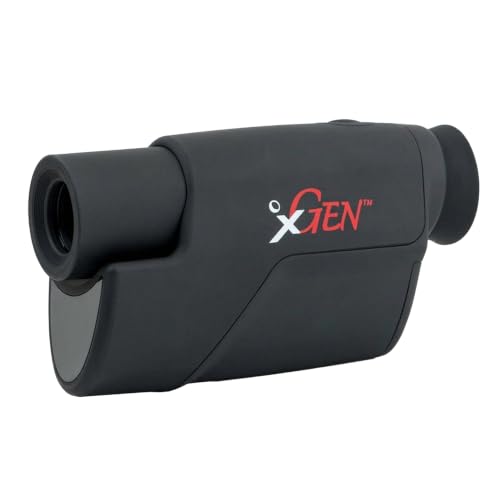
Night Owl Optics xGen2 Night Vision Monocular with Thermal Imaging - Perfect for Beginners & Kids, with Built-in IR Illuminator, 70yd Range, Mode Selection, and Easy Focus Adjustment
As an Amazon Associate we earn from qualifying purchases. Product prices and availability are accurate as of the date/time indicated.

RIX Pocket K2 Portable Thermal Monocular for Hunting, 256x192 (50Hz), Wi-Fi, Handheld Night Vision Monocular
As an Amazon Associate we earn from qualifying purchases. Product prices and availability are accurate as of the date/time indicated.
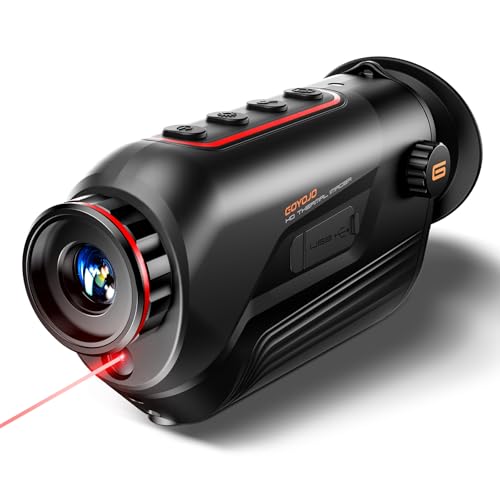
GOYOJO G215 Thermal Imaging Monocular for Hunting, 256x192 (50Hz) Infrared Night Vision Telescope, 15mm Focal Lens Thermal Scopes for Outdoor Night Vision Camera Telescope
As an Amazon Associate we earn from qualifying purchases. Product prices and availability are accurate as of the date/time indicated.
Sensor resolutions and pixel pitch, lens and field of view, detection ranges for the maker’s stated target, display, palettes, battery type and stated hours, sealing terms, and recording provisions are each maker’s stated details for the current version; detection figures are for the stated target under stated conditions, and recognition and identification distances are shorter, as this guide explains. Ratings are editorial for beginner night observation: sensor and picture quality in class, field of view for searching, battery and sealing, controls a beginner can learn, and value in class.
Detailed Reviews: Best Budget Thermal Monocular for Beginners Night Picks
1. AGM Taipan Class – Best Overall for Beginners
AGM’s Taipan schools, in their current generations, are the beginner’s reference because they spend the budget where this guide grades it: a sensor, in the maker’s stated resolution for the model, that gives a recognisable picture at a field’s distances, a lens whose wide field suits the search, controls a first night can learn, and a price that leaves the category’s lesson affordable. Their stated detection figures are read by this guide’s three distances, and inside those terms their real-world finding, across their owners’ fields and pastures, is the budget class’s standard. For the first thermal, bought once and learned properly, it is the first name.
2. Pulsar Axion Class – Best Build
Pulsar’s Axion school is the budget table’s premium edge: a compact, beautifully made body in the maker’s design, sensors and lenses in its options at the head of the entry classes, an eyepiece and display whose comfort across a long night is its owners’ refrain, and a maker’s support with the category’s long memory. Its price reaches toward the mid classes, and its provision is the decade’s instrument rather than the season’s experiment. For the beginner who knows, from a borrowed night, that thermal is a permanent interest, it is the buy-once row, and its resale, in a category whose owners upgrade, is its own quiet specification.
3. HIKMICRO Class – Best Value System
HIKMICRO’s Lynx and Condor schools press the leaders on the beginner’s arithmetic: sensors in the maker’s stated figures at prices a class below their picture’s quality, and, in several of its designs, replaceable batteries whose pocket-of-cells logistics suit the long night and the cold one, where sealed units go home early. Its menus reward an evening’s learning, which this guide prescribes for every row. For the beginner whose ground is large and whose nights are long, it is the considered value, and its picture, in its owners’ footage, has ended more arguments about the budget class’s ceiling than any other row here.
4. ATN Class – Best Features
ATN’s entry classes load the beginner’s unit with the feature list, recording, palettes, and modes in their models’ stated designs, at prices that make the experiment cheap. Their pictures, sensor for sensor, are the class’s, and their controls and menus are the busiest here, a tax on the first night and a toy box thereafter. For the beginner who records, shares, and tinkers, it is the playful row, bought with the understanding that features are visited and the sensor is lived with, and that the sensor, in the exact model’s stated figures, is the purchase.
5. FLIR Class – Best Simplicity
FLIR, the category’s founding name in the civilian market, builds its Scout school for the user who wants a thermal and not a hobby: few controls, in the maker’s design, a picture presented without a menu’s mediation, and a body’s manners from a maker whose other customers are professionals. Its sensors, model for model, are read in its stated figures against the table’s, and its prices carry its name’s premium. For the property owner, the boater, and the beginner whose specification is a button and a picture, it is the honest row, and its simplicity, across a decade of porches, has been a specification and not a lack.
6. Prior-Generation AGM Class – Best Low Entry
Their batteries, displays, and sealing are their generation’s, read exactly. For the beginner who is testing the interest itself, it is the rational first step, bought from a reputable retailer with a return window, because a first thermal’s most common outcome is a second thermal, and the floor’s price is the tuition that makes the second’s specification obvious.
Buying Guide: How to Choose the Best Budget Thermal Monocular for Beginners Night Use
Buy the Sensor and the Field of View, Read the Three Distances, and Plan the Battery
Shop in the physics’ order. The sensor first, its stated resolution for the exact model, at the highest class the budget reaches without starving the rest of the kit, because the sensor is the picture and every other feature is furniture. The lens and field of view second, wide for the beginner’s searching, its stated figure matched to your ground’s scale, a garden and a pasture being different instruments’ homes. The three distances third, the maker’s stated detection translated, by this guide’s fractions and your own ground’s test in the return window, into the recognition distance your use requires, a dog in a field, a person at a gate, heat leaking from a roofline. The battery fourth, its stated hours discounted for cold and display, its type’s logistics settled, spare cells or a power bank in the maker’s stated provision, priced into the kit. The display, the sealing, the recording where the use records, and the maker’s warranty and support close the audit, every figure from the exact model’s page, because thermal lines span generations whose sensors differ under one family name more completely than any other category on this site. Test the arrived unit in its window, on your own ground, at your own distances, a partner, a dog, a vehicle cooling in a drive, a house’s warm windows, and let a picture that does not meet the use be a return, because a thermal’s specifications are the hardest in optics to judge from a listing and the easiest to judge in a field at night, which is where the window’s test belongs.
Learn the Night Craft, Observe Within the Law, and Maintain the Sensor
Use the monocular as the craft teaches. Sweep slowly, in overlapping arcs, pausing to let shapes declare themselves by movement, because thermal finding is a patience instrument and its narrow view misses, at a pan, what it catches at a pause. Rest the eye, alternate where the design allows, and navigate by your dark-adapted unaided vision and your knowledge of the ground, with a dim red light for the map and the gate, because the thermal shows the warm world and hides the ditch in front of your boots with perfect impartiality. Observe within the law and the decency this guide states: your own land and the wildlife upon it, the public scene in its public aspect, no neighbour’s private heat, no use for game that the exact jurisdiction’s rules have not been read to permit, and no identification, for any purpose that matters, from a thermal picture alone. Maintain the unit by its maker’s book, its lens cleaned with the cloth and the method the maker directs, because a thermal lens’s coating is not a spectacle’s; its battery kept by the maker’s stated storage charge; its body dried after a wet night before it is cased. Do all of that, and the best budget thermal monocular for beginners night use becomes what its owners, sweeping a familiar field made entirely new, describe as the cheapest ticket to a second countryside: the same lanes and pastures, populated, warm, and busy all night, in a country that was always there and that a small, honest sensor, rightly bought and patiently learned, finally lets its owner visit.
Frequently Asked Questions About Best Budget Thermal Monocular for Beginners Night
What is the best budget thermal monocular for beginners night use?
AGM’s Taipan classes are the best overall, Pulsar’s Axion the best built, HIKMICRO’s the best value system, ATN’s the most featured, FLIR’s the simplest, and the prior Taipan generation the cheapest honest entry. The best for your nights is specified by the sensor and the search: the highest sensor resolution, in the maker’s stated figures for the exact model, that your budget reaches; a wide field of view for finding, matched to your ground’s scale; a recognition distance, understood as a fraction of the stated detection figure and tested on your own ground in the return window, that covers your use; and a battery system, replaceable cells or a sealed body with USB provision in the maker’s terms, whose real hours cover your night. Buy those four in that order, learn the sweep and the palettes in white hot, and observe within the law of your place. A beginner’s thermal bought so is a teacher. Bought by its detection headline and its digital zoom, it is a tuition fee, and the second purchase, in this category’s long history, is the one the first should have been.
What sensor resolution do I need, 256 or 384?
It depends on your ground’s distances, and the honest translation is by recognition rather than detection. At a garden’s, a smallholding’s, and a campsite’s distances, inside a hundred yards or so, a 256-class sensor in this table recognises a person, a dog, and a deer-sized animal by shape and gait and gives a beginner a complete and absorbing picture, and it is the budget class’s sweet spot for most first uses. At a pasture’s, a shoreline’s, and a large property’s distances, where the subject is two and three hundred yards away and its kind matters, a 384-class sensor’s extra vocabulary is the difference between a bright shape and a recognised animal, and its premium is the use’s and not a vanity. Below the 256 class, the current 160-class devices detect warm shapes at close range and serve a house’s heat leaks and a yard’s checks, bought knowingly for those uses. Judge, where you can, by footage from the exact model at your distances, test the arrived unit on your own ground inside its window, and remember that the lens’s field of view spends the sensor’s pixels, a wide view spreading them thin across a field and a narrow view concentrating them on a subject, which is why this guide buys the sensor and the lens as one decision.
Can I hunt with a budget thermal monocular?
Only where, for what, and as the exact jurisdiction’s current rules permit, and those rules vary so widely that this guide’s answer is a direction and not a permission. In some places thermal location is lawful for certain varmint, predator, and hog control and for recovering wounded game; in many places and for most game species and seasons it is prohibited, and a handheld monocular’s lawfulness as an observation aid is a separate question, in some rules, from a weapon-mounted thermal’s, which no row in this budget table is or may be improvised into. Read the issuing authority for your place, species, and date, in its current publication, before the device leaves the house on any hunting errand, and keep the receipt of that reading in your own conscience, because an officer’s question is answered from the rules and not from a guide. The uses this guide can recommend without a law book are the observation uses, wildlife watching within the place’s rules and the animals’ welfare, property and livestock checks, pet finding, and the household’s heat and safety sweeps, and for many beginners those uses, pursued for a season, are also the training that makes any later lawful field use competent, because thermal craft, the sweep, the distances, the identification’s limits, is learned on innocent errands or it is not learned at all.
How far can a budget thermal monocular actually see?
As far as its stated detection figure for a large, warm target in good conditions, and usefully far less for the subjects a beginner actually seeks, and the useful figure is the one to plan by. A budget class unit will detect a person-sized heat source at several hundred yards in its maker’s stated terms, recognise that source as a person at a fraction of that distance, at the 256 class’s typical terms somewhere in the low hundreds of yards and closer in broken ground and humid air, and identify an individual, by this guide’s rule, by other means entirely. Weather spends the picture, rain, fog, and a warm night whose ground holds the day’s heat all compress the contrast the sensor lives on, and a cold, clear night after a frost is the thermal’s finest hour, when every warm thing in a field declares itself. The practical method is the field test: on your own ground, in your return window, with a partner and a dog at measured distances, learn your unit’s three distances in your own conditions and write them in its case. Those figures, and not a listing’s, are your monocular’s range, and a beginner who knows them owns an instrument, while a beginner who quotes the box owns a hope, and the night, across a season, will educate the second into the first at the price of the lesson this FAQ has just given free.
Related guides
- Best Optics for Beginners Winter Use in 2026: Fogproof Binoculars Graded on the Cold Transition — Warm Car to Frozen Field Without Losing the View
- Best Cell Phone Monocular in 2026: 7 Best Cell Phone Monoculars With Clear View, Simple Use, and Easy Use for Cell Phone Monocular
- Best Monocular for Glasses Wearers Comfort in 2026: Monocular for Glasses Wearers Comfort, Glasses Wearers Monoculars, and Best Comfortable Monoculars for Glasses Wearers
- Best Binoculars for Camping Trips Viewing in 2026: 7 Binoculars for Camping Trips Viewing That Offer Clear Optics, Easy Carry, and Reliable Performance for Camping
More from Amazon
Programs that pair well with the guide above. Offers and eligibility are set by Amazon and may change.
Free shipping on eligible items, Prime Video and more. Eligible new members can start with a free trial.
Start a Prime free trialAudiobooks and podcasts to listen to on the go. Eligible new members can start with a free trial.
Try Audible freeAd-free music streaming. Eligible new subscribers can start with a free trial.
Try Music Unlimited freeA free business account with business pricing and bulk-buying tools for work, shop or home office.
Create a business accountAs an Amazon Associate we earn from qualifying purchases.

Write Your Review
No reviews yet. Be the first to share your experience!