
What's inside
- Best Binoculars for Whale Watching Tours: Magnification, Exit Pupil, and Field of View
- Best Binoculars for Whale Watching Tours: Quick Comparison
- The Six Best Binoculars for Whale Watching Reviewed
- Buying Guide: How to Choose the Best Binoculars for Your Whale Watching Tour
- Frequently Asked Questions About Binoculars for Whale Watching
As an Amazon Associate I earn from qualifying purchases. This post may contain affiliate links at no extra cost to you.
The best binoculars for whale watching tours are bought for a platform that will not hold still, and that single fact overturns most binocular advice. On land, magnification is a virtue limited mainly by your hands. On a boat, the deck rolls, pitches, and vibrates through every magnification you choose, so a 12x binocular does not show you a whale twelve times larger; it shows you the sea, the sky, a fluke, the sea again, in a frantic sweep that leaves beginners seasick and veterans reaching for a lower power. The classic marine answer, 7×50, exists because generations of sailors settled the argument: moderate magnification, a huge exit pupil that keeps the image bright and easy to hold as the binocular moves relative to your eyes, and a wide field that lets you find a blow, a breach, or a dorsal fin inside the frame before it vanishes. This guide compares six real, currently sold binoculars for whale watching across budgets, from the traditional marine 7×50 to a stabilized model that breaks the magnification rule by engineering, and explains how to choose for your tour: a large whale watching vessel, a small rigid inflatable, a kayak, or the shore.
Two practical truths frame every recommendation. First, you will likely have seconds per sighting, not minutes, because whales surface on their own schedule and a tour boat positions you for a sequence of surfacings that rewards the observer who can find the animal fast, which is a field-of-view and handling contest, not a magnification contest. Second, the marine environment is actively hostile to optics: salt spray, rain, sunscreened hands, a wet deck, and the occasional green wave over the bow of a small boat. Waterproof, fogproof construction is not a feature in this guide. It is the entry requirement, and every model in the table meets it, because a binocular that fogs internally on its first tour is not a bargain at any price.
Our Top Picks
Best Binoculars for Whale Watching Tours: Magnification, Exit Pupil, and Field of View
Why 7x and 8x Win on the Water
Magnification multiplies everything, including the boat. At 7x or 8x, a practiced observer can keep a surfacing whale in view through a moderate swell, scan a wide arc for the next blow, and hold the binocular for a full encounter without fatigue. At 10x, on a large, stable vessel in calm water, the extra reach is usable and welcome, which is why one 10x model earns a conditional place in this table. At 12x and above, handheld on a small boat, the image dances beyond most people’s ability to use it, and the narrower field means the whale is more often outside the frame than in it. The exception is image stabilization, which cancels much of the motion electronically and mechanically and makes 10x to 14x genuinely usable afloat, at a price, a weight, and a dependence on batteries that this guide weighs openly in its review. Choose your power by your platform’s motion, not by the size of your ambition, and you will see more whales, more clearly, for longer, than the passenger beside you with the bigger number.
Exit Pupil and Field of View: The Numbers That Find Whales
Exit pupil is the objective diameter divided by the magnification, and on a moving boat it does double duty. A 7×50 gives a 7mm exit pupil, a broad beam of light that tolerates your eye moving relative to the binocular as the deck rolls, so the image does not black out at the exact moment of the breach, and it stays bright in the grey, overcast light in which much of the world’s whale watching happens, from Alaska to Iceland to a drizzly morning off the Azores. Field of view, quoted in feet at a thousand yards or in degrees, is your search area: the wider it is, the more ocean fits in the frame, the faster a spouting whale is found, and the longer a swimming one stays in view between corrections. For this use, prefer a field in the wider half of a model’s class, learn to scan first with the naked eye and bring the binocular up onto a sighting without dropping your gaze, and you will have mastered the two techniques that separate the passengers who see whales from the passengers who see other passengers pointing.
Waterproofing, Grip, and the Strap That Floats
Marine binoculars should be sealed and nitrogen or argon purged, rated by their makers for water resistance in real terms, and armored in a rubber coating that does three jobs at once: grip with wet hands, armor against the knocks of a boat, and a surface that tolerates salt, sunscreen, and fish-adjacent tour life. Rinse salt off with fresh water after a tour, as the maker directs, and dry the binocular before casing it, because salt left on seals and coatings works all winter in a drawer. Then attend to the strap, the most neglected safety item in marine optics: a wide, comfortable neck strap for the tour itself, and, for small boats and kayaks, a floating strap or a tether, because a binocular overboard in forty feet of whale water is not a mishap to be recovered but a donation. Several models in this table ship with marine-minded straps or have floating options in their lines, and the buying guide prices one in for every reader whose platform has a rail instead of a deck.
Best Binoculars for Whale Watching Tours: Quick Comparison
| Binocular Model | Key Specs | Best For | Typical Price Range | Rating |
|---|---|---|---|---|
| Fujinon Polaris 7×50 FMTR-SX | 7×50, individual focus, flat-field optics in this line class, fully waterproof marine construction, about 3 lbs class | Best traditional marine binocular | $650 – $800 | 4.8 / 5 |
| Steiner Navigator Pro 7×50 | 7×50, Sports-Auto-Focus system in this line class, compass versions available, waterproof and armored | Best set-and-forget boat binocular | $550 – $700 | 4.6 / 5 |
| Nikon OceanPro 7×50 CF WP | 7×50, center focus, waterproof and fogproof, multicoated optics in this line class, floating strap included in common packages | Best value true marine model | $200 – $280 | 4.4 / 5 |
| Vortex Diamondback HD 8×42 | 8×42, waterproof and fogproof, wide field in its class, about 1.3 lbs class, lifetime VIP warranty in this line class | Best all-round tour and travel binocular | $190 – $250 | 4.5 / 5 |
| Nikon Monarch M7 8×42 | 8×42, ED glass in this line class, wide field, waterproof and fogproof, about 1.3 lbs class | Best image quality under premium prices | $480 – $550 | 4.6 / 5 |
| Canon 10×42 L IS WP | 10×42, image stabilization, waterproof, L-class optics in this line, powered stabilization, about 2.4 lbs class | Best stabilized, calm boats and shore | $1,400 – $1,600 | 4.7 / 5 |

20x50 High Powered Binoculars for Adults, Waterproof Compact Binoculars with Low Light Vision for Bird Watching Hunting Camping Travel Cruise Hiking Sports Stargazing, Christmas Birthday Gifts for Men
As an Amazon Associate we earn from qualifying purchases. Product prices and availability are accurate as of the date/time indicated.
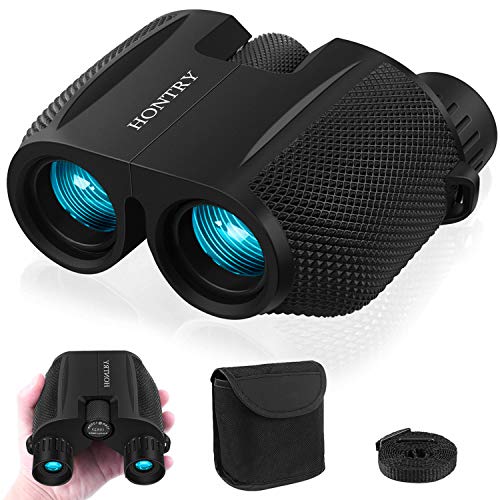
Hontry 10x25 Compact Binoculars for Adults and Kids | Bird Watching, Travel, Cruise Ship, Sport Games, Theater, Concerts, Road Trip
As an Amazon Associate we earn from qualifying purchases. Product prices and availability are accurate as of the date/time indicated.

12X25 Compact Binoculars Small Pocket for Bird Watching for Adults & Kids | BAK4 & FMC Lens, Wide View Low Light Vision, High Powered, Easy Focus, Mini for Cruise Ship Travel, Concert, Hiking, Camping
As an Amazon Associate we earn from qualifying purchases. Product prices and availability are accurate as of the date/time indicated.
Prices shown are approximate and for reference only. Prices change often, so please check the current price on Amazon before you buy.
Specifications summarize manufacturers’ published figures for current models; weights and included accessories vary by version and package. Ratings are editorial, weighing marine handling, optical quality in overcast light, waterproofing, and value at typical prices.
The Six Best Binoculars for Whale Watching Reviewed
1. Fujinon Polaris 7×50 FMTR-SX: Best Traditional Marine Binocular
The Polaris is the binocular professional mariners reach for, and a whale watching tour is simply its home water with better scenery. Its flat-field image stays sharp to the edges, which matters when a whale surfaces at the frame’s edge and there is no time to recenter, its individual-focus eyepieces are set once for your eyes and then forgotten, which on a boat is a profound convenience, and its build treats immersion, fog, and a dropped landing on a deck as ordinary events. It is heavy, as a 50mm marine glass must be, and individual focus is wrong for close, fast-changing distances on land. For a serious whale watcher, a sailing household, or a tour naturalist equipping themselves for a career, it is the finest tool in this table.
2. Steiner Navigator Pro 7×50: Best Set-and-Forget
Steiner’s auto-focus system holds the scene sharp from a working distance to the horizon once set to your eyes, which means a whale at any range on the water is in focus the moment you raise the binocular, with no wheel to hunt for with cold, gloved, or excited hands. Add serious armor, marine waterproofing, and compass versions that serve a boat owner beyond the tour, and the Navigator Pro is the easiest binocular here to simply use, all day, in weather. Its optics sit a step below the Fujinon’s at the edges, honestly priced. For the passenger who wants to watch whales rather than operate an instrument, it is arguably the best recommendation in the guide.
3. Nikon OceanPro 7×50: Best Value Marine Model
The OceanPro delivers the essential marine formula, 7×50, sealed and purged, with a floating strap in common packages, at a price that makes owning rather than renting a tour boat’s loaners an easy decision. Its center focus suits shared use between partners of different eyes, where individual focus models must be reset at every handover, and its image is bright and entirely adequate for the distances whale watching actually happens at. It lacks the premium models’ edge sharpness and build refinement, and it does not pretend otherwise. For a family taking two pairs on a season of tours, this is where the money should go first.
4. Vortex Diamondback HD 8×42: Best All-Rounder
Most readers do not live on boats, and for them the best whale watching binocular is the one that also does the rest of a traveling life: birds, scenery, sport, and the hike to the lighthouse after the tour. The Diamondback HD 8×42 is that binocular, half the marine models’ weight, waterproof and fogproof, with a wide field that finds whales admirably from any vessel, and a lifetime warranty that removes the fear from lending it to a teenager on a wet deck. It gives up the 7×50’s rolling-deck forgiveness and grey-light brightness, and in exchange it will be carried on a hundred days the marine glasses stay home. Versatility is a performance figure, and here it wins its row.
5. Nikon Monarch M7 8×42: Best Image Under Premium Prices
The Monarch M7 brings ED glass and a notably wide field to the 8×42 class, producing the bright, high-contrast image that separates a grey whale against grey water on an overcast morning, which is the exact optical problem this entire article is about. It is light, sealed, and finished like an instrument, and for the traveler who watches whales in season and birds all year, it is the quality summit below the stabilized and marine flagships. Its price buys two OceanPros, a fact a couple should weigh, because two good binoculars beat one excellent binocular shared between two people at the moment a pod surfaces on both sides of the boat.
6. Canon 10×42 L IS WP: Best Stabilized
Press the button and the sea calms down. Canon’s stabilization removes the tremor and much of the swell from the image, letting 10x do on a boat what 10x cannot ordinarily do, and the L-class optics behind it are superb. On a large vessel, from shore, and in the hands of an observer who wants to study a fluke’s markings or a calf’s behavior in detail, it is transformative. Its costs are the table’s highest price, real weight, batteries to manage, and electronics to keep dry within its waterproof rating’s terms. It is a specialist’s instrument that earns its place by breaking the guide’s own first rule, fairly, with engineering.
Buying Guide: How to Choose the Best Binoculars for Your Whale Watching Tour
Step One: Name Your Platform and Your Weather
Write down the vessel and the water: a large, stable tour ship in sheltered bays forgives 8x and even a stabilized 10x, and rewards image quality. A small open boat, a rigid inflatable, or a kayak in open ocean argues for 7x, maximum exit pupil, armor, and a floating strap, in that order, and punishes every gram of delicacy. Add your climate’s honest light: the grey northern waters where much whale watching happens prize brightness and contrast over magnification, while tropical tours in hard sun forgive a smaller exit pupil and ask instead for glare control and a binocular you can hold with sunscreened hands. This paragraph, answered truthfully, eliminates half the table before price is mentioned, which is what a buying guide is for.
Step Two: Decide Who Shares, and How Many Pairs That Means
A binocular shared on a whale tour is a whale missed by one of the sharers, because sightings are brief and the handover takes exactly as long as a dive. Budget honestly for a pair per adult where you can, which is why this table leads with value at several levels, and choose center focus models for any binocular that will pass between different eyes, reserving individual focus and auto-focus systems for personal instruments set to one observer. For children, a smaller, lighter 8×32 class binocular from a reputable maker, not in this table but in every maker’s line, serves better than an adult marine glass they cannot hold steady, and a child with their own binocular, however modest, watches the water instead of the rail.
Step Three: Compose the Whole Marine Kit
Price the system: the binocular, a floating strap or tether if it is not included, a wide comfort strap if it is, a dry bag or waterproof case for the boat ride and the drive, lens cleaning supplies that can handle salt, which means a rinse with fresh water as the maker directs and a proper cloth, never a dry wipe of a salty lens, and, for stabilized and premium models, the batteries and the insurance of a tour-day checklist. Compare that total across your finalists, and against the alternative of renting or borrowing the operator’s binoculars, which are commonly basic, shared, and of unknown hygiene and history. For anyone taking more than one tour in a life, ownership at the OceanPro or Diamondback level repays itself in the first season, in whales actually seen, which is the only currency this purchase is finally denominated in.
Step Four: Practice the Two Skills Before the Tour
At home, set the binocular to your eyes: the interpupillary distance until the two circles become one, the diopter until both eyes are sharp, and, on individual focus models, each eyepiece in turn, then mark or note the settings. Practice the spotter’s lift: eyes on the sighting, binocular raised into the gaze without looking down at it, which keeps the whale in view through the transition and is the single technique that most improves a first tour. On the boat, brace your elbows against your body or a rail, sit where the vessel’s motion is least, amidships rather than the bow, and scan in overlapping arcs, naked eye first. The binocular you bought is half the instrument. These habits are the other half, and unlike the binocular, they are free, transferable to every future tour, and impossible to leave in the motel.
Frequently Asked Questions About Binoculars for Whale Watching
What magnification is best for whale watching?
Seven or eight power, for almost every observer on almost every vessel, because the boat’s motion is multiplied by the magnification and the field of view shrinks as power grows, making whales harder to find and harder to follow. A 7×50 remains the marine standard for its combination of steadiness, brightness, and a 7mm exit pupil that forgives a rolling deck, while an 8×42 is the versatile traveler’s equivalent, lighter and nearly as forgiving. Ten power earns its place on large, stable ships, in calm water, and in stabilized models that cancel the motion problem mechanically. Above that, handheld on the water, you are mostly buying a narrower, shakier view of a whale leaving. Choose the power your platform can hold still, and you will see more animal, in more detail, than the passenger who chose by the number on the box.
Do I need waterproof binoculars for a whale watching tour?
Yes, without exception, and fogproof with them, because the marine environment delivers water to a binocular from every direction at once: spray over the bow, rain, wet hands, dripping foul-weather gear, and the simple humidity of a cabin-to-cold-deck transition that fogs an unsealed instrument internally and ends its day. Every model in this guide is sealed and purged, which should be your minimum specification, stated by the maker, for any binocular bought for the water. After the tour, rinse salt away with fresh water exactly as the maker directs, dry the binocular fully before storing it in its case, and never leave it sealed in a damp bag between tours. Waterproofing gets a binocular through the tour. That rinsing and drying routine gets it through the decade.
Should I buy binoculars or use the ones the tour provides?
Buy your own if you expect to take more than one tour, watch wildlife on land, or simply value seeing the animals you paid to see, because provided binoculars are typically few, basic, shared among passengers, and adjusted to nobody’s eyes, which in a ninety-second sighting is the difference between a whale and a story about a whale. The value models in this guide cost less than many tour tickets themselves, set up for your eyes in advance, ride in your bag to every future coast, and serve a lifetime of birds, games, and scenery between tours. For a single, once-in-a-lifetime tour taken light, borrowing is rational, in which case arrive early, claim a pair, set its diopter during the safety briefing rather than during the first breach, and hold it with both hands and a strap around your neck from the first minute, because the sea collects its rental fee in dropped equipment.
What is image stabilization, and is it worth it for whale watching?
Image stabilization uses sensors and moving optical elements to cancel the shake and much of the slow motion in the image, producing a steadiness that feels, on a boat, like the water calming beneath you. It makes higher magnifications usable afloat, reveals detail, a fluke’s trailing edge, a spyhop’s eye, a calf staying close, that unstabilized binoculars smear away, and reduces the eye fatigue and seasickness that a dancing image causes in susceptible observers. Its costs are price, weight, battery dependence, and one more system to protect from the marine environment, and for most tour passengers the honest verdict is that a good 7×50 or 8×42 serves them completely. For the dedicated whale watcher, the photographer who scouts with optics, the shore-based observer, and anyone whose tours are the center of a traveling life, stabilization is not a luxury. It is the single largest upgrade available, and the Canon in this guide is its benchmark.
Related guides
- Best Lightweight Rangefinder for Hiking Trips in 2026: Vortex, Leupold, Bushnell, and Sig Sauer Compared for an Honest Hiking Office, a Weight Counted With Its Case and Battery, and a Beam Never Pointed at Eyes or the Sun
- Telescope for Planets vs Telescope for Deep Sky in 2026: 7 Telescopes That Offer Clear Planet Views, Bright Deep Sky Views, and Reliable Performance for Telescope for Planets vs Telescope for Deep Sky
- Best Monocular for Wildlife Viewing in 2026: 6 Monoculars With at Least 10x Magnification, at Least 36mm Objective, and a Price Range, for Wildlife Viewing
- Best Binoculars for Travel Horse Racing in 2026: How to Pick Binoculars for Travel Horse Racing That Are Compact, Clear, and Perfect for the Track
More from Amazon
Programs that pair well with the guide above. Offers and eligibility are set by Amazon and may change.
Free shipping on eligible items, Prime Video and more. Eligible new members can start with a free trial.
Start a Prime free trialAudiobooks and podcasts to listen to on the go. Eligible new members can start with a free trial.
Try Audible freeAd-free music streaming. Eligible new subscribers can start with a free trial.
Try Music Unlimited freeA free business account with business pricing and bulk-buying tools for work, shop or home office.
Create a business accountAs an Amazon Associate we earn from qualifying purchases.

Write Your Review
No reviews yet. Be the first to share your experience!