
What's inside
As an Amazon Associate I earn from qualifying purchases. This post may contain affiliate links at no extra cost to you.
Window birding is not astronomy. You are not looking at Saturn, you are looking at a bird at 20 to 100 metres, through a window, from a chair, with a cup of tea. You need a telescope that is small enough to sit on a windowsill or on a table by a window, light enough to move, and easy enough to focus that you can find a bird before it flies away.
That is why a portable telescope for window birding is different from a telescope for astronomy. A large Dobsonian will show you more detail, but it will not fit on a windowsill. A small refractor with a short tube, a low magnification, and a tabletop tripod will fit, and it will show you a bird clearly enough to identify it.
Our top pick is the Celestron Travel Scope 80. It is an 80 mm refractor with a 400 mm focal length, a weight of about 4 lb, and a price of $100 to $130. It comes with a tabletop tripod, it fits on a windowsill or on a table, and it gives you a brighter image than a 70 mm telescope, with a wide field of view that makes it easy to find a bird.
The ratings below are editorial assessments based on aperture, focal length, weight, ease of use, and value for window birding. They are not customer-star averages. Prices are typical retail ranges, not fixed prices, and they vary by retailer.
Our Top Picks
Best Portable Telescope for Window Birding Compared
| Telescope | Aperture | Focal length | Weight | Typical price range | Rating |
|---|---|---|---|---|---|
| Celestron Travel Scope 80 | 80 mm | 400 mm | 4.0 lb | $100–$130 | 4.8 / 5 |
| Celestron Travel Scope 70 | 70 mm | 400 mm | 3.3 lb | $80–$100 | 4.7 / 5 |
| Sky-Watcher StarTravel 80 | 80 mm | 400 mm | 5.0 lb | $200–$250 | 4.6 / 5 |
| Svbony SV503 70ED | 70 mm | 420 mm | 4.0 lb | $250–$300 | 4.5 / 5 |
| Meade Infinity 80 | 80 mm | 400 mm | 6.0 lb | $150–$180 | 4.4 / 5 |
| Celestron NexStar 4SE | 102 mm | 1,325 mm | 9.0 lb OTA | $700–$800 | 4.3 / 5 |

Ximimark 1 pcs 8x20 Mini Pocket Zoom Monocular HD Low Outdoor Portable Telescope for Hunting Camping Mountaineering Hike Birdwatch…


As an Amazon Associate we earn from qualifying purchases. Product prices and availability are accurate as of the date/time indicated.

Compact High Power Monocular Telescope, 8X Magnification Portable Single Tube for Hiking, Bird Watching, Stargazing, and Outdoor Adventures

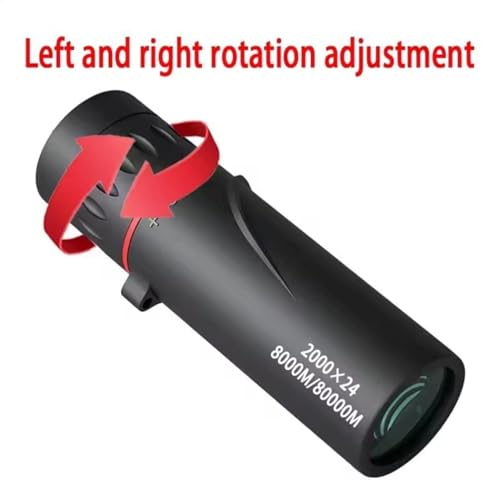


As an Amazon Associate we earn from qualifying purchases. Product prices and availability are accurate as of the date/time indicated.

Maksutov-Cassegrain Telescope for Adults Kids Astronomy Beginners, Sarblue Mak60 Catadioptric Compound Telescope 750x60mm, Compact Portable Travel Telescope, with Tabletop Tripod Phone Adapter
As an Amazon Associate we earn from qualifying purchases. Product prices and availability are accurate as of the date/time indicated.
Prices shown are approximate and for reference only. Prices change often, so please check the current price on Amazon before you buy.
Best Portable Telescope for Window Birding Reviews
1. Celestron Travel Scope 80: Best Overall Portable Telescope for Window Birding
The Celestron Travel Scope 80 is an 80 mm refractor with a 400 mm focal length, which works out to f/5. It weighs about 4 lb, it is about 16 inches long when assembled, and it comes with a tabletop tripod, a backpack, and two eyepieces, a 20 mm eyepiece for 20x magnification and a 10 mm eyepiece for 40x magnification.
For window birding, 20x is the right starting magnification. It is low enough to give you a wide field of view, so you can find a bird at a feeder, and it is high enough to see detail on a bird at 20 to 50 metres. At 40x, you can see more detail, but the image is dimmer, and the field of view is narrower, so you will spend more time searching.
The 80 mm aperture gathers more light than a 70 mm aperture, which helps on a cloudy day, in shade, or at dawn and dusk, when birds are most active. It also gives you a brighter image through a window, which is important, because a window absorbs and reflects light, and it reduces contrast. A larger aperture helps compensate for that loss.
At $100 to $130, the Travel Scope 80 is the best value in this guide, and it is the easiest to use. Set it on a windowsill or on a table, point it at a feeder, focus with the knob, and you are birding. Do not use it to look at the sun, and do not leave it in direct sun with the lens cap off, because the lens can focus sunlight and damage the eyepiece or start a fire.
2. Celestron Travel Scope 70: Best Cheapest Portable Telescope for Window Birding
The Celestron Travel Scope 70 is the smaller version of the Travel Scope 80, with a 70 mm aperture, a 400 mm focal length, and a weight of about 3.3 lb. It costs $80 to $100, about $20 less than the 80 mm version, and it comes with the same tabletop tripod, backpack, and two eyepieces.
At 70 mm, it gathers less light than the 80 mm, which means the image is dimmer, especially at dawn, at dusk, or on a cloudy day. It is still usable for window birding in daylight, and it is the lightest telescope in this guide, which makes it the easiest to move from window to window, or to take to a park.
Choose the Travel Scope 70 if you want the cheapest, lightest portable telescope for window birding, and you bird mainly in daylight. Choose the Travel Scope 80 if you want a brighter image, if you bird at dawn or dusk, or if you want a little more detail. For most window birders, the 80 mm is worth the extra $20.
3. Sky-Watcher StarTravel 80: Best Portable Telescope for Better Optics
The Sky-Watcher StarTravel 80 is an 80 mm refractor with a 400 mm focal length, a weight of about 5 lb, and a price of $200 to $250. It is a short-tube refractor, like the Celestron Travel Scope 80, but it has better optics, a better focuser, and a better mount, which makes it easier to focus and easier to keep steady.
For window birding, that better focuser matters. A cheap focuser can be stiff, or it can have backlash, which means you turn the knob and the image does not move, then it jumps. A good focuser moves smoothly, so you can focus on a bird quickly, before it flies away. The StarTravel 80 has a smoother focuser than the Travel Scope, and it is worth the extra money if you bird often.
The trade-off is price and weight. At $200 to $250, it costs twice as much as the Travel Scope 80, and at 5 lb, it is a pound heavier. It does not come with a backpack, and it does not come with as many accessories. If you want the best optics in a portable 80 mm refractor, and you are willing to pay for it, the StarTravel 80 is a good choice.
4. Svbony SV503 70ED: Best ED Portable Telescope for Window Birding
The Svbony SV503 70ED is a 70 mm refractor with extra-low dispersion, or ED, glass, a 420 mm focal length, and a weight of about 4 lb. It costs $250 to $300, the most expensive 70 mm telescope in this guide, and it is designed for astrophotography as well as for visual use.
ED glass reduces chromatic aberration, which is the colour fringing you see around a bright object, like a white bird against a dark background, or a bird against a bright sky. A standard achromat, like the Travel Scope, will show some colour fringing, especially at high magnification. An ED refractor shows less fringing, which means a cleaner image, especially for birding, where you need to see true colours to identify a species.
At 70 mm, it gathers less light than an 80 mm telescope, but its ED glass gives you a sharper image than a standard 70 mm achromat. Choose it if you want the sharpest image in a small telescope, if you photograph birds through the telescope, or if you are sensitive to colour fringing. If you just want to watch birds, the Travel Scope 80 gives you more light for less money.
5. Meade Infinity 80: Best Portable Telescope with a Full-Size Tripod
The Meade Infinity 80 is an 80 mm refractor with a 400 mm focal length, a weight of about 6 lb, and a price of $150 to $180. It comes with a full-size alt-azimuth tripod, not a tabletop tripod, which means you can set it up on the floor by a window, instead of on a windowsill or a table.
That full-size tripod is useful if your windowsill is narrow, if your table is too low, or if you want to stand while you bird. It is also useful if you want to take the telescope outside, to a park or to a garden, where there is no table. The tripod is adjustable, so you can set the height to match your chair or your standing height.
The trade-off is weight and bulk. At 6 lb, it is heavier than the Travel Scope 80, and it is bulkier to store. It is also more expensive than the Travel Scope 80, for the same aperture and focal length. Choose it if you need a full-size tripod, or if you do not have a table by your window. If you have a table, the Travel Scope 80 is lighter and cheaper.
6. Celestron NexStar 4SE: Best Portable Telescope for Detail, With a Caveat
The Celestron NexStar 4SE is a 102 mm Maksutov-Cassegrain telescope with a 1,325 mm focal length, a weight of about 9 lb for the optical tube alone, and a price of $700 to $800. It has a GoTo mount that can find and track objects automatically, and it gives you much more detail than an 80 mm refractor, especially at high magnification.
For window birding, that detail is useful if you want to see a bird at 100 metres or more, or if you want to see detail on a bird that is far away. The 102 mm aperture gathers more light than an 80 mm aperture, and the long focal length gives you higher magnification with the same eyepiece.
The caveat is portability and field of view. The NexStar 4SE is heavy, it needs a full tripod or a sturdy table, and its field of view is narrow, which makes it hard to find a bird. It is also a telescope for astronomy, not for birding, and it produces an upright image only with a correct-image diagonal, which is not always included. It is the best telescope here for detail, but it is not the best telescope for window birding for most people. Use it if you already own one, and you want to use it by a window, with a tabletop tripod and a correct-image diagonal. Do not buy it specifically for window birding, unless you need the detail and you are willing to deal with the weight and the narrow field.
Best Portable Telescope for Window Birding Buying Guide
Start with aperture, then focal length, then mount. A good portable telescope for window birding should have an aperture of 70 to 102 mm, a focal length of 400 to 1,325 mm, a weight of less than 10 lb for the optical tube, and a tabletop tripod or a full-size tripod that fits by a window. Every telescope in the table meets those tests. The differences are in how much light they gather, how wide the field of view is, and how much they cost.
Aperture, magnification, and field of view
Aperture is the diameter of the objective lens. A larger aperture gathers more light, which gives you a brighter image, especially through a window, which absorbs light. An 80 mm aperture gathers about 30 percent more light than a 70 mm aperture, which is a noticeable difference at dawn, at dusk, or on a cloudy day. A 102 mm aperture gathers about 65 percent more light than an 80 mm aperture, but it is also heavier and more expensive.
Magnification is focal length divided by eyepiece focal length. A 400 mm telescope with a 20 mm eyepiece gives you 20x magnification. With a 10 mm eyepiece, it gives you 40x. For window birding, start with 20x. It is wide enough to find a bird, and it is high enough to see detail. Use 40x only when the bird is still, and you want more detail.
Field of view is how wide the scene is. A wider field makes it easier to find a bird, especially a moving one. A short focal length, like 400 mm, gives you a wider field than a long focal length, like 1,325 mm. That is why the Travel Scope 80, with a 400 mm focal length, is easier to use for window birding than the NexStar 4SE, with a 1,325 mm focal length.
Window, mount, and image orientation
A window affects the image. Glass absorbs light, it reflects light, and it can distort the image if it is old, dirty, or double-glazed. Clean the window, open it if you can, and do not point the telescope through a dirty window. If you must look through glass, use a low magnification, and do not expect the same sharpness as you would get outside.
Mount matters. A tabletop tripod is best for a windowsill or a table, because it is small, stable, and easy to move. A full-size tripod is best if you do not have a table, or if you want to stand. A window mount, which clamps to a windowsill, is another option, but it is not included with most portable telescopes, and it needs a sturdy sill.
Image orientation also matters. A refractor with a standard diagonal gives you a mirror image, which is fine for astronomy, but it is confusing for birding, because left and right are reversed. Use a correct-image diagonal, which gives you an upright, left-right correct image, like a spotting scope. Most portable telescopes for birding should be used with a correct-image diagonal, or with an erecting eyepiece.
Setting up by a window
Set the telescope on a stable table or windowsill, close to the window, with the objective close to the glass, to reduce reflections. Turn off lights inside the room, because they will reflect in the window and reduce contrast. Use a low magnification first, find the bird, then increase magnification to see detail.
Focus slowly. A telescope focuser is sensitive, and a small turn makes a big difference. If the image is blurry, turn the knob slowly in one direction, then back, until the bird is sharp. Do not touch the telescope while you are looking through it, because vibration will blur the image. Use a tripod, and let the telescope settle for a few seconds after you touch it.
Do not look at the sun with a telescope, and do not leave a telescope in direct sun with the lens cap off. The lens can focus sunlight and damage the eyepiece, or start a fire. If you want to observe the sun, use a proper solar filter, not a telescope without a filter.
Best Portable Telescope for Window Birding FAQ
What is the best portable telescope for window birding?
The best portable telescope for window birding for most people is the Celestron Travel Scope 80. It is an 80 mm refractor with a 400 mm focal length, a weight of about 4 lb, and a price of $100 to $130. It comes with a tabletop tripod, it fits on a windowsill or on a table, and it gives you a brighter image than a 70 mm telescope, with a wide field of view that makes it easy to find a bird.
Can I use a telescope through a window for birding?
Yes, but the image will not be as sharp as it would be outside. Glass absorbs light, reflects light, and can distort the image, especially if it is old, dirty, or double-glazed. Clean the window, open it if you can, use a low magnification, and turn off lights inside the room to reduce reflections. For the best image, set the telescope outside, or open the window and point the telescope through the opening.
What magnification is best for window birding?
Start with 20x. It is wide enough to find a bird, and it is high enough to see detail on a bird at 20 to 50 metres. Use 40x only when the bird is still, and you want more detail. A higher magnification will narrow the field of view, magnify hand shake and vibration, and make the image dimmer, especially through a window.
Do I need a spotting scope or a telescope for window birding?
A spotting scope is usually better for window birding, because it gives you an upright, left-right correct image, it has a wider field of view, and it is designed for terrestrial viewing. A telescope can work for window birding if it has a correct-image diagonal, a low magnification, and a tabletop tripod, like the Celestron Travel Scope 80. If you already own a telescope, use it with a correct-image diagonal. If you are buying specifically for window birding, consider a spotting scope first, and a portable telescope second.
FAQ
What is the best portable telescope for window birding?
Can I use a telescope through a window for birding?
What magnification is best for window birding?
Do I need a spotting scope or a telescope for window birding?
Related guides
- Best Binoculars for the Money in 2026: 6 Best Value Binoculars for Birding, Hiking, and Travel
- Best Binoculars for Birding in 2026: Bright 8×42 Binoculars for Birds, Close Focus, and Long Days Compared
- Best Dew Shield for Under 25 Dollars in 2026: 6 Affordable Dew Shields for Telescopes
- Best Telescope Battery Pack Replacement: 6 Best Picks in 2026
More from Amazon
Programs that pair well with the guide above. Offers and eligibility are set by Amazon and may change.
Free shipping on eligible items, Prime Video and more. Eligible new members can start with a free trial.
Start a Prime free trialAudiobooks and podcasts to listen to on the go. Eligible new members can start with a free trial.
Try Audible freeAd-free music streaming. Eligible new subscribers can start with a free trial.
Try Music Unlimited freeA free business account with business pricing and bulk-buying tools for work, shop or home office.
Create a business accountAs an Amazon Associate we earn from qualifying purchases.

Write Your Review
No reviews yet. Be the first to share your experience!