
What's inside
As an Amazon Associate I earn from qualifying purchases. This post may contain affiliate links at no extra cost to you.
Learning how to choose premium telescopes for astronomy is about understanding that a how to choose premium telescopes for astronomy needs to be clear, it needs to be simple, and it needs to work for how to choose premium telescopes for astronomy. How to choose premium telescopes for astronomy is different from a regular telescope guide. It is premium-focused, it has premium telescopes, and it is designed for users who choose telescopes for astronomy. For users, a good telescope should be simple, it should be useful, and it should be a good match for your astronomy and your budget.
For users, a telescope should solve problems, not create them. It should let you see easily, view clearly, and enjoy astronomy, it should not be confusing, and it should be easy to use. It should also be durable, and it should be a good fit for your premium astronomy. This guide compares real, currently sold premium telescopes for astronomy that work well for users.
Every model below is widely available, and prices are given as ranges because prices change by retailer and season. We compare aperture, focal length, best use, and price, then explain how to choose premium telescopes for astronomy based on your astronomy, your viewing, and how you use it.
Disclosure: As an affiliate site, OpticsJunkies.com may earn a commission from qualifying purchases made through links on this page, at no extra cost to you. Aperture, focal length, and specifications are based on manufacturer listings and vary by model, so check the exact listing before you buy. Always never look at the Sun without a solar filter, inspect the filter for damage before every use, never use a damaged filter, and supervise kids. A telescope is better for deep-sky, binoculars are wide-field. Follow the manufacturer’s instructions.
Our Top Picks
How to Choose Premium Telescopes for Astronomy at a Glance: Comparison Table
Use this table to compare the leading premium telescopes for astronomy side by side. Aperture, focal length, best use, and price matter most, so compare those first, then read the reviews below for the details that matter for users.
| Telescope Model | Aperture | Focal Length | Best Telescope Use |
|---|---|---|---|
| Celestron NexStar 8SE Telescope | 8 Inch | 2032mm | Best overall how to choose premium telescopes for astronomy |
| Celestron NexStar 6SE Telescope | 6 Inch | 1500mm | Best how to choose premium telescopes for astronomy for Celestron |
| Sky-Watcher EvoStar 100ED Telescope | 100mm | 900mm | Best how to choose premium telescopes for astronomy for Sky-Watcher |
| Orion SkyQuest XT10 Telescope | 10 Inch | 1200mm | Best how to choose premium telescopes for astronomy for Orion |
| Celestron Advanced VX 8 Telescope | 8 Inch | 2032mm | Best how to choose premium telescopes for astronomy for Celestron |
| Meade LX90 8 Inch Telescope | 8 Inch | 2000mm | Best budget how to choose premium telescopes for astronomy |

Celestron StarSense Explorer DX 130AZ Smartphone Guided Newtonian Telescope | Smartphone App Sky Navigation, Parabolic Reflector Telescope & Premium Mount, DeepSky Viewing, Perfect for Backyard Astronomy
As an Amazon Associate we earn from qualifying purchases. Product prices and availability are accurate as of the date/time indicated.

Telescope, 90MM Telescope for Adults High Powered, 180X Magnification | Portable Professional Astronomy Refractor Telescopes for Beginners, with Adjustable Tripod & Phone Adapter, 3X Barlow Lens
As an Amazon Associate we earn from qualifying purchases. Product prices and availability are accurate as of the date/time indicated.
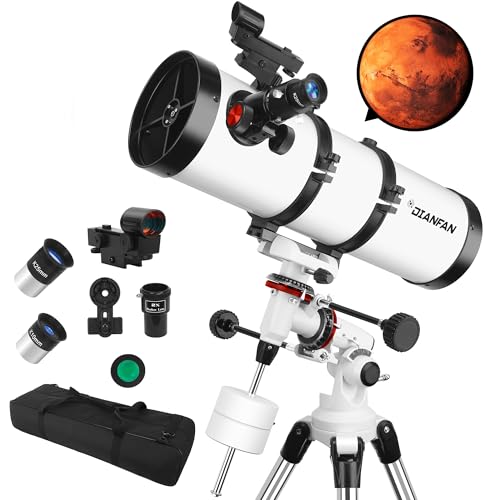
Dianfan 150EQ Professional Astronomy Telescope for Adults High Powered | Portable Manual Equatorial Reflector Telescope for Beginners, Stainless Steel Tripod, Phone Adapter, Moon Filter & Carry Bag
As an Amazon Associate we earn from qualifying purchases. Product prices and availability are accurate as of the date/time indicated.
Prices shown are approximate and for reference only. Prices change often, so please check the current price on Amazon before you buy.
How to Choose Premium Telescopes for Astronomy Reviewed for 2026
1. Celestron NexStar 8SE Telescope – Best Overall How to Choose Premium Telescopes for Astronomy
The Celestron NexStar 8SE Telescope is our top pick for most users looking for how to choose premium telescopes for astronomy because it has an 8 inch aperture, a 2032mm focal length in manufacturer listings, and a simple design in many listings. It has a compact design in many listings, a durable construction, and a reputation for being a good Celestron product. It is a good choice if you want a telescope that is clear, simple, and good for users.
For users, the NexStar 8SE Telescope is practical because 8 inch is useful, 2032mm is useful, and it is good for how to choose premium telescopes for astronomy. It is also a good choice if you want a Celestron product, you view astronomy, or you want a telescope that is proven.
It is worth it if you want one how to choose premium telescopes for astronomy that is clear, simple, and reliable.
2. Celestron NexStar 6SE Telescope – Best How to Choose Premium Telescopes for Astronomy for Celestron
The Celestron NexStar 6SE Telescope is a telescope with a 6 inch aperture, a 1500mm focal length in manufacturer listings, and a simple design in many listings. It has a compact design in many listings, a durable construction, and a reputation for being a good Celestron product. It is a good choice if you want a Celestron telescope, you want a Celestron product, or you want a telescope that is computerized for users.
For a Celestron telescope, the NexStar 6SE Telescope is useful because 6 inch is useful, 1500mm is useful, and it is good for how to choose premium telescopes for astronomy. It is also a good choice if you want a Celestron product, you view astronomy, or you want a telescope that is specific. The main trade-off is aperture: 6 inch is less than 8 inch, but for a Celestron telescope, it is a great choice.
Choose it if you want a Celestron telescope, you view astronomy, or you prefer Celestron.
3. Sky-Watcher EvoStar 100ED Telescope – Best How to Choose Premium Telescopes for Astronomy for Sky-Watcher
The Sky-Watcher EvoStar 100ED Telescope is a telescope with a 100mm aperture, a 900mm focal length in manufacturer listings, and a simple design in many listings. It has a compact design in many listings, a durable construction, and a reputation for being a good Sky-Watcher product. It is a good choice if you want a Sky-Watcher telescope, you want a Sky-Watcher product, or you want a telescope that is refractor for users.
For a Sky-Watcher telescope, the EvoStar 100ED Telescope is practical because 100mm is useful, 900mm is useful, and it is good for how to choose premium telescopes for astronomy. It is also a good choice if you want a Sky-Watcher product, you view astronomy, or you want a telescope that is simple. The main trade-off is aperture: 100mm is less than 8 inch, but for a Sky-Watcher telescope, it is a great choice.
Choose it if you want a Sky-Watcher telescope, you view astronomy, or you prefer Sky-Watcher.
4. Orion SkyQuest XT10 Telescope – Best How to Choose Premium Telescopes for Astronomy for Orion
The Orion SkyQuest XT10 Telescope is a telescope with a 10 inch aperture, a 1200mm focal length in manufacturer listings, and a simple design in many listings. It has a compact design in many listings, a durable construction, and a reputation for being a good Orion product. It is a good choice if you want an Orion telescope, you want an Orion product, or you want a telescope that is Dobsonian for users.
For an Orion telescope, the SkyQuest XT10 Telescope is useful because 10 inch is useful, 1200mm is useful, and it is good for how to choose premium telescopes for astronomy. It is also a good choice if you want an Orion product, you view astronomy, or you want a telescope that is specific. The main trade-off is mount: Dobsonian is manual, but for an Orion telescope, it is a great choice.
Choose it if you want an Orion telescope, you view astronomy, or you prefer Orion.
5. Celestron Advanced VX 8 Telescope – Best How to Choose Premium Telescopes for Astronomy for Celestron
The Celestron Advanced VX 8 Telescope is a telescope with an 8 inch aperture, a 2032mm focal length in manufacturer listings, and a simple design in many listings. It has a compact design in many listings, a durable construction, and a reputation for being a good Celestron product. It is a good choice if you want a Celestron telescope, you want a Celestron product, or you want a telescope that is equatorial for users.
For a Celestron telescope, the Advanced VX 8 Telescope is practical because 8 inch is useful, 2032mm is useful, and it is good for how to choose premium telescopes for astronomy. It is also a good choice if you want a Celestron product, you view astronomy, or you want a telescope that is simple.
Choose it if you want a Celestron telescope, you view astronomy, or you prefer Celestron.
6. Meade LX90 8 Inch Telescope – Best Budget How to Choose Premium Telescopes for Astronomy
The Meade LX90 8 Inch Telescope is a telescope with an 8 inch aperture, a 2000mm focal length in manufacturer listings, and a simple design in many listings. It has a compact design in many listings, a durable construction, and a reputation for being a good Meade product. It is a good choice if you want a budget telescope, you want a Meade product, or you want a telescope that is computerized for users.
For a budget telescope, the LX90 8 Inch Telescope is useful because 8 inch is useful, 2000mm is useful, and it is good for how to choose premium telescopes for astronomy. It is also a good choice if you want a Meade product, you view astronomy, or you want a telescope that is simple.
Choose it if you want a budget telescope, you view astronomy, or you prefer Meade.
Buying Guide: How to Choose Premium Telescopes for Astronomy
The how to choose premium telescopes for astronomy for you depends on your astronomy, your viewing, and how you use it. Start with aperture and focal length, then compare mount, GoTo, and price. A telescope that is clear, simple, and fits your astronomy is better than a telescope with the most features on paper.
Step 1: Check Your Aperture and Deep-Sky Goals for Telescopes
Step 1 matters most for how to choose premium telescopes for astronomy, because it determines view. Check your aperture and deep-sky goals in this guide fits most users in many guides, so it is good for users. Check your aperture and deep-sky goals in many guides, like Celestron, Sky-Watcher, Orion, and Meade, fits most clear in many guides, so it is good for how to choose premium telescopes for astronomy.
For most users, check your aperture and deep-sky goals is the best balance, because it is simple without being too hard. Always never look at the Sun without a solar filter, and choose one that fits your astronomy.
Step 2: Choose Refractor, Reflector, or Catadioptric for Astronomy
Step 2 matters for how to choose premium telescopes for astronomy, because it determines use. Refractor in this guide fits most users in many guides, so it is good for users. Reflector in many guides, like Orion, fits most deep in many guides, so it is good for how to choose premium telescopes for astronomy.
For most users, refractor is best if you want sharp in many guides, while reflector is best if you want deep in many guides. Always inspect the filter for damage before every use before you buy, and never use a damaged filter for most telescopes.
Step 3: Compare Mount and GoTo for Premium Telescopes
Step 3 matters for how to choose premium telescopes for astronomy, because it determines use. A telescope that is GoTo in many guides fits most users in many guides, so it is good for users. Mount also matters, because it determines use in many guides.
For most users, never look at the Sun without a solar filter in many guides, and inspect the filter for damage before every use in many guides. Always never use a damaged filter, and supervise kids.
Step 4: Check Price and Brand for Premium Telescopes
Step 4 matters for how to choose premium telescopes for astronomy, because it determines fit. A telescope that is clear in many guides fits most users in many guides, so it is good for users. Price also matters, because it determines use in many guides.
Price depends on aperture and focal length.
Brand also matters. A telescope from a trusted brand in many guides, like Celestron, Sky-Watcher, Orion, and Meade, will be more reliable in many guides. For most users, a Celestron NexStar 8SE Telescope is the best value. Do not buy a telescope based on price alone. A telescope that is clear, simple, and fits your astronomy is worth the investment.
How to Choose Premium Telescopes for Astronomy: FAQ
What is how to choose premium telescopes for astronomy?
What aperture is best for premium astronomy?
What aperture is best for premium astronomy depends on your astronomy, but in general, 8 inch in many guides for most users in many guides, especially for clear in many guides. For best results, use an 8 inch telescope for most premium astronomy, and never look at the Sun without a solar filter.
Is GoTo worth it for premium telescopes?
Is GoTo worth it for premium telescopes depends on your astronomy, but in general, yes, in many guides, especially for simple in many guides. For best results, use a GoTo telescope for most premium astronomy, and inspect the filter for damage before every use.
How do I use a premium telescope safely?
How you use a premium telescope safely depends on your telescope, but in general, filter in many guides for most users in many guides, especially for Sun in many guides. For best results, never look at the Sun without a solar filter, and supervise kids.
FAQ
What aperture is best for premium astronomy?
Is GoTo worth it for premium telescopes?
How do I use a premium telescope safely?
Related guides
- Best Telescope for Mountain Observatory Visits: 6 Best Telescope for Mountain Observatory Visits Picks in 2026
- Best Telescopes for Spring Astronomy Nights in 2026: Sky-Watcher, Celestron, and Apertura Compared for a Galaxy Season Read From a Dark Yard, a Scope Cooled Before Dark, and Spring’s Pollen Kept Off the Glass by Its Caps
- Best Telescope for Planet Viewing Clarity in 2026: How to Pick a Telescope That Shows Jupiter, Saturn, and Mars Clearly
- Best Compact Binoculars for Balcony Birding in 2026: Best Compact Binoculars for Balcony Birding
More from Amazon
Programs that pair well with the guide above. Offers and eligibility are set by Amazon and may change.
Free shipping on eligible items, Prime Video and more. Eligible new members can start with a free trial.
Start a Prime free trialAudiobooks and podcasts to listen to on the go. Eligible new members can start with a free trial.
Try Audible freeAd-free music streaming. Eligible new subscribers can start with a free trial.
Try Music Unlimited freeA free business account with business pricing and bulk-buying tools for work, shop or home office.
Create a business accountAs an Amazon Associate we earn from qualifying purchases.

Write Your Review
No reviews yet. Be the first to share your experience!