
What's inside
As an Amazon Associate I earn from qualifying purchases. This post may contain affiliate links at no extra cost to you.
The best binocular lens cleaner is the one that removes what is actually on your lens, in the right order, without ever dragging grit across a coating: a blower first, a brush second, and only then a fluid or a treated cloth, used gently, on a lens that needed wet cleaning in the first place. This guide compares real, currently sold lens cleaning products from Zeiss, Nikon, Vortex, LensPen, Carson, and Giottos, explains what each format is for and what it must never be asked to do, and gives the cleaning routine this site teaches for every optic it covers. Never wipe a dry lens that has visible dust or grit on it, never use household glass cleaner, paper tissue, or a shirt on a coated optic, never point binoculars at or near the sun, and follow your binocular maker’s own care guidance for your exact model, because coatings and seals vary and the maker’s instructions govern.
Most lens damage is not caused by dirt. It is caused by cleaning. A coated objective will tolerate a surprising amount of ordinary dust with barely measurable effect on the view, a fact experienced observers repeat because it is true: a lightly dusty lens looks worse to its owner, peering at it under a lamp, than it performs in the field. What a lens cannot tolerate is a hard particle, sand, grit, dried salt, pressed between a cloth and the coating and drawn across it. That single stroke can write a permanent line into the coating, and it is almost always written by someone who meant well and skipped the first step. So this category is unusual: the best product is partly a sequence. The blower and brush are not preliminaries to the real cleaner; they are the cleaner, used on ninety percent of occasions, with fluids, wipes, and pens reserved for the fingerprints, tree sap, salt spray, and sunscreen that air and bristles cannot lift. The table below therefore rates complete cleaning approaches, kits and formats, rather than pretending a bottle alone is a system.
Contents, volumes, cloth and brush patterns, and stated uses are each maker’s stated details for the current version, so check a product’s stated suitability for coated optics on its own packaging before use, and discard any cloth or wipe that has itself become dirty, because a soiled cleaner is an abrasive with good branding.
Our Top Picks
What Makes the Best Binocular Lens Cleaner Different
The Order That Protects Coatings: Air, Brush, Then Wet
Every safe cleaning follows the same order, and any product should be judged by where it sits in it. Step one is air: a squeeze blower, held near the lens without touching it, blows loose dust and grit off the surface so nothing hard remains to be dragged. A blower is not a trivial accessory; it is the step that makes the later steps safe, and it should live wherever the binocular lives. Compressed gas cans are a poor substitute, because they can spit propellant and blast particles across the surface at speed; the makers of optics consistently favour the humble squeeze bulb, and so does this guide. Step two is a soft brush, a retractable lens brush with fine bristles, swept lightly across the lens to lift what the air loosened and left. Step three, only if a smudge remains, is wet: a drop of proper lens fluid on a clean microfibre cloth or a pre-moistened lens wipe, or the treated tip of a lens pen used by its maker’s directions, worked in small circles from the centre outward with almost no pressure, then buffed with a dry part of the cloth. The discipline is in the restraint: if air and brush restore the view, stop there. Wet cleaning is for contamination, not for a schedule, and a lens cleaned rarely and correctly will outlive one cleaned anxiously every week.
Formats Compared: Wipes, Fluid and Cloth, Pens, and Kits
Each format has a job it does best. Pre-moistened wipes, individually wrapped, are the field and travel answer: sterile-clean for one use, flat in a pocket or a harness pouch, and finished before they can collect grit of their own. Their weakness is waste and a tendency to dry out in an old packet, so check the feel of a wipe before it touches a lens and discard a dry one. Fluid with a microfibre cloth is the home system: economical, controllable, a drop at a time, and the best answer for a thorough clean of both objectives and eyepieces at a table. Its weakness is the cloth, which must be kept clean, washed or replaced on a rhythm, stored in its own bag, and retired when it feels anything but soft, because the cloth is the part that touches the coating. Lens pens combine a retractable brush at one end with a treated cleaning tip at the other and are the birder’s pocket standard: quick on a fingerprint at a viewpoint, with the tip’s compound refreshed by its cap in the maker’s stated pattern. Their weakness is size and temptation: the tip is small for a large objective and the pen makes wet cleaning so easy that owners overuse it. Kits bundle the sequence, blower, brush, fluid, cloths, and wipes in a case, and for a first binocular they are often the wisest single purchase, because they teach the order by containing it. Buy the format your setting uses, and keep a blower in every setting regardless.
What Never Touches a Lens, and the Special Cases
The forbidden list is short and absolute. No paper products, tissues, paper towels, napkins, which are wood fibre and abrasive at coating scale however soft they feel to a cheek. No clothing, which carries the day’s grit and detergent. No household glass cleaner or general solvents, whose chemistry is made for window glass and can attack coatings and the cements and seals around them. No breath-and-wipe as a system; a fogged lens at a viewpoint is a moment’s inconvenience, and the shirt it tempts you to use is the risk. Two special cases deserve their own sentences. Salt spray, from sea watching, should be removed promptly but gently, because dried salt is both abrasive and corrosive: air first, then a wet clean with proper fluid, since salt that air cannot lift will scratch if it is dry-wiped. Fungus, the branching pattern that appears inside a lens element on an optic stored damp, is not a cleaning problem at all; no surface product reaches it, and the answer is the maker’s service department and better storage, dry, aired, and with caps managed so the optic does not sit sealed with moisture. A cleaner that promises otherwise is promising falsely.
Quick Comparison: Best Binocular Lens Cleaner Models
| Model | Format and Key Specs in Maker’s Terms | Best For | Typical Price Range |
|---|---|---|---|
| Zeiss Lens Cleaning Kit and Wipes class | Pre-moistened wipes and kits in maker’s line terms, counts by pack stated | Best binocular lens cleaner overall | $8 – $35 by pack or kit |
| LensPen Original and Pro class | Brush and treated-tip pens in maker’s line terms by model stated | Best binocular lens cleaner for the field | $10 – $20 by model |
| Nikon Lens Cleaner Kit class | Kits and fluids in maker’s line terms by model stated | Best binocular lens cleaner kit for home | $12 – $30 by kit |
| Vortex Fog Free Lens Cleaning Kit class | Kits in maker’s line terms, contents by kit stated | Best binocular lens cleaner from a binocular maker | $12 – $25 |
| Carson Clip n Clean and cleaning class | Clip-on cleaners, wipes and kits in maker’s line terms stated | Best binocular lens cleaner for a harness or pocket | $8 – $25 by model |
| Giottos Rocket Blower and cleaning class | Squeeze blowers and kits in maker’s line terms by size stated | Best blower for binocular lens cleaning | $10 – $20 by size |
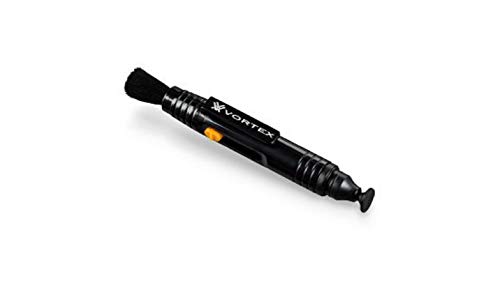
Vortex Lens Pen, Non-Liquid Lens Cleaner, Retractable Natural Hair Brush, Safe for Optics, Binoculars, Sunglasses, Eyeglasses (LP-2)
As an Amazon Associate we earn from qualifying purchases. Product prices and availability are accurate as of the date/time indicated.
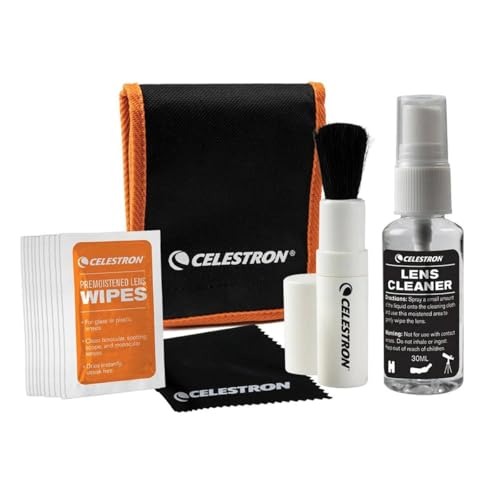
Celestron Lens Cleaning Kit for Telescopes, Binoculars & Cameras | Cleaning Solution, Cloth & Accessories Included, Complete Cleaning Kit, Safe for Optical Coatings, Removes Dust & Smudges
As an Amazon Associate we earn from qualifying purchases. Product prices and availability are accurate as of the date/time indicated.

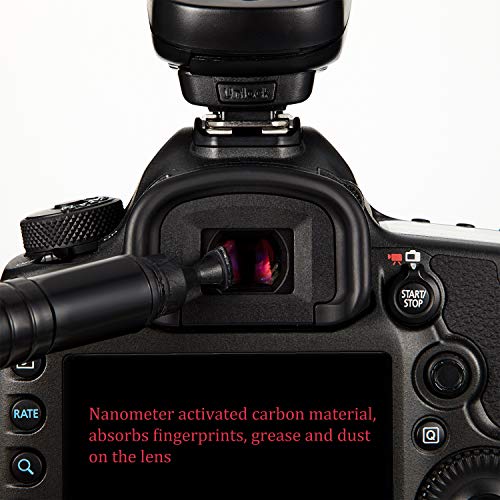
Frienda 3 Pcs Lens Cleaning Pen Brush for Camera Telescope Optics Screen | Dual-ended Soft Brush Tip, Removes Dust and Fingerprints, for Slr Cameras Binoculars Spotting Scopes Rangefinders Monoculars
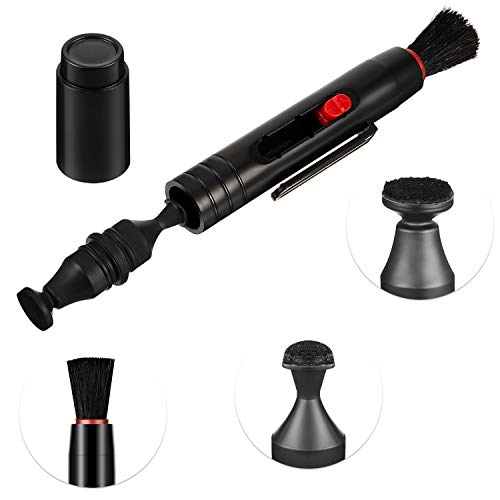


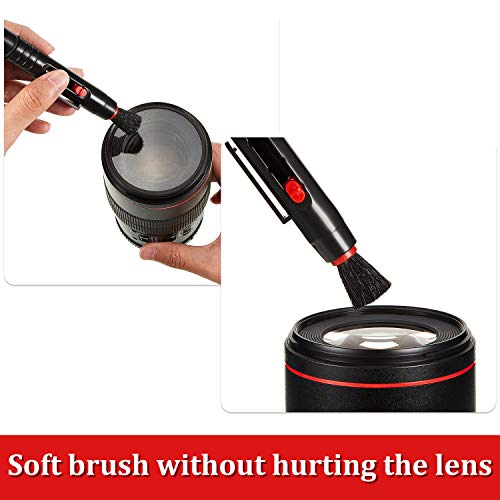
As an Amazon Associate we earn from qualifying purchases. Product prices and availability are accurate as of the date/time indicated.
Formats, counts, volumes, contents, and stated uses are each maker’s stated details for the current version and model. Ratings are editorial ratings for binocular care: safety for coated optics in class, effectiveness on fingerprints and salt, format practicality in the field and at home, freshness and packaging, accessory quality in kits, and value.
Detailed Reviews: Best Binocular Lens Cleaner Picks
1. Zeiss Class – Best Binocular Lens Cleaner Overall
Zeiss’s wipes are the reference pre-moistened format: individually wrapped, consistently moist rather than wet, sized generously enough for a large objective, and made by an optics house whose own coatings are the thing being protected. They are the wipe this guide would hand a beginner without a lecture, because the format itself enforces the hygiene that matters, one clean surface, one lens, then discard. The maker’s kits extend the same standard to a home system. For travel and for the final step of a wet clean anywhere, this is the starting point, used always after air and brush, never instead of them.
2. Giottos Rocket Blower Class – Best Blower for Binocular Lens Cleaning
The blower is the most important product in this article and the Rocket pattern is its best-known form: a large squeeze bulb with a directed nozzle and, in the maker’s stated design, an intake arrangement that avoids blowing settled dust back at the lens. It moves enough air to clear grit from an objective and from the crevices around eyecups and focus wheels where grit hides before migrating to glass. Every binocular kit should contain one at home and ideally a smaller one in the field bag. It earns the table’s second-highest rating while containing no fluid at all, which is precisely the point.
3. LensPen Class – Best Binocular Lens Cleaner for the Field
The LensPen packs the sequence’s second and third steps into a pen: a retractable brush that stays clean in its housing, and a treated tip for fingerprints and smudges, refreshed by twisting it in its cap by the maker’s directions. At a viewpoint, for the fingerprint a careful hand somehow still leaves on an eyepiece, it is unmatched for speed. Its disciplines are to brush first, always, to reserve the tip for smudges rather than dust, and to replace the pen when the tip is worn or contaminated rather than pressing harder. Carried in the harness, it is the field cleaner’s centre of gravity.
4. Nikon Kit Class – Best Binocular Lens Cleaner Kit for Home
Nikon’s cleaning kits bundle the home sequence from an optics maker: fluid, cloths, and in the stated kits the associated basics, in a package that suits the table where a binocular gets its occasional thorough clean. The fluid-and-cloth method in practised hands is the gentlest wet clean there is, a drop on the cloth, never flooded onto the lens, worked in small circles with the weight of the cloth alone. The kit’s value is that it arrives as a system and its cloths start life clean; keeping them that way, bagged, washed or replaced on a rhythm, is the owner’s half of the bargain.
5. Vortex Kit Class – Best Binocular Lens Cleaner From a Binocular Maker
Vortex’s lens cleaning kits are the natural companion purchase to its binoculars, and the anti-fog emphasis in the maker’s line suits hunters and birders whose eyepieces mist at dawn. Contents vary by kit in the stated terms, so read the exact bundle. The deeper reason to buy a binocular maker’s kit is alignment: the products are sold for the coatings and seals of the same house’s optics, and the care guidance in the binocular’s own manual and the kit’s instructions will not contradict each other. For a one-brand kit bag, this is the tidy row.
6. Carson Class – Best Binocular Lens Cleaner for a Harness or Pocket
Carson’s cleaning line competes on carry formats: clip-on and pocket cleaners in the maker’s stated patterns that attach to a harness strap or a pack so that a brush and a cleaning surface are present at the moment a lens is smudged, which is the only moment that matters. Their wipes and kits cover the ordinary formats at friendly prices. The clip-on designs trade some cleaning area for presence, a fair exchange in the field. For the walker who will not carry a kit but will carry a clip, this is the realistic row, and a realistic cleaner beats a perfect one left at home.
Buying Guide: Choosing the Best Binocular Lens Cleaner
Build the Sequence, Not a Product: Blower, Brush, Wet
Buy in the order of the routine. A squeeze blower first, one for home and one for the bag if the budget allows two purchases in this whole category. A brush second, either a standalone retractable brush or the brush end of a LensPen. A wet step third, chosen by setting: pre-moistened wipes for travel and field kits, fluid and microfibre for the home table, a pen for the harness. That is the entire system; everything else is packaging. Spend the money on freshness and replacement rather than on exotic claims: wipes within their life and still moist, cloths replaced when they lose softness, pens replaced when their tips tire. Check any product’s stated suitability for coated optics before its first use, follow your binocular maker’s care guidance where it names products or methods, and treat any cleaner that promises to restore scratched coatings or remove internal fungus as mislabelled, because no surface product can do either.
The Cleaning Routine, Step by Step
Clean at a table or a stable seat where possible, with the binocular’s strap around your neck or the instrument set down securely, never held loosely over hard ground. Inspect the lens under a light first and decide what you are removing: loose dust, a fingerprint, salt, or nothing that justifies touching it at all. Blow the surface thoroughly, bulb close but never touching, at an angle that carries particles away. Brush lightly across the whole surface. Re-inspect: if the view would now be clean, stop. If a smudge remains, take the wet step, a fresh wipe, or a drop of fluid on a clean cloth, or the pen’s tip, and work in small circles from the centre outward with no more pressure than the cleaner’s own weight, then buff gently with a dry cloth area. Clean the eyepieces the same way, remembering they collect skin oil and sunscreen fastest and usually need the wet step more often than the objectives. Finish by blowing the whole instrument’s crevices, focus wheel, hinges, and eyecups, where grit accumulates and later migrates. Store the binocular dry, caps on for storage, and its cleaners bagged separately from anything gritty.
How Often, and When to Stop and Send It In
Clean on evidence, not on a calendar. A binocular used weekly in dusty country may want its air-and-brush step after most outings and a wet clean a few times a season; a binocular used monthly in clean air may want a wet clean once a year. The view is the test: hold the binocular up to a bright, plain background and look for the smudge’s shadow, or simply notice whether the image has lost its snap. Stop and use the maker’s service when you see anything inside the optic, fungus, internal haze, a displaced element, or when a coating is already damaged, because none of those are cleaning problems and attempting them at home converts a service bill into a write-off. Run that discipline, sequence bought whole, restraint practised, service used for service problems, and the best binocular lens cleaner becomes the least dramatic purchase in your kit: a blower that does most of the work, a wipe for the rest, and lenses that look, in ten years, very much as they did on the first morning.
Frequently Asked Questions About Best Binocular Lens Cleaner
What is the best binocular lens cleaner?
The best answer is a small system rather than a single product: a Giottos Rocket-class squeeze blower for the essential first step, a LensPen for brush-and-smudge work in the field, and Zeiss pre-moistened wipes for a safe wet clean anywhere, with a Nikon or Vortex kit as the home alternative. If you buy one thing, buy the blower, because blowing grit off a lens before anything touches it prevents more damage than any fluid repairs. Whatever you choose, follow the order, air, brush, then wet only if a smudge remains, use almost no pressure, and never let a dirty cloth, a tissue, or a shirt touch a coated lens.
Can I use glasses cleaner or household glass cleaner on binoculars?
Use only products stated for coated camera or binocular optics, and not household glass cleaner. Window cleaners are formulated for uncoated glass and can contain chemicals that attack lens coatings and the seals and cements around elements, and they are typically applied with paper products that are themselves abrasive. Spectacle cleaners vary: some are gentle and alcohol-based and are sold by optics makers for both purposes, Zeiss’s wipes among them, but a generic glasses spray of unknown composition is a gamble with an expensive coating. The price difference between a proper lens wipe and a household product is small; the price difference between a coating and a recoating is not. Keep a dedicated cleaner with the binocular and the question never arises in the field.
How do I clean a binocular lens without scratching it?
Remove everything loose before anything touches the glass. Hold the lens facing slightly downward and blow it thoroughly with a squeeze blower so grit falls away, then sweep it lightly with a soft retractable brush. Only then, if a fingerprint or smudge remains, use a fresh pre-moistened lens wipe, a drop of lens fluid on a clean microfibre cloth, or a lens pen’s tip, in small circles from the centre outward with virtually no pressure, and buff with a dry area of cloth. Work at a table with the strap around your neck, inspect before and after under a light, and stop as soon as the lens is clean. Scratches come from pressure and grit, not from cleaning itself, so the whole technique is removing the grit first and letting the cleaner do the rest unforced.
My binocular lens looks hazy or has a branching pattern inside. Will a cleaner fix it?
No, and you should not try. A branching, web-like pattern inside the lens or a general internal haze is usually fungus or internal contamination from storage in damp conditions, and it sits on internal element surfaces that no wipe, fluid, or pen can reach. Attempting to open an optic at home destroys its sealing and alignment and voids its warranty. The correct response is the maker’s service department, which can assess whether the element can be cleaned or must be replaced, and a change in storage: keep the binocular in a dry, aired place, let it dry fully with caps off after wet outings before storing it, and consider a desiccant in its storage case in humid climates. Surface cleaning remains worthwhile for the outside surfaces, performed gently by the usual routine, but the internal problem is a service job.
Related guides
- Best Optics for Beginners Winter Use in 2026: Fogproof Binoculars Graded on the Cold Transition — Warm Car to Frozen Field Without Losing the View
- Best Cell Phone Monocular in 2026: 7 Best Cell Phone Monoculars With Clear View, Simple Use, and Easy Use for Cell Phone Monocular
- Best Monocular for Glasses Wearers Comfort in 2026: Monocular for Glasses Wearers Comfort, Glasses Wearers Monoculars, and Best Comfortable Monoculars for Glasses Wearers
- Best Binoculars for Camping Trips Viewing in 2026: 7 Binoculars for Camping Trips Viewing That Offer Clear Optics, Easy Carry, and Reliable Performance for Camping
More from Amazon
Programs that pair well with the guide above. Offers and eligibility are set by Amazon and may change.
Free shipping on eligible items, Prime Video and more. Eligible new members can start with a free trial.
Start a Prime free trialAudiobooks and podcasts to listen to on the go. Eligible new members can start with a free trial.
Try Audible freeAd-free music streaming. Eligible new subscribers can start with a free trial.
Try Music Unlimited freeA free business account with business pricing and bulk-buying tools for work, shop or home office.
Create a business accountAs an Amazon Associate we earn from qualifying purchases.

Write Your Review
No reviews yet. Be the first to share your experience!