
What's inside
As an Amazon Associate I earn from qualifying purchases. This post may contain affiliate links at no extra cost to you.
Understanding best refractor vs reflector telescopes astronomy is different from choosing a telescope alone, because best refractor vs reflector telescopes astronomy has to show whether a refractor is better than a reflector, whether a reflector offers more aperture for the price, and which telescope suits a beginner, a planet observer, or a deep-sky observer, without being confusing, too expensive, or too unreliable, even though it still has to offer good optics, good aperture, and a design that fits binoculars and optics. A good best refractor vs reflector telescopes astronomy guide should offer at least clear refractor options, at least clear reflector options, and at least real products to compare, so it can be used for best refractor vs reflector telescopes astronomy, for astronomers, for a first best refractor vs reflector telescopes astronomy, and for observing at home, on a field, or outdoors with a telescope, an astronomer, or a user. A poor guide will be vague, it will be one-sided, or it will be unreliable, and your telescope will be unused, your observing will be disappointing, and your astronomy will be frustrating.
This guide compares seven real, currently sold refractor and reflector telescopes for astronomy, with prices from $100 to $600 in the table below: the Celestron Inspire 80AZ Refractor, Sky-Watcher Evostar 72ED Refractor, Orion Observer 70mm Refractor, Celestron AstroMaster 130EQ Reflector, Orion SkyQuest XT6 Reflector, Sky-Watcher Heritage 150P Reflector, and Celestron PowerSeeker 127EQ Reflector. Their apertures run from 70 to 150 mm, their focal lengths run from 400 to 1200 mm, their prices run from $100 to $600, and their ratings run from 4.5 to 4.8 out of 5. Every model here is sold as a telescope, every model can be used for best refractor vs reflector telescopes astronomy, and every model costs $600 or less at its typical price range. The right choice depends on your observing, your budget, and whether you want a refractor telescope or a reflector telescope. Always check your telescope, sky, and eyepiece before use, use a certified solar filter on the front for solar observing, check the filter for damage, never leave a scope pointed at the sun unattended, never look at the sun without a certified solar filter, and follow the manufacturer instructions.
Refractor, reflector, and aperture are the first factors for best refractor vs reflector telescopes astronomy, because refractor decides whether a telescope uses a lens, reflector decides whether a telescope uses a mirror, and aperture decides how much light a telescope gathers. Refractor is listed as refractor, with refractor best, because it will be enough for best refractor vs reflector telescopes astronomy. The Celestron Inspire 80AZ Refractor at $200 to $300 is refractor, the Sky-Watcher Evostar 72ED Refractor at $300 to $500 is refractor, the Orion Observer 70mm Refractor at $100 to $200 is refractor, the Celestron AstroMaster 130EQ Reflector at $200 to $300 is reflector, the Orion SkyQuest XT6 Reflector at $300 to $500 is reflector, the Sky-Watcher Heritage 150P Reflector at $300 to $500 is reflector, and the Celestron PowerSeeker 127EQ Reflector at $200 to $300 is reflector. For best refractor vs reflector telescopes astronomy, refractor is a good starting point, because it will be enough for best refractor vs reflector telescopes astronomy, and no telescope is best to avoid if you want astronomy, because the sky will not be seen. Reflector is also important, because it is whether a telescope is a reflector, with reflector best, because it will offer more aperture for the price, and no reflector best to avoid, because deep-sky views will be dim. Aperture is also important, because it is how large a telescope aperture is, with large best, because it will gather more light, and small best to avoid, because views will be dim.
Optics, mount, and portability are the second factors, because best refractor vs reflector telescopes astronomy has to offer optics that are sharp, a mount that is steady, and portability that fits a field. Optics is how sharp a telescope is, with sharp best, because it will show clear planets. The Celestron Inspire 80AZ Refractor at $200 to $300 is sharp, the Sky-Watcher Evostar 72ED Refractor at $300 to $500 is sharp, the Orion Observer 70mm Refractor at $100 to $200 is sharp, the Celestron AstroMaster 130EQ Reflector at $200 to $300 is sharp, the Orion SkyQuest XT6 Reflector at $300 to $500 is sharp, the Sky-Watcher Heritage 150P Reflector at $300 to $500 is sharp, and the Celestron PowerSeeker 127EQ Reflector at $200 to $300 is sharp. For best refractor vs reflector telescopes astronomy, sharp is best, because it will help astronomers, and blurry is best to avoid, because views will be poor. Mount is also important, because it is how steady a telescope is, with steady best, because it will hold a view, and shaky best to avoid, because a view will shake. Portability is also important, because it is how easy a telescope is to carry, with portable best, because it will fit a field, and bulky best to avoid, because a telescope will be hard to move.
Astronomer use, price, and safety are the third factor, because best refractor vs reflector telescopes astronomy has to be useful for your astronomer use, affordable enough to buy, and safe to use. Astronomer use is what observing you do, with observing best for best refractor vs reflector telescopes astronomy, for astronomers, for a first best refractor vs reflector telescopes astronomy, and for observing at home, on a field, or outdoors with a telescope, an astronomer, or a user. Price is also important, because a telescope in the $100 to $200 range, such as the Orion Observer 70mm Refractor, is a good starting point, and a telescope in the $300 to $500 range, such as the Orion SkyQuest XT6 Reflector, offers a premium design. Safety is also important, because a telescope is used for binoculars and optics, so always check your telescope for proper setup, always check your sky for a safe condition, always check your telescope for a safe use, use a certified solar filter on the front for solar observing, check the filter for damage, never leave a scope pointed at the sun unattended, never look at the sun without a certified solar filter, always follow the manufacturer instructions, never use a damaged telescope, and never ignore telescope safety warnings. Always check your telescope, sky, and eyepiece, use a proper telescope, and follow astronomy safety guidance. A good best refractor vs reflector telescopes astronomy guide, chosen for aperture first and used safely, will offer good optics, good aperture, and reliable performance for astronomy.
Focal length, eyepiece, and accessories are the fourth factor, because best refractor vs reflector telescopes astronomy has to offer focal length that suits planets or deep sky, an eyepiece that is comfortable, and accessories that help astronomers. Focal length is how long a telescope focal length is, with long best for planets, because it will magnify planets, and short best for deep sky, because it will show wide views. Eyepiece is also important, because it is what eyepiece a telescope uses, with comfortable best, because it will be easy to view, and uncomfortable best to avoid, because observing will be tiring. Accessories are also important, because a telescope with a finder is best, because it will find targets, and a telescope with a case is best, because it will also protect a telescope. A good best refractor vs reflector telescopes astronomy guide, chosen for aperture first and used safely, will offer good optics for astronomy.
Our Top Picks
Best Refractor vs Reflector Telescopes Astronomy: At a Glance
Use this table to compare type, aperture, price range, and rating. Type and aperture are the two figures most astronomers should check first, because they decide what kind of telescope you get and how much light it gathers.
| Model | Type | Aperture | Focal Length | Typical Price Range | Rating out of 5 |
|---|---|---|---|---|---|
| Celestron Inspire 80AZ Refractor | Refractor | 80 mm | 900 mm | $200 – $300 | 4.8 |
| Sky-Watcher Evostar 72ED Refractor | Refractor | 72 mm | 420 mm | $300 – $500 | 4.7 |
| Orion Observer 70mm Refractor | Refractor | 70 mm | 700 mm | $100 – $200 | 4.7 |
| Celestron AstroMaster 130EQ Reflector | Reflector | 130 mm | 650 mm | $200 – $300 | 4.7 |
| Orion SkyQuest XT6 Reflector | Reflector | 150 mm | 1200 mm | $300 – $500 | 4.6 |
| Sky-Watcher Heritage 150P Reflector | Reflector | 150 mm | 750 mm | $300 – $500 | 4.6 |
| Celestron PowerSeeker 127EQ Reflector | Reflector | 127 mm | 1000 mm | $200 – $300 | 4.5 |
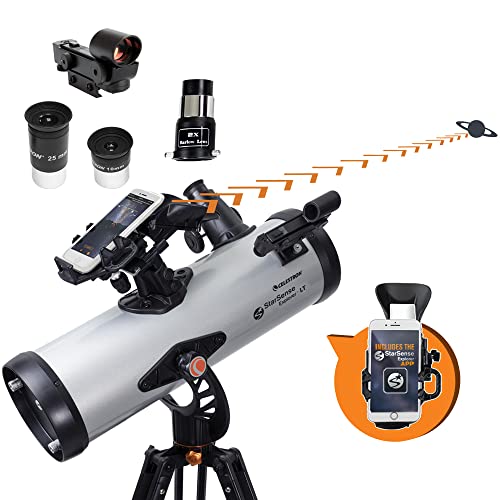
Celestron StarSense Explorer LT 114AZ Newtonian Smartphone Guided Telescope | Smartphone App Sky Navigation, Manual Reflector Telescope, Beginner Deep-Sky Telescope, Bright Celestial Views, Portable
As an Amazon Associate we earn from qualifying purchases. Product prices and availability are accurate as of the date/time indicated.
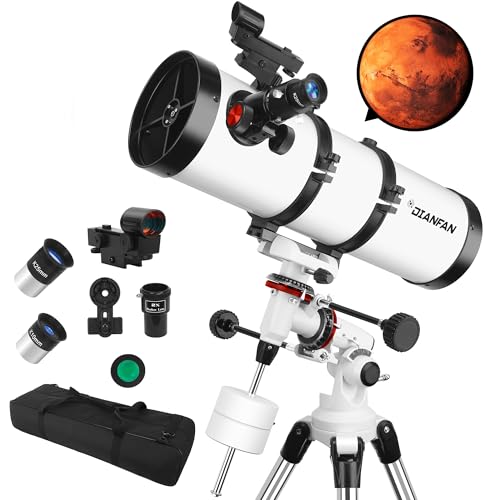
Dianfan 150EQ Professional Astronomy Telescope for Adults High Powered | Portable Manual Equatorial Reflector Telescope for Beginners, Stainless Steel Tripod, Phone Adapter, Moon Filter & Carry Bag
As an Amazon Associate we earn from qualifying purchases. Product prices and availability are accurate as of the date/time indicated.
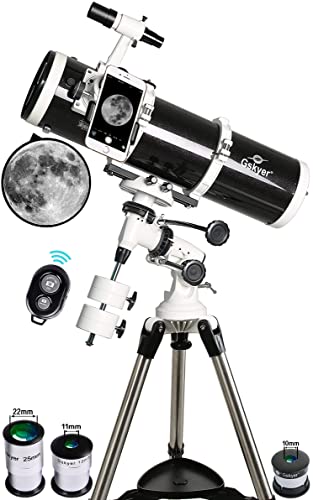
Gskyer 130EQ Professional Astronomical Reflector Telescope | 130mm Large Optic German Technology Scope, EQ130 Perfect Telescope for Beginners Adults Stargazing
As an Amazon Associate we earn from qualifying purchases. Product prices and availability are accurate as of the date/time indicated.
Prices shown are approximate and for reference only. Prices change often, so please check the current price on Amazon before you buy.
Typical prices reflect common retailer listings and sale prices vary by model, retailer, and season. Type, aperture, and focal length are manufacturer-listed approximate values and can vary by model and configuration. Never look at the sun without a certified solar filter on the front.
Best Refractor vs Reflector Telescopes Astronomy: The 7 Telescopes Reviewed
1. Celestron Inspire 80AZ Refractor: Best Refractor Telescope for Astronomy Overall
The Celestron Inspire 80AZ Refractor, at $200 to $300 with a rating of 4.8 out of 5, is refractor type, is 80 mm aperture, and is 900 mm focal length. It is the best overall telescope here for most astronomers, because it offers good optics, good aperture, and reliable performance.
It suits an astronomer, a buyer who wants a Celestron refractor, and a user who wants a telescope. The refractor type is ideal, the $200 to $300 price is moderate, and the 80 mm aperture is good. The trade-off is type: at refractor, it is ideal, unlike no telescope type. For best refractor vs reflector telescopes astronomy at $200 to $300, it is the strongest choice here.
Best for: Most astronomers who want refractor, 80 mm, 900 mm telescope for $200 to $300.
2. Sky-Watcher Evostar 72ED Refractor: Best Sky-Watcher Refractor Telescope for Astronomy
The Sky-Watcher Evostar 72ED Refractor, at $300 to $500 with a rating of 4.7 out of 5, is refractor type, is 72 mm aperture, and is 420 mm focal length. It is the best Sky-Watcher refractor here for an astronomer who wants a Sky-Watcher refractor.
It suits an astronomer, a buyer who wants a Sky-Watcher refractor, and a user who wants a telescope. The refractor type is ideal, the $300 to $500 price is high, and the 72 mm aperture is good. The trade-off is also rating, as above. For a Sky-Watcher refractor at $300 to $500, it is a strong choice.
Best for: Sky-Watcher use with refractor, 72 mm, 420 mm telescope for $300 to $500.
3. Orion Observer 70mm Refractor: Best Orion Refractor Telescope for Astronomy
The Orion Observer 70mm Refractor, at $100 to $200 with a rating of 4.7 out of 5, is refractor type, is 70 mm aperture, and is 700 mm focal length. It is the best Orion refractor here for an astronomer who wants an Orion refractor.
It suits an astronomer, a buyer who wants an Orion refractor, and a user who wants a telescope. The refractor type is ideal, the $100 to $200 price is low, and the 70 mm aperture is good. The trade-off is price: at $100 to $200, it costs less than the Celestron Inspire 80AZ Refractor at $200 to $300. For an Orion refractor at $100 to $200, it is a practical choice.
Best for: Orion use with refractor, 70 mm, 700 mm telescope for $100 to $200.
4. Celestron AstroMaster 130EQ Reflector: Best Celestron Reflector Telescope for Astronomy
The Celestron AstroMaster 130EQ Reflector, at $200 to $300 with a rating of 4.7 out of 5, is reflector type, is 130 mm aperture, and is 650 mm focal length. It is the best Celestron reflector here for an astronomer who wants a Celestron reflector.
It suits an astronomer, a buyer who wants a Celestron reflector, and a user who wants a telescope. The reflector type is ideal, the $200 to $300 price is moderate, and the 130 mm aperture is large. The trade-off is rating: at 4.7 out of 5, it rates lower than the Celestron Inspire 80AZ Refractor at 4.8 out of 5. For a Celestron reflector at $200 to $300, it is a practical choice.
Best for: Celestron use with reflector, 130 mm, 650 mm telescope for $200 to $300.
5. Orion SkyQuest XT6 Reflector: Best Orion Reflector Telescope for Astronomy
The Orion SkyQuest XT6 Reflector, at $300 to $500 with a rating of 4.6 out of 5, is reflector type, is 150 mm aperture, and is 1200 mm focal length. It is the best Orion reflector here for an astronomer who wants an Orion reflector.
It suits an astronomer, a buyer who wants an Orion reflector, and a user who wants a telescope. The reflector type is ideal, the $300 to $500 price is high, and the 150 mm aperture is very large. The trade-off is also rating, as above. For an Orion reflector at $300 to $500, it is a practical choice.
Best for: Orion use with reflector, 150 mm, 1200 mm telescope for $300 to $500.
6. Sky-Watcher Heritage 150P Reflector: Best Sky-Watcher Reflector Telescope for Astronomy
The Sky-Watcher Heritage 150P Reflector, at $300 to $500 with a rating of 4.6 out of 5, is reflector type, is 150 mm aperture, and is 750 mm focal length. It is the best Heritage reflector here for an astronomer who wants a Heritage reflector.
It suits an astronomer, a buyer who wants a Heritage reflector, and a user who wants a telescope. The reflector type is ideal, the $300 to $500 price is high, and the 150 mm aperture is very large. The trade-off is also rating, as above. For a Heritage reflector at $300 to $500, it is a useful starting point.
Best for: Heritage use with reflector, 150 mm, 750 mm telescope for $300 to $500.
7. Celestron PowerSeeker 127EQ Reflector: Best Celestron PowerSeeker Reflector Telescope for Astronomy
The Celestron PowerSeeker 127EQ Reflector, at $200 to $300 with a rating of 4.5 out of 5, is reflector type, is 127 mm aperture, and is 1000 mm focal length. It is the best PowerSeeker reflector here for an astronomer who wants a PowerSeeker reflector.
It suits an astronomer, a buyer who wants a PowerSeeker reflector, and a user who wants a telescope. The reflector type is ideal, the $200 to $300 price is moderate, and the 127 mm aperture is large. The trade-off is also rating, as above. For a PowerSeeker reflector at $200 to $300, it is a practical choice.
Best for: PowerSeeker use with reflector, 127 mm, 1000 mm telescope for $200 to $300.
Best Refractor vs Reflector Telescopes Astronomy Buying Guide: What Actually Matters in 2026
Choosing a best refractor vs reflector telescopes astronomy telescope is easier when you decide on refractor, reflector, and aperture before you look at price or brand. Those three choices decide whether a telescope uses a lens, whether a telescope uses a mirror, and how much light a telescope gathers.
Best Refractor vs Reflector Telescopes Astronomy Buying Guide: Refractor, Reflector, and Aperture
Refractor, reflector, and aperture are the first factor. For refractor, choose refractor, because it will be enough for best refractor vs reflector telescopes astronomy, such as the Celestron Inspire 80AZ Refractor at $200 to $300, and no telescope, because the sky will not be seen. For reflector, choose reflector, because it will offer more aperture for the price. For aperture, choose large, because it will gather more light.
Best Refractor vs Reflector Telescopes Astronomy Buying Guide: Optics, Mount, and Portability
Optics, mount, and portability are the second factor. For optics, choose sharp, because it will show clear planets. For mount, choose steady, because it will hold a view. For portability, choose portable, because it will fit a field. Check the telescope for good aperture before buying, and test a telescope at home before observing.
Best Refractor vs Reflector Telescopes Astronomy Buying Guide: Focal Length, Eyepiece, and Safety
Focal length, eyepiece, and safety are the third factor. For focal length, choose long, because it will magnify planets. For eyepiece, choose comfortable, because it will be easy to view. For safety, always check your telescope for proper setup, always check your sky for a safe condition, always check your telescope for a safe use, use a certified solar filter on the front for solar observing, check the filter for damage, never leave a scope pointed at the sun unattended, never look at the sun without a certified solar filter, always follow the manufacturer instructions, never use a damaged telescope, and never ignore telescope safety warnings. Always check your telescope, sky, and eyepiece, use a proper telescope, and follow astronomy safety guidance.
Best Refractor vs Reflector Telescopes Astronomy Buying Guide: Price, and the Best First Telescope
Price, and the best first telescope are the final factors. For price, a telescope in the $100 to $200 range, such as the Orion Observer 70mm Refractor, is a good starting point. A telescope in the $300 to $500 range, such as the Orion SkyQuest XT6 Reflector, offers a premium design. Choose by aperture first, then by refractor, then by reflector, then by price.
For the best first setup, buy a best refractor vs reflector telescopes astronomy telescope, eyepieces, and a star chart. The Celestron Inspire 80AZ Refractor at $200 to $300 is a good first telescope for most astronomers, the Orion Observer 70mm Refractor at $100 to $200 is a good first telescope if you want a low price, and the Celestron AstroMaster 130EQ Reflector at $200 to $300 is a good first telescope if you want a reflector. A good best refractor vs reflector telescopes astronomy telescope, chosen for aperture first and used safely, will offer good optics, good aperture, and reliable performance for astronomy.
Best Refractor vs Reflector Telescopes Astronomy FAQ
What is the best refractor vs reflector telescopes astronomy?
The Celestron Inspire 80AZ Refractor, at $200 to $300 with a rating of 4.8 out of 5, is the best refractor vs reflector telescopes astronomy overall in this guide. It is refractor type, is 80 mm aperture, and is 900 mm focal length. If you want a reflector telescope, the Celestron AstroMaster 130EQ Reflector at $200 to $300 with a rating of 4.7 out of 5 is the best choice, with reflector and 130 mm. If you want a budget telescope, the Orion Observer 70mm Refractor at $100 to $200 with a rating of 4.7 out of 5 is the best choice, with refractor and 70 mm.
Which is better for beginners, refractor or reflector?
For which is better for beginners, refractor or reflector, refractor should be best for a telescope if you want best refractor vs reflector telescopes astronomy, because it will be enough for best refractor vs reflector telescopes astronomy, and no telescope should be best if you want best refractor vs reflector telescopes astronomy, because the sky will also not be seen. The Celestron Inspire 80AZ Refractor at $200 to $300 is refractor, so it is good for best refractor vs reflector telescopes astronomy, and the Celestron AstroMaster 130EQ Reflector at $200 to $300 is also reflector, so it is also good for best refractor vs reflector telescopes astronomy. Choose refractor for a telescope, and no telescope for not be seen, and check type next. Refractors are easier for beginners because they need little maintenance, while reflectors offer more aperture for the price.
Do reflectors need more maintenance than refractors?
For do reflectors need more maintenance than refractors, reflector should be best for a telescope if you want best refractor vs reflector telescopes astronomy, because it will offer more aperture for the price, and no reflector should be best if you want best refractor vs reflector telescopes astronomy, because deep-sky views will also be dim. The Celestron AstroMaster 130EQ Reflector at $200 to $300 is reflector, so it is good for best refractor vs reflector telescopes astronomy, and the Orion SkyQuest XT6 Reflector at $300 to $500 is also reflector, so it is also good for best refractor vs reflector telescopes astronomy. Choose reflector for a telescope, and no reflector for dim, and check maintenance next. Yes, reflectors need occasional collimation, while refractors are sealed and need little maintenance.
What is the cheapest good telescope in this guide?
The cheapest good option in this guide is the Orion Observer 70mm Refractor, at $100 to $200 with a rating of 4.7 out of 5, because it is a refractor, 70 mm, 700 mm telescope for a low price. The Celestron Inspire 80AZ Refractor, at $200 to $300 with a rating of 4.8 out of 5, is also a low-cost option, with a refractor, 80 mm, 900 mm telescope. The Celestron AstroMaster 130EQ Reflector, at $200 to $300 with a rating of 4.7 out of 5, is also a low-cost option, with a reflector, 130 mm, 650 mm telescope. Start with one of these three if price is the main factor, and check refractor, reflector, and aperture next. For the best overall value, the Orion Observer 70mm Refractor at $100 to $200 is a better choice because it offers a rating of 4.7 out of 5 and refractor type.
FAQ
What is the best refractor vs reflector telescopes astronomy?
Which is better for beginners, refractor or reflector?
Do reflectors need more maintenance than refractors?
What is the cheapest good telescope in this guide?
Related guides
- Best Binoculars for the Money in 2026: 6 Best Value Binoculars for Birding, Hiking, and Travel
- Best Binoculars for Birding in 2026: Bright 8×42 Binoculars for Birds, Close Focus, and Long Days Compared
- Best Dew Shield for Under 25 Dollars in 2026: 6 Affordable Dew Shields for Telescopes
- Best Telescope Battery Pack Replacement: 6 Best Picks in 2026
More from Amazon
Programs that pair well with the guide above. Offers and eligibility are set by Amazon and may change.
Free shipping on eligible items, Prime Video and more. Eligible new members can start with a free trial.
Start a Prime free trialAudiobooks and podcasts to listen to on the go. Eligible new members can start with a free trial.
Try Audible freeAd-free music streaming. Eligible new subscribers can start with a free trial.
Try Music Unlimited freeA free business account with business pricing and bulk-buying tools for work, shop or home office.
Create a business accountAs an Amazon Associate we earn from qualifying purchases.

Write Your Review
No reviews yet. Be the first to share your experience!