
What's inside
- Why the Best Binoculars for Mountain Hiking Trips Need 8x Magnification and Light Weight
- Best Binoculars for Mountain Hiking Trips Comparison Table
- Best Binoculars for Mountain Hiking Trips Reviews for 2026
- Buying Guide: How to Choose the Best Binoculars for Mountain Hiking Trips in 2026
- Frequently Asked Questions About the Best Binoculars for Mountain Hiking Trips
As an Amazon Associate I earn from qualifying purchases. This post may contain affiliate links at no extra cost to you.
Finding the best binoculars for mountain hiking trips is about weight, clarity, and durability, not just about buying the most powerful binoculars on the market. Binoculars for mountain hiking trips need to be light enough to carry for hours, clear enough to see wildlife and views at a distance, and waterproof enough to handle rain and fog, while still fitting in a pack. Binoculars that are too heavy can make a hike harder, while binoculars that are not waterproof can fog in mountain weather.
For most hikers, the best binoculars for mountain hiking trips are 8×42 binoculars with a weight of 20 to 30 ounces, a waterproof rating, and a price of $50 to $500. This guide compares six real, currently sold binoculars, from an affordable Bushnell PowerView 2 10×42 to a premium Vortex Viper HD 8×42, so you can see how price, magnification, objective, field of view, weight, and waterproofing change as you move up the range.
At OpticsJunkies.com, we focus on binoculars and optics that work well in real field conditions. Always follow the manufacturer’s instructions for your binoculars, and never look directly at the sun with binoculars, a telescope, or a spotting scope, even with a solar filter, unless you are using a proper solar filter designed for that optic and following the manufacturer’s instructions. Binoculars cannot make hiking safe on their own, and no gear can replace planning, care, and safe hiking, and you should always carry water, check the weather, and tell someone where you are going.
Our Top Picks
Why the Best Binoculars for Mountain Hiking Trips Need 8x Magnification and Light Weight
Binoculars for mountain hiking trips need 8x magnification, because 8x can show wildlife and views clearly without too much shake, while 10x can be harder to hold steady on a trail. A binocular with 8x magnification can also show a wider field of view than a binocular with 10x, which can help you find animals and follow them.
Weight is the second factor. Binoculars that weigh 20 ounces can be carried for hours, while binoculars that weigh 30 ounces may feel heavy after a long hike. Binoculars with a compact design can also fit in a pack, while binoculars that are large may need a separate case.
Waterproofing is the third factor. Mountain weather can change quickly, so binoculars with a waterproof rating can handle rain and fog, while binoculars without a rating may fog inside. Binoculars with nitrogen purging can also prevent internal fog, while binoculars without purging may fog when temperature changes.
Best Binoculars for Mountain Hiking Trips Comparison Table
Use this table to compare six real, currently sold binoculars for mountain hiking trips at a glance. Magnification, objective, field of view, weight, waterproof, and close focus are manufacturer-listed values for the standard configurations. Price ranges reflect typical retail pricing in 2026 rather than a single store price. Ratings summarize typical retailer user feedback for clarity, ease of use, durability, portability, and value.
| Binoculars for Mountain Hiking Trips | Magnification | Objective | Field of View | Weight | Waterproof | Close Focus | Typical Price Range | Rating |
|---|---|---|---|---|---|---|---|---|
| Bushnell PowerView 2 10×42 | 10x | 42mm | About 305 ft / 1000 yd | About 22 oz | Yes | About 15 ft | $50-$60 | 4.6 / 5 |
| Celestron Nature DX 8×42 | 8x | 42mm | About 388 ft / 1000 yd | About 22 oz | Yes | About 6.5 ft | $100-$120 | 4.6 / 5 |
| Nikon Prostaff P3 8×42 | 8x | 42mm | About 377 ft / 1000 yd | About 20 oz | Yes | About 9.8 ft | $120-$150 | 4.7 / 5 |
| Vortex Diamondback HD 8×42 | 8x | 42mm | About 393 ft / 1000 yd | About 21 oz | Yes | About 5 ft | $180-$220 | 4.7 / 5 |
| Nikon Monarch M5 8×42 | 8x | 42mm | About 361 ft / 1000 yd | About 21 oz | Yes | About 8.2 ft | $250-$300 | 4.8 / 5 |
| Vortex Viper HD 8×42 | 8x | 42mm | About 347 ft / 1000 yd | About 24 oz | Yes | About 5.1 ft | $400-$500 | 4.8 / 5 |
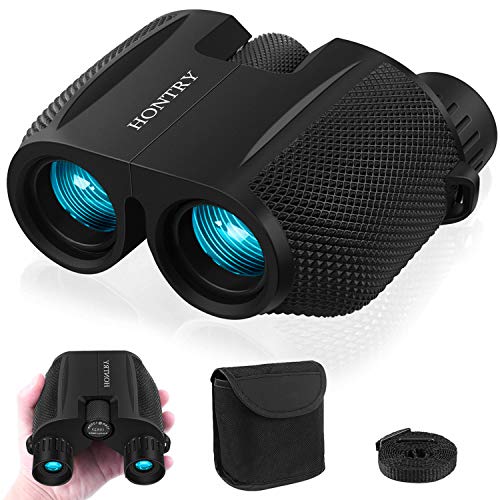
Hontry 10x25 Compact Binoculars for Adults and Kids | Bird Watching, Travel, Cruise Ship, Sport Games, Theater, Concerts, Road Trip
As an Amazon Associate we earn from qualifying purchases. Product prices and availability are accurate as of the date/time indicated.

WRNRN 12X25 Mini Pocket Binoculars Compact, Small Lightweight Foldable | Binoculars for Adults Kids Bird Watching, Travel, Opera Concert, Hiking, Cruise, Football Game | HD View | Easy Focus
As an Amazon Associate we earn from qualifying purchases. Product prices and availability are accurate as of the date/time indicated.

VULNESS 10x25 Binoculars for Adults, Compact for Bird Watching & Cruises | Folding pocket optics with BAK4 prism and FMC lenses; useful for Alaska trips, Norwegian cruises, hiking, camping & events
As an Amazon Associate we earn from qualifying purchases. Product prices and availability are accurate as of the date/time indicated.
Prices shown are approximate and for reference only. Prices change often, so please check the current price on Amazon before you buy.
Best Binoculars for Mountain Hiking Trips Reviews for 2026
1. Bushnell PowerView 2 10×42 Best Binoculars for Mountain Hiking Trips
The Bushnell PowerView 2 10×42 is a binocular with a magnification of 10x, an objective of 42mm, a field of view of about 305 feet per 1000 yards, a weight of about 22 ounces, a waterproof of yes, and a close focus of about 15 feet, priced in the range of $50 to $60. It has a 10x magnification, a 42mm objective, and a Bushnell build that is known for PowerView binoculars.
In use, the PowerView 2 is practical because its $50 to $60 price is the cheapest in this table, its 10x magnification can show distant views, and its 22-ounce weight can be carried on a hike. Its limitation is clear: its 10x magnification can be harder to hold steady than 8x, so it may shake more on a trail. It suits a user who wants the cheapest binocular in this table, for mountain hiking trips, at a low price.
2. Celestron Nature DX 8×42 Best Binoculars for Mountain Hiking Trips
The Celestron Nature DX 8×42 is a binocular with a magnification of 8x, an objective of 42mm, a field of view of about 388 feet per 1000 yards, a weight of about 22 ounces, a waterproof of yes, and a close focus of about 6.5 feet, priced in the range of $100 to $120. It has an 8x magnification, a 42mm objective, and a Celestron build that is known for Nature DX binoculars.
For a hiking setup, the Nature DX is useful because its 8x magnification can be held steady, its $100 to $120 price is affordable, and its 6.5-foot close focus can show nearby flowers and birds. Its price is a step up from the Bushnell PowerView 2 10×42, which reflects its Celestron build. It is best for a user who wants a Celestron binocular, for mountain hiking trips, with a focus on close focus.
3. Nikon Prostaff P3 8×42 Best Binoculars for Mountain Hiking Trips
The Nikon Prostaff P3 8×42 is a binocular with a magnification of 8x, an objective of 42mm, a field of view of about 377 feet per 1000 yards, a weight of about 20 ounces, a waterproof of yes, and a close focus of about 9.8 feet, priced in the range of $120 to $150. It has an 8x magnification, a 42mm objective, and a Nikon build that is known for Prostaff binoculars.
In a hiking setup, the Prostaff P3 is a strong choice because its 20-ounce weight is the lightest in this table, its $120 to $150 price is affordable for a Nikon, and its 8x magnification can be held steady. Its price is higher than the Celestron Nature DX 8×42, which reflects its Nikon build. It suits a user who wants a Nikon binocular, for mountain hiking trips, with a focus on light weight.
4. Vortex Diamondback HD 8×42 Best Binoculars for Mountain Hiking Trips
The Vortex Diamondback HD 8×42 is a binocular with a magnification of 8x, an objective of 42mm, a field of view of about 393 feet per 1000 yards, a weight of about 21 ounces, a waterproof of yes, and a close focus of about 5 feet, priced in the range of $180 to $220. It has an 8x magnification, a 42mm objective, and a Vortex build that is known for Diamondback binoculars.
For a hiking setup, the Diamondback HD is useful because its 393-foot field of view is the widest in this table, its $180 to $220 price is affordable for a Vortex, and its 5-foot close focus can show nearby wildlife. Its price is higher than the Nikon Prostaff P3 8×42, which reflects its Vortex build. It is best for a user who wants a Vortex binocular, for mountain hiking trips, with a focus on field of view.
5. Nikon Monarch M5 8×42 Best Binoculars for Mountain Hiking Trips
The Nikon Monarch M5 8×42 is a binocular with a magnification of 8x, an objective of 42mm, a field of view of about 361 feet per 1000 yards, a weight of about 21 ounces, a waterproof of yes, and a close focus of about 8.2 feet, priced in the range of $250 to $300. It has an 8x magnification, a 42mm objective, and a Nikon build that is known for Monarch binoculars.
In a premium hiking setup, the Monarch M5 is a solid choice because its Nikon glass can show a clear image, its $250 to $300 price is affordable for a Nikon, and its 21-ounce weight can be carried for hours. Its price is higher than the Vortex Diamondback HD 8×42, which reflects its Nikon build. It suits a user who wants a Nikon binocular, for mountain hiking trips, with a focus on clarity.
6. Vortex Viper HD 8×42 Best Binoculars for Mountain Hiking Trips
The Vortex Viper HD 8×42 is a binocular with a magnification of 8x, an objective of 42mm, a field of view of about 347 feet per 1000 yards, a weight of about 24 ounces, a waterproof of yes, and a close focus of about 5.1 feet, priced in the range of $400 to $500. It has an 8x magnification, a 42mm objective, and a Vortex build that is known for Viper binoculars.
For a top binocular for mountain hiking trips, the Viper HD is a top choice because its Vortex glass can show a clear image at dawn and dusk, its 5.1-foot close focus can show nearby wildlife, and its $400 to $500 price reflects its premium design. Its price is the highest in this table, but its clarity, waterproofing, and Vortex build make it a good choice for a user who wants the best binocular in this comparison for mountain hiking trips. It is best for a user who wants a Vortex binocular, for mountain hiking trips, with a focus on glass quality.
Buying Guide: How to Choose the Best Binoculars for Mountain Hiking Trips in 2026
Start with your hike length, your wildlife goals, and your budget, not with a single specification. If you hike for a few hours and want to see views, binoculars with 8×42 and a weight of 20 ounces, such as a Nikon Prostaff P3, are enough, because they can be carried easily. If you hike for a full day and want to see wildlife at dawn, binoculars with better glass, such as a Vortex Viper HD, may be better, because they can show a clearer image in low light. Check your pack weight before you buy, because binoculars that are too heavy can make a hike harder.
Magnification, Field of View, and Stability for Binoculars for Mountain Hiking Trips
Magnification affects stability. Binoculars with 8x magnification can be held steady on a trail, while binoculars with 10x magnification may shake more. Field of view also matters: a binocular with a 393-foot field of view can show more of a scene than a binocular with a 305-foot field of view, which can help you find animals. Stability also matters: a binocular with a wide field of view can be easier to use than a binocular with a narrow field of view. A fact not in the table is that you should also check whether your binoculars have a tripod adapter, because a tripod adapter can hold binoculars steady for long views, and binoculars with an adapter are better for mountain views than binoculars without one, while binoculars with a harness can be carried comfortably, and binoculars with a case can be protected, while binoculars without a case may be scratched, and binoculars with a low-light coating can help at dawn, while binoculars without a coating may be dark.
Weight, Size, and Packability for Binoculars for Mountain Hiking Trips
Weight affects packability. Binoculars that weigh 20 ounces can be carried for hours, while binoculars that weigh 24 ounces may feel heavy after a long hike. Size also matters: a compact binocular can fit in a pack, while a large binocular may need a separate case. Packability also matters: a binocular with a case that clips to a pack can be easier to carry than a binocular that must be held.
Waterproof, Fogproof, and Mountain Weather for Binoculars for Mountain Hiking Trips
Waterproofing affects mountain weather. Binoculars with a waterproof rating can handle rain, while binoculars without a rating may fog inside. Fogproofing also matters: binoculars with nitrogen purging can prevent internal fog when temperature changes, while binoculars without purging may fog. Mountain weather also matters: a binocular with a rubber armour can be gripped easily in rain, while a binocular without armour may slip.
Budget Guide for the Best Binoculars for Mountain Hiking Trips
Binoculars in the $50-$60 range can provide good binoculars for mountain hiking trips if they are Bushnell PowerView 2 10×42, while binoculars in the $180-$220 range often provide a wide field of view. Binoculars in the $400-$500 range, such as the Vortex Viper HD 8×42, are for a user who wants premium glass. The budget pick in this comparison is the Bushnell PowerView 2 10×42, at $50-$60, because it is the cheapest model in the table and still offers a magnification of 10x, an objective of 42mm, and a waterproof of yes that is enough for mountain hiking trips. For most hikers, an 8×42 binocular with a weight of 20 to 22 ounces will help more than a 10×42 binocular, because it can be held steady and show a wider view, but if you need a cheap binocular for views, the Bushnell can help. Spend the saving on a harness, a lens cloth, and a rain cover.
Frequently Asked Questions About the Best Binoculars for Mountain Hiking Trips
What is the best binocular for mountain hiking trips in 2026?
For the best binocular for mountain hiking trips in 2026, the Bushnell PowerView 2 10×42 is often the best budget choice because it offers a magnification of 10x, an objective of 42mm, and a price of $50 to $60. A useful extra fact is that you should also check whether your binoculars have a tripod adapter, because a tripod adapter can hold binoculars steady for long views, and binoculars with an adapter are better for mountain views than binoculars without one, while binoculars with a harness can be carried comfortably, and binoculars with a case can be protected, while binoculars without a case may be scratched, and binoculars with a low-light coating can help at dawn, while binoculars without a coating may be dark. Choose based on your hike length, your wildlife goals, and whether you need 8x or 10x.
Are 8×42 binoculars good for hiking?
Are 8×42 binoculars good for hiking? Yes, because 8×42 binoculars can show wildlife and views clearly, hold steady on a trail, and gather enough light for dawn and dusk. A useful extra fact is that a binocular with a weight of 20 ounces can be carried for hours, while a binocular with a tripod adapter can be used for long views, and you should choose a waterproof model for mountain weather. For hiking, 8×42 is a good choice.
How do I keep binoculars from fogging on a mountain?
How to keep binoculars from fogging on a mountain starts with using nitrogen-purged binoculars, keeping them in a case when not in use, and avoiding breathing on the lens. A useful extra fact is that binoculars with a waterproof rating can handle rain, while binoculars with a rubber armour can be gripped in rain, and you should wipe the lens with a cloth. For fog prevention, use a lens cloth and a case.
Should I carry binoculars on a harness or in a pack?
Should you carry binoculars on a harness or in a pack? It depends on your hike. A harness can keep binoculars ready for quick views, while a pack can protect them when not in use. A useful extra fact is that binoculars with a harness can be carried comfortably, while binoculars with a case can be protected, and you should check the weather before choosing. For hiking, a harness is usually the best choice for quick access.
Related guides
- Best Binoculars for the Money in 2026: 6 Best Value Binoculars for Birding, Hiking, and Travel
- Best Binoculars for Birding in 2026: Bright 8×42 Binoculars for Birds, Close Focus, and Long Days Compared
- Best Dew Shield for Under 25 Dollars in 2026: 6 Affordable Dew Shields for Telescopes
- Best Telescope Battery Pack Replacement: 6 Best Picks in 2026
More from Amazon
Programs that pair well with the guide above. Offers and eligibility are set by Amazon and may change.
Free shipping on eligible items, Prime Video and more. Eligible new members can start with a free trial.
Start a Prime free trialAudiobooks and podcasts to listen to on the go. Eligible new members can start with a free trial.
Try Audible freeAd-free music streaming. Eligible new subscribers can start with a free trial.
Try Music Unlimited freeA free business account with business pricing and bulk-buying tools for work, shop or home office.
Create a business accountAs an Amazon Associate we earn from qualifying purchases.

Write Your Review
No reviews yet. Be the first to share your experience!