
What's inside
As an Amazon Associate I earn from qualifying purchases. This post may contain affiliate links at no extra cost to you.
The best 10×42 monocular occupies a sweet spot that experienced optics users understand immediately. Ten power is enough magnification to identify a distant bird, read a trail marker across a valley, follow a ship, or pick out detail on a mountainside, while a 42mm objective gathers enough light to keep the image bright at dawn, at dusk, and under forest canopy. Divide 42 by 10 and you get a 4.2mm exit pupil, a figure that tells you a great deal: in daylight your own pupil is smaller than that, so the monocular is not starving you of light, and in low light it remains usable long after a compact 10×25, with its 2.5mm exit pupil, has gone dim and difficult. That is the core trade of the 10×42 format. It is larger and heavier than the pocket monoculars that dominate gift guides, typically in the range of a full-size handful rather than a shirt pocket, and in return it gives you an image that behaves like a serious binocular’s image, because optically that is exactly what it is: one barrel of a 10×42 binocular, with the same demands on glass, coatings, focusing, and build.
This guide compares real, currently sold 10×42 monoculars across the price classes, from accessible models that make the format available to almost anyone, to premium ED glass that will satisfy a birder who already owns good binoculars. It is written for buyers who need to know what actually differs between a forty-dollar monocular and a four-hundred-dollar one, because the specifications printed on the boxes look deceptively similar. Both will say 10×42. Both may say waterproof, multi-coated, and BAK4. The differences live in the quality and completeness of the coatings, in whether the glass is ED and what that does to color fringing at high contrast, in the width and flatness of the field, in close focus, eye relief for glasses wearers, the smoothness and precision of the focus wheel, and in whether the waterproof claim is backed by purging, sealing, and a maker who will still be there to honor a warranty. Magnification also deserves a warning at the start. Ten power magnifies hand shake exactly as much as it magnifies the subject. A monocular, held in one hand with no second barrel to stabilize it, is inherently less steady than a binocular. Good technique, bracing, and in some cases a monopod or tripod mount, are part of owning a 10×42 monocular happily, and this guide treats technique as part of the product.
Our Top Picks
Best 10×42 Monocular: What the Specifications Really Mean
Exit Pupil, Brightness, and Low-Light Reality
Brightness in a monocular is not a single number a maker can invent. It follows from exit pupil, coating transmission, and glass quality. The 4.2mm exit pupil of a 10×42 is generous for daylight and respectable for twilight, which is why this format is the standard for general-purpose binoculars. Where models differ is transmission. A fully multi-coated optic, with multiple anti-reflective layers on every air-to-glass surface, transmits substantially more light and, just as importantly, controls internal reflections that wash out contrast. A monocular described only as multi-coated may have those layers on some surfaces only. At dawn, looking into shadow, the fully multi-coated ED model will show you feather detail and true color while the cheaper model shows a darker, lower-contrast silhouette, even though both are 10×42 and both were pointed at the same bird. Twilight performance also depends on your own eyes and on steadiness, because a shaking dim image is worse than a steady dim one. If most of your use is midday hiking and travel, a good mid-priced 10×42 is more than enough. If you watch wildlife at first and last light, the premium glass in this table earns its price in the minutes that matter most to wildlife watchers.
Field of View, Close Focus, and Eye Relief
Field of view at 10x is naturally narrower than at 8x, which makes it a specification to read carefully. A wider field, often expressed in feet at 1,000 yards or in degrees, makes it easier to find a moving subject, follow a bird in flight, and scan a shoreline without feeling that you are looking through a tube. Two 10×42 monoculars can differ enough in field that one feels spacious and the other cramped, and that difference is a design choice involving eyepiece complexity and edge correction, which is part of what premium prices buy. Close focus matters more in a monocular than many buyers expect, because monoculars get used for butterflies, flowers, museum details, and reading signs at awkward distances as well as for distant views. A model that focuses down to a couple of meters is a different tool from one that stops at five. Eye relief, the distance your eye can sit behind the eyepiece while still seeing the full field, is decisive for glasses wearers. Look for longer eye relief, generally in the mid-teens of millimeters and above, and a twist-up eyecup that holds intermediate positions firmly. If you wear glasses and buy a short-eye-relief monocular, you will see a tunnel, lose the edges, and conclude wrongly that monoculars are unpleasant. They are not. The wrong eye relief is.
Glass, Coatings, and Color Fringing
Look at a dark branch against a bright sky through a budget monocular and you will often see a purple or green fringe along the edge. That is chromatic aberration, the failure of ordinary glass to bring all colors to the same focus, and at 10x it is plainly visible in high-contrast scenes: white birds, snowy ridges, backlit raptors, rigging against sky. ED, extra-low dispersion, glass reduces that fringing dramatically, and it is the single clearest optical dividing line in this table. Birders care because identification often hangs on subtle color and on clean edges at distance. Travelers and hikers who mostly view landscapes in ordinary light may care less, and can sensibly spend less. Phase coating, a term borrowed from roof-prism binocular design and applied in some monocular constructions, and dielectric or high-reflective coatings where a prism is used, affect contrast and brightness in ways that show up as a cleaner, punchier image. None of these terms should be bought as magic words. They should be verified by looking, ideally at a high-contrast target in bright light, which is why the buying guide in this article insists on a contrast test before you commit to any model you can handle in a store or return after a home test.
Best 10×42 Monocular: Quick Comparison
| 10×42 Monocular | Key Specs | Best For | Typical Price Range | Rating |
|---|---|---|---|---|
| Vortex Solo 10×36 / Diamondback class note: true 10×42 alternatives in Vortex line are binocular-class; Solo Tactical 10×36 is the closest current Vortex monocular | 10×36, waterproof, rubber armor, utility clip | Buyers loyal to Vortex warranty who accept 36mm | $120 – $170 | 4.2 / 5 |
| Hawke Endurance ED 10×42 Monocular | 10×42, ED glass, fully multi-coated, waterproof, close focus in the 2 m class | Best 10×42 monocular overall | $170 – $230 | 4.7 / 5 |
| Opticron DBA VHD+ 10×42 Monocular | 10×42, premium ED-class glass, wide field for its class, waterproof | Best premium image quality | $300 – $420 | 4.8 / 5 |
| Celestron Nature DX 10×42 Monocular | 10×42, BAK4 prism class, multi-coated, waterproof and fogproof class | Best value from a major optics brand | $80 – $120 | 4.3 / 5 |
| Wingspan Optics / Gosky 10×42 class | 10×42, ED in some versions, phone adapter commonly included, waterproof class | Best budget with phone adapter | $50 – $90 | 4.0 / 5 |
| Leica Monovid 8×20 note: not 10×42; included only as a contrast, most buyers should choose a true 10×42 above | 8×20, premium compact, close focus, waterproof | Premium pocket use, not a 10×42 substitute | $450 – $550 | 4.1 / 5 for this use |
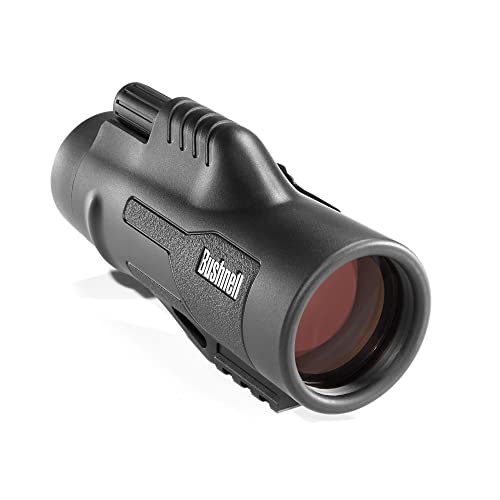
Bushnell Legend 10x42 Ultra HD Monocular, Optical Performance for Hunting and Wildlife Observation
As an Amazon Associate we earn from qualifying purchases. Product prices and availability are accurate as of the date/time indicated.

Monocular Telescope, 10x42 Monocular for Adults, BAK4 Prism & FMC Lens | Monoculars for Adults High Powered, Waterproof Portable Monocular with Hand Strap for Bird Watching, Camping, Travel


As an Amazon Associate we earn from qualifying purchases. Product prices and availability are accurate as of the date/time indicated.
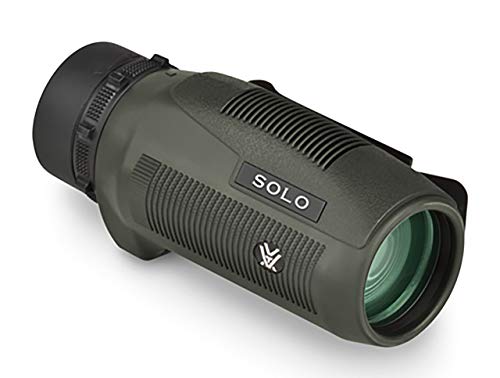
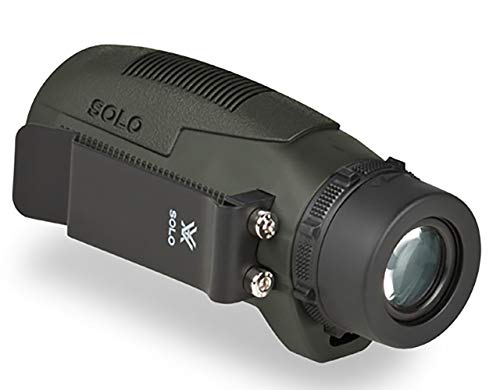
Vortex Solo Monocular 10x36 | Utility Clip, Adjustable Eyecup, Multi-Coated Lenses, Rubber Armor, Fogproof, Waterproof - Unlimited, Unconditional Warranty


As an Amazon Associate we earn from qualifying purchases. Product prices and availability are accurate as of the date/time indicated.
Prices shown are approximate and for reference only. Prices change often, so please check the current price on Amazon before you buy.
Two rows are deliberately labeled as non-10×42 contrasts because buyers searching this keyword are often shown near-miss products. For a strict 10×42 purchase, choose among the Hawke, Opticron, Celestron, and Gosky/Wingspan-class rows and verify the exact current version’s specs on the maker’s page. Prices are typical US street ranges only. Ratings are editorial for 10×42 use, weighing optical quality, brightness, field, focus and eye relief, build and sealing, and value.
Reviews: The 10×42 Monoculars Worth Your Money
Hawke Endurance ED 10×42: Best Overall
Hawke’s Endurance ED monocular is the recommendation defended first because it gets the format’s fundamentals right at a price that does not require a premium leap: ED glass that visibly cleans up high-contrast edges, a bright and honest image at the ends of the day, a focus wheel that can be run with one hand without fighting, and a waterproof build that can live in a pack. For birding, hiking, and travel in one instrument, it is the balanced choice.
Opticron DBA VHD+ 10×42: Best Premium
Opticron has made serious monoculars for longer than most brands have offered them, and the DBA class shows it in field width, contrast, and handling. It is the choice for the birder who wants a monocular that does not feel like a compromise next to good binoculars. Its price is the premium in this table, and its image is the reason.
Celestron Nature DX 10×42: Best Major-Brand Value
Celestron’s Nature DX line is a familiar value parish in binoculars, and the monocular version brings the same logic: respectable glass, honest waterproofing class, and a price that leaves room in the budget for a harness, a monopod, or the trip itself. It will not match the ED models at dawn or against the sky, and at its price it does not pretend to.
Gosky and Wingspan Class: Best Budget and Phone Use
The budget ED-claimed monoculars sold under Gosky, Wingspan, and similar labels are the most variable parish in this table, and they should be bought with a return policy in hand and tested on arrival. At their best they are astonishing value and their included phone adapters make casual digiscoping easy. At their worst they show the fringing, soft edges, and focus roughness that the price predicts. Buy from a seller whose returns you trust, test at contrast, and keep the good unit.
Buying Guide: How to Choose a 10×42 Monocular
Step One: Confirm the Format Fits Your Use and Your Hands
Be honest about size. A 10×42 monocular is a substantial handful, not a pocket trinket, and it will live in a jacket pocket, a pack lid, a harness, or a vehicle console rather than in a trouser pocket. If your real use is an always-with-you glance at distant detail, a smaller 8x or 10×25 may serve you more because you will actually carry it. If your use is deliberate watching, birding, scanning water, reading distant markers, or travel where one serious optic must do everything, the 10×42’s brightness and steadier two-handed or braced handling are worth its size. Decide also whether a monocular is the right tool at all. For long sessions, most people find binoculars less fatiguing, because two eyes work the way they evolved to. A monocular wins on weight, bulk, price at equal glass quality, and on sharing a view quickly. Buy it for those reasons, not as a cheaper imitation of binoculars.
Step Two: Test Contrast, Focus, and Eye Relief Before You Commit
Use three tests, in a store or at home within a return window. First, the contrast test: view a dark edge against a bright sky or a sunlit white sign with dark lettering, and grade color fringing and sharpness at the center and toward the edge. Second, the focus test: run the wheel from close focus to distance and back, with the hand you will actually hold it in, and check for smoothness, backlash, and whether you can make fine adjustments at 10x without overshooting, because at this magnification focus precision is usability. Third, the eye test: with glasses on if you wear them, set the eyecup and confirm you can see the full field without pressing the optic uncomfortably into your glasses, and check that the eyecup stays where you set it. A monocular that fails any of these in your hands is the wrong one for you, whatever its reviews say, because these are personal-fit specifications as much as optical ones.
Step Three: Build the Steady System and Care for the Glass
Plan to steady the monocular as part of the purchase. Learn the braces that cost nothing: elbows tucked to the body, the monocular hand supported by the other hand, leaning on a tree, a fence, a vehicle, or a pack, and sitting with elbows on knees for longer watches. If your use includes tripod-friendly situations, choose a model or adapter that can mount to a monopod or tripod and use it, because a mounted 10×42 is a small spotting scope and the difference in what you can identify is not subtle. Carry it on a lanyard or harness so a fumble is not a fall, keep the lens caps as working equipment rather than packaging, and clean the glass properly: blow or brush grit off first, then use lens fluid and microfiber in gentle circles, never a shirt tail on a dusty lens. Store it dry, in a temperate place, and check the focus and eyecup at the start of each season. A 10×42 monocular kept this way will give a decade of bright, steady service, which is the point of buying the format in the first place.
Frequently Asked Questions About 10×42 Monoculars
Is a 10×42 monocular better than a 10×25?
For image quality, brightness, and comfort, yes, decisively, and the arithmetic is the reason. A 10×42 has a 4.2mm exit pupil against the 10×25’s 2.5mm, so it delivers a brighter image, is far more forgiving about where your eye sits behind the eyepiece, and remains usable at dawn and dusk when the smaller optic has become dim and fussy. It also tends to offer better eye relief and a less cramped view. The 10×25 wins only on size and weight, and that win is real: it fits a pocket, weighs a few ounces, and is therefore present on walks where the 42mm would have been left at home. The correct choice is the one matched to your carrying reality. Deliberate watching, birding, water, and low light argue for the 10×42 without much contest. Casual, always-carried convenience argues for the compact, with its limits understood. Many serious users own both across a few years, the compact for every day and the 10×42 for the days that are about looking.
Can I use a 10×42 monocular for birding?
Yes, and many birders carry one as a second optic or as their only optic when weight and bulk rule out binoculars. The 10x reach and 42mm brightness suit distant and open-country birding well: waterfowl, raptors, shorebirds, and seabirds are natural subjects. The limitations are the monocular’s own. Following a fast, close bird in flight through a narrower, one-eyed field is harder than with binoculars, and long sessions are more fatiguing for most people. Technique closes much of the gap: find the bird with the naked eye first, keep both eyes open as you raise the monocular so the other eye keeps the context, brace whenever the ground offers anything to brace on, and rest your eye by lowering the optic between watches. Choose a model with the widest field you can afford, ED glass for clean identification against the sky, and close focus for the butterflies and near birds that fill the gaps between distant ones. Bought and used that way, a 10×42 monocular is a legitimate birding instrument and not a toy.
Why does the image shake so much at 10x, and how do I steady it?
Because 10x magnifies everything, including the small, constant movements of your hand, your pulse, and your breathing, and a monocular gives you only one hand and one barrel where a binocular gives your brain a wider, more stable grip. The shake is not a defect in your particular unit, though a very light or badly balanced monocular can make it worse. Steady it with structure, in escalating order. First, grip: hold the monocular with one hand and support that hand or wrist with the other, rather than holding it at arm’s length in one fist. Second, brace: elbows to ribs, back against a tree or wall, elbows on knees when seated, the optic or your forearm on a fence, a pack, or a vehicle. Third, breathe: take the view as you exhale and pause, the same discipline photographers and marksmen use. Fourth, mount: a monopod, a trekking pole with an adapter, or a tripod turns the monocular into a different instrument, and for digiscoping or long watches it is the honest answer. If shake still defeats you in ordinary use, an 8×42 monocular, with the same brightness and a calmer view, may be your correct format, and choosing it is experience, not surrender.
Are expensive ED monoculars worth it over budget 10×42 models?
For viewers who look at high-contrast subjects and low light, yes, and the difference is visible in the first minute of a side-by-side test. ED glass cleans up the color fringing that budget glass paints around backlit birds, white plumage, rigging, and snow edges, and premium coatings return a brighter, higher-contrast image at dawn and dusk, which are wildlife’s working hours. Premium models also tend to focus more smoothly, offer wider and flatter fields, hold their eyecup and diopter-class settings better, and carry warranties and service that budget labels may not match. For a traveler who views landscapes at midday, reads distant signs, and wants a capable optic in the vehicle, a good budget or mid-priced 10×42 is a rational purchase and the premium difference will rarely be missed. The dividing question is therefore not income but subject: if your monocular will be pointed at birds against the sky and animals in the last light, buy the ED glass in this table’s upper rows and keep it for a decade. If it will be pointed at views, buy the honest middle and spend the difference on going to see them.
Related guides
- Best Binoculars for Astronomy in 2026: 6 Binoculars for the Moon, Planets, and Deep Sky
- Best Binoculars for Whale Watching in 2026: 6 Marine Binoculars for the Ocean
- Binoculars for Alaska Cruise: 6 Best Picks in 2026
- Best Safe Telescope Filter for Seniors in 2026: Certified Solar Filters That Are Easy to Fit, Easy to Check, and Safe for Older Eyes
More from Amazon
Programs that pair well with the guide above. Offers and eligibility are set by Amazon and may change.
Free shipping on eligible items, Prime Video and more. Eligible new members can start with a free trial.
Start a Prime free trialAudiobooks and podcasts to listen to on the go. Eligible new members can start with a free trial.
Try Audible freeAd-free music streaming. Eligible new subscribers can start with a free trial.
Try Music Unlimited freeA free business account with business pricing and bulk-buying tools for work, shop or home office.
Create a business accountAs an Amazon Associate we earn from qualifying purchases.

Write Your Review
No reviews yet. Be the first to share your experience!