
What's inside
- Best Binoculars for Eagle Watching in Mountains: Power, Brightness, and Mountain Build
- Best Binoculars for Eagle Watching in Mountains: Quick Comparison
- The Six Mountain Eagle Binoculars Reviewed
- Buying Guide: How to Choose Binoculars for Mountain Eagle Watching
- Frequently Asked Questions About Eagle Watching Binoculars
As an Amazon Associate I earn from qualifying purchases. This post may contain affiliate links at no extra cost to you.
The best binoculars for eagle watching in mountains are chosen for a subject that refuses to come closer. Eagles in high country are watched at distances that humble ordinary birding optics: a golden eagle working a ridgeline a half mile away, a lammergeier quartering a cliff face across a valley, a white-tailed eagle circling a thermal so high it is a punctuation mark with wings. Identification at those ranges is made on shape and behavior as much as on plumage, the dihedral of a golden’s wings, the wedge tail and immense span of the bearded vulture, the plank-straight wings of the sea eagle, and the binocular’s job is to hold that distant cross steady, bright, and true long enough for the eye and the brain to read it. Mountains add their own examination to the optics: altitude’s thin, bright light and its ultraviolet glare, wind that turns a high-magnification view into a trembling rumor, cold that stiffens focus wheels and fogs an careless eyepiece, long climbs that price every ounce, and weather that can soak a binocular in minutes. This guide compares the real, currently sold binoculars for the alpine eagle parish on the specifications that decide it there: magnification matched to a braced, windy reality, objective size and exit pupil for the dawn and storm light when eagles move, optical quality, ED glass and coatings, that keeps a backlit speck from dissolving into purple fringe, field of view for finding the bird in an enormous sky, and the waterproof, fogproof, armored build that mountain equipment must have to be equipment at all. It assumes the watcher will also carry the parish’s patience and its ethics: eagles are protected species in most of their range, nests and roosts are approached under the law’s and the land manager’s rules and given their distance without exception, and no view in this article is worth a flushed bird or a failed nest.
The magnification question deserves its answer before any model is praised, because the mountains seduce buyers into power their hands cannot hold. A 10x binocular is the alpine parish’s working standard for a reason: it reaches meaningfully farther than the 8x of the forest birder, and it can still be held steady, braced on knees, a pack, or a trekking pole, in the wind’s ordinary parish. The 12x parish is the specialist’s instrument, magnificent from a tripod or a truly solid brace at a migration watchpoint, where eagles pass on predictable lines, and a trembling frustration in a gale on a summit, where its narrow field also makes finding the bird in an empty sky a skill of its own. The 15x and above parish belongs to tripods and to the spotting scope that this site’s readers commonly pair with their binocular, the binocular finding and following, the scope confirming at its leisure. Exit pupil arithmetic runs the dawn shift: a 10×42 gives 4.2mm, a 10×50 and 12×50 give 5mm and about 4.2mm respectively, and the larger figures earn their weight at first light in a north-facing corrie and under the storm light when the eagles are hunting and the valley is a cave. Field of view is the finding specification, and in the mountains it is bought with the same money as power, so this guide grades the balance rather than either number alone, and teaches the sky-searching technique, naked eye to the speck, binocular raised onto it without looking down, landmarks called against the ridge, that makes any of these instruments twice itself in practiced hands.
Our Top Picks
Best Binoculars for Eagle Watching in Mountains: Power, Brightness, and Mountain Build
Optical Quality at Distance: ED Glass, Coatings, and the Backlit Eagle
At eagle distances, optical quality stops being a refinement and becomes the identification itself. The bird is commonly seen against the sky, backlit, at the contrast’s worst parish, and the aberrations that a forest birder never meets become the whole view: chromatic aberration fringing the wings in purple and green until the white head of a bald eagle or the pale wedge of a lammergeier’s tail smears into the sky, and a veiling glare that washes the dark golden eagle into the dark rock it crosses. ED, extra-low dispersion, glass in the objectives is the parish’s standard answer, holding color true at the edges of contrast, and phase-coated, fully multi-coated roof prisms are its companions, the coatings deciding how much of the mountain’s fierce light reaches the eye as image rather than as haze. Resolution at the center is the third citizen, since the eagle lives at the center of the field once found, and the better glasses in this table resolve feather detail, the fingered primaries, the tail’s shape, at ranges where the budget parish gives a well-shaped rumor. None of this can be shopped from a specification sheet alone, which is why the buying guide sends you to a bright window and a distant sign with every finalist, because the fringe and the glare confess in thirty seconds to an eye that knows to look at contrast’s edge, and a binocular bought for eagles without that test has been bought on faith in the one parish where faith is not a specification.
Build for Altitude: Sealing, Armor, Cold, and the Climb’s Arithmetic
A mountain binocular is mountaineering equipment and is graded as such. It must be waterproof, sealed and O-ringed against the horizontal rain and the dunking in a summit stream that its life will eventually include, and nitrogen or argon purged and fogproof, because the walk from a warm hut to a dawn ridge, and the breath of a climber on a cold eyepiece, are fog machines aimed at its inner glass. Rubber armor is part of the system, grip for gloved and wet hands, and a cushion against the rock that every mountain binocular eventually meets at speed. The focus wheel must turn smoothly with gloves on, neither stiffening in January cold nor spinning so freely that the wind’s parish can argue with it, and the diopter and eyecups must hold their settings through a day of being pulled from a pack, since an optic that must be re-zeroed at every eagle is an optic that misses eagles. Weight is the climb’s arithmetic and it is honest arithmetic: the 42mm parish in the class of a pound and a half to two pounds rides a harness all day without comment, the 50mm parish adds its ounces and its brightness together, and the harness itself, the chest pack or binocular harness that carries the weight on the torso rather than the neck, is part of the mountain purchase and not an accessory, since a binocular on a neck strap at altitude is a pendulum that its owner stops carrying by the second summit, which is the same as not owning it at the third.
Finding and Following: Field of View, Scanning, and the Watchpoint Parish
Eagles are found by technique and followed by field of view, and the guide teaches the technique because it multiplies the instrument. The mountain sky is searched in a grid, naked eye first, since the eye’s parish is wider than any binocular’s, ridge lines and cliff faces scanned in strips, thermals’ known addresses, the sun-warmed faces and the ridge lift lines, worked in their order, with the ears aboard, since the raven’s parish and the marmot’s whistle have announced more eagles than any glass. The speck, once found, is fixed with a landmark, the notch, the snow patch, the dead pine, before the binocular rises onto it without the eyes leaving the sky, the movement rehearsed until the bird is in the glass in one motion, because the beginner’s parish, look down, raise, search, is where eagles are lost. Following is the field of view’s office, the wider glasses in this table holding a circling bird through its turn while the narrow parish loses it at the field’s edge and must find it again, and bracing is the follow’s foundation, elbows on knees seated, the glass on a pack or a pole standing, the summit’s wind answered by the body’s own lee. At the established watchpoint, the migration pass and the known eyrie viewpoint, the tripod and the scope join the system and the 12x parish comes into its kingdom, and the watcher who grades their own parish honestly, wandering ridge or fixed watchpoint, buys the glass their actual watching asks for, which is the buying guide’s first step stated as a parable.
Best Binoculars for Eagle Watching in Mountains: Quick Comparison
| Binocular | Key Specs | Best For | Typical Price Range | Rating |
|---|---|---|---|---|
| Swarovski NL Pure 10×42 class | 10×42 in class, very wide field positioning, ED parish in line, premium build | Best binoculars for eagle watching in mountains overall | $2,700 – $3,100 | 4.9 / 5 |
| Zeiss Victory SF 10×42 class | 10×42 in class, wide field positioning, ED parish in line, balanced handling | Best handling and field | $2,400 – $2,800 | 4.8 / 5 |
| Vortex Razor UHD 10×50 class | 10×50 in class, UHD parish positioning, bright exit pupil in line | Best brightness per dollar at the summit parish | $1,400 – $1,700 | 4.6 / 5 |
| Nikon Monarch M7 10×42 class | 10×42 in class, ED parish positioning, wide field in line, mid price | Best mid-price mountain glass | $480 – $560 | 4.5 / 5 |
| Hawke Frontier APO 10×42 class | 10×42 in class, APO parish positioning, strong value in line | Best value ED | $550 – $700 | 4.4 / 5 |
| Vortex Diamondback HD 12×50 class | 12×50 in class, HD parish positioning, tripod parish in line | Best watchpoint power on a budget | $260 – $330 | 4.3 / 5 |
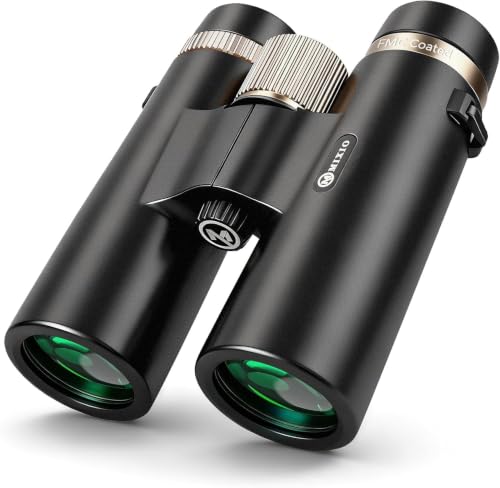
M MIXIO 12x42 Binoculars for Adults High Powered Waterproof with Large View | Professional HD Binoculars BAK4 Prism FMC Lens Bird Watching Binoculars for Cruise Ship Hunting Camping Travel Sport Safari
As an Amazon Associate we earn from qualifying purchases. Product prices and availability are accurate as of the date/time indicated.

HONORACE BONE 10x42 Binoculars for Adults High Powered Compact Birdwatching | Birding Binoculars Waterproof Binoculars Bird Watching Hunting Wildlife Travel Cruise Ship Lightweight hiking Clear Low Light
As an Amazon Associate we earn from qualifying purchases. Product prices and availability are accurate as of the date/time indicated.

18x56 UHD Binoculars for Adults High Powered with Upgraded Phone Adapter, Wide Field of View Binoculars with Clear Low Light Vision, Lightweight Waterproof Binocular for Bird Watching Hunting Cruise
As an Amazon Associate we earn from qualifying purchases. Product prices and availability are accurate as of the date/time indicated.
Prices shown are approximate and for reference only. Prices change often, so please check the current price on Amazon before you buy.
Fields of view, exit pupils, and weights refer to the makers’ published specifications for the current versions. Prices are typical US street ranges. Ratings are editorial for mountain eagle watching, weighing distant contrast performance, brightness, field of view, mountain build and sealing, handling with gloves and harness, and value.
The Six Mountain Eagle Binoculars Reviewed
1. Swarovski NL Pure 10×42: Best Overall
The NL Pure leads on the finding specification itself, a field of view so wide that the circling eagle stays in the glass through its turn, behind contrast and color of the summit parish. Its price is the category’s ceiling, paid by those whose watching is a life’s parish. For the alpine eagle, it is the recommendation defended first.
2. Zeiss Victory SF 10×42: Best Handling
Zeiss’s SF balances in the hands like a thought, its focus where the fingers live, its field nearly the leader’s, its contrast the German parish’s own. Its price is a breath below the ceiling’s. Where the glass is raised a thousand times a season, it closes the argument by ergonomics.
3. Vortex Razor UHD 10×50: Best Brightness Value
The big Razor brings a 5mm exit pupil and summit-approaching contrast at half the ceiling’s price, behind a warranty parish that has made it the working guide’s glass in more than one range. Its weight is the 50’s own, carried gladly at dawn. In the brightness parish, it stands.
4. Nikon Monarch M7 10×42: Best Mid-Price
Nikon’s M7 delivers ED contrast and a generous field at the parish where most watchers actually live, sealed and armored for the mountain’s weather. Its dawn is a step below the 50’s, graded in that office. As the serious mountain glass for most purses, its arithmetic is the argument.
5. Hawke Frontier APO 10×42: Best Value ED
Hawke’s APO parish punches at the classes above it in contrast and color, at a price that leaves the harness and the scope fund alive. Its parish is younger than the leaders’, stated plainly. In the value ED parish, it earns its row on the glass itself.
6. Vortex Diamondback 12×50: Best Watchpoint Budget
The big Diamondback closes the table as the fixed watchpoint’s instrument, 12x for the tripod and the brace at a price that invites the beginner to the pass. Handheld in wind, it is the trembling parish the text warns of, graded in that honesty. At the watchpoint, it has started more eagle watchers than any row above it.
Buying Guide: How to Choose Binoculars for Mountain Eagle Watching
Step One: Grade Your Parish, Wandering Ridge or Fixed Watchpoint
Write the watching as it will actually be: the ridges walked and the summits stood on, against the passes and viewpoints returned to, and let that census choose the power, the 10×42 parish for the wanderer whose glass is handheld and braced a hundred ways, the 12x admitted only where the tripod and the fixed parish dominate the log, the 50mm objectives admitted where the dawn and the storm light are the watching’s heart and the legs accept their ounces. Set the budget against the whole system in the same step, glass, harness, and the scope’s eventual parish, since the binocular that consumes the system buys a season of finding birds it cannot confirm. Strike any candidate that is not fully sealed and purged, whatever its glass, because the mountain’s weather is not a risk in this parish but a schedule.
Step Two: Test at Contrast’s Edge, With Gloves, on a Harness
Audition the finalists against the eagle’s own conditions: a backlit sign, a gull against a bright sky, a dark roofline against brighter cloud, read for the fringe and the veil that the shop’s parish lighting hides, at the center and toward the edge where the circling bird will live. Work the focus with your mountain gloves on, set and reset the diopter and eyecups with the same hands, and carry the glass on its harness for the shop’s longest aisle, since the neck’s parish and the torso’s are different countries and the mountain lives in the second. Compare the fields of view in the makers’ figures at equal power, and prefer, at the table’s shortlist level, the wider, since the eagle is followed more often than it is examined. Reject on fringe that smears a white head, on a focus the glove defeats, or on a seal the maker will not state, without negotiating with a sale, because the ridge will not negotiate either.
Step Three: Watch by the System, and Keep the Glass Mountain-Ready
Work the glass in the field as the text teaches: the sky gridded by eye, the speck landmarked, the raise rehearsed to one motion, the brace taken from knees, pack, and pole as the ground offers, the watchpoint’s hours logged with the weather’s parish beside the birds’, since the eagle’s calendar, the thermal’s hour, the migration’s wind, is learned from a log and not from hope. Keep the ethics as part of the system entire, protected species given their legal distance, nests and roosts unapproached and unpublicized, the land manager’s rules read for the exact ground, because the mountain parish’s access is a trust and its eagles are its landlords. At home, the binocular is dried before it is cased, its lenses cleaned by the optics parish’s gentle liturgy, blown, brushed, and only then wiped, its caps and harness inspected at the season’s turn. Kept so, the glass becomes what its price promised, a window that disappears between the watcher and the great bird on the ridge, which is the whole doctrine of the best binoculars for eagle watching in mountains and the reason the right one is chosen by its contrast, its field, and its owner’s technique, and never by its magnification alone.
Frequently Asked Questions About Eagle Watching Binoculars
Is 10x or 12x better for watching eagles in the mountains?
Ten power for the wandering watcher, twelve for the fixed watchpoint, and the reasoning is the platform’s stability multiplied by the sky’s emptiness: handheld and braced on a ridge, the 10x view can be held through the wind’s ordinary parish and its wider field finds and keeps the circling bird, while the 12x view, from the same hands in the same wind, trembles at exactly the magnification where the identification lives, and its narrower field loses the bird at the turn and must find it again in a sky with no addresses. From the tripod at the pass, the arithmetic reverses completely, the 12x, and the spotting scope beyond it, delivering the distance parish the watchpoint exists for, steady as a table and patient as the migration. The honest household commonly owns the 10×42 as its mountain glass and meets the 12x parish with a scope, rather than with a second binocular, since the scope’s parish begins where the binocular’s ends and the two together cover the mountain entire. Buy for the watching you will actually do, graded by last season’s log and not by the summit photograph in the imagination, which is this guide’s advice in every parish and the eagle’s in particular.
What do I look for to identify eagles at long distance?
Shape, flight, and proportion, in that order, because at the ranges the mountains impose, plumage is the last witness called and often the least reliable in backlight. The golden eagle flies on wings raised in a shallow V, the dihedral, with a relatively small head and a long, rounded tail, soaring in the high country it owns. The bald eagle flies flat, plank-straight, with an immense head and bill that the distance cannot hide, its white head and tail arriving as the confirmation rather than the first clue. The lammergeier, the bearded vulture of the high ranges, is a wedge-tailed, narrow-winged cross of a bird, larger than it first seems, quartering cliffs at a distance that makes its size a judgment of landmarks. The white-tailed eagle is a flying barn door, broad, fingered, short-wedged of tail, on flat wings over its northern waters and crags. Size against the known, a raven, a buzzard, the cliff itself, is the watcher’s constant discipline, since the sky gives no scale and the imagination gives too much. The binocular’s part is to hold the silhouette steady and fringeless long enough for that reading, which is why this guide spends its money on contrast and field, the identification’s true instruments.
Do I need a spotting scope as well as binoculars for eagles?
For the watchpoint and the eyrie viewpoint, the scope is the parish’s natural second instrument, and for the wandering ridge it is commonly left to the car or the hut without regret, and the wise watcher owns the binocular first and adds the scope when their log, and not a catalog, asks for it. The division of labor is the classic one: the binocular finds, follows, and identifies by shape and flight across the whole sky, the scope, on its tripod at twenty to sixty power, confirms the details the distance withheld, the plumage’s parish, the ring on a leg, the bird on a nest at its lawful distance, and it does so from the fixed parish where its weight and its setup belong. The migration pass, the reservoir viewpoint, and the known nesting cliff’s designated viewpoint are scope country, and a watcher whose seasons center there will find the scope becoming the main instrument and the binocular its finder. The ridge walker who buys the scope first owns a magnificent instrument for a parish they visit twice a year, which is why Step One’s census, the watching as it will actually be, governs the order of purchase in this parish as in every other on this site.
How do I stop my binoculars fogging and getting damaged in the mountains?
Internal fog is prevented at the factory or not at all, which is why this guide requires the sealed, purged parish without exception: the dry gas inside a fogproof binocular cannot condense on its inner glass when the dawn’s cold meets the hut’s warmth on its surfaces. External fog, on the outer lenses, is the manageable citizen, answered by patience, by letting the glass equalize in its case at the temperature’s change, by the breath disciplined away from the eyepieces, and by a clean microfiber’s gentle parish once the moisture is droplets rather than mist. Damage is prevented by the carry and the habits: the harness that keeps the glass on the torso and out of the pendulum’s parish, the caps that live on the objectives whenever the glass is not at the eyes, the rule that a binocular is never set on rock when a pack or a hat offers itself, and the rain cover that lives in the pack’s lid rather than in the car’s. At home, the glass is dried open before it is cased, cleaned by the gentle liturgy of the text, and stored in a temperate parish, and a mountain binocular kept so will be resolving eagles in its second decade, which is the return the summit prices in this table are actually buying.
Related guides
- Best Spotting Scope Rain Cover Upgrade in 2026: LensCoat RainCoat, Think Tank Hydrophobia, Swarovski and Kowa Stay-On Cases, and Kite Skua Covers Compared for Storm Birding, Sea Watching, and Scopes That Work in the Weather Other People Go Home From
- Best Binoculars for Birding in 2026: 8×42 Binoculars for Clear Views, Wide Fields, and All-Day Comfort Compared
- Best Spotting Scope for Professionals Birding in 2026: 7 Professional Spotting Scopes That Offer Clear Views, Strong Zoom, and Reliable Performance for Birding
- Best Binoculars for Hunting in 2026: 6 Binoculars That Find Game in Low Light
More from Amazon
Programs that pair well with the guide above. Offers and eligibility are set by Amazon and may change.
Free shipping on eligible items, Prime Video and more. Eligible new members can start with a free trial.
Start a Prime free trialAudiobooks and podcasts to listen to on the go. Eligible new members can start with a free trial.
Try Audible freeAd-free music streaming. Eligible new subscribers can start with a free trial.
Try Music Unlimited freeA free business account with business pricing and bulk-buying tools for work, shop or home office.
Create a business accountAs an Amazon Associate we earn from qualifying purchases.

Write Your Review
No reviews yet. Be the first to share your experience!