
What's inside
As an Amazon Associate I earn from qualifying purchases. This post may contain affiliate links at no extra cost to you.
The 6×30 binoculars vs 8×42 binoculars comparison is the optics world’s argument between two philosophies that share a shelf. The 6×30 is the wide, bright-for-its-size, steady classic: a huge field of view, an exit pupil of five millimeters that serves the eye generously, an image that barely shakes in the hand, and a size that disappears into a jacket pocket, bought by birders of the woods, by hunters of the thick timber, by travelers and stadium-goers, for a century. The 8×42 is the modern mainstream champion: more magnification for the detail at distance, a 42mm objective that gathers the dawn’s light, the standard birding and hunting format against which all others are measured. Neither is better in the abstract, and this guide refuses the abstract: it compares the formats head to head and six real, currently sold models across both, graded on field of view, low-light manners, steadiness, detail at range, and carry, and it decides the question the only honest way, by the user’s parish, the woods or the open, the pocket or the harness, the young eye or the older one, with the arithmetic shown so the verdict can be checked rather than believed.
Do the two computations that govern everything. Exit pupil is the objective’s diameter divided by the magnification: the 6×30 delivers five millimeters, the 8×42 delivers five and a quarter, a near-tie that surprises the shopper who assumed the bigger glass wins the twilight by a rout, since the 6×30’s modest objective is divided by a modest power. What the eye can use of that pupil depends on its own dilation, generous in youth and in darkness, narrower with age, which is why older observers often find the formats closer in the dusk than the young do. Field of view divides the other way: the 6×30 class commonly shows a field a third wider than the 8×42’s, the difference between watching a whole thicket and watching a branch of it, and in the woods, on the water, and in the stadium, that width is a form of resolution no magnification can repay, since the bird outside the field is not magnified at all. Magnification’s tax is shake: every tremor of the hand is multiplied by the power, so the 8x image dances a third more than the 6x, which is why the lower power’s image so often looks sharper in the field than its specifications promise, the steadiness returning what the magnification spent.
Our Top Picks
6×30 Binoculars vs 8×42 Binoculars: Field, Light, and Steadiness
Where the 6×30 Wins: Woods, Water, and the Moving World
Give the 6×30 every parish where the subject is near, moving, or embedded in clutter. The woodland birder following a warbler through the branches lives inside the wide field, acquiring the bird in a fraction of the 8×42’s search and holding it through its hops without the frame’s edge amputating the story. The hunter in thick timber, the boater whose deck moves, the parent at the stadium, the traveler whose binocular must earn its pocket every day, all draw on the same account: steadiness, width, and a depth of field so forgiving that focus becomes an occasional suggestion rather than a constant chore, since lower magnification forgives the focus’s imprecision across a deeper span of distance. The 6×30’s size writes the last line of its case: it is the binocular that is actually carried, and the carried binocular outperforms the finer one in the car’s glovebox on every metric ever measured by a memory.
Where the 8×42 Wins: Distance, Detail, and the Open Country
Give the 8×42 every parish where the subject is far and the light is thin. The extra magnification is not vanity; across a marsh, a clear-cut, a reservoir, or a mountain basin, it is the difference between a duck and a species, between a buck and a legal buck, between reading the band and admiring the bird. The 42mm objective gathers the dawn and dusk light that the hunting and birding hours are made of, and the format’s popularity has built it the deepest market in optics: every maker, every price tier, every refinement of glass and coating competes here first, so the 8×42 buyer shops the industry’s main arena while the 6×30 buyer shops a smaller, more traditional room. For the one-binocular household whose world is open, it is the correct default, and this guide’s table crowns its finest citizen accordingly, while insisting the crown is the parish’s and not the format’s in the abstract.
The Middle Testimony: Eyes, Hands, and Habits
The individual variables deserve their hearing. Older eyes, whose pupils no longer dilate to the young eye’s width, harvest less of any format’s exit pupil and often find the 6×30’s steadiness and depth of field worth more than the 8×42’s paper brightness, a trade many experienced observers make deliberately in their later decades and describe as the image calming down. Hands vote similarly: the tremor that age, caffeine, cold, or a climb introduces is taxed a third less by the 6x. Habits vote loudest: the observer whose binocular lives on a chest harness in open country should buy the 8×42 and never look back, while the one whose glass lives in a coat pocket in the woods should buy the 6×30 and accept the marsh’s distant ducks as silhouettes with a clear conscience. The buying guide turns these testimonies into a procedure, because a comparison article that ends in it depends has done only half its job.
6×30 Binoculars vs 8×42 Binoculars: Quick Comparison
| Binocular Model | Key Specs | Best For | Typical Price Range | Rating |
|---|---|---|---|---|
| Vortex Diamondback HD 8×42 | 8×42 in class, HD optical system positioning in line, wide field for class | Best 8×42 overall value | $230 – $280 | 4.7 / 5 |
| Kowa YF II 6×30 | 6×30 in class, porro design positioning, very wide field in line, waterproof | Best 6×30 binoculars overall | $100 – $130 | 4.6 / 5 |
| Nikon Prostaff P7 8×42 | 8×42 in class, phase-coated positioning in line, locking diopter | Best 8×42 for beginners | $190 – $230 | 4.5 / 5 |
| Leupold BX-1 Yosemite 6×30 | 6×30 in class, porro positioning, compact and light in line | Best 6×30 for travel and family | $110 – $140 | 4.4 / 5 |
| Celestron Nature DX ED 8×42 | 8×42 in class, ED glass positioning in line, close focus | Best 8×42 glass upgrade | $200 – $250 | 4.5 / 5 |
| Steiner Military-Marine 6×30 class | 6×30 in class, rugged porro positioning, sports autofocus tradition in line | Best rugged 6×30 | $280 – $340 | 4.4 / 5 |

Nikon PROSTAFF P3 8x42 Binocular | Waterproof, fogproof, rubber-armored Full-Size Binocular, wide field of view & long eye relief | Official Nikon USA Model
As an Amazon Associate we earn from qualifying purchases. Product prices and availability are accurate as of the date/time indicated.

HD 8x42 Binoculars for Adults High Powered Phone Adapter Tripod | BAK4 Prism, FMC Lense, Waterproof, Low Light Vision, Compact Binoculars for Bird Watching Hunting Stargazing Hiking Cruise
As an Amazon Associate we earn from qualifying purchases. Product prices and availability are accurate as of the date/time indicated.
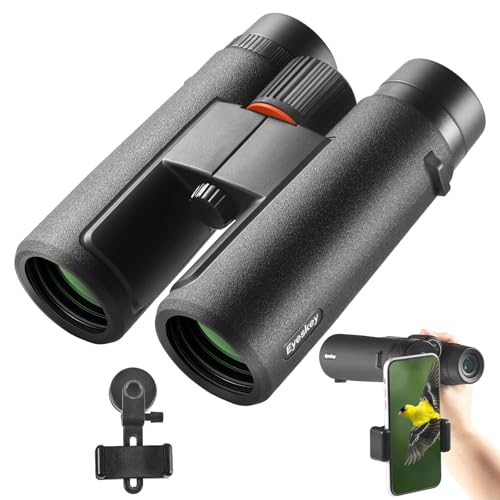
8x42 HD Wide-View Binoculars for Adults with Low Light Night Vision – Ultra-Bright Waterproof Binoculars with Smartphone Adapter for Hunting, Bird Watching, Stargazing & Outdoor Travel
As an Amazon Associate we earn from qualifying purchases. Product prices and availability are accurate as of the date/time indicated.
Prices shown are approximate and for reference only. Prices change often, so please check the current price on Amazon before you buy.
Fields of view and exit pupils are makers’ figures for each format. Prices are typical US street ranges. Ratings are editorial within each format’s parish, weighing field of view, low-light manners, steadiness in hand, build, and value.
The Six Binoculars Reviewed Across Both Formats
1. Vortex Diamondback HD 8×42: Best 8×42 Value
The Diamondback HD leads the 8×42 parish on the union of glass that punches above its price, a field wide for its format, and a warranty culture that has made it the default recommendation of a decade of shop counters. For the open-country, one-binocular buyer, it is the recommendation defended first, and its only argument is with the format across the aisle, which this article has already refereed by parish.
2. Kowa YF II 6×30: Best 6×30 Overall
Kowa’s YF II is the modern 6×30 done properly: a waterproof porro with a field wide enough to change how a woodland walk feels, optics from a maker whose spotting scopes anchor the premium parish, and a size that vanishes into a daypack’s side pocket. For the woods birder, the young family, and the traveler, it is the format’s finest hour at a fair price.
3. Nikon Prostaff P7 8×42: Best 8×42 for Beginners
The Prostaff P7 brings Nikon’s optical heritage and a locking diopter to the mainstream format at the beginner’s price, with manners in the hand that flatter a new observer’s learning curve. Its glass grades a breath below the leader’s. As the first serious 8×42, it is the table’s most forgiving place to start.
4. Celestron Nature DX ED 8×42: Best Glass Upgrade
The Nature DX ED spends its budget on the objective’s glass, ED elements that clean up the color fringing the standard tier tolerates, in a body whose close focus serves the butterfly and wildflower parish the standard birding glass forgets. For the observer whose eyes have begun to grade glass rather than formats, it is the 8×42 shelf’s thinking step up.
5. Leupold BX-1 Yosemite 6×30: Best Travel and Family 6×30
The Yosemite is the 6×30 as a household instrument: light, simple, sized for smaller hands and faces as honestly as for adults, with Leupold’s warranty behind its adventures. Its optics grade in its class. Passed around a stadium row or a family’s shoreline walk, it is the binocular most likely to be in the photograph and in the memory.
6. Steiner Military-Marine 6×30 Class: Best Rugged 6×30
Steiner’s 6×30 class closes the table as the traditionalist’s instrument: a porro built like equipment rather than like jewelry, in the military-marine tradition of the format’s golden age, with the maker’s distance-focus system that suits the water and the watch. Its price is the rugged tier’s. For the boater and the hunter of the wet woods, it is the 6×30 that will outlive its owner’s second car.
Buying Guide: How to Decide Between 6×30 and 8×42 Binoculars
Step One: Name Your Parish in One Sentence
Write where the binocular will actually live and look: the wooded trail, the pocket, the boat, the stadium, for the 6×30; the marsh, the basin, the reservoir, the dawn field, for the 8×42, and let the sentence elect the format before any model is admired, since a format bought against its parish is a disappointment with excellent glass. Count your light in the same step, the dawn-and-dusk observer leaning to the 42’s gathering, the midday walker free of the question, and your carry, honestly, since the pocket’s vote outranks the harness’s in every household where both exist. If the sentence genuinely contains both parishes, the 8×42 is the tiebreaker for its detail and its market depth, with the 6×30 filed as the household’s second binocular, the one that will, in practice, be borrowed most.
Step Two: Test Steadiness and Field With Your Own Hands and Eyes
Handle both formats in the shop or across a return window, and run the field’s own tests: read the distant sign for the detail verdict, then follow a moving subject, a bird, a boat, a child on a bicycle, across a cluttered background for the field and steadiness verdict, and notice which image your hands keep calm and your eyes keep fed. Check the eye relief with your glasses if you wear them, the focus wheel’s manners with your gloves if your parish has a winter, and the close focus if insects and flowers share your walks. The format question is unusually personal, a matter of pupils and tremors, and ten honest minutes outperforms ten reviews, this one included, which is why the guide prescribes the test rather than merely the verdict.
Step Three: Buy Once, Carry Always, and Keep the Glass Clean
Purchase the format’s leader your budget reaches, add the harness or the pocket arrangement that matches its elected life, since a binocular’s carriage is half its specification, and protect the investment with the small disciplines: caps on, a cloth in the case, the strap or harness checked at the season’s turn, and storage dry and out of the car’s heat. Then use it at the parish’s hours, the dawn patrol and the woodland walk, and let a season of your own evidence grade the choice, because the 6×30 owner who finds the marsh calling can add the 8×42 with a clear conscience, and the 8×42 owner who discovers the woods can add the little porro for the price of a good dinner out. Run so, the format war ends the way it should in every household, not with a winner, but with the right glass in the right pocket, and a family argument conducted, ever after, at the level of scenery rather than of specifications.
Frequently Asked Questions About 6×30 vs 8×42 Binoculars
Are 6×30 binoculars bright enough for dawn and dusk?
Brighter than their size suggests, and the arithmetic is the reason: the 6×30’s exit pupil is five millimeters, within a breath of the 8×42’s five and a quarter, so in the low light where the pupil governs, the little porro delivers nearly the same disc of light to an eye that can use it, with modern coatings deciding the real-world margin more than the format does. What the 8×42 adds at the twilight is not chiefly brightness but detail, the magnification to resolve the deer from the thicket at the hour when both are gray. The older observer, whose pupils dilate less, may find the formats effectively equal in the dusk and the 6×30’s steadiness the deciding gift. Judge by your hours: the last-light hunter of open country belongs to the 42, the woods walker at dusk is honestly served by the 30, and neither is squinting in the dark by the format’s fault.
Why do 6×30 binoculars feel sharper than higher powers?
Because in the hand, sharpness is a system and magnification is only one of its terms. The 6x image is multiplied by a steadier hand, the tremor taxed a third less than at 8x; it enjoys a deeper field, so the subject stays in the focus’s sweet span as it moves toward and away; and its wider field keeps the subject centered, where every binocular’s optics are at their best, rather than wandering toward the edges where aberrations live. The bench and the tripod reverse the verdict, the 8×42’s extra detail appearing the moment the shake is removed, which is why specifications and field impressions disagree so politely. Buy for the use you actually have, handheld in the living world, and the 6×30’s reputation stops being a paradox and becomes a measurement.
Are 6×30 binoculars good for birdwatching?
For woodland birding, they are not merely good but traditional, the format a generation of forest birders chose deliberately: the warbler in the branches is a field-of-view problem before it is a magnification problem, and the 6×30’s wide, steady, deep-focused image acquires and holds a moving bird in clutter better than any mainstream alternative. Their parish ends where the birds get distant and small, the shorebirds across the mudflat, the raptors over the reservoir, the ducks at the marsh’s far edge, where the 8×42’s detail is the whole game. The birder whose walks are woods and edges should buy the 6×30 without a flicker of the insecurity the bigger format’s popularity tries to sell, and the birder of the open water should do the reverse, and both should ignore any verdict that does not ask where they walk.
Which format is better for children and beginners?
The 6×30, on every term a beginner’s success is measured by: a wider field that finds the subject before frustration does, a steadier image that forgives an unsteady hand, a depth of field that makes the focus wheel a suggestion rather than an examination, and a size and price that fit smaller hands and a family’s risk tolerance. The beginner’s whole education is acquiring subjects and enjoying them, and the little porro is a machine for exactly that, which is why the youth and family rows of this table are 6x30s and why so many experienced observers keep one as the household’s teaching glass long after their own harness carries the bigger format. When the young birder starts naming the distant ducks and asking what they are, the 8×42’s hour has arrived, and it will be obvious to everyone, which is the correct way for equipment to be outgrown.
Related guides
- Best Interpupillary Hinge for Long Life in 2026: 7 Binoculars With Durable Hinges That Stay Smooth, Hold Adjustment, and Last for Years
- Best Myths About Monocular vs Binoculars in 2026: What Is True, What Is False, and How to Choose
- Best Telescopes for Windy Astronomy Nights in 2026: Sky-Watcher, Orion, Celestron, and Zhumell Compared for a Mount Graded as More Than Half the Instrument, a Low Parish Against the Wind, and a Night Read From the Forecast Before the Scope Is Carried Out
- Best Telescopes for Windy Astronomy Nights in 2026: Sky-Watcher, Orion, Celestron, and Zhumell Compared for a Mount Graded as More Than Half the Instrument, a Low Parish Against the Wind, and a Night Read From the Forecast Before the Scope Is Carried Out
More from Amazon
Programs that pair well with the guide above. Offers and eligibility are set by Amazon and may change.
Free shipping on eligible items, Prime Video and more. Eligible new members can start with a free trial.
Start a Prime free trialAudiobooks and podcasts to listen to on the go. Eligible new members can start with a free trial.
Try Audible freeAd-free music streaming. Eligible new subscribers can start with a free trial.
Try Music Unlimited freeA free business account with business pricing and bulk-buying tools for work, shop or home office.
Create a business accountAs an Amazon Associate we earn from qualifying purchases.

Write Your Review
No reviews yet. Be the first to share your experience!