
What's inside
- How to Choose Tripod for Telescope: Start with Load Capacity
- How to Choose Tripod for Telescope: Height, Stability and Head Type
- How to Choose Tripod for Telescope Comparison Table
- Top Tripods Reviewed in This How to Choose Tripod for Telescope Guide
- How to Mount a Telescope on a Tripod
- Buying Guide: How to Choose Tripod for Telescope
- Alt-Azimuth vs Equatorial Mount for Telescope Tripods
- Frequently Asked Questions
As an Amazon Associate I earn from qualifying purchases. This post may contain affiliate links at no extra cost to you.
Learning how to choose tripod for telescope use is about choosing a tripod that is stable, tall, and easy to use, with a tripod that works well for holding a telescope steady for astronomy, birdwatching, and terrestrial viewing, and with a price that fits an observer who wants a reliable tripod without a large, expensive premium model that is too complex for a first telescope setup. A good how to choose tripod for telescope guide should explain load capacity, height, stability, head type, leg locks, and price, with a price that gives you value. It should also be simple to use, with a design that is suitable for a beginner. Always check the tripod load capacity, height, stability, and mount compatibility before buying, and follow the manufacturer guidance for use, and always keep your fingers clear of leg locks when you fold a tripod, and never look at the sun through a telescope without a proper certified solar filter.
This guide explains how to choose tripod for telescope use, how to compare load capacity, height, stability, head type, leg locks, and price, and which tripods work well in 2026 for telescopes, spotting scopes, and binoculars. We focus on practical use for observers who buy a tripod for the first time, with a tripod that is used for viewing the moon, planets, and stars in spring, summer, autumn, and winter, and with a design that is suitable for a beginner. Whether you use a small refractor, a tabletop telescope, or a large spotting scope, the same principles apply: choose a tripod that is stable, with a good height, and with a price that fits your needs. Always check your tripod specifications before buying.
Our Top Picks
How to Choose Tripod for Telescope: Start with Load Capacity
How to choose tripod for telescope use starts with load capacity, because a tripod such as the Celestron Heavy Duty Alt-Azimuth Tripod is designed with a strong body that holds a telescope securely, while a tripod without enough load capacity may wobble and may make your image shaky. Load capacity is better than price alone for a telescope tripod, because it ensures your telescope stays steady. A tripod with a load capacity above your telescope weight is a good choice, because it gives you a safety margin, and a tripod with a wide leg spread is better if you use a heavy telescope, because it is more stable.
A telescope tripod also needs good height. A tripod with a max height of 60 inches or more is a good choice, because it lets you stand and view comfortably. A tripod with a good price is a good choice, because it gives you value. Look for a tripod with a simple leg lock, so it is easy to set up in the dark.
How to Choose Tripod for Telescope: Height, Stability and Head Type
Height matters most for how to choose tripod for telescope use, because it determines whether you can view comfortably without stooping. Tripods with a max height of 60 inches or more are a good choice for most adults, while tripods with a lower height are better if you sit to observe. Tripods with enough height are better than tripods without, because they let you view the sky without bending. Tripods with a stable base are a good choice, because they reduce vibration.
Stability and head type also matter for telescope tripods. Tripods with a fluid head are better than tripods without, because they let you pan smoothly to follow the moon or a bird. Tripods with a pan tilt head are a good choice, because they are simple and easy to use. Tripods with a good price are a good choice, because they give you value. Always check the height, with its inches, before buying.
How to Choose Tripod for Telescope Comparison Table
| Model | Material | Max Height | Load Capacity | Weight | Typical Price Range | Rating |
|---|---|---|---|---|---|---|
| Celestron Heavy Duty Alt-Azimuth | Steel | 54 in | 20 lb | 12 lb | $150-$180 | 4.8/5 |
| Vanguard Alta Pro 2+ 263AB | Aluminium | 68 in | 15 lb | 5.5 lb | $150-$180 | 4.8/5 |
| Manfrotto 190XPRO3 | Aluminium | 63 in | 15 lb | 4.4 lb | $180-$200 | 4.8/5 |
| Slik Pro 700 DX | Aluminium | 75 in | 15 lb | 7.1 lb | $100-$120 | 4.7/5 |
| Benro Mach3 TMA38CL | Carbon fibre | 69 in | 35 lb | 4.6 lb | $300-$320 | 4.8/5 |
| Vortex Ridgeview Carbon | Carbon fibre | 61 in | 15 lb | 3.8 lb | $250-$280 | 4.7/5 |
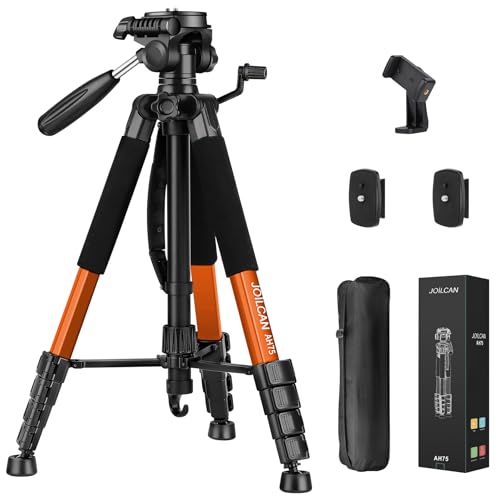
JOILCAN 74" Tripod for Camera Cell Phone Video Photography | Heavy Duty Tall Cameras Tripod Stand, Professional Travel DSLR Tripods, Compatible with Canon iPhone, Max Load 15 LB
As an Amazon Associate we earn from qualifying purchases. Product prices and availability are accurate as of the date/time indicated.

Amazon Basics 50-inch Lightweight Portable Camera Tripod Stand with Quick-Release Plate, Adjustable Height, Aluminum, for Travel Photography, Champagne
As an Amazon Associate we earn from qualifying purchases. Product prices and availability are accurate as of the date/time indicated.

Celestron Heavy-Duty Alt-Azimuth Tripod for Spotting Scopes & Telescopes | Heavy-Duty Mount, Precision Slow-Motion Controls in Altitude and Azimuth, Built for Large Optics, Smooth Tracking
As an Amazon Associate we earn from qualifying purchases. Product prices and availability are accurate as of the date/time indicated.
Prices shown are approximate and for reference only. Prices change often, so please check the current price on Amazon before you buy.
Top Tripods Reviewed in This How to Choose Tripod for Telescope Guide
Celestron Heavy Duty Alt-Azimuth
The Celestron Heavy Duty Alt-Azimuth is a tripod with material of Steel, max height of 54 in, load capacity of 20 lb, weight of 12 lb, and a price of $150 to $180. It has a strong steel body, good load capacity, and a good value for telescope users. It is a good choice if you want to know how to choose tripod for telescope use with a proven Celestron design, because it is one of the most trusted tripods for telescopes, it has a steel material, and it has a 20 lb load capacity. The Celestron tripod is made for telescopes, and it has a slow motion control, a stable base, and a design that holds a telescope steady for astronomy.
Vanguard Alta Pro 2+ 263AB
The Vanguard Alta Pro 2+ 263AB is a tripod with material of Aluminium, max height of 68 in, load capacity of 15 lb, weight of 5.5 lb, and a price of $150 to $180. It has a tall height, good load capacity, and a good value for telescope users. It is a good choice if you want a Vanguard tripod with a tall height for telescopes, because it has an aluminium material, it has a 68 in max height, and it is made by a trusted brand. It is ideal for observers who want a Vanguard tripod, and its multi angle centre column is useful for low angle viewing.
Manfrotto 190XPRO3
The Manfrotto 190XPRO3 is a tripod with material of Aluminium, max height of 63 in, load capacity of 15 lb, weight of 4.4 lb, and a price of $180 to $200. It has a good height, stable design, and a good value for telescope users. It is a good choice if you want a Manfrotto tripod with a proven design for telescopes, because it has an aluminium material, it has a 63 in max height, and it is made by a trusted brand. It is a popular choice for observers who want a Manfrotto tripod, especially for a small telescope where a stable tripod is useful.
Slik Pro 700 DX
The Slik Pro 700 DX is a tripod with material of Aluminium, max height of 75 in, load capacity of 15 lb, weight of 7.1 lb, and a price of $100 to $120. It has a very tall height, low price, and a good value for telescope users. It is a good choice if you want a Slik tripod with a very tall height for telescopes, because it has an aluminium material, it has a 75 in max height, and it is made by a trusted brand. It is a good entry level option for observers who want a Slik tripod, and its 75 inch height is good for tall users.
Benro Mach3 TMA38CL
The Benro Mach3 TMA38CL is a tripod with material of Carbon fibre, max height of 69 in, load capacity of 35 lb, weight of 4.6 lb, and a price of $300 to $320. It has a light weight, high load capacity, and a good value for telescope users. It is a good choice if you want a Benro tripod with a light weight for telescopes, because it has a carbon fibre material, it has a 69 in max height, and it is made by a trusted brand. It is ideal for observers who want a Benro tripod, and its carbon fibre legs are light for travel.
Vortex Ridgeview Carbon
The Vortex Ridgeview Carbon is a tripod with material of Carbon fibre, max height of 61 in, load capacity of 15 lb, weight of 3.8 lb, and a price of $250 to $280. It has a light weight, good height, and a good value for telescope users. It is a good choice if you want a Vortex tripod with a light weight for telescopes, because it has a carbon fibre material, it has a 61 in max height, and it is made by a trusted brand. It is a good option for observers who want a Vortex tripod, and its light weight makes it easy to carry to a dark sky site.
How to Mount a Telescope on a Tripod
To mount a telescope on a tripod, first check your telescope, with its mount, so you know it fits the tripod head, and check your tripod, with its head, so you know it can hold your telescope weight. Attach your telescope, with its dovetail or screw, to the tripod head, so it is secure, and tighten the locking knob, with your hand, so it does not move. Balance your telescope, with its position, so it does not tip forward or back, and test your tripod, with its legs, so you know it is stable on the ground. When you are done, check your telescope, with its focus, so you know it is ready to view, and follow the manufacturer guidance for use, and always keep your fingers clear of leg locks when you fold a tripod, and never look at the sun through a telescope without a proper certified solar filter.
Buying Guide: How to Choose Tripod for Telescope
Start with your telescope weight, your height, and your budget. If you want a proven Celestron tripod, a tripod such as the Celestron Heavy Duty Alt-Azimuth is a good choice, because it is $150 to $180. If you want a Vanguard tripod, a tripod such as the Vanguard Alta Pro 2+ 263AB is a good choice, because it is $150 to $180. If you want a low price Slik tripod, a tripod such as the Slik Pro 700 DX is a good choice, because it is $100 to $120. If you want a light carbon fibre tripod, a tripod such as the Vortex Ridgeview Carbon is a good choice, because it is $250 to $280.
Next, check load capacity, height, and stability. A tripod with a load capacity above your telescope weight is better than a tripod without, because it holds your telescope securely. A tripod with a max height of 60 inches or more is a good choice, because it lets you stand and view comfortably. A tripod with a wide leg spread is better than a tripod without, because it is more stable. A tripod with a fluid head is a good choice, because it lets you pan smoothly.
Check leg locks, material, and ease of use together. A tripod with twist locks is better than a tripod without, because it is fast to set up in the dark. A tripod made from steel is a good choice, because it is stable and durable. A tripod with a simple design is better than a tripod without, because it is easy to use at night. Check your telescope, with its weight and mount, before buying, so you know the tripod will hold it, and check your height, with its eye level, so you know the tripod is tall enough.
Check your budget, your use, and your future. Tripods for telescopes typically cost $100 to $320. A tripod from $100 to $120, such as the Slik Pro 700 DX, offers a good way to start with a budget tripod. A tripod from $150 to $180, such as the Celestron Heavy Duty Alt-Azimuth, offers a proven telescope design. A tripod from $250 to $280, such as the Vortex Ridgeview Carbon, offers a light carbon fibre design. A tripod from $300 to $320, such as the Benro Mach3 TMA38CL, offers a premium carbon fibre design.
Finally, do not buy a tripod for a telescope based only on price or height. A tripod without enough load capacity will wobble, even if it is cheap, while a tripod without enough height will force you to stoop, even if it has a good price. A tripod that is too heavy will be hard to carry to a dark sky site, even if it is stable. Choose a tripod that is tall enough, with a good load capacity, and with a price that fits your needs. Always check your tripod specifications before buying, and always keep your fingers clear of leg locks when you fold a tripod, and never look at the sun through a telescope without a proper certified solar filter.
Alt-Azimuth vs Equatorial Mount for Telescope Tripods
To understand alt-azimuth vs equatorial mount for telescope tripods, first think about an alt-azimuth mount, with its up down and left right movement, so you know it is simple and easy to use for beginners, and think about an equatorial mount, with its polar alignment, so you know it tracks stars as the Earth rotates, but it is more complex to set up. An alt-azimuth mount is a good choice if you want a simple tripod for a telescope, because it is easy to point at the moon, while an equatorial mount is a good choice if you want to track planets for a long time, because it follows their movement. When you are done, compare your needs, with their simplicity and tracking, so you know which mount is right, and follow the manufacturer guidance for use. For most beginners who use a telescope for the moon and planets, an alt-azimuth mount is usually the better choice, because it is simple and affordable.
Frequently Asked Questions
How to choose tripod for telescope?
How to choose tripod for telescope, you choose a tripod for a telescope by checking load capacity first, because a tripod such as the Celestron Heavy Duty Alt-Azimuth has a 20 lb load capacity and a tripod with a load capacity above your telescope weight will hold it steady, while a tripod without enough capacity will wobble. Check your telescope, with its weight, before you buy, so you know what load capacity you need, and use a tripod, with its height, that lets you stand comfortably, and follow the manufacturer guidance for use.
What size tripod do I need for a telescope?
What size tripod do you need for a telescope, a tripod with a max height of 60 inches or more is a good size for a telescope, because a tripod such as the Vanguard Alta Pro 2+ 263AB is 68 in tall and lets you stand to view, while a shorter tripod may force you to stoop. Check your height, with its eye level, before you buy, so you know the tripod is tall enough, and use a tripod, with its legs, that is stable on the ground, so your telescope does not shake, and follow the manufacturer guidance for use.
Can I use a camera tripod for a telescope?
Can you use a camera tripod for a telescope, you can use a camera tripod for a telescope if it has enough load capacity, because a camera tripod such as the Manfrotto 190XPRO3 has a 15 lb load capacity and can hold a small telescope, while a light camera tripod may wobble with a heavy telescope. Check your telescope, with its weight, before you buy, so you know if a camera tripod will hold it, and use a tripod, with its head, that fits your telescope mount, so it attaches securely, and follow the manufacturer guidance for use.
How heavy should a telescope tripod be?
How heavy should a telescope tripod be, a telescope tripod should be heavy enough to be stable, because a tripod such as the Celestron Heavy Duty Alt-Azimuth weighs 12 lb and is stable for a telescope, while a tripod such as the Vortex Ridgeview Carbon weighs 3.8 lb and is light for travel. Check your use, with its location, before you buy, so you know if you need a heavy stable tripod or a light travel tripod, and use a tripod, with its weight, that you can carry to your viewing site, and follow the manufacturer guidance for use.
Related guides
- Best Monoculars Under 100 Dollars Rainy Weather in 2026: Best Monoculars Under 100 Dollars Rainy Weather
- Spotting Scope 20-60x vs 15-45x Birding in 2026: Vortex, Celestron, Athlon, and Leupold Compared for a Power Taxed by Light and Tremor, a Field That Finds the Bird Before the Zoom Does, and Identifications Proven at a Real Shore
- Best Marine Binoculars With Compass in 2026: 6 Marine Binoculars With Compass, 7×50, Waterproof, and a Price Range, for Boating
- Best Premium Rangefinders With Slope Compensation in 2026: 7 Rangefinders That Offer Accurate Distance, Slope Adjustment, and Reliable Performance for Premium Rangefinders With Slope Compensation
More from Amazon
Programs that pair well with the guide above. Offers and eligibility are set by Amazon and may change.
Free shipping on eligible items, Prime Video and more. Eligible new members can start with a free trial.
Start a Prime free trialAudiobooks and podcasts to listen to on the go. Eligible new members can start with a free trial.
Try Audible freeAd-free music streaming. Eligible new subscribers can start with a free trial.
Try Music Unlimited freeA free business account with business pricing and bulk-buying tools for work, shop or home office.
Create a business accountAs an Amazon Associate we earn from qualifying purchases.

Write Your Review
No reviews yet. Be the first to share your experience!