
What's inside
As an Amazon Associate I earn from qualifying purchases. This post may contain affiliate links at no extra cost to you.
An inexpensive night vision monocular should be digital, not thermal, and it should cost less than $300. That is the whole point of the category. Thermal monoculars start at about $400 to $500 for a real AGM Taipan TM10-256, and there is no true thermal under $100. A digital night vision monocular is different. It amplifies the light that is already there, and it uses an infrared illuminator to see in complete darkness. It cannot see heat through glass, and it cannot see through a wall, but it can show an animal, a fence, or a path at night, for a fraction of a thermal price.
For this guide, inexpensive means under $300. Every monocular below meets that gate. They are all digital night vision, with an IR illuminator included or built in. They are not thermal, they are not goggles with two tubes, and they are not toy monoculars that only work in a lit room. A night vision monocular that needs light to work, and has no IR, will go blind in a dark field. That is the first thing to check.
Our top pick is the Nightfox Swift 2 Pro. At $130 to $160, it is the cheapest monocular here with a usable IR illuminator, a clear digital view, and a design that a beginner can use without a manual in one hand. It is not the most powerful monocular here, and it is not the longest ranging, but for a first night vision monocular, it is the best balance of price and performance.
Our Top Picks
Best Inexpensive Night Vision Monocular Compared
The table compares six digital night vision monoculars, all under $300, all with an IR illuminator. Range is the maker’s listed viewing distance in darkness with IR on, and it depends on weather, moonlight, and the size of the target. Prices are typical ranges, not fixed prices, and they vary by retailer.
| Model | Digital Magnification | IR Illuminator | Viewing Distance | Typical Price Range | Rating |
|---|---|---|---|---|---|
| Nightfox Swift 2 Pro | 3x | 850nm, included | Up to 200 m | $130–$160 | 4.7 / 5 |
| Bushnell Equinox X650 | 6x | 850nm, built in | Up to 200 m | $220–$270 | 4.6 / 5 |
| Night Owl Optics NOXM50 | 5x | 850nm, built in | Up to 180 m | $150–$190 | 4.5 / 5 |
| CREATIVE XP Elite Night Vision | 3x | 850nm, included | Up to 150 m | $180–$220 | 4.4 / 5 |
| Bushnell Equinox Z2 4.5×40 | 4.5x | 850nm, built in | Up to 200 m | $200–$250 | 4.3 / 5 |
| Bushnell Equinox Z2 6×50 | 6x | 850nm, built in | Up to 250 m | $250–$300 | 4.2 / 5 |

Night Vision Monocular Digital Infrared Monocular Telescope for 100% Darkness with 8X Zoom 2000mAh Rechargeable Battery Upgrade Tripod 32 GB SD Card & Card Reader, for Hunting Camping Green
As an Amazon Associate we earn from qualifying purchases. Product prices and availability are accurate as of the date/time indicated.
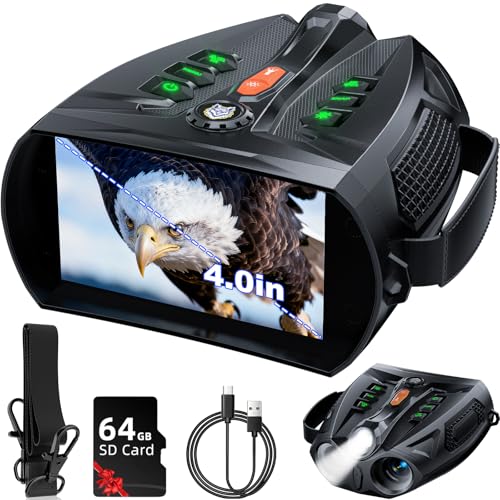
Gipsot 4.0" Night Vision Goggles, 4K Night Vision Binoculars for Adults | 5000mAh Rechargeable Battery, 64GB TF Card for Photo & Video, Camping, Wildlife, Perfect Hunting Gear Gifts for Men
As an Amazon Associate we earn from qualifying purchases. Product prices and availability are accurate as of the date/time indicated.
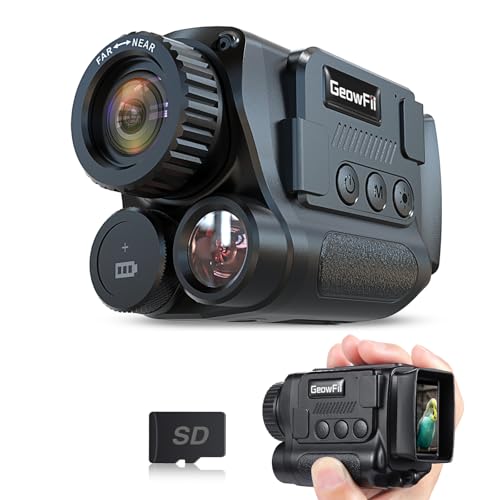
GeowFiiTech Night Vision Monocular, 4K Infrared Digital Night Vision Goggle | 850nm IR, 40M Photo & 4K Video, 984FT Range, 8X Zoom, Rechargeable, SD Card Included for Hunting Camping Adventure
As an Amazon Associate we earn from qualifying purchases. Product prices and availability are accurate as of the date/time indicated.
Prices shown are approximate and for reference only. Prices change often, so please check the current price on Amazon before you buy.
Best Inexpensive Night Vision Monocular in 2026: Detailed Reviews
1. Nightfox Swift 2 Pro — Best Overall Inexpensive Night Vision Monocular
The Nightfox Swift 2 Pro is a digital monocular with 3x magnification, an 850nm IR illuminator, and a viewing distance of up to 200 metres. At $130 to $160, it is the cheapest way to get a usable night vision monocular that actually works in the dark. The 850nm illuminator is brighter than a 940nm illuminator, so you see farther, but it has a faint red glow that an animal may notice. For most beginners, that trade is worth it. A dimmer 940nm illuminator is stealthier, but it shows less, and on a cheap monocular, less is a real problem.
The Swift 2 Pro is light, it runs on rechargeable batteries, and it records photos and video to a card. That last point matters more than it sounds. A beginner who can record what they saw can check it later in daylight, learn what a deer looks like through night vision, and avoid mistaking a fence post for an animal. Use it on a tripod if you want a steady view, and keep a spare battery in a pocket. Digital night vision eats batteries faster than a daytime binocular, and a dead monocular in the field is just a tube.
2. Bushnell Equinox X650 — Best Inexpensive Night Vision Monocular With 6x Magnification
The Bushnell Equinox X650 is a digital monocular with 6x magnification, a built-in 850nm IR illuminator, and a viewing distance of up to 200 metres. At $220 to $270, it costs more than the Nightfox, but it gives you twice the magnification, and a larger, more comfortable view. That matters if you are watching a field, not a garden. A 3x view is wide and easy to hold steady. A 6x view is narrower, and it shows detail at a distance, but it needs a steadier hand, or a tripod.
The X650 is not thermal, and it should not be confused with a thermal monocular. It is night vision only, which means it needs some light, or its IR illuminator, to work. In complete darkness with IR on, it sees well. In daylight, it should not be used as a daytime optic, because the sensor is made for low light. It is a good choice if you want a Bushnell, a 6x view, and a monocular that is still under $300.
3. Night Owl Optics NOXM50 — Best Inexpensive Night Vision Monocular Under $200
The Night Owl Optics NOXM50 is a digital monocular with 5x magnification, a built-in 850nm IR illuminator, and a viewing distance of up to 180 metres. At $150 to $190, it sits between the Nightfox and the Bushnell, with more magnification than the Nightfox, and a lower price than the X650. The 5x view is a useful middle ground. It is tighter than 3x, so you can pick out an animal at the edge of a field, but it is wider than 6x, so you can still find that animal without sweeping the monocular for a minute.
The NOXM50 is a simple monocular, with a straightforward control layout and a built-in IR that you turn on when you need it. It is a good choice if you want a monocular under $200, with 5x magnification, and you do not want to pay for recording features you will not use. Like the other monoculars here, it is night vision only, not thermal, and it will not see through glass or a wall.
4. CREATIVE XP Elite Night Vision — Best Inexpensive Night Vision Monocular With Recording
The CREATIVE XP Elite is a digital monocular with 3x magnification, an included 850nm IR illuminator, and a viewing distance of up to 150 metres. At $180 to $220, it is not the cheapest 3x monocular here, but it is the most recording-friendly. It takes photos and video, and it is made to be used with a tripod or a mount, so you can set it up, leave it running, and review the footage later.
The shorter viewing distance is the trade. At up to 150 metres, it sees less far than the X650 or the Nightfox, but for a garden, a campsite, or a short trail, 150 metres is enough. It is a good choice if you want to record, and you do not need the longest range. It is not a good choice if you need to watch a large open field at the far end.
5. Bushnell Equinox Z2 4.5×40 — Best Inexpensive Night Vision Monocular With a Balanced View
The Bushnell Equinox Z2 4.5×40 is a digital monocular with 4.5x magnification, a 40mm objective, a built-in 850nm IR illuminator, and a viewing distance of up to 200 metres. At $200 to $250, it is the balanced Bushnell in this list. The 4.5x view is wider than 6x, and tighter than 3x, so it is easy to find a target, and it still shows detail. The 40mm objective gathers more light than a smaller lens, which helps at dawn and dusk, when there is some light but not much.
This is the monocular to buy if you like the Equinox line, but you want a wider field than the X650. It is still under $300, it is still digital night vision only, and it still needs its IR in complete darkness. It is a good choice for a beginner who wants a Bushnell, and a view that is not too narrow.
6. Bushnell Equinox Z2 6×50 — Best Inexpensive Night Vision Monocular With the Longest Range
The Bushnell Equinox Z2 6×50 is a digital monocular with 6x magnification, a 50mm objective, a built-in 850nm IR illuminator, and a viewing distance of up to 250 metres. At $250 to $300, it is at the top of the inexpensive gate, and it is the longest ranging monocular here. The 50mm objective gathers the most light in this list, and the 6x magnification shows the most detail at a distance.
The trade is size and steadiness. A 6×50 monocular is heavier than a 3x monocular, and a 6x view shakes more in the hand. Use it on a tripod for a long watch, or brace your elbows on a fence or a table. It is a good choice if you want the longest range under $300, and you are willing to carry a larger monocular to get it.
Best Inexpensive Night Vision Monocular Buying Guide
Choosing an inexpensive night vision monocular is about digital versus thermal, IR wavelength, magnification, and battery. A digital monocular that has no IR will not work in complete darkness. A thermal monocular that costs under $100 does not exist, and a monocular that claims to be thermal at that price is night vision, or a toy. A 940nm IR is stealthier, but dimmer. An 850nm IR is brighter, but it has a red glow. A 3x view is wide and steady. A 6x view is narrow and detailed, but it shakes.
Digital Night Vision Only, No Thermal, NV Needs IR, 850nm Brighter With Red Glow vs 940nm Stealth Dimmer, Sensor 640 Greater Than 384 Greater Than 256 Greater Than 160, Refresh 50Hz
All six monoculars here are digital night vision only, not thermal. That matters, because thermal and night vision do different things. Thermal sees heat, and it can detect a warm animal in complete darkness, without any light, at a distance, but it cannot identify that animal as a specific species without a closer look. Night vision amplifies light, and it needs light, or IR, to work. It cannot see through glass, walls, or water, and it cannot see heat through a window.
NV needs IR in complete darkness. Without IR, a digital monocular will show almost nothing on a moonless night in a forest. With IR on, it will show a path, a fence, and an animal, out to the distance in the table. An 850nm IR is brighter, with a red glow that an animal may notice. A 940nm IR is stealthier, with a dimmer view. Most inexpensive monoculars use 850nm, because it is brighter, and brightness matters more than stealth when you are starting out.
Thermal sensor numbers do not apply to digital night vision, but they are useful for context. A thermal sensor of 640 is better than 384, which is better than 256, which is better than 160, and a refresh rate of 50Hz is the standard for a moving target. A digital night vision monocular does not have a thermal sensor, so do not compare a 256 thermal sensor to a digital monocular. Compare digital monoculars by magnification, IR, viewing distance, and battery, not by thermal sensor size.
Exit Pupil, Eye Relief, and a Steady View: How to Hold a Monocular at Night
Exit pupil equals objective divided by magnification. For a daytime binocular, an exit pupil of at least 5mm is the gate for night and astronomy, and at least 4mm is the gate for marine use. A 8×42 binocular has an exit pupil of 5.25mm, and a 10×42 has an exit pupil of 4.2mm. That is why 8×42 is brighter at dawn and dusk than 10×42, even though 10×42 shows more detail.
A night vision monocular is different, because it shows a digital screen, not a direct optical view. Eye relief is still important, and a monocular that is hard to hold steady will show a shaky image, no matter how good its sensor is. Brace your elbows, use a tripod, or rest the monocular on a fence. A 3x monocular is easier to hold steady than a 6x monocular, which is why the Nightfox Swift 2 Pro is a good first monocular, even though the Bushnell Equinox Z2 6×50 sees farther.
Battery, Recording, and a Tripod: What to Pack With a Night Vision Monocular
Digital night vision eats batteries. A monocular that runs for a few hours on a charge will not last a whole night, so pack a spare battery, or a power bank. A power bank of 10,000mAh is about 37Wh, 20,000mAh is about 74Wh, and 26,800mAh is about 99Wh. Carry-on only is less than 100Wh with no approval, 100 to 160Wh needs approval, and more than 160Wh cannot fly. A 10,000mAh power bank, such as an Anker PowerCore 10000 Redux, is enough to charge a monocular in the field, and it is light enough to carry in a pocket.
Recording is useful, but it is not essential. A monocular that records photos and video lets you review what you saw, and learn from it. A monocular that does not record is simpler, and it uses less battery. A tripod is useful for a long watch, especially with a 6x monocular. A tripod adapter, a hard case, and a neck strap are the accessories that matter most for a night vision monocular, not a fancy lens filter.
Best Inexpensive Night Vision Monocular FAQ
What is the best inexpensive night vision monocular?
The best inexpensive night vision monocular is the Nightfox Swift 2 Pro, at $130 to $160, because it is digital, it has an 850nm IR illuminator, it sees up to 200 metres, and it is under $200, with a clear view and a simple design that a beginner can use. The Bushnell Equinox X650, at $220 to $270, is the best alternative with 6x magnification. The Night Owl Optics NOXM50, at $150 to $190, is the best alternative under $200 with 5x magnification.
Can I buy a thermal monocular for under $100?
No, there is no true thermal monocular under $100. The cheapest real thermal monocular is the AGM Taipan TM10-256, at $400 to $500, with a sensor of 256 and a refresh rate of 50Hz. A monocular under $100 that claims to be thermal, such as a Bushnell Equinox X650 or a Night Owl NOXM50, is not thermal. It is night vision only, which means it needs light or IR to work, and it cannot see heat through glass, walls, or water.
Should I choose 850nm or 940nm IR for night vision?
Choose 850nm IR if you want a brighter view and a longer viewing distance, because 850nm is brighter than 940nm, but it has a faint red glow that an animal may notice. Choose 940nm IR if you want a stealthier view, with no visible glow, but a dimmer image and a shorter viewing distance. Most inexpensive monoculars use 850nm, because brightness matters more than stealth when you are starting out, and a dimmer view is a real problem on a cheap monocular.
Can I use a night vision monocular in daylight?
No, you should not use a night vision monocular in daylight as a daytime optic. A digital night vision monocular is made for low light, and it uses a sensor that is sensitive to light. In daylight, it will be washed out, and it will not show a clear image. Use a daytime binocular, such as a Vortex Diamondback HD 10×42, with 8×42 or 10×42, eye relief of at least 14mm, and waterproof fogproof optics, for daylight, and use a night vision monocular only at night, at dawn, or at dusk.
FAQ
What is the best inexpensive night vision monocular?
Can I buy a thermal monocular for under $100?
Should I choose 850nm or 940nm IR for night vision?
Can I use a night vision monocular in daylight?
Related guides
- Best Binoculars for Marine Boating Use in 2026: Steiner, Fujinon, Bushnell, and Nikon Compared for a 7×50 Parish Chosen for a Moving Deck, Sealing Proven in the Maker’s Text, and a Compass That Aids and Never Replaces the Boat’s Own
- Best Telescopes for Spring Galaxy Viewing in 2026: Apertura, Sky-Watcher, and Celestron Compared for Aperture Sentenced Against Your Sky’s Own Darkness, Dark Adaptation Kept Like a Citizen, and Galaxies Read by Their Surface Brightness
- How to Service Binoculars Professional Repair in 2026: When to Clean, When to Send for Repair, and How to Protect Your Optics
- Dielectric Coated Prism Pros and Cons in 2026: What a Dielectric Coated Prism Does, Why It Helps Binoculars, and When It Is Worth the Price
More from Amazon
Programs that pair well with the guide above. Offers and eligibility are set by Amazon and may change.
Free shipping on eligible items, Prime Video and more. Eligible new members can start with a free trial.
Start a Prime free trialAudiobooks and podcasts to listen to on the go. Eligible new members can start with a free trial.
Try Audible freeAd-free music streaming. Eligible new subscribers can start with a free trial.
Try Music Unlimited freeA free business account with business pricing and bulk-buying tools for work, shop or home office.
Create a business accountAs an Amazon Associate we earn from qualifying purchases.

Write Your Review
No reviews yet. Be the first to share your experience!