
What's inside
- Best Travel Setup for Mountain Holidays: The Mountain Specification
- Best Travel Setup for Mountain Holidays: Binoculars Compared
- The Six Travel Binoculars Reviewed
- Buying Guide: How to Assemble the Best Travel Setup for Mountain Holidays
- Frequently Asked Questions About Travel Optics for Mountain Holidays
As an Amazon Associate I earn from qualifying purchases. This post may contain affiliate links at no extra cost to you.
The best travel setup for mountain holidays is built on a truth every mountain traveler learns, usually at 2,000 meters with a heavy pack: the optic you carry is the optic you use, and the finest full-size binocular in the world contributes nothing from the hotel room where its weight convinced you to leave it. A mountain holiday asks an unusual combination of its glass: light enough for a day pack’s fourth hour, tough enough for weather that changes by the valley, wide enough in view for landscapes and birds in flight, and bright enough for the dawn and dusk hours when the mountains do their best work and the wildlife does its. This guide builds the complete setup around that brief: six real, currently sold compact and mid-size binoculars compared honestly, the harness and case that decide whether the glass is at your eyes or in your bag when the eagle crosses the ridge, and the small discipline of packing, carrying, and caring for optics at altitude. One binocular, chosen for your holiday and carried properly, is the setup. Everything else in this article exists to make that sentence true for you.
Decide first what your mountain holiday actually is, because the Alps by cable car and the Himalaya by footpath are both mountain holidays and they tax an optic differently. The lift-served traveler can carry a mid-size 8×32 and enjoy its brighter, wider view at every viewpoint. The trekker counting grams for a week above the tree line belongs in the pocket class, the double-hinged 8x25s that fold into a jacket. The wildlife traveler, the one whose holiday is ibex, chamois, lammergeier, and marmot, should read the table’s field of view and low-light notes with a specialist’s eye and consider the guide’s closing word on a travel scope. All three are served below, because the setup is a system sized to a trip, and a system, unlike a product, begins with the truth about its user.
Our Top Picks
 EXY 4 Pcs Mountain Table Decor Travel Rustic5.8" x 1.6" x 6.2"5.8 x 1.57 x 6.2 inchesCheck on Amazon
 Janinka 20 Pack Camping Enamel Pins Set3 x 5 x 1 inches5.71 x 4.72 x 0.63 inches0.3 poundsCheck on Amazon
 oyanx1 Green Forest Mouse Pad Mountain Tree Desk9.4L x 7.8W inches9.5 x 7.9 x 0.12 inches0.2 poundsCheck on Amazon
Best Travel Setup for Mountain Holidays: The Mountain Specification
8x Is the Mountain Magnification, and 25 to 32 Is the Mountain Objective
Mountain viewing is long-distance viewing in moving air, from a body that has climbed to where the view is, often breathing hard, always on ground that moves underfoot more than a hide’s floor does. At 10x, that combination shakes the image past pleasure for most travelers, and the narrower field loses the bird against the cliff it crossed. Eight power is the mountain standard because it holds steady in tired hands, keeps a field wide enough to find a soaring raptor and keep it, and pairs with the objective sizes travel allows. Between 25 and 32 millimeters of objective, the trade is written in grams and in dusk: a 25 gathers less light and folds smaller, a 32 shows you the chamois in the shadowed gully ten minutes longer each evening and rides in a harness rather than a pocket. Neither is wrong. The trekker takes the 25, the viewpoint traveler takes the 32, and the traveler who cannot decide should weigh their day pack’s other contents with a kitchen scale, because the mountain will weigh the binocular for them, daily, at altitude, in the currency of breath.
Weatherproofing, Fogproofing, and the Altitude Problem
Mountain weather is not a risk to optics; it is a schedule. Rain arrives sideways, summits sit inside cloud, and a warm hut’s door opens onto a freezing ridge, which is the exact recipe for internal fogging in any binocular that is merely splash-resistant. For this holiday, waterproof and nitrogen or argon fogproof construction is not a premium feature but the entry ticket, and every model in this table holds it. The subtler altitude disciplines belong to the user: let the binocular acclimatize in its case when moving between temperatures, keep it inside your jacket’s warmth on the coldest ridges rather than swinging in the wind at your chest, and dry it in open air at the hut before it goes into a sealed bag with the day’s damp. Glass cared for this way crosses a hundred mountain days without a mark. Glass sealed wet into a pack crosses one holiday and comes home with a garden on its internal lenses, which no warranty on earth covers, because it is not a defect. It is a diary.
The Harness Is Half the Setup
A binocular in a day pack is a binocular retired, because the eagle does not wait for zips. The mountain setup therefore carries its glass on a harness, a chest system that holds the binocular close, protected, and instantly raisable, distributing its weight across the shoulders the pack already uses and keeping it from swinging, bouncing, and striking rock on scrambles. Modern chest packs add a weatherproof enclosure, a small home for a lens cloth, a phone, and the permit, and they have become the standard carry for mountain and wildlife travelers for the simple reason that they convert carrying from a burden into a reflex. Budget the harness with the binocular, as one purchase, and judge any binocular in this table as you will actually meet it on the mountain: in its harness, under your jacket’s edge in rain, at your eyes in two seconds. That is the product. The box it ships in is packaging.
Best Travel Setup for Mountain Holidays: Binoculars Compared
| Binocular Model | Key Specs | Best For | Typical Price Range | Rating |
|---|---|---|---|---|
| Swarovski CL Pocket 8×25 | 8×25, double hinge folding, waterproof and fogproof, premium ED-class optics in this line class, about 345 g class | Best pocket binocular overall | $850 – $950 | 4.8 / 5 |
| Zeiss Terra ED Pocket 8×25 | 8×25, double hinge folding, waterproof and fogproof, ED glass, about 310 g class | Best value premium pocket glass | $350 – $450 | 4.6 / 5 |
| Leica Trinovid 8×20 BCA | 8×20, ultra-compact, waterproof in this line class, premium build, very small folded size | Best ultra-compact for minimalists | $550 – $650 | 4.5 / 5 |
| Vortex Diamondback HD 8×32 | 8×32, waterproof and fogproof, HD optical system in this line class, wide field, strong warranty | Best mid-size value for viewpoints | $190 – $240 | 4.5 / 5 |
| Nikon Prostaff P3 8×30 | 8×30, waterproof and fogproof, lightweight polymer body in this line class, wide field in this class | Best budget mid-size travel glass | $130 – $170 | 4.2 / 5 |
| Maven C.2 7×28 | 7×28, compact, ED glass in this line class, waterproof and fogproof, very steady low power | Best steady view for trekkers | $200 – $250 | 4.4 / 5 |
EXY 4 Pcs Mountain Table Decor Travel Rustic Wooden Tiered Tray Decor | Stacked Decor Go Explore Memories Await Saying, Desk Shelf Centerpiece Accent for Cabin Home Office Desk Traveler Gift


As an Amazon Associate we earn from qualifying purchases. Product prices and availability are accurate as of the date/time indicated.
Janinka 20 Pack Camping Enamel Pins Set - Outdoor Nature Lapel Pin Bulk | Adventure Hiking Mountain Brooch Pins for Backpack Jackets Hats Bags, Fun Travel Gift for Women Men Campers Christmas Holiday


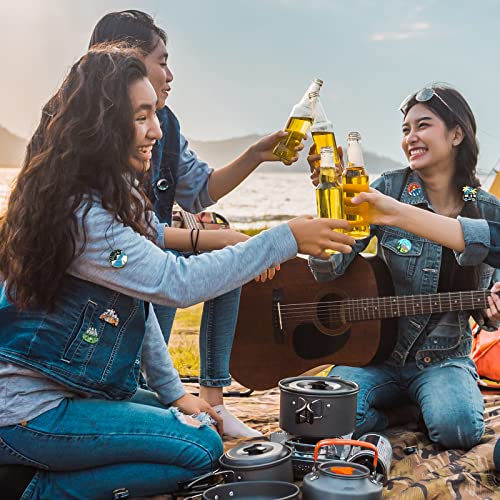


As an Amazon Associate we earn from qualifying purchases. Product prices and availability are accurate as of the date/time indicated.
oyanx1 Green Forest Mouse Pad Mountain Tree Desk Mousepad Computer Gaming Office Small Cute Aesthetic Vintage Christmas Large Wireless Mat Desktop Laptop Travel Square Medium Accessories Supplies


As an Amazon Associate we earn from qualifying purchases. Product prices and availability are accurate as of the date/time indicated.
Prices shown are approximate and for reference only. Prices change often, so please check the current price on Amazon before you buy.
Weights and specifications summarize manufacturers’ published figures for current versions and are given as classes where versions vary. Ratings are editorial, weighing optical quality, weight, weatherproofing, carry, warranty, and value for mountain travel.
The Six Travel Binoculars Reviewed
1. Swarovski CL Pocket 8×25: Best Pocket Binocular Overall
The CL Pocket is the binocular that ended the argument that pocket glass is compromised glass: an image of genuine premium character, bright, sharp to the edges, with a focusing and build quality that feel machined rather than molded, in a double-hinged body that folds into a coat pocket and disappears until the moment it is the only thing that matters. Its price is the table’s highest and its defense is a decade: this is a buy-once optic whose warranty and service stand behind a lifetime of holidays. For the trekker who will carry one fine thing, this is the fine thing, and its rating assumes its buyer has already accepted that its cost is the cost of the category’s summit.
2. Zeiss Terra ED Pocket 8×25: Best Value in Premium Pocket Glass
The Terra ED Pocket delivers the largest share of the Swarovski’s experience, a bright, clean, genuinely enjoyable 8×25 image in a folding, weatherproof body, at less than half its price, which makes it the value summit of the pocket class and this guide’s default recommendation for the serious mountain traveler. Its ergonomics and finish are a step below the summit’s, felt in the hand rather than seen in the image, and many travelers will never miss them. If the CL Pocket is the binocular you buy for life, the Terra is the one you buy for the next ten years of holidays without a single evening’s regret, and the difference funds the harness, the boots, or the extra night in the hut.
3. Leica Trinovid 8×20 BCA: Best for the True Minimalist
The little Trinovid is the connoisseur’s pocket piece: smaller than everything in this table, beautifully made, with an image that belies its 20-millimeter objectives in daylight and a pedigree that makes it as much an heirloom as an instrument. Its compromises are its size’s own, a dimmer view at dusk than the 25s and handling that small hands love and large, gloved hands must learn. For the traveler whose mountain holiday is a journey first and a viewing expedition second, the fastpacker, the hut-to-hut walker, the one-bag traveler, it is the optic that is always, actually, there, and being there is the first optical specification of all.
4. Vortex Diamondback HD 8×32: Best Mid-Size Value
Step up to 32 millimeters and the view changes its character, wider, brighter, easier on the eyes across a long evening at a viewpoint, and the Diamondback HD delivers that step at a price that startles, backed by Vortex’s famous unconditional warranty, which for a travel optic that will be rained on, dropped, and lent is a functional specification. It is a harness binocular, not a pocket one, and its owner must want the view enough to carry it properly. For the lift-served holiday, the road trip of passes and overlooks, and the wildlife traveler on a budget, it is the most capability per dollar in this article, and it is not close.
5. Maven C.2 7×28: Best Steady View for Trekkers
Maven’s little 7×28 makes a case the specification sheet undersells: at seven power, the image is steadier in tired, altitude-breathing hands than any 8x, the field is generous, the depth of focus forgiving, and the whole instrument is compact and tough at a direct-sold price. For the trekker whose viewing is landscape, weather, route, and the wildlife that presents itself, rather than the distant speck that must be identified, that steadiness is worth more than a power of magnification. It is the thinking walker’s binocular, and its presence here is a reminder that the best travel setup is tuned to a stride, not to a chart.
6. Nikon Prostaff P3 8×30: Best Budget Mid-Size
The Prostaff P3 puts a waterproof, fogproof, wide-viewing 8×30 into the budget traveler’s harness at a price that survives being a first binocular, with an image that will show a beginner everything the mountain offers in daylight and an honest dimming at dusk that teaches what the premium money buys. Its build is polymer and proud of it, light rather than luxurious. For the family equipping two or three travelers, the school trip, the first mountain holiday that may become a life’s habit, it is the correct purchase, and its rating is for that job, which it does without a single apology that matters at a viewpoint at noon.
Buying Guide: How to Assemble the Best Travel Setup for Mountain Holidays
Step One: Match the Class to the Holiday You Booked
Write the trip’s truth in one line: the days’ lengths, the altitude, who carries what, and how the viewing ranks among the walking, the food, and the rest. Then choose the class before the model: pocket 8×25 for the trekker and the one-bag traveler, mid-size 8×32 for the viewpoint and wildlife traveler whose carry is a harness and a day pack, ultra-compact for the minimalist whose first law is weight. Price the whole setup as you choose, binocular, chest harness or pack, a proper case for the suitcase leg of the journey, a lens pen and cloth, and the small insurance of a spare strap, because an optic’s travel system fails at its accessories more often than at its lenses. The model decision, made inside the right class and the whole budget, is the easy part, and this table has already graded it for you.
Step Two: Pack and Carry Optics Like the Fragile Instruments They Are
In transit, the binocular travels in your hand luggage, in its case, cushioned among clothing, never in a checked bag whose journey includes drops no specification survives and temperatures no fogproofing enjoys, and never loose in a pack’s lid among the hardware. On the mountain, it lives in the harness, tethered where the harness allows, with its objective covers managed by the discipline of the moment, on in weather and on scrambles, off when the viewing is continuous. At the hut, it dries in the open air of the room before any sealed storage, and it sleeps away from the stove’s heat and the window’s frost alike. These habits cost nothing, weigh nothing, and are the entire difference between a travel optic that ages like the Leica in this table, gracefully, over decades, and one that returns from its third holiday with a rattle and a fog it earned in a single wet evening sealed in plastic.
Step Three: Consider the Second Instrument, and Usually Decline It
Every mountain traveler is tempted by a second optic, the travel spotting scope for the ibex on the far ridge, the monocular for the summit day, the bigger binocular for the hotel terrace. This guide’s counsel, from the arithmetic of carried weight, is to decline almost always, and to spend the money and the grams on the one binocular’s quality and carry instead. The exceptions name themselves honestly: the dedicated wildlife holiday, where a compact travel scope on a light tripod is the trip’s purpose and the pack is built around it, and the two-traveler holiday, where one carries the 8×32 and the other the pocket glass, and the setup, between them, covers every hour of the day. For the rest, the perfect mountain setup is a discipline as much as a purchase, one fine binocular, carried at the chest, dry, instantly ready, from the first cable car to the last descent, and the views it will bring you are the argument no specification can make.
Frequently Asked Questions About Travel Optics for Mountain Holidays
What size binocular is best for mountain travel?
An 8×25 for the traveler who carries everything on their back for days, an 8×32 for the traveler whose base is a hotel, a car, or a lift, and an 8×20 only for the committed minimalist, is the short answer this guide’s table is built on. The reasoning is the mountain’s own: eight power holds steady in tired hands and keeps the field wide enough for birds against cliffs, while the objective decision is a trade between the 25’s pocketable weight and the 32’s brightness and ease in the long dawns and dusks when mountain wildlife is active. Travelers who split the difference with the less common sizes, the 7×28 and 8×30 in this table, often land closest to their personal truth. What no mountain traveler should carry is a full-size 42-millimeter binocular up a week’s trek for the sake of its twilight figure, because the best travel setup is the one still on your chest on day five, and weight, at altitude, always collects its debt.
Can I take binoculars in hand luggage on a flight?
Yes, and you should: binoculars are permitted in cabin baggage on commercial flights as a general rule, and the cabin is where a precision optic belongs, protected from the drops, pressure, and temperature swings of the hold, and from the simpler risk of a checked bag’s delayed arrival at a holiday measured in days. Pack the binocular in its case, cushioned, where you can reach it, because a long flight over mountains, coast, or migration country is itself a viewing opportunity travelers forget they have paid for. Check your airline’s current cabin rules for any specifics, keep the optic’s value in mind for your travel insurance as you would a camera’s, and if the holiday includes a scope and tripod, the tripod commonly travels in checked baggage while the scope itself, the valuable and fragile part, stays with you. Arrive with your glass in your hands and the holiday starts at the first viewpoint. Arrive waiting for a bag and it starts a day late.
How do I stop my binoculars fogging up in the mountains?
Distinguish the two fogs, because they have different cures. External fog, condensation on the outer lenses when warm, moist air meets cold glass, as you step from a hut into a dawn ridge, is physics and patience: keep the binocular at ambient temperature in its harness rather than warm against your body under layers, let it acclimatize before you need it, and clear what forms with a clean microfiber cloth, never a glove or a sleeve’s grit. Internal fog, moisture visible inside the lenses, is a failure of seals in a binocular that should be waterproof and fogproof, and it is a warranty matter, not a technique matter, which is why this guide insists on genuinely fogproof construction for mountain use. Prevention covers the rest: never seal a wet binocular into an airtight bag or case, dry it in open air at each day’s end, and store it dry. A mountain holiday’s moisture is entirely survivable by a good optic handled with those three habits, and fatal, over time, without them.
Is a premium pocket binocular worth it over a budget mid-size?
For the trekker, yes, and the comparison is not really between the two products but between the two holidays they create. The premium 8×25 in this table rides in a pocket or a light harness for a week’s trek and is present at every viewpoint, every bird, every weather window, while delivering an image its owner enjoys without qualification for a decade of such trips. The budget 8×32 shows a brighter, wider image wherever it is carried, and on a trek it is carried, by the third day, in the pack, which is to say nowhere. Buy the optic your holiday will actually carry: the pocket premium for the walker, the mid-size for the traveler whose transport does the carrying, and do not let a twilight specification talk a trekker into a kilogram of good intentions. Worth, in travel optics, is measured at the moment of the eagle, and the eagle grades only what is at your eyes.
Related guides
- Best Telescopes for Winter Night Skies in 2026: Orion, Sky-Watcher, Apertura, and Celestron Compared for a Mirror Cooled to the Night’s Own Temperature, a Session Sentenced by Its Warmest Layer, and Batteries That Pay Winter’s Tax
- Best Digital Monocular: 6 Best Digital Monocular Picks in 2026
- Best Rangefinder for Mountain Hunting Elevation in 2026: 6 Angle-Compensating Rangefinders for Steep, High-Country Shots
- Best Monocular for Safari in 2026: How to Pick a Monocular for Safari That Gives Sharp Views, Is Easy to Carry, and Works for Wildlife Watching
More from Amazon
Programs that pair well with the guide above. Offers and eligibility are set by Amazon and may change.
Free shipping on eligible items, Prime Video and more. Eligible new members can start with a free trial.
Start a Prime free trialAudiobooks and podcasts to listen to on the go. Eligible new members can start with a free trial.
Try Audible freeAd-free music streaming. Eligible new subscribers can start with a free trial.
Try Music Unlimited freeA free business account with business pricing and bulk-buying tools for work, shop or home office.
Create a business accountAs an Amazon Associate we earn from qualifying purchases.

Write Your Review
No reviews yet. Be the first to share your experience!