
What's inside
- What Makes the Best Binocular Harness for Family Birding Trips Different
- Quick Comparison: Best Binocular Harness for Family Birding Trips Models
- Detailed Reviews: Best Binocular Harness for Family Birding Trips Picks
- Buying Guide: Choosing the Best Binocular Harness for Family Birding Trips
- Frequently Asked Questions About Best Binocular Harness for Family Birding Trips
As an Amazon Associate I earn from qualifying purchases. This post may contain affiliate links at no extra cost to you.
The best binocular harness for family birding trips solves a problem that only reveals itself about ninety minutes into the walk: a binocular on a neck strap is a pendulum with a grudge. It swings into the wearer’s stomach at every step, bounces on the run to a viewpoint, twists its strap into a cable by lunchtime, and transfers its whole weight to two square inches of neck, which by the second hour has opinions. A harness — straps across the shoulders and back that carry the binocular on the chest, in the better designs inside a protective pouch — ends all of that. The weight spreads across the shoulders, the binocular sits still against the chest until the moment it is wanted, it comes up to the eyes in one motion, and it goes back just as fast, which on a family trip, where the bird allows the group about eight seconds, is the difference between a shared sighting and a story about one. This guide compares real, currently sold harnesses and chest packs from Vortex, Marsupial Gear, Rick Young Outdoors, Badlands, and Alaska Guide Creations, and it grades them as family equipment, which is a sterner test than it sounds.
Family grading means four things that solo reviews underweight. First, adjustability across bodies: the same harness may carry a parent on the morning walk and a tall teenager after lunch, and its straps must size down honestly toward a child’s frame or the guide will say which models simply do not, because a harness that cannot fit the family’s smallest birder is a harness that family member watches everyone else use. Second, sharing speed: a family binocular changes hands constantly, and a harness whose binocular detaches in seconds — or whose wearer can simply hand over the whole rig — beats a theoretically superior pouch that takes a minute of buckles to escape. Third, protection with access: a chest pouch keeps a shared, expensive binocular safe from the knocks, rain, and dropped-lunch incidents of family life, and its lid must open quietly and one-handed, because a loud, fiddly pouch costs birds. Fourth, the rest of the family’s cargo: a phone for the birding app and the photographs, a notebook, a snack that is not in the same compartment as the optics cloth, and a layer system underneath that changes across the day. Buy for those four and the harness becomes the trip’s quiet infrastructure. Buy for a solo specification sheet and the family will route around it by the second outing.
Our Top Picks
What Makes the Best Binocular Harness for Family Birding Trips Different
Strap Harness vs Chest Pack: The Family’s First Decision
The category divides into two schools, and a family’s habits choose between them more honestly than any feature list. The strap harness — Rick Young Outdoors’ ultralight shock-cord system is its purest form, and Vortex’s GlassPak-adjacent strap designs and the classic elastic shoulder harnesses are its relatives — suspends the binocular openly on the chest on elasticated straps. Its virtues are weight, or rather the absence of it, instant access with nothing to open, a binocular that can be passed to another person in two seconds by lifting the whole harness off, and a price and pack size that make buying one per family member a realistic plan. Its costs are exposure: the binocular rides in the weather and against every gate, branch, and ice-cream of the day, and the straps, however clever, put a light binocular’s bounce management ahead of a heavy one’s support. The chest pack — Marsupial Gear, Badlands, and Alaska Guide Creations are its engineers — encloses the binocular in a padded, commonly forward-opening pouch on a structured harness. Its virtues are protection, organisation, and support for larger, heavier glass across a whole day, with pockets for the phone, the notebook, and the trip’s small bureaucracy. Its costs are heat on a summer chest, a lid between the birder and the bird, a price that usually means one per family rather than one each, and a fitting exercise that matters, because a pack sized wrong rides like luggage. Most serious family setups this guide has seen run both: a pack for the main binocular and its keeper, strap harnesses for the children’s and the spare, which is why the table is organised as a wardrobe rather than a duel.
Fit Across a Family: Sizing, Adjustment, and the Child Question
Read every harness’s sizing with the family’s smallest and largest members in mind, because the makers’ stated size ranges are honest documents that reward reading. Structured chest packs commonly come in sizes matched to the binocular first and the body second — the pouch must fit the glass, in the maker’s stated internal dimensions, with the eyecups down and the strap attached as you actually carry it — and their harnesses adjust across a wide span of adult torsos, with the limits appearing at the extremes: a small adult or older teenager may find the smallest pack still long on the chest, and a tall, broad parent may find the straps at their last inch over a winter coat. Strap harnesses adjust more widely and more simply, and the shock-cord school fits children best of all, because its whole structure is elastic and hardware-light. For a child under roughly ten, this guide’s advice from its lightweight binoculars companion applies with the force of experience: give them their own light binocular on a simple, short strap or a youth-sized harness, adjusted so the glass rests on the chest and cannot swing, rather than a share of an adult pack that fits them like a building. Fit at home, over the clothing layers the season actually uses, with the binocular in and out fifty times, and adjust until the lift to the eyes is a single, unthinking motion for each wearer. A harness is worn closer and longer than any other birding equipment you own. Its fit is not a preliminary to the birding. Over a six-hour day, it is half of it.
Access, Quiet, and the Eight-Second Rule
A family bird gives you about eight seconds. In that window the binocular must leave the chest, reach the eyes of whoever is holding it, find the bird — with the eyes-first technique this site teaches, looking at the bird, then raising the glass into the line of sight — and, half the time, change hands to a child whose turn it is, with the focus roughly right. Every harness feature should be graded against that window. A chest pack’s lid should open forward, away from the body, in one hand, without a rip of hook-and-loop fastening loud enough to startle the bird and the wood — magnetic closures, in the better makers’ current designs, exist precisely for this moment, and the difference between a magnetic lid and a loud one, at eight seconds’ distance from a warbler, is the whole sighting. The binocular should be tethered to the pack or harness in the makers’ systems, so a fumbled handover is a dangle and not a drop, and the tether must be long enough to use and short enough not to garotte the wearer or catch every branch on the trail. Strap harnesses pass the eight-second test by having no lid at all, which is their permanent argument. Whichever school you buy, rehearse the window at home: binocular from rest to eyes, a sighting called, a handover to the next person, glass back to rest, timed by a phone and judged by a child’s honesty. The harness that wins your family’s rehearsal is the harness to take, and a surprising number of expensive pouches lose that rehearsal to a length of shock cord, which is information worth having in the kitchen rather than the forest.
Quick Comparison: Best Binocular Harness for Family Birding Trips Models
| Model | Type, Fit and Key Specs | Best For | Typical Price Range |
|---|---|---|---|
| Vortex GlassPak Pro class | Chest pack system in maker’s line, sizes for common binocular classes in maker’s stated dimensions, harness with accessory attachment points, quiet closure class in maker’s design | Best binocular harness for family birding trips overall | $110 – $150 |
| Marsupial Gear Binocular Pack class | Chest pack, forward-opening magnetic lid in maker’s design, sizes by binocular in maker’s stated range, structured harness, accessory pouches in maker’s system | Best quiet, fast chest pack | $130 – $180 by size and options |
| Rick Young Ultralight class | Shock-cord strap harness in maker’s design, near-universal fit, very light, binocular carried openly, multiple carry positions in maker’s system | Best for children, spares, and sharing | $30 – $50 |
| Badlands Bino XR and Mag class | Chest packs in maker’s line, magnetic closure class in maker’s design, combined binocular and rangefinder or accessory storage in XR design, harness system | Best for a parent carrying for the whole family | $130 – $190 by model |
| Alaska Guide Creations Kodiak Cub class | Compact chest pack in maker’s line, sizes for mid-size binoculars in maker’s stated dimensions, front and side storage, made in the maker’s established patterns | Best compact pack for a smaller adult or teen | $100 – $140 |
| Vortex GlassPak standard class | Simpler chest pack in maker’s line, harness included in class, fits common family binocular sizes in maker’s stated terms | Best value chest pack to start with | $60 – $90 |
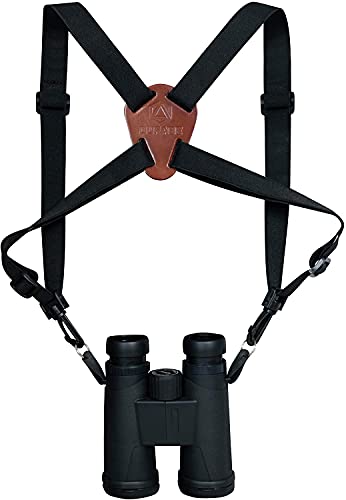
Binocular Harness Strap for Hunting, X-shaped Decompression Binocular Straps for Birding, Binocular Straps Harness, Suitable for Outdoor Camping, Hiking, Outdoor Survival, Search and Rescue Activities


As an Amazon Associate we earn from qualifying purchases. Product prices and availability are accurate as of the date/time indicated.

WGDJEMAX Binocular Harness Strap Compatible with Vortex Binoculars | X-Shape Adjustable Bino Chest Harness for Hunting, Birding, Hiking,Outdoor Activities, Comfortable Decompression Strap System


As an Amazon Associate we earn from qualifying purchases. Product prices and availability are accurate as of the date/time indicated.

Rick Young Outdoors Premium Binocular Harness | Adjustable Chest Strap BLK | Comfortable for All-day Hunting, Birding, & Hiking | Compact Shock Cord Binocular Harness Reduces Strain | Stores Tangle-free
As an Amazon Associate we earn from qualifying purchases. Product prices and availability are accurate as of the date/time indicated.
Pouch internal dimensions, binocular size compatibility, harness size ranges, closure types, and included straps and tethers are each maker’s stated details for the current version; measure your binocular with its strap and eyecups in their carried position against the maker’s stated pouch dimensions before ordering, because a pouch that fits the glass on paper and not in life is the category’s most common return. Ratings are editorial for family birding: access speed and quiet, fit range across family bodies, protection, comfort over a full day, sharing practicality, and value in class.
Detailed Reviews: Best Binocular Harness for Family Birding Trips Picks
1. Vortex GlassPak Pro Class – Best Overall
The GlassPak Pro earns the lead on balance: a protective chest pack sized for the binoculars families actually own, a harness comfortable across a full day and adjustable across a family’s adults, accessory mounting in the maker’s system for the phone pouch and the small extras, and Vortex’s support culture behind a product that will be rained on, dropped, and sat on by the people you love most. Its lid and access are quick enough for the eight-second rule in practised hands. If the family buys one serious pack for the main binocular, this is the default, and its standard sibling below is the same idea at a learner’s price.
2. Marsupial Gear Binocular Pack Class – Best Quiet and Fast
Marsupial’s forward-opening, magnetic-lidded pack is the access specialist: the lid falls away from the body in one motion, silently, the binocular rises out of a structured pouch that holds its shape instead of collapsing around the glass, and the whole system has the finished, sewn-like-it-means-it quality its following describes. Sizing by binocular in the maker’s stated range is precise, so measure with care. For the family’s lead birder, the one whose glass must be up first and whose sightings start the eight seconds, this is the connoisseur’s row, priced like one and used like a tool.
3. Rick Young Ultralight Class – Best for Children, Spares, and Sharing
A harness made of shock cord and ingenuity sounds like a compromise until a family uses one, at which point it becomes the purchase they multiply. It weighs almost nothing, fits almost anyone — children included, where the structured packs cannot follow — carries the binocular still against the chest in the maker’s carry positions, and lifts off over the head in a second for the handover that family birding is made of. The binocular rides unprotected, which is the honest cost, answered by the family’s rule that a cord-harnessed binocular is the tough or the older one. Buy one first, and the family’s second and third will not be far behind.
4. Badlands Bino Class – Best for the Parent Carrying Everything
Badlands builds for the family member whose chest is the expedition’s headquarters: generous packs in the maker’s line, magnetic closures in its current designs, and in the XR pattern a combined layout that carries the binocular and the small second instrument or accessories a parent accumulates — phone, rangefinder on the trips that want one, the notebook, the emergency snack that has ended more expeditions’ mutinies than any bird. It is the biggest wear here and the warmest on a summer day, and for the quartermaster parent it is not bulk. It is the job, worn.
5. Alaska Guide Creations Kodiak Cub Class – Best Compact Pack
The Kodiak Cub takes Alaska Guide Creations’ established chest pack pattern down to the mid-size binoculars most families carry, in a compact pouch that suits a smaller adult or an older teenager better than the full-size packs do — a fit niche the rest of the table largely ignores and real families constantly meet. Storage is sensibly arranged, construction is the maker’s proven standard, and the whole rig disappears on a smaller frame in a way that keeps the binocular carried all day rather than surrendered at lunch. Measure the glass, as always, and this row solves the family’s hardest fitting problem.
6. Vortex GlassPak Standard Class – Best Value Pack
The standard GlassPak is the starter pack in the honourable sense: a protective pouch and a working harness, sized for the common family binocular, at a price that lets a family learn whether the chest pack school suits them before flagship money is committed. Its closure and organisation are simpler than the Pro’s, and its comfort over a day is a step behind, which at its price is the correct set of trades. Many families will run it for years. Some will upgrade the lead birder to the Pro or the Marsupial and hand this down, which in family equipment is not a demotion but a career.
Buying Guide: Choosing the Best Binocular Harness for Family Birding Trips
Build the Family Wardrobe, Not the Single Purchase
Plan the harnesses as a set, in the order families actually acquire them. One protective chest pack for the main binocular and its usual keeper, sized to the glass by measurement, chosen between the Vortex Pro’s balance, the Marsupial’s access, the Badlands’ capacity, and the Alaska Guide compact’s fit by the body that will wear it most. One shock-cord harness per additional birder who carries a binocular of their own — the children’s, the spare’s, the loaner’s — because at its price the Rick Young pattern removes every excuse for a neck strap in the family. And one simple rule that costs nothing: the binocular lives in its harness or its case, never loose in a backpack, a car footwell, or a picnic bag, because family optics die of logistics, not of birds. Size each wearer at home over the season’s layers, set the diopter and the strap for the binocular’s main user, and mark each harness with a name in tape, because at a viewpoint, in a hurry, identical black straps belong to whoever shouts first, and the family’s peace is a specification too.
Rehearse the Sighting, Pack the Pouch, Walk the Day
Run the eight-second rehearsal from this guide’s access section with every wearer, and fix what it exposes before the first real bird grades you: a lid that needs two hands gets its technique practised or its pack exchanged, a tether that tangles gets rerouted, a child’s harness that swings gets shortened until the glass rides still. Pack the pouch or the pockets by a fixed map the whole family learns — optics cloth in its own sealed pocket, phone where the app hand expects it, notebook and pencil together, snacks anywhere but with the cloth — because a family that shares equipment survives on shared maps. On the trail, let the harness do the work it was bought for: binocular carried on the chest from the car park, not produced from a backpack at the first bird; lids and straps managed at every stop the same way; rain answered by the pouch’s protection or a cover, and the glass dried and aired at home, out of the pack, before it is stored. At the season’s end, wash straps as the makers direct, check elastic and cord for the fatigue that a summer writes into them, and replace a tired shock cord for the price of a coffee rather than beside a dropped binocular. Do all of that, and the best binocular harness for family birding trips becomes what the best families barely notice: the reason the binocular is always there, always ready, and always in the right hands inside eight seconds — which is to say, the reason the whole family saw the bird.
Frequently Asked Questions About Best Binocular Harness for Family Birding Trips
What is the best binocular harness for family birding trips?
As a set rather than a single product: a protective chest pack for the main binocular — the Vortex GlassPak Pro for balance, the Marsupial Gear pack for the quietest, fastest access, the Alaska Guide Creations Kodiak Cub for a smaller wearer — and a Rick Young shock-cord harness for each additional carrier, children included, because it fits small bodies, weighs nothing, and hands over in a second. If the family buys one item only, buy the chest pack sized by measurement to your actual binocular, with a quiet, one-handed lid, and rehearse the lift-to-eyes and the handover at home until both are single motions. The best harness is the one still being worn, comfortably, at hour five, with the bird found inside its eight seconds.
Is a chest pack or a strap harness better for birding?
Each wins a different day. A chest pack protects the binocular from weather and knocks, organises the phone, notebook, and cloth, and supports heavy glass across a long day, at the cost of a lid to open, heat on the chest, and a price that usually means one per family. A strap harness, above all the shock-cord pattern, is nearly weightless, instantly accessible with nothing to open, widely adjustable down to a child’s size, and cheap enough to equip everyone, at the cost of leaving the binocular exposed to the day’s weather and accidents. Most families end with both, assigned by role: the pack on the lead birder with the best glass, cords on everyone else. Judge your own days honestly — long, wet, and organised argues pack; short, hot, and democratic argues cord — and let the rehearsal at home confirm it.
Can children wear a binocular harness?
Yes, with the right type, and it transforms their birding. A shock-cord harness like the Rick Young pattern adjusts down to a child’s frame, holds a light binocular still against the chest instead of swinging from a neck strap, and lifts off in a second when the child wants to hand it over or be rid of it. Structured chest packs generally do not size down far enough for younger children, and an adult pack on a small child rides as luggage, not equipment; older teenagers can often wear the compact packs, the Kodiak Cub class being this table’s candidate, fitted carefully over their layers. Pair the child’s harness with a light, child-scaled binocular — the combination this site’s family binocular guide recommends — adjust it short so the glass rests on the chest, and rehearse the handover. A child whose binocular is carried comfortably is a child who has it up, on the bird, in time.
How do I choose the right size chest pack for my binocular?
Measure the binocular as it will actually live in the pack: length with the eyecups in their carried position, width across the folded barrels at their widest, with the strap attached and bundled as you carry it, because straps and rainguards are the silent millimetres that make a paper fit fail. Match those measurements against the maker’s stated internal dimensions for each pack size, choose the size the maker assigns to your binocular class where they publish a fit list, and be honest about the borderline case — a pouch a fraction small strains its closure over the glass on every outing, and a pouch a fraction large lets the binocular travel inside it, so follow the maker’s guidance for your model rather than rounding by optimism. Order where returns are straightforward, fit the real binocular the day the pack arrives, and run the eight-second rehearsal before the return window closes.
Related guides
- Best Optics for Beginners Winter Use in 2026: Fogproof Binoculars Graded on the Cold Transition — Warm Car to Frozen Field Without Losing the View
- Best Cell Phone Monocular in 2026: 7 Best Cell Phone Monoculars With Clear View, Simple Use, and Easy Use for Cell Phone Monocular
- Best Monocular for Glasses Wearers Comfort in 2026: Monocular for Glasses Wearers Comfort, Glasses Wearers Monoculars, and Best Comfortable Monoculars for Glasses Wearers
- Best Binoculars for Camping Trips Viewing in 2026: 7 Binoculars for Camping Trips Viewing That Offer Clear Optics, Easy Carry, and Reliable Performance for Camping
More from Amazon
Programs that pair well with the guide above. Offers and eligibility are set by Amazon and may change.
Free shipping on eligible items, Prime Video and more. Eligible new members can start with a free trial.
Start a Prime free trialAudiobooks and podcasts to listen to on the go. Eligible new members can start with a free trial.
Try Audible freeAd-free music streaming. Eligible new subscribers can start with a free trial.
Try Music Unlimited freeA free business account with business pricing and bulk-buying tools for work, shop or home office.
Create a business accountAs an Amazon Associate we earn from qualifying purchases.

Write Your Review
No reviews yet. Be the first to share your experience!