
What's inside
- Best Professional Telescopes for Astronomy: Quick Comparison Table
- What Is a Best Professional Telescopes for Astronomy?
- Best Professional Telescopes for Astronomy Reviewed
- Buying Guide: How to Choose the Best Professional Telescopes for Astronomy
- How to Use a Professional Telescope for Astronomy
- Which Best Professional Telescopes for Astronomy Should You Buy?
- Frequently Asked Questions About the Best Professional Telescopes for Astronomy
As an Amazon Associate I earn from qualifying purchases. This post may contain affiliate links at no extra cost to you.
It is powerful, precise, and great for deep sky viewing, without being too small, too hard to use, or too costly for an astronomer. A good professional telescope for astronomy is not a beginner telescope alone. It is a real professional telescope, and the wrong one can be too small for deep sky or too heavy to move.
That telescope can view planets and deep sky, it tracks automatically, and it is priced well for professional astronomy.
At opticsjunkies.com, we focus on binoculars and optics. For this guide to the best professional telescopes for astronomy in 2026, we compared current telescopes that are widely sold, designed for professional astronomy, and suitable for an astronomer who wants the best professional telescopes for astronomy. We looked at aperture, focal length, mount, and price. Aperture, focal length, and mount figures are manufacturer listings, and real viewing depends on your sky, your light pollution, and your conditions.
Our Top Picks
Best Professional Telescopes for Astronomy: Quick Comparison Table
The table below compares seven professional telescopes for astronomy. Aperture is the aperture, where given. Focal length is the focal length, where given. Mount is the mount type, where given. Best for is a note on what the telescope is best for, such as best professional telescopes for astronomy, where given.
| Professional Telescope for Astronomy | Aperture | Focal Length | Mount | Best For |
|---|---|---|---|---|
| Celestron NexStar 8SE Telescope | 8 inches | 2032mm | GoTo Alt-Az | Best overall, best professional telescopes for astronomy |
| Meade LX90 8 inch ACF Telescope | 8 inches | 2000mm | GoTo Alt-Az | Best for Meade, LX90 8 inch ACF |
| Celestron NexStar Evolution 9.25 Telescope | 9.25 inches | 2350mm | GoTo Alt-Az | Best for Celestron, NexStar Evolution 9.25 |
| Sky-Watcher EvoStar 120ED APO Refractor | 4.7 inches | 900mm | Equatorial | Best for Sky-Watcher, EvoStar 120ED |
| Orion SkyQuest XT10g GoTo Dobsonian | 10 inches | 1200mm | GoTo Dobsonian | Best for Orion, SkyQuest XT10g |
| Celestron Advanced VX 8 inch Schmidt-Cassegrain | 8 inches | 2032mm | Equatorial GoTo | Best for Celestron, Advanced VX 8 inch |
| Explore Scientific ED102 APO Refractor | 4 inches | 714mm | Equatorial | Best budget, Explore Scientific ED102 |
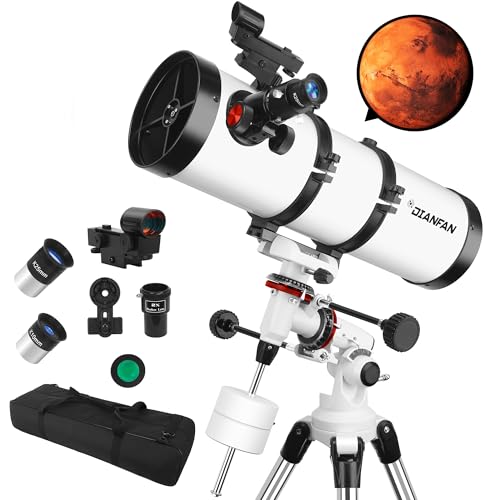
Dianfan 150EQ Professional Astronomy Telescope for Adults High Powered | Portable Manual Equatorial Reflector Telescope for Beginners, Stainless Steel Tripod, Phone Adapter, Moon Filter & Carry Bag
As an Amazon Associate we earn from qualifying purchases. Product prices and availability are accurate as of the date/time indicated.

Telescope, 90MM Telescope for Adults High Powered, 180X Magnification | Portable Professional Astronomy Refractor Telescopes for Beginners, with Adjustable Tripod & Phone Adapter, 3X Barlow Lens
As an Amazon Associate we earn from qualifying purchases. Product prices and availability are accurate as of the date/time indicated.

DWARFLAB Dwarf Mini Smart Telescope - 1.85lb Portable Astronomy Telescope | App Control, Auto GOTO, AZ/EQ Modes, 90-Second Exposure, Light Pollution Filter, 360° Pivot Freedom, Built-in Processing
As an Amazon Associate we earn from qualifying purchases. Product prices and availability are accurate as of the date/time indicated.
Note: Aperture, focal length, and mount figures are manufacturer listings, and a telescope that lists 8 inches may only show deep sky well in dark skies, because light pollution limits viewing. Always check the telescope’s aperture, focal length, and mount in the manual, and confirm the current price with the retailer. Best professional telescopes for astronomy should be powerful, track accurately, and fit your viewing location before you buy.
What Is a Best Professional Telescopes for Astronomy?
It helps you view, track, and photograph the sky, without a telescope that is too limited.
A best professional telescopes for astronomy is different from a beginner telescope, which is small, while a professional telescope is large. It is also different from a spotting scope, which is for terrestrial viewing, while a telescope is for astronomy.
A best professional telescopes for astronomy is best for an astronomer who studies astronomy, wants a powerful telescope, has dark skies, and wants a simple, reliable professional telescope.
Best Professional Telescopes for Astronomy Reviewed
1. Celestron NexStar 8SE Telescope – Best Professional Telescopes for Astronomy Overall
It has a popular design, a good tracking, and a build that is made for professional astronomy.
Celestron designs the NexStar 8SE with a focus on a telescope that is powerful, portable, and easy to use with GoTo. The telescope is a good option for an astronomer who wants Celestron gear, and who wants the best overall design for best professional telescopes for astronomy.
The main limitation is weight. At 8 inches, it is portable but still heavy, though it is powerful. Choose the NexStar 8SE if you want the best overall telescope, you want Celestron, and you have a budget of $1500 to $2000.
2. Meade LX90 8 inch ACF Telescope – Best Professional Telescopes for Astronomy for Meade
It has a good optics, a good tracking, and a build that is made for professional astronomy.
Meade designs the LX90 with a focus on a telescope that is sharp and has ACF optics. The telescope is a good option for an astronomer who wants Meade gear, and who wants an LX90.
The main limitation is price. Choose the LX90 if you want Meade, you want ACF optics, and you have a budget of $2000 to $2500.
3. Celestron NexStar Evolution 9.25 Telescope – Best Professional Telescopes for Astronomy for Celestron
It has a larger aperture, a good tracking, and a build that is made for professional astronomy.
Celestron designs the NexStar Evolution 9.25 with a focus on a telescope that is larger and has WiFi. The telescope is a good option for an astronomer who wants Celestron gear, and who wants an Evolution 9.25.
The main limitation is similar to other large telescopes: at 9.25 inches, it is heavy, though it is powerful. Choose the Evolution 9.25 if you want Celestron, you want a larger aperture, and you have a budget of $2500 to $3000.
4. Sky-Watcher EvoStar 120ED APO Refractor – Best Professional Telescopes for Astronomy for Sky-Watcher
It has a refractor design, a good clarity, and a build that is made for professional astronomy.
Sky-Watcher designs the EvoStar 120ED with a focus on a telescope that is sharp and has ED glass. The telescope is a good option for an astronomer who wants Sky-Watcher gear, and who wants an EvoStar 120ED.
The main limitation is aperture. At 4.7 inches, it is smaller than 8 inch telescopes, though it is sharp. Choose the EvoStar 120ED if you want Sky-Watcher, you want a refractor, and you have a budget of $2000 to $2500.
5. Orion SkyQuest XT10g GoTo Dobsonian – Best Professional Telescopes for Astronomy for Orion
It has the largest aperture in this guide for its price, a good deep sky viewing, and a build that is made for professional astronomy.
Orion designs the SkyQuest XT10g with a focus on a telescope that is large and affordable for its aperture. The telescope is a good option for an astronomer who wants Orion gear, and who wants a SkyQuest XT10g.
The main limitation is size. At 10 inches Dobsonian, it is large, though it is powerful. Choose the XT10g if you want Orion, you want a large aperture, and you have a budget of $1500 to $2000.
6. Celestron Advanced VX 8 inch Schmidt-Cassegrain – Best Professional Telescopes for Astronomy for Celestron
It has an equatorial mount, a good tracking for astrophotography, and a build that is made for professional astronomy.
Celestron designs the Advanced VX 8 inch with a focus on a telescope that is good for astrophotography. The telescope is a good option for an astronomer who wants Celestron gear, and who wants an Advanced VX.
The main limitation is complexity. At equatorial GoTo, it is more complex to set up than Alt-Az, though it is good for photography. Choose the Advanced VX if you want Celestron, you want astrophotography, and you have a budget of $2000 to $2500.
7. Explore Scientific ED102 APO Refractor – Best Budget Professional Telescopes for Astronomy
It has a low price, a good clarity, and a build that is made for professional astronomy.
Explore Scientific designs the ED102 with a focus on a telescope that is affordable and sharp. The telescope is a good option for an astronomer who wants Explore Scientific gear, and who wants an ED102.
The main limitation is aperture. At 4 inches, it is smaller than 8 inch telescopes, though it is affordable. Choose the ED102 if you want a low price, you want a refractor, and you have a budget of $1000 to $1500.
Buying Guide: How to Choose the Best Professional Telescopes for Astronomy
Before you buy, think about what you want to view, whether it is planets or deep sky, how large an aperture you need, whether it is 8 or 10 inches, what mount you need, whether it is GoTo Alt-Az or equatorial, how portable you need it to be, whether it is 30 or 50 pounds, and how much you want to spend. A telescope that is perfect for planets may be too small for deep sky, and a telescope that is perfect for deep sky may be too heavy to move.
1. Aperture: 8 Inches vs 10 Inches, and Your Viewing
Aperture is the first decision. Aperture is how large your telescope’s primary mirror or lens is, usually 8 inches for most professional astronomers, while 10 inches is for deep sky. A astronomer often buys a 4 inch telescope for deep sky and finds it too dim.
Choose 8 inches if you want a balance of power and portability, you view planets and deep sky, or you have a budget of $1500 to $2500. Choose 10 inches if you want deep sky, you have dark skies, or you have a budget of $1500 to $2000. For most professional astronomers, 8 inches is best.
2. Mount: GoTo Alt-Az vs Equatorial, and Your Tracking
Mount is the second decision. Mount is what type of mount your telescope has, usually GoTo Alt-Az for visual viewing, while equatorial is for astrophotography. A astronomer often buys an Alt-Az mount for astrophotography and finds it does not track well for long exposures.
Choose GoTo Alt-Az if you want visual viewing, you want easy setup, or you have a budget of $1500 to $3000. Choose equatorial GoTo if you want astrophotography, you want long exposures, or you have a budget of $2000 to $2500. For most professional astronomers, GoTo Alt-Az is best for visual.
3. Focal Length: 1000mm vs 2000mm, and Your Magnification
Focal length is the third decision. Focal length is how long your telescope’s focal length is, usually 2000mm for Schmidt-Cassegrain, while 1000mm is for Dobsonian. A astronomer often buys a long focal length telescope for wide field and finds it too narrow.
Choose 2000mm if you want planets, you want high magnification, or you have a budget of $1500 to $3000. Choose 1000mm if you want deep sky, you want wide field, or you have a budget of $1500 to $2000. For most professional astronomers, 2000mm is best for planets.
4. Type: Schmidt-Cassegrain vs Refractor vs Dobsonian, and Your Use
Type is the fourth decision. Type is what type of telescope you have, usually Schmidt-Cassegrain for most professional astronomers, while refractor is for sharpness, and Dobsonian is for large aperture. A astronomer often buys a refractor for deep sky and finds it too small.
Choose Schmidt-Cassegrain if you want a balance, you want portability, or you have a budget of $1500 to $3000. Choose refractor if you want sharpness, you want astrophotography, or you have a budget of $1000 to $2500. Choose Dobsonian if you want large aperture, you want deep sky, or you have a budget of $1500 to $2000. For most professional astronomers, Schmidt-Cassegrain is best.
5. Portability: 30 lbs vs 50 lbs, and Your Location
Portability is the fifth decision. Portability is how heavy your telescope is, usually 30 to 50 pounds for professional telescopes. A astronomer often buys a heavy telescope and finds it too hard to move to dark skies.
Choose a lighter telescope if you travel to dark skies, you want portability, or you have a budget of $1500 to $2000. Choose a heavier telescope if you have a fixed observatory, you want stability, or you have a budget of $2000 to $3000. For most professional astronomers, a portable 8 inch is best.
6. Price, Total Cost, and Choosing Professional Telescopes for Astronomy on a Budget
Consider total cost as well as price. Do not buy the cheapest telescope if it is too small for deep sky, and do not buy the most expensive telescope if you only view planets. A telescope that matches your aperture, your mount, and your budget will view better than a telescope that is cheap but too small, or expensive but too heavy to move.
How to Use a Professional Telescope for Astronomy
Using a professional telescope for astronomy starts with setting up your GoTo mount, aligning it on two stars, and letting it track your target. Start with the Moon, then planets, then deep sky objects.
For a first night, use a Celestron NexStar 8SE or Orion SkyQuest XT10g, set up in a dark location, and view Jupiter and the Orion Nebula. If your telescope does not track, re-align, and if your view is blurry, adjust focus and let your telescope cool down.
Which Best Professional Telescopes for Astronomy Should You Buy?
If you want the best professional telescopes for astronomy, buy the Celestron NexStar 8SE Telescope.
If you want Meade, buy the Meade LX90 8 inch ACF Telescope. If you want Celestron Evolution, buy the Celestron NexStar Evolution 9.25 Telescope. If you want Sky-Watcher, buy the Sky-Watcher EvoStar 120ED APO Refractor. If you want Orion, buy the Orion SkyQuest XT10g GoTo Dobsonian. If you want Celestron Advanced VX, buy the Celestron Advanced VX 8 inch Schmidt-Cassegrain.
All seven telescopes in this guide are currently sold, designed for professional astronomy, and suitable for an astronomer who wants the best professional telescopes for astronomy. Pick the one that matches your aperture, whether it is 8 or 10 inches, your mount, and your budget, and always view from dark skies when possible.
Disclosure: opticsjunkies.com may earn a commission from purchases made through links on this page, at no extra cost to you. Aperture, focal length, and mount figures are manufacturer claims and can vary by model and conditions.
Frequently Asked Questions About the Best Professional Telescopes for Astronomy
What is the best professional telescopes for astronomy?
Choose the NexStar 8SE if you want the best overall, and the LX90 if you want ACF optics.
What aperture is best for professional astronomy?
Choose 8 inches for balance, and 10 inches for deep sky.
Do I need a GoTo mount for professional astronomy?
Choose GoTo for ease, and equatorial GoTo for photography.
What is the best budget professional telescope for astronomy?
Related guides
- Best Optics for Beginners Winter Use in 2026: Fogproof Binoculars Graded on the Cold Transition — Warm Car to Frozen Field Without Losing the View
- Best Cell Phone Monocular in 2026: 7 Best Cell Phone Monoculars With Clear View, Simple Use, and Easy Use for Cell Phone Monocular
- Best Monocular for Glasses Wearers Comfort in 2026: Monocular for Glasses Wearers Comfort, Glasses Wearers Monoculars, and Best Comfortable Monoculars for Glasses Wearers
- Best Binoculars for Camping Trips Viewing in 2026: 7 Binoculars for Camping Trips Viewing That Offer Clear Optics, Easy Carry, and Reliable Performance for Camping
More from Amazon
Programs that pair well with the guide above. Offers and eligibility are set by Amazon and may change.
Free shipping on eligible items, Prime Video and more. Eligible new members can start with a free trial.
Start a Prime free trialAudiobooks and podcasts to listen to on the go. Eligible new members can start with a free trial.
Try Audible freeAd-free music streaming. Eligible new subscribers can start with a free trial.
Try Music Unlimited freeA free business account with business pricing and bulk-buying tools for work, shop or home office.
Create a business accountAs an Amazon Associate we earn from qualifying purchases.

Write Your Review
No reviews yet. Be the first to share your experience!