
What's inside
- What Makes the Best Lightweight Binoculars for Family Hiking Trips Different
- Quick Comparison: Best Lightweight Binoculars for Family Hiking Trips Models
- Detailed Reviews: Best Lightweight Binoculars for Family Hiking Trips Picks
- Buying Guide: Choosing the Best Lightweight Binoculars for Family Hiking Trips
- Frequently Asked Questions About Best Lightweight Binoculars for Family Hiking Trips
As an Amazon Associate I earn from qualifying purchases. This post may contain affiliate links at no extra cost to you.
The best lightweight binoculars for family hiking trips are not the lightest binoculars you can buy. They are the lightest binoculars a whole family will actually use: light enough that a child will carry them without negotiating, tough enough to survive being dropped on a trail, swung into a gatepost, and left lens-down in the grit at the bottom of a pack, simple enough that a grandparent, a teenager, and a nine-year-old can each pick them up, find the bird, and hand them on with the focus roughly right, and bright enough that the view rewards the effort — because a family’s first binocular teaches a permanent lesson, either that looking closely at the world is a joy, or that binoculars are a heavy, blurry chore adults pretend to enjoy. In current ranges that shortlist is led by compact and mid-size models from Vortex, Nikon, Celestron, Bushnell, and Athlon, mostly in 8×32 and 8×42 and the smaller 8×25 and 10×25 travel formats, and the differences between them are not really optical. They are differences in weight, in focus wheel size and smoothness for small or gloved hands, in eye relief for the family members who wear glasses, in close focus for the child who will spend more time watching butterflies and beetles than eagles, and in warranty — the quiet specification that decides what a dropped binocular costs you.
This guide compares six real, currently sold models across the family’s real budget range, explains the format decision that matters most — how much weight and size to trade for brightness and ease — and gives a buying guide built around the family’s actual members rather than an idealised user. One piece of advice stands above the table and should be read before any of it: for most families, the winning purchase is not one excellent binocular but two good ones, a capable 8×32 or 8×42 for the adults and older children and an inexpensive, genuinely tough compact for the youngest, because the bottleneck on a family hike is never optical quality. It is turns. A single shared binocular spends the decisive ten seconds of a bird’s appearance in the wrong hands, being refocused, while two modest binoculars put two pairs of eyes on the bird at once — and a child with their own binocular around their own neck becomes a spotter for the whole family instead of an audience for it.
Our Top Picks
What Makes the Best Lightweight Binoculars for Family Hiking Trips Different
Weight Is a Behaviour Specification, Not a Number
Every gram in a binocular’s stated weight is paid for twice: once in the pack on the climb, and once in the hands at the viewpoint, where a heavy binocular is held for twenty seconds and lowered, and a light one is held for two minutes and passed around. For adults, the practical ceiling for all-day hiking carry is around the weight of the 8×42 class in this table — roughly a pound and a half in round terms, varying by model — and the 8×32 class below it is noticeably kinder over a full day, which is why so many experienced hikers have quietly moved down a size. For children the arithmetic is stricter and simpler: a binocular a child cannot hold steady is a binocular a child cannot use, and steadiness, not magnification, is what a young viewer needs. An 8x compact at half the weight will show a child more of a heron than a 10x full-size model shaking in their hands, because a steady, dimmer image contains more information than a bright blur. Judge weight with the strap and case the binocular will actually travel in, weigh the whole carry in your hand at home, and remember the family’s golden rule: the binocular that gets carried gets used, and the one left in the car for being heavy might as well not have been bought.
8x Is the Family Magnification, and Field of View Is the Family Feature
Magnification sells binoculars and disappoints families. A 10x image is larger and shakier, with a narrower field of view that makes finding the subject — the first and hardest skill for every beginner, child or adult — significantly harder. An 8x image is steadier in every hand, brighter in the same objective size, and framed wider, so the bird a parent is describing stays findable while the binocular changes hands. For family hiking, 8x is the correct default in every format in this table, and 10x belongs only to the family’s most experienced member, on open-country trips, as a second instrument. Field of view, stated by each maker in feet at a thousand yards or in degrees, deserves the attention magnification usually steals: a wide field is a forgiving field, for a child tracking a butterfly, a beginner following directions like “left of the dead tree,” and a whole family taking turns on a moving deer. Close focus is the family’s other underrated number. A binocular that focuses down to around two metres or less turns a rest stop into a nature table — butterflies, dragonflies, frogs, flowers, the inside of a pine cone — and for many children that near world, entirely theirs and entirely steady, is where a lifelong habit of looking actually begins.
Eye Relief, Focus Wheels, and Other Small Hands Problems
Families are a fit problem no single-user review ever meets. Eye relief — the distance from the eyepiece at which the full view is visible, in each maker’s stated figures — decides whether the glasses-wearers in the family see the whole picture or a tunnel of it; look for the longer stated figures, and for twist-up eyecups that stay where each user sets them. Interpupillary adjustment decides whether the binocular fits a child’s narrow face at all: check the maker’s stated minimum, because some full-size models simply do not close down far enough for a young child, and a binocular that shows a small face two overlapping circles is, to that child, broken. The focus wheel should be large, central, and smooth through its whole travel, operable by a small hand, a cold hand, and a gloved hand, with a diopter adjustment that holds its setting when set — because in a family binocular the diopter will be set by the adult who needs it and disturbed by everyone else, and a design that locks or resists casual movement saves a daily argument. Finally, waterproofing and armour are family specifications, not adventure garnish: a nitrogen-purged, waterproof model in the maker’s stated terms survives the rain shower nobody packed for, the drop in the stream-side mud, and the condensation of a cold morning leaving a warm car, and rubber armour is the difference between a drop that is a story and a drop that is a warranty claim.
Quick Comparison: Best Lightweight Binoculars for Family Hiking Trips Models
| Model | Format, Weight Class and Key Specs | Best For |
|---|---|---|
| Vortex Diamondback HD 8×32 class | 8×32 roof prism, lightweight mid-size in maker’s terms, wide field of view in maker’s stated figures, waterproof and fogproof, strong lifetime warranty programme in maker’s terms | Best lightweight binoculars for family hiking trips overall |
| Nikon Prostaff P3 8×30 class | 8×30 roof prism, light and compact in maker’s terms, long eye relief in maker’s stated figures, waterproof, silver-alloy coated optics in maker’s terms | Best for glasses wearers and smaller budgets |
| Vortex Bantam HD 6.5×32 youth class | 6.5×32 roof prism designed for young users in maker’s terms, compact interpupillary range, light weight, same warranty family as maker’s line | Best first binocular for younger children |
| Celestron Nature DX 8×32 class | 8×32 roof prism, close focus in maker’s stated figures, waterproof, phase-coated BaK-4 prisms in maker’s terms | Best value for butterflies and close nature |
| Bushnell H2O 8×25 compact class | 8×25 compact roof prism, waterproof and fogproof in maker’s terms, very light, folds and packs small, non-slip armour | Best pocket compact for older children and spares |
| Athlon Neos G2 HD 8×42 class | 8×42 roof prism, brightest format in this table, waterproof, strong value optics in maker’s terms, heavier than the 32mm class | Best for dawn, dusk, and woodland family walks |

WRNRN 12X25 Mini Pocket Binoculars Compact, Small Lightweight Foldable | Binoculars for Adults Kids Bird Watching, Travel, Opera Concert, Hiking, Cruise, Football Game | HD View | Easy Focus
As an Amazon Associate we earn from qualifying purchases. Product prices and availability are accurate as of the date/time indicated.
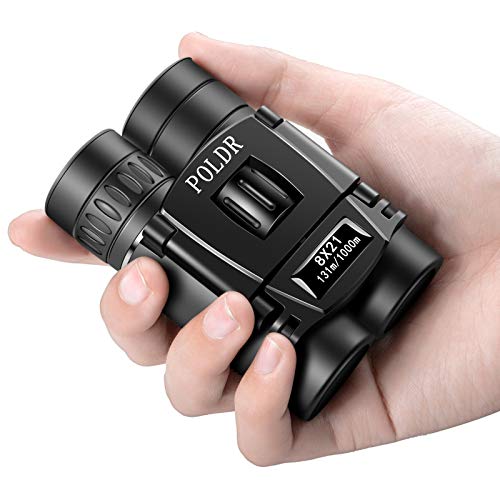
POLDR 8x21 Small Compact Binoculars for Adults, Travel Hiking Essentials | Mini Pocket, Foldable, Lightweight, BAK4 FMC Optics for Bird Watching Concert Opera, Waterproof, with Strap
As an Amazon Associate we earn from qualifying purchases. Product prices and availability are accurate as of the date/time indicated.

VULNESS 10x25 Binoculars for Adults, Compact for Bird Watching & Cruises | Folding pocket optics with BAK4 prism and FMC lenses; useful for Alaska trips, Norwegian cruises, hiking, camping & events
As an Amazon Associate we earn from qualifying purchases. Product prices and availability are accurate as of the date/time indicated.
Weights, fields of view, eye relief, interpupillary ranges, close focus, and waterproof ratings are each maker’s stated details for the current version and exact format; compact formats vary between single and double hinge designs between versions, so confirm the current figure for the exact model. Ratings are editorial for family hiking specifically: carry weight and child usability, steadiness and field of view for beginners, eye relief across a family’s faces, build and waterproofing against real family handling, warranty support, and value bought as one of a possible pair.
Detailed Reviews: Best Lightweight Binoculars for Family Hiking Trips Picks
1. Vortex Diamondback HD 8×32 Class – Best Overall
The Diamondback HD in 8×32 is the family compromise perfected: mid-size brightness and a genuinely wide field in a body light enough for a full day’s carry and for older children’s hands, a focus wheel and eyecups that suit a whole family’s faces, and waterproofing that treats weather as a non-event. Behind it stands Vortex’s lifetime warranty programme in the maker’s terms, which for a binocular that will be dropped by a child — not if, when — converts the worst moment of its life into a repair story rather than a replacement bill. It is the binocular this guide would hand to the adult who carries for everyone, and the benchmark against which the family’s second binocular is chosen.
2. Nikon Prostaff P3 8×30 Class – Best for Glasses Wearers
Nikon’s Prostaff P3 in 8×30 trims a little size and price from the class above and keeps the two things a family notices: light weight and a long stated eye relief that lets the glasses-wearers — in most families, at least one adult and sometimes a child — see the whole field without removing their glasses and losing the bird in the process. The view is bright and honest for its price, the body is waterproof, and the handling suits smaller adult and teenage hands particularly well. As the family’s main binocular on a tighter budget, or as the second binocular beside a Diamondback, it is the easiest recommendation in the table to defend at the till.
3. Vortex Bantam HD 6.5×32 Youth Class – Best for Younger Children
The Bantam exists because Vortex noticed what this guide keeps saying: children need their own binocular, sized for their faces and hands, and modest in magnification so the view holds still. At 6.5x, with a compact interpupillary range that actually fits a young face and a body light enough for a small neck, it gives a child the two experiences that make birders — finding the subject themselves, and keeping it in view. It is a real binocular with a real warranty behind it, not a toy, and that distinction matters to the child holding it more than any adult realises. If there is a child under about ten in your hiking party, this row, added to any adult row, is the highest-value purchase in the guide.
4. Celestron Nature DX 8×32 Class – Best Value for Close Nature
The Nature DX line has been the value recommendation in nature optics for years, and the 8×32’s stated close focus is its family superpower: butterflies, dragonflies, and pond life at a couple of metres, in a waterproof 8×32 body at a price that lets a family buy two and end the turns problem outright. Absolute optical polish and mechanical refinement sit a step below the Vortex, at a saving that, multiplied by two binoculars, is the difference between a plan and a purchase. For a family equipping itself from zero on a real budget, a pair of these is a genuinely excellent answer.
5. Bushnell H2O 8×25 Compact Class – Best Pocket Spare
The H2O compact is the binocular that lives in a jacket pocket, a car door, or an older child’s own pack: very light, waterproof in the maker’s terms, armoured against the knocks of independent carry, and optically modest in the way all 25mm objectives are modest — dimmer at dusk, a smaller field, a view that asks more of the user. Within those honest limits it is a superb second or third instrument, the one that is present for the unexpected eagle because it is always present. Buy it as a spare and a child’s step-up, not as the family’s only glass, and it will never disappoint you.
6. Athlon Neos G2 HD 8×42 Class – Best for Low Light
The 8×42 format gathers the most light in this table, and Athlon’s Neos G2 delivers it at a value price: dawn starts, dusk finishes, and the deep shade of woodland trails, where families actually walk, all look brighter and easier through it. The cost is the format’s own — it is the heaviest row here, best carried by an adult, in a harness rather than on a neck strap over a long day. As the family’s shared main binocular for a strong adult carrier, especially on woodland and shoulder-season walks, its brightness earns its weight. As an all-family, all-day carry, the 32mm rows above remain the wiser default.
Buying Guide: Choosing the Best Lightweight Binoculars for Family Hiking Trips
Buy for the Family You Have: The Two-Binocular Strategy
Start by listing the family’s eyes, not its budget: who wears glasses, whose face is smallest, who will carry their own, and who — be honest — will lose interest if the view is hard work. Then allocate in the order this guide has argued throughout. One good mid-size binocular, the Diamondback or Prostaff class, as the family’s main instrument, carried by an adult in a chest harness that keeps it instantly available and off a swinging neck strap. One child’s binocular, the Bantam class, for the youngest member, because ownership changes a child’s whole relationship to the walk. A compact spare, the H2O class, when the budget allows a third, living in a pocket or the car for the moments nobody planned. If the budget allows only one purchase this season, buy the main binocular now and the child’s next, and in between, practise the family’s sharing drill: the spotter keeps the binocular until everyone has seen the subject, the adult narrates directions by landmarks rather than by grabbing and pointing the binocular, and turns are timed by the subject, not by the loudest voice. Equipment multiplies eyes; habits multiply sightings.
Fit-Test at Home and Set Up Each User in Turn
When the binoculars arrive, set them up person by person before the first hike, because a binocular adjusted for its user is a different instrument from one pulled straight from the box. Set the interpupillary distance for each face — barrels closer for children, wider for adults — until the two circles merge into one clean image. Set the diopter for each user who will use that binocular regularly, following the maker’s method: focus the fixed eye first with the main wheel, then adjust the diopter ring for the other eye on a distant, detailed target, and note the setting so it can be restored after sharing. Set the eyecups: twisted down for glasses, up for bare eyes, and teach every user that this, not squinting, is how the whole field appears. Practise finding things in the garden in the order the trail will demand — first a big, still subject, then a small one, then a moving one — using the family’s core technique: eyes on the subject first, binocular raised to the eyes without looking away, then focus. Five minutes of that at home is worth an hour of frustration at the first real bird, and for a child it is the difference between a skill and a mystery.
Carry, Care, and the Habits That Keep Them Alive
On the trail, carry the main binocular on a chest harness and the child’s on a strap adjusted short enough that the binocular rests on the chest rather than swinging at the waist into every gate and rock. Caps live on tethers or in the same pocket every time, go back on between viewpoints, and come off only for looking — most family binocular damage is transport damage, and most of the rest is grit wiped across a lens by a helpful sleeve. Teach the cleaning rule as a family law, because children love rules they can enforce on adults: blow or brush grit off first, breathe on the lens only if you must, and wipe only with the cloth, in the case, kept clean for that one job. At home, binoculars live out of their cases in a dry room, so any trail damp dries rather than festers, and straps, eyecups, and the diopter setting get a ten-second check while the packs are unpacked. Do those small things and the best lightweight binoculars for family hiking trips become what the best families say they are: not equipment at all, but the way the whole tribe learned to stop at the same moment, look in the same direction, and see — a heron, a butterfly, a deer in the treeline — together, which is the entire reason the packs were loaded in the first place.
Frequently Asked Questions About Best Lightweight Binoculars for Family Hiking Trips
What size binoculars are best for family hiking?
An 8×32 is the best all-round family format: light enough for all-day carry and for older children’s hands, bright enough for woodland and most daylight, wide in field of view, and steady at 8x in a way 10x never is for beginners. Choose 8×30 if the budget or the carriers are smaller, 8×42 — the Athlon class here — if one adult will carry the main binocular and your walks run at dawn, dusk, or in deep shade, and a 6.5x or 8x compact for younger children, whose steadiness and face fit matter more than brightness. Avoid making a 10x full-size model the family’s only binocular: it is heavier, shakier, and narrower, and every one of those costs falls hardest on the family’s newest viewers.
Should I buy one good binocular or two cheaper ones for the family?
For most families, two good-enough binoculars beat one excellent one, because the family’s bottleneck is turns, not optical quality. A bird gives you seconds; a single binocular being passed and refocused spends them, while two binoculars put two viewers on the subject at once and let a child spot for the group instead of waiting in it. The practical pattern in this guide is a strong main binocular — Vortex Diamondback HD 8×32 class — plus an affordable second, Nikon’s Prostaff P3 or Celestron’s Nature DX, or a dedicated child’s model such as the Vortex Bantam for younger children. If the budget truly allows only one, buy the main binocular, run a fair sharing drill, and add the second next season; the upgrade path is painless because a good 8×32 is never made redundant by a second pair.
Can young children really use binoculars?
Yes, if the binocular fits them, and no, if it does not — which is why a youth model exists. A child needs three things an adult binocular often denies them: an interpupillary range that closes down to a small face, a weight their neck and arms accept, and a modest magnification, 6.5x to 8x, that holds still in unsteady hands. The Vortex Bantam class is built to exactly that brief. Set the binocular up for the child at home, teach the eyes-first-then-lift technique on garden targets, keep early subjects big and close — ducks, herons, butterflies through a close-focusing model — and expect the skill to arrive in one outing rather than ten. A child who finds their own bird has had a different day from a child who was handed a view, and the equipment difference between those days is smaller and cheaper than most parents expect.
How do I keep family binoculars from being damaged?
Prevent the four classic injuries. Drops: carry on a chest harness or a short strap, never swinging loose, and choose armoured, waterproof models whose makers back them with a strong warranty — Vortex’s programme in this table being the family favourite for a reason. Grit: caps on between viewpoints, lenses never wiped dry, cleaning done blower-first and cloth-last with a cloth kept solely for that job. Damp: binoculars stored out of their cases in a dry room after wet walks, so moisture leaves instead of settling into the optics. Loss: a bright strap or tape mark, a named home in the pack, and a head-count of binoculars at every car park, because family gear is left on roofs and picnic tables at a rate no one admits to. None of this is elaborate. All of it together is the difference between a binocular that serves one summer and one that serves a childhood.
Related guides
- Best Optics for Beginners Winter Use in 2026: Fogproof Binoculars Graded on the Cold Transition — Warm Car to Frozen Field Without Losing the View
- Best Cell Phone Monocular in 2026: 7 Best Cell Phone Monoculars With Clear View, Simple Use, and Easy Use for Cell Phone Monocular
- Best Monocular for Glasses Wearers Comfort in 2026: Monocular for Glasses Wearers Comfort, Glasses Wearers Monoculars, and Best Comfortable Monoculars for Glasses Wearers
- Best Binoculars for Camping Trips Viewing in 2026: 7 Binoculars for Camping Trips Viewing That Offer Clear Optics, Easy Carry, and Reliable Performance for Camping
More from Amazon
Programs that pair well with the guide above. Offers and eligibility are set by Amazon and may change.
Free shipping on eligible items, Prime Video and more. Eligible new members can start with a free trial.
Start a Prime free trialAudiobooks and podcasts to listen to on the go. Eligible new members can start with a free trial.
Try Audible freeAd-free music streaming. Eligible new subscribers can start with a free trial.
Try Music Unlimited freeA free business account with business pricing and bulk-buying tools for work, shop or home office.
Create a business accountAs an Amazon Associate we earn from qualifying purchases.

Write Your Review
No reviews yet. Be the first to share your experience!