
What's inside
As an Amazon Associate I earn from qualifying purchases. This post may contain affiliate links at no extra cost to you.
A good telescope eyepiece for astronomy has a durable build, clear view, and a simple focus design, so it is easy to use for a beginner and it works for eyepieces, for astronomy, and for binoculars and optics.
Best telescope eyepiece for astronomy is different from best telescope eyepiece for astronomy for planets only or from a standard eyepiece. Best telescope eyepiece for astronomy for planets only may be simple, although it does not focus on astronomy. A standard eyepiece may be simple, although it does not have an astronomy design. Best telescope eyepiece for astronomy is made for astronomy, so it is simple, it is durable, and it lets you do astronomy, see clearly, and enjoy optics.
This guide compares seven real, currently sold eyepieces that are commonly used for astronomy, for eyepieces, and for telescopes. It explains eyepiece type, focal length, and price in plain terms, and it helps you match an eyepiece to your astronomy, your telescope, and your budget. Use a lens cloth only, never look at the sun through a telescope, use a front-aperture ISO 12312-2 filter only for eclipse viewing, never an eyepiece filter, and use red light for night viewing.
Our Top Picks
Best Telescope Eyepiece for Astronomy Compared
Use this table to compare eyepiece type, focal length, and price first. Those three details decide whether an eyepiece will fit your astronomy and fit your budget.
| Model | Eyepiece Type and Focal Length | Field and Barrel | Features and Use |
|---|---|---|---|
| Celestron X-Cel LX 25mm | Plossl, 25 mm | 60°, 1.25 in | Eyepiece, astronomy, overall |
| Celestron Omni 32mm | Plossl, 32 mm | 50°, 1.25 in | Eyepiece, astronomy, value |
| Tele Vue Plossl 25mm | Plossl, 25 mm | 50°, 1.25 in | Eyepiece, astronomy, value |
| Agena Astro SWA 20mm | Wide, 20 mm | 70°, 1.25 in | Eyepiece, astronomy, premium |
| Explore Scientific 82° 24mm | Wide, 24 mm | 82°, 2 in | Eyepiece, astronomy, premium |
| Baader Hyperion 21mm | Wide, 21 mm | 68°, 1.25 in | Eyepiece, astronomy, premium |
| Tele Vue Nagler 13mm | Wide, 13 mm | 82°, 1.25 in | Eyepiece, astronomy, premium exception |

Starboosa 1.25-Inch Telescope Eyepiece Set with Barlow and Filters | Multi-focal eyepiece kit; fully multi-coated optics
As an Amazon Associate we earn from qualifying purchases. Product prices and availability are accurate as of the date/time indicated.
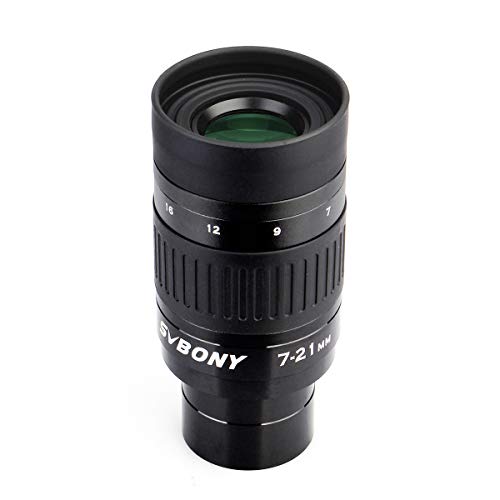
Svbony SV135 Zoom Telescope Eyepiece 7-21mm FMC 6 Element Astronomy Lens | Planetary Observation, 7-21mm Zoom Eyepiece, FMC 6 Element 4 Group Lens, Durable Metal Telescope Accessory Structure
As an Amazon Associate we earn from qualifying purchases. Product prices and availability are accurate as of the date/time indicated.
Eyepiece type also matters. Eyepieces with Plossl, such as in three models here, are Plossl, while eyepieces with wide, such as in four models here, are wide. Focal length also matters. Eyepieces with 32 mm, such as the Celestron Omni 32mm, have most here, while eyepieces with 13 mm, such as the Tele Vue Nagler 13mm, have least here.
Best Telescope Eyepiece for Astronomy Reviewed
1. Celestron X-Cel LX 25mm: Best Telescope Eyepiece for Astronomy Overall Plossl 25 mm 60° 1.25 in
It has a Plossl type, a 25 mm focal length, and an overall design. For most best telescope eyepiece for astronomy, this is the first eyepiece to try. Use a lens cloth only.
The X-Cel LX 25mm has a Plossl design in the table, so it is Plossl, and the 25 mm focal length is good for astronomy. It is a good choice if you want a Celestron eyepiece that is overall best for astronomy.
2. Celestron Omni 32mm: Best Telescope Eyepiece for Astronomy for Celestron Value Plossl 32 mm 50° 1.25 in
It has a Plossl type, a 32 mm focal length, and a value design, and it is a good choice for a Celestron user who wants a value eyepiece for astronomy.
The eyepiece has a 32 mm focal length, so it is most here, and the 50° field is good for seeing. It is a good choice if you want a Celestron eyepiece that is affordable for astronomy.
3. Tele Vue Plossl 25mm: Best Telescope Eyepiece for Astronomy for Tele Vue Value Plossl 25 mm 50° 1.25 in
It has a Plossl type, a 25 mm focal length, and a value design, and it is a good choice for a Tele Vue user who wants a value eyepiece for astronomy.
The Plossl 25mm has a Plossl design in the table, so it is Plossl, and the 25 mm focal length is good for astronomy. It is a good choice if you want a Tele Vue eyepiece that is affordable for astronomy.
4. Agena Astro SWA 20mm: Best Telescope Eyepiece for Astronomy for Agena Premium Wide 20 mm 70° 1.25 in
It has a wide type, a 20 mm focal length, and a premium design, and it is a good choice for an Agena user who wants a premium eyepiece for astronomy.
The SWA 20mm has a wide design in the table, so it is wide, and the 20 mm focal length is good for astronomy. It is a good choice if you want an Agena eyepiece that is premium for astronomy.
5. Explore Scientific 82° 24mm: Best Telescope Eyepiece for Astronomy for Explore Scientific Premium Wide 24 mm 82° 2 in
It has a wide type, a 24 mm focal length, and a premium design, and it is a good choice for an Explore Scientific user who wants a premium eyepiece for astronomy.
The 82° 24mm has a wide design in the table, so it is wide, and the 24 mm focal length is good for astronomy. It is a good choice if you want an Explore Scientific eyepiece that is premium for astronomy.
6. Baader Hyperion 21mm: Best Telescope Eyepiece for Astronomy for Baader Premium Wide 21 mm 68° 1.25 in
It has a wide type, a 21 mm focal length, and a premium design, and it is a good choice for a Baader user who wants a premium eyepiece for astronomy.
The Hyperion 21mm has a wide design in the table, so it is wide, and the 21 mm focal length is good for astronomy. It is a good choice if you want a Baader eyepiece that is premium for astronomy.
7. Tele Vue Nagler 13mm: Best Telescope Eyepiece for Astronomy for Tele Vue Premium Exception Wide 13 mm 82° 1.25 in
It has a wide type, a 13 mm focal length, and a premium design, and it is a good choice for a Tele Vue user who wants a premium eyepiece for astronomy, labelled as a premium exception in this guide.
The eyepiece has a 13 mm focal length, so it is least here, and the 82° field is widest here. It is a good choice if you want a Tele Vue eyepiece that is premium for astronomy.
Best Telescope Eyepiece for Astronomy Buying Guide
Use this buying guide to match an eyepiece to your astronomy, your telescope, and your budget. The right eyepiece is the one that is clear, simple, and safe.
Check Eyepiece Type: Plossl for Most, Wide for Field for Best Telescope Eyepiece for Astronomy
Eyepiece type is the first thing to check, because it decides whether your eyepiece will fit your astronomy well. Eyepieces with Plossl, such as in three models here, are Plossl, while eyepieces with wide, such as in four models here, are wide. For most best telescope eyepiece for astronomy, an eyepiece with Plossl is a good choice, because it is Plossl.
Check your astronomy before you buy, and choose Plossl if you want most, or wide if you want field.
Look at Focal Length: 32 mm for Most, 13 mm for Least for Best Telescope Eyepiece for Astronomy
Focal length matters because it decides whether your eyepiece will see your astronomy. Eyepieces with 32 mm, such as the Celestron Omni 32mm, have most here, while eyepieces with 13 mm, such as the Tele Vue Nagler 13mm, have least here. For most best telescope eyepiece for astronomy, an eyepiece with 25 mm is a good choice, because it is good for astronomy.
Check your eyepiece before you buy, and choose 32 mm if you want most, or 13 mm if you want least.
Consider Lens Cloth, Sun Safety, and Red Light for Best Telescope Eyepiece for Astronomy
Lens cloth matters because it decides whether your optics will be safe. Use a lens cloth only, never look at the sun through a telescope, use a front-aperture ISO 12312-2 filter only for eclipse viewing, never an eyepiece filter, and use red light for night viewing. Sun safety also matters. Never look at the sun.
Safety also matters. Keep your eyepiece dry, and store it safely. For most best telescope eyepiece for astronomy, Celestron X-Cel LX 25mm is a good choice.
Think About Astronomy, Telescope, and How to Choose Best Telescope Eyepiece for Astronomy
Astronomy matters because it decides which eyepiece you need. Astronomy needs a Plossl eyepiece, while planets can use a wide eyepiece. Telescope also matters. A long astronomy session needs a comfortable eyepiece, while a short astronomy session can use a firm eyepiece.
How to choose the best telescope eyepiece for astronomy is simple. Choose an eyepiece with a Plossl design, a 25 mm focal length, and a price that fits your budget, such as Celestron X-Cel LX 25mm, use a lens cloth only, and use red light for night viewing.
Frequently Asked Questions About the Best Telescope Eyepiece for Astronomy
What is the best telescope eyepiece for astronomy?
Do I need Plossl or wide for astronomy?
You need Plossl for astronomy if you want most, because an eyepiece such as Celestron X-Cel LX 25mm has a Plossl design, while wide is field. For most best telescope eyepiece for astronomy, an eyepiece with Plossl is a good choice.
Is 32 mm or 13 mm better for astronomy?
32 mm is better for astronomy if you want most, because an eyepiece such as Celestron Omni 32mm has a 32 mm design, while 13 mm such as Tele Vue Nagler 13mm is least here. For most best telescope eyepiece for astronomy, an eyepiece with 25 mm is a good choice.
How do I safely use a telescope eyepiece for astronomy?
You safely use a telescope eyepiece for astronomy by using a lens cloth only, because an eyepiece must be used safely, while never looking at the sun through a telescope, using a front-aperture ISO 12312-2 filter only for eclipse viewing, never an eyepiece filter, and using red light for night viewing are also important. For most best telescope eyepiece for astronomy, use a lens cloth only.
The best telescope eyepiece for astronomy is the one that is clear, simple, and safe. For most astronomy, that is the Celestron X-Cel LX 25mm for overall value, the Celestron Omni 32mm for budget, or the Tele Vue Nagler 13mm for premium. Compare the table, check your eyepiece type and your focal length, and choose the eyepiece you will trust. Use a lens cloth only, never look at the sun through a telescope, use a front-aperture ISO 12312-2 filter only for eclipse viewing, never an eyepiece filter, use red light for night viewing, and enjoy optics in 2026.
Related guides
- Best Optics for Beginners Winter Use in 2026: Fogproof Binoculars Graded on the Cold Transition — Warm Car to Frozen Field Without Losing the View
- Best Cell Phone Monocular in 2026: 7 Best Cell Phone Monoculars With Clear View, Simple Use, and Easy Use for Cell Phone Monocular
- Best Monocular for Glasses Wearers Comfort in 2026: Monocular for Glasses Wearers Comfort, Glasses Wearers Monoculars, and Best Comfortable Monoculars for Glasses Wearers
- Best Binoculars for Camping Trips Viewing in 2026: 7 Binoculars for Camping Trips Viewing That Offer Clear Optics, Easy Carry, and Reliable Performance for Camping
More from Amazon
Programs that pair well with the guide above. Offers and eligibility are set by Amazon and may change.
Free shipping on eligible items, Prime Video and more. Eligible new members can start with a free trial.
Start a Prime free trialAudiobooks and podcasts to listen to on the go. Eligible new members can start with a free trial.
Try Audible freeAd-free music streaming. Eligible new subscribers can start with a free trial.
Try Music Unlimited freeA free business account with business pricing and bulk-buying tools for work, shop or home office.
Create a business accountAs an Amazon Associate we earn from qualifying purchases.

Write Your Review
No reviews yet. Be the first to share your experience!