
What's inside
- What Makes the Best Tripod for Binocular Astronomy Different
- Quick Comparison: Best Tripod for Binocular Astronomy Models
- Detailed Reviews: Best Tripod for Binocular Astronomy Picks
- Buying Guide: Choosing the Best Tripod for Binocular Astronomy
- Frequently Asked Questions About Best Tripod for Binocular Astronomy
As an Amazon Associate I earn from qualifying purchases. This post may contain affiliate links at no extra cost to you.
The best tripod for binocular astronomy is not a camera tripod pressed into service but a tall, rigid support with a smooth counterbalance video head or a parallelogram mount, sized so that a heavy astronomy binocular can be aimed at the zenith while you stand or sit beneath it without crouching, shaking, or fighting the mount’s balance. This guide compares real, currently sold supports from Oberwerk, Manfrotto, Benro, Vanguard, Celestron, and Orion, explains the physics that makes astronomy the most demanding job a binocular support can do, and gives the setup routine that turns shaky glimpses into settled observing sessions. Never point binoculars at or near the sun without a proper front-mounted solar filter from a reputable maker, because concentrated sunlight causes instant and permanent eye damage; set up on stable ground, mind tripod legs in the dark for your own and others’ safety, and follow any site rules at star parties and observing fields.
Handholding a binocular works for a 7×50 or a light 10×50 on bright targets. Astronomy, however, keeps asking for more: a 15×70 or 20×80 on the Milky Way’s star clouds, a 25×100 on a comet, an angled 100mm binocular telescope on the Orion Nebula at powers where a heartbeat in your hands becomes a comet of its own in the eyepieces. Magnification multiplies shake by the same factor it multiplies the Moon, and astronomy adds three cruelties of its own. The targets are overhead, so the support must lift the binocular high and tilt it steeply while the observer gets underneath it. The sessions are long, so any posture the mount forces, crouched, craning, arms raised, becomes pain inside half an hour. And the view rewards absolute stillness more than any other kind of looking, because faint detail, a galaxy’s core, a double star’s split, appears in the moments when the image stops moving entirely. This is why experienced binocular astronomers talk about mounts the way telescope owners do: the binocular is the smaller half of the instrument. This guide rates supports on the terms that decide a night, height at the zenith, smoothness and balance of the head, settling time after a touch, and the honesty of the stated load capacity, which in every maker’s catalogue should be read with a discount, because a capacity measured as static weight says little about a long binocular’s leverage at a steep angle.
Heights, stated load capacities, head patterns, and materials are each maker’s stated details for the current version. Binocular adapters, L-brackets, and counterweights are discussed as the accessories they are; confirm the fitting pattern between your binocular, its adapter, and any head before ordering, because thread and plate standards are the commonest source of a ruined first night.
Our Top Picks
What Makes the Best Tripod for Binocular Astronomy Different
Height at the Zenith, the Specification Nobody Lists Honestly
A binocular on a tripod must clear your head while pointing up. Work the geometry once and you will never read a tripod listing the same way again. To look through a straight-through binocular at a target near the zenith, your eyes must be directly under the eyepieces, which means the mount head must sit roughly at your standing eye height or above, and the binocular’s own length extends the demand further. A tripod whose stated maximum height is measured to the top of its extended centre column, with the head’s height uncounted and the column wobbling at full stretch, will advertise a number it cannot usefully deliver. Prefer supports whose working height comes from their legs rather than a raised column, treat any column as a fine adjustment rather than a structure, and check the stated height against your own: a support that leaves a tall observer crouching will be used twice and sold. The seated alternative changes the arithmetic kindly. A parallelogram mount, discussed below, lets the observer sit in a chair while the binocular floats at a comfortable height, which is why so many dedicated binocular astronomers end there. Angled binocular telescopes, with eyepieces at forty-five or ninety degrees in their makers’ designs, relax the height problem considerably, since the observer’s head stays more upright, and they pair with shorter, sturdier supports as a result.
Heads: Counterbalance Video Heads, and the Parallelogram Difference
The head is where astronomy tripods are won and lost, because a heavy binocular tilted steeply is a weight trying to fall, forward or backward, the whole session. A photographic ball head is the wrong tool: it moves in every axis at once, flops under an unbalanced load the moment it is loosened, and locks with a shift that moves the target out of the field. A fluid video head in the makers’ stated patterns is the mainstream answer, moving in two smooth axes with adjustable drag, and the better ones add counterbalance, a spring or dialled resistance that offsets the binocular’s tilt weight so it stays where you leave it at any angle, which is the single feature that transforms high-angle observing. Read the head’s stated capacity and counterbalance range against your binocular’s actual weight, adapter included, and prefer a head rated comfortably above it. The parallelogram mount is the specialist answer and deserves its reputation: an articulated arm on a heavy tripod, counterweighted so the binocular floats nearly weightless, holding its aim while it moves up, down, and across, so a seated observer can sweep from horizon to zenith without standing, re-aiming, or re-balancing, and can even share the view, one observer swapping with another while the target stays in the field. It is the largest, heaviest, and most expensive pattern in this guide, and for a big binocular used often from one observing spot, it is also simply the best, which is why it leads the table despite its price.
Stiffness, Settling Time, and Load Ratings Read with Salt
Stability in the field is measured in seconds: touch the binocular to move it, and count how long the image trembles before it settles. A good astronomy support settles in about a second; a poor one rings for three or four, and across a night of hundreds of touches, those seconds are the difference between observing and waiting. Settling is bought with leg stiffness, which is why material and section count matter in the makers’ stated terms, fewer, thicker leg sections flex less than many thin ones, spreaders and a rigid hub help, and weight itself is a virtue here, since a heavier support absorbs vibration that a travel tripod passes through. This is the one branch of optics where a heavier tripod is usually a better tripod, and where carbon fibre’s appeal is its stiffness at a given weight rather than lightness for its own sake. Discount every stated load capacity by common sense: a binocular is a long lever, and a 4kg binocular on an adapter at a steep angle loads a head like a much heavier camera at the horizontal. Buy the support rated well above your rig’s weight, keep the legs as un-extended as the height allows, hang nothing swinging from the column, and set the feet firmly, spikes or pads as the ground asks, before blaming the binocular for a shaky view.
Quick Comparison: Best Tripod for Binocular Astronomy Models
| Model | Height, Head and Key Specs in Maker’s Terms | Best For | Typical Price Range |
|---|---|---|---|
| Oberwerk Parallelogram and TR3 class | Parallelogram mounts and hardwood tripods in maker’s line terms by model stated | Best tripod for binocular astronomy overall | $300 – $900 by configuration |
| Manfrotto 475B and Nitrotech class | Geared and tall tripods and counterbalance video heads in maker’s line terms stated | Best tripod for binocular astronomy with a video head | $350 – $800 by configuration |
| Benro TMA Mach3 and video head class | Tall tripods and fluid heads in maker’s line terms by model stated | Best value tripod for binocular astronomy | $200 – $500 by configuration |
| Oberwerk 5000 and monopod class | Heads and supports in maker’s line terms by model stated | Best tripod head for mid-size astronomy binoculars | $120 – $350 by configuration |
| Vanguard Alta Pro and VEO class | Tall tripods in maker’s line terms, head patterns by model stated | Best tripod for binocular astronomy on a budget | $130 – $300 by configuration |
| Celestron TrailSeeker and Regal class | Fluid pan heads and tripods in maker’s line terms by model stated | Best light tripod for binocular astronomy and travel | $120 – $280 by configuration |

Binocular Tripod, 72” Spotting Scope Tripod Stand with Binocular Adapter and 2 QR Plates, Travel Camera Stand with Phone Holder/Carry Bag, Compatible with Binoculars/Spotting Scope/Camera/Phone


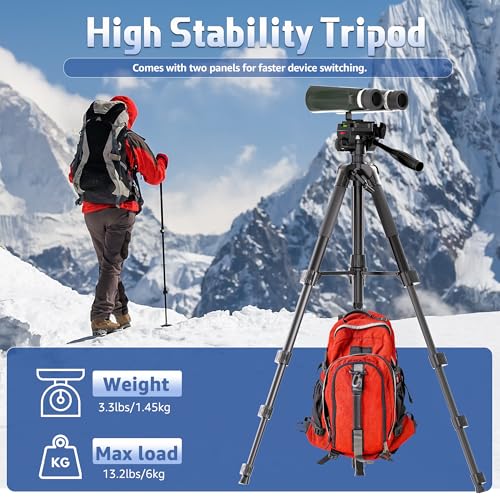
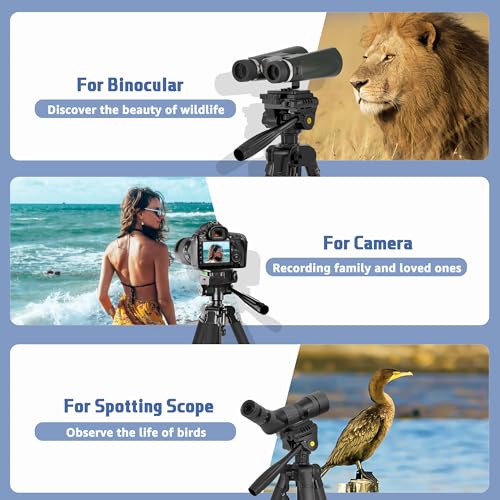

As an Amazon Associate we earn from qualifying purchases. Product prices and availability are accurate as of the date/time indicated.

69” Tripod for Spotting Scopes, Binocular & Camera, Includes Binocular Adapter, 2 QR Plates, Phone Holder & Carry Bag, Ideal for Bird Watching, Hunting, Wildlife Viewing & Target Shooting

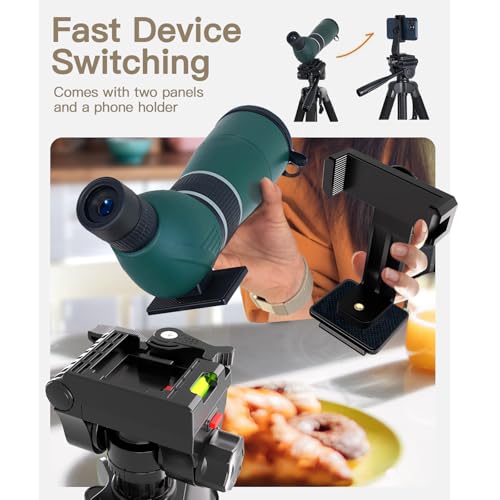


As an Amazon Associate we earn from qualifying purchases. Product prices and availability are accurate as of the date/time indicated.

Oberwerk 3000 Tall Tripod - Sturdy Binocular & Camera Tripod Stand with Quick Release Head & 2 Versatile Quick-Release Plates | Aluminum, Portable, Extendable Tripod | Extends from 33" to 78"


As an Amazon Associate we earn from qualifying purchases. Product prices and availability are accurate as of the date/time indicated.
Maximum heights, stated load capacities, head and counterbalance patterns, leg materials and sections, and included plates are each maker’s stated details for the current version and model; configurations vary, since legs and heads are sold separately and as kits across these lines. Ratings are editorial ratings for binocular astronomy: height and rigidity at high angles in class, head smoothness and counterbalance, settling time in practice terms, fitting practicality, and value.
Detailed Reviews: Best Tripod for Binocular Astronomy Picks
1. Oberwerk Class – Best Tripod for Binocular Astronomy Overall
Oberwerk is the specialist house in this table, a maker whose catalogue is binocular astronomy, and its parallelogram mounts and hardwood tripods are the reference pattern for seated observing with big binoculars. The parallelogram floats a heavy instrument nearly weightless on its counterweights, holds aim while it travels, and lets two observers share a target; the hardwood TR3 class legs beneath it are chosen for the damping wood gives. It is a garden and observing-field instrument, not a hiking one, priced like the specialist equipment it is. For a 20×80, a 25×100, or an angled binocular telescope used regularly, this is the support the others are measured against.
2. Manfrotto Class – Best Tripod for Binocular Astronomy with a Video Head
Manfrotto’s tall geared tripods and counterbalance video heads are the mainstream professional answer: genuine working height from the legs, a geared column that adjusts in small controlled steps rather than a sliding gamble, and heads whose counterbalance in the maker’s stated patterns holds a tilted binocular where it is left. The ecosystem of plates and spares is the deepest in the table, which matters across a decade of use. Bought as legs and head matched to your binocular’s weight, it is the standing observer’s benchmark, and the configuration most star-party regulars will recognise on sight.
3. Benro Class – Best Value Tripod for Binocular Astronomy
Benro’s tall Mach3 class legs and its fluid video heads deliver most of the Manfrotto pattern, real height, smooth two-axis movement, stated capacities with headroom, at materially lower prices, which is why this row is the value recommendation for a mid-size astronomy binocular. Finish and small refinements sit a step below the leader’s in honest terms, and the stated capacities should be discounted by this guide’s rule. For a 15×70 or a mid-weight angled binocular, it is the configuration that leaves money for the binocular itself, which is where a beginner’s money usually belongs.
4. Oberwerk Head Class – Best Head for Mid-Size Astronomy Binoculars
This second Oberwerk row is the head-led route: the maker’s heavy-duty head patterns, designed around binocular adapters and the leverage a long instrument applies, mounted on legs you may already own. It is the upgrade that rescues a common beginner situation, adequate legs ruined by a floppy photographic head, and its stated patterns are binocular-first in a way camera heads are not. Confirm the plate and adapter fitting for your binocular before ordering, and rate the legs honestly, because a fine head cannot stiffen a weak leg set.
5. Vanguard Class – Best Tripod for Binocular Astronomy on a Budget
Vanguard’s tall tripod lines put genuine height and serviceable heads at the friendliest prices in this table, and for a first mounted binocular in the 10×50 to 15×70 classes, that combination is enough to learn whether mounted astronomy is your hobby before the specialist money is spent. The compromises are settling time and head finesse at steep angles, felt most with the heaviest binoculars, which this row should not be asked to carry. As a first support bought knowingly, with its limits respected, it is a sensible door into the hobby.
6. Celestron Class – Best Light Tripod for Binocular Astronomy and Travel
Celestron’s fluid-head tripods are the portable row: light enough to carry to a dark site, smooth enough in the head for bright and mid-power targets, and priced for the binocular owner who also travels. They are not the support for a 25×100 at the zenith, and their stated capacities should be read with the full discount. For a 10×50 or a light 15×70 taken to dark skies, where the alternative is no tripod at all, they earn their place, because the best support for a travelling observer is the one that comes along.
Buying Guide: Choosing the Best Tripod for Binocular Astronomy
Start from the Binocular, Its Weight, and How You Will Sit or Stand
Weigh your actual rig, binocular, adapter, and plate, and write the figure down; then decide your observing posture, because it chooses the support class before any brand is discussed. Standing at a straight-through binocular demands the tall-legs and counterbalance-head route, with the head’s height clearing your own eye height at the zenith. Seated observing, the posture most long sessions prefer, points to the parallelogram if the binocular is heavy and the site is home, or to an angled binocular telescope on a shorter, stiffer support if you are buying the instrument too. Rate the head above your rig’s weight with clear headroom, prefer height from legs over height from a centre column, and confirm every fitting in the chain, binocular thread, adapter, plate, head, in the makers’ stated terms, since an astronomy binocular’s adapter is the small part whose absence cancels clear nights. Include in the budget a proper observing chair if you go the seated route, because the chair is half the comfort the parallelogram promises.
Set Up Once in Daylight and Balance Before Dark
Assemble the whole rig in daylight first: legs spread and locked, head fitted, binocular mounted and its adapter tightened, and the balance set by the head’s stated method, sliding the plate or setting the counterbalance until the binocular holds its angle hands-off at the steepest tilt you will use. Practise the movements in the light, panning, tilting, locking and unlocking by feel, because every control you must look at in the dark costs you the night vision you came for. Choose the observing spot with the setup in mind, firm level ground, room for the legs’ full spread, and clearance behind for your chair or your standing position, and mark the leg positions if the site is your own garden, so the rig returns to a known geometry. At dusk, fit a dim red light for your charts rather than any white torch, dress warmer than the evening suggests, since a still observer cools quickly, and let the binocular itself cool to the night air while you set up, because a warm instrument brought into cold air fogs its outer surfaces and blurs its first hour.
Observe in a Rhythm That Protects the View and the Night
Work in a rhythm the mount rewards: move to a target, let the image settle for its second before judging it, observe in unhurried spells, and rest your eyes by looking at the naked-eye sky between targets, which is both pleasure and technique, since dark adaptation deepens across the whole session and is spent in one glance at a phone or a white light. Keep a hand off the binocular while observing where the mount allows, because a resting hand is a tremor delivered directly. Log what you see briefly, a notebook tolerates dew better than a phone and preserves the dark. Pack down in the reverse of your setup, caps on before the binocular leaves the mount, legs wiped if dew has settled, and let a cold, dewed instrument dry open at home before it is stored away. Never be tempted, at a session’s end or its beginning, to swing the binocular anywhere near the sun, and if you observe at dawn, stop well before the sun can enter the field. Run that discipline, balanced in daylight, settled in the dark, and the best tripod for binocular astronomy disappears from your attention entirely, leaving only the sky it was bought to hold still.
Frequently Asked Questions About Best Tripod for Binocular Astronomy
What is the best tripod for binocular astronomy?
For a heavy astronomy binocular used from a home site, an Oberwerk parallelogram mount is the best support in this guide, because it floats the binocular counterbalanced and lets you observe seated while the aim holds. For standing observing, a tall Manfrotto geared tripod with a counterbalance video head is the benchmark, and Benro’s tall class is the value route to the same pattern. Whichever class you choose, the tests are the same: working height from the legs that clears your eyes at the zenith, a head rated well above your rig’s weighed total with counterbalance for steep angles, settling in about a second after a touch, and every adapter and plate fitting confirmed before the first clear night.
Can I use my camera tripod for astronomy binoculars?
For a light binocular on bright, low targets, it will serve an evening; for serious astronomy it will frustrate you in three predictable ways. Its stated height is usually reached on a wobbling centre column, its ball head flops under a tilted binocular and shifts as it locks, and its load rating was measured for a camera’s compact weight rather than a long binocular’s leverage. If you already own one, the cheapest meaningful upgrade is the head, a fluid video head with counterbalance in the stated patterns, on the legs you have, which converts the rig for mid-size binoculars. For a 15×70 and above used at high angles, plan on a dedicated support from this guide’s table rather than incremental apologies.
What is a parallelogram mount, and do I need one?
A parallelogram mount is an articulated, counterweighted arm on a heavy tripod that holds a binocular balanced in front of a seated observer, so the instrument can be raised, lowered, and swept across the sky while it keeps its aim, with the observer sitting comfortably beneath it throughout. You need one if your binocular is heavy, a 20×80, 25×100, or a large angled model, if your sessions are long, and if you observe mainly from one place, a garden or a regular field, because the mount is bulky to transport. You do not need one for a 10×50 or a light 15×70 used standing or carried to dark sites, where a tall tripod and a counterbalance video head do the job in a fraction of the packed size.
How tall should a tripod be for binocular astronomy?
Tall enough that the head sits at about your standing eye height with the legs, not the centre column, doing the work, because a straight-through binocular aimed near the zenith puts your eyes directly under its eyepieces. Measure your own eye height standing, add the head’s stated height, and choose legs whose stated maximum approaches that figure before any column is raised; then treat the column as a small adjustment, since a fully raised column is the commonest source of tremor in a beginner’s rig. Seated observing with a parallelogram or an angled binocular relaxes the requirement considerably. When in doubt between two supports, choose the taller and stiffer one, because no observer has ever returned a tripod for holding a binocular too steadily, too high.
Related guides
- Best Optics for Beginners Winter Use in 2026: Fogproof Binoculars Graded on the Cold Transition — Warm Car to Frozen Field Without Losing the View
- Best Cell Phone Monocular in 2026: 7 Best Cell Phone Monoculars With Clear View, Simple Use, and Easy Use for Cell Phone Monocular
- Best Monocular for Glasses Wearers Comfort in 2026: Monocular for Glasses Wearers Comfort, Glasses Wearers Monoculars, and Best Comfortable Monoculars for Glasses Wearers
- Best Binoculars for Camping Trips Viewing in 2026: 7 Binoculars for Camping Trips Viewing That Offer Clear Optics, Easy Carry, and Reliable Performance for Camping
More from Amazon
Programs that pair well with the guide above. Offers and eligibility are set by Amazon and may change.
Free shipping on eligible items, Prime Video and more. Eligible new members can start with a free trial.
Start a Prime free trialAudiobooks and podcasts to listen to on the go. Eligible new members can start with a free trial.
Try Audible freeAd-free music streaming. Eligible new subscribers can start with a free trial.
Try Music Unlimited freeA free business account with business pricing and bulk-buying tools for work, shop or home office.
Create a business accountAs an Amazon Associate we earn from qualifying purchases.

Write Your Review
No reviews yet. Be the first to share your experience!